
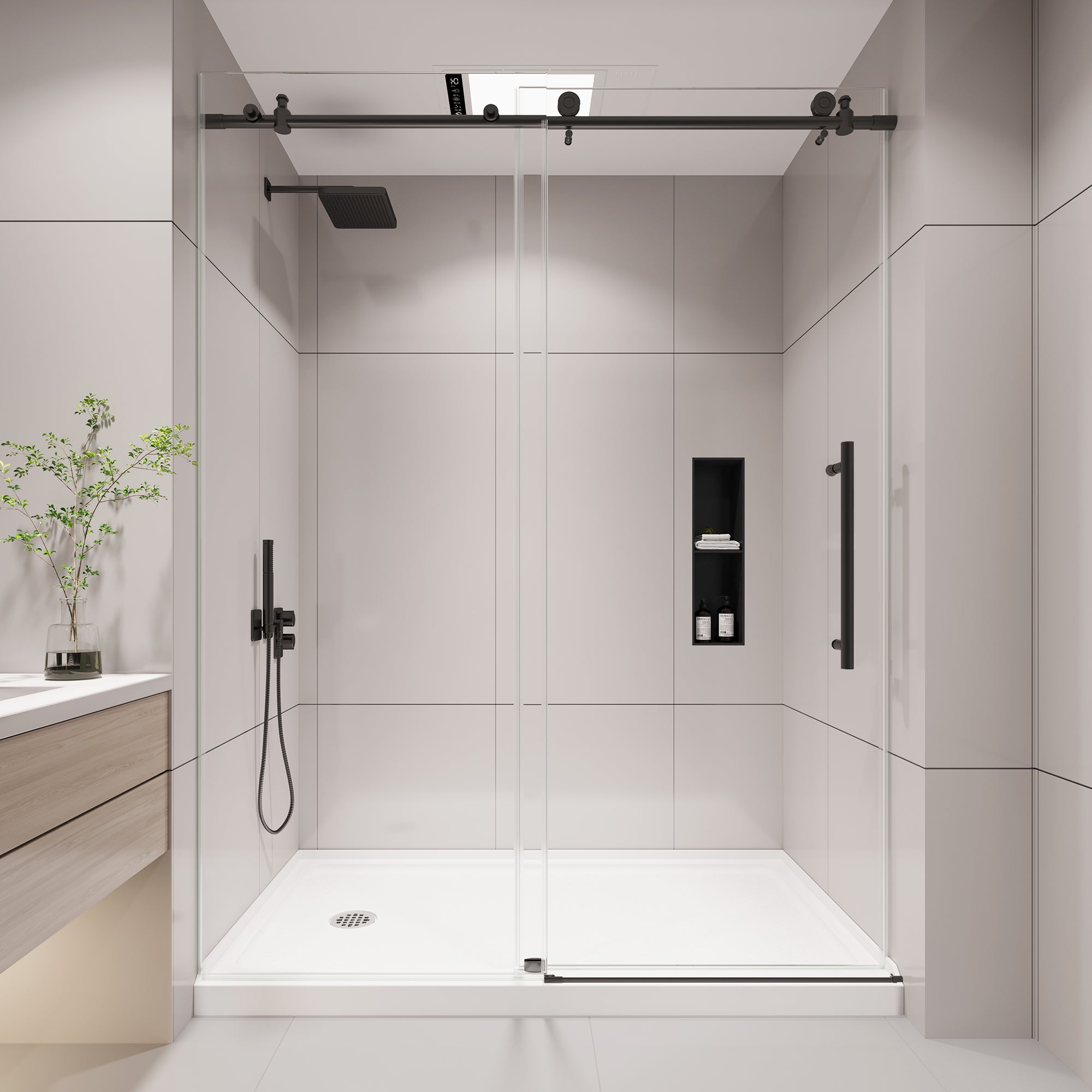
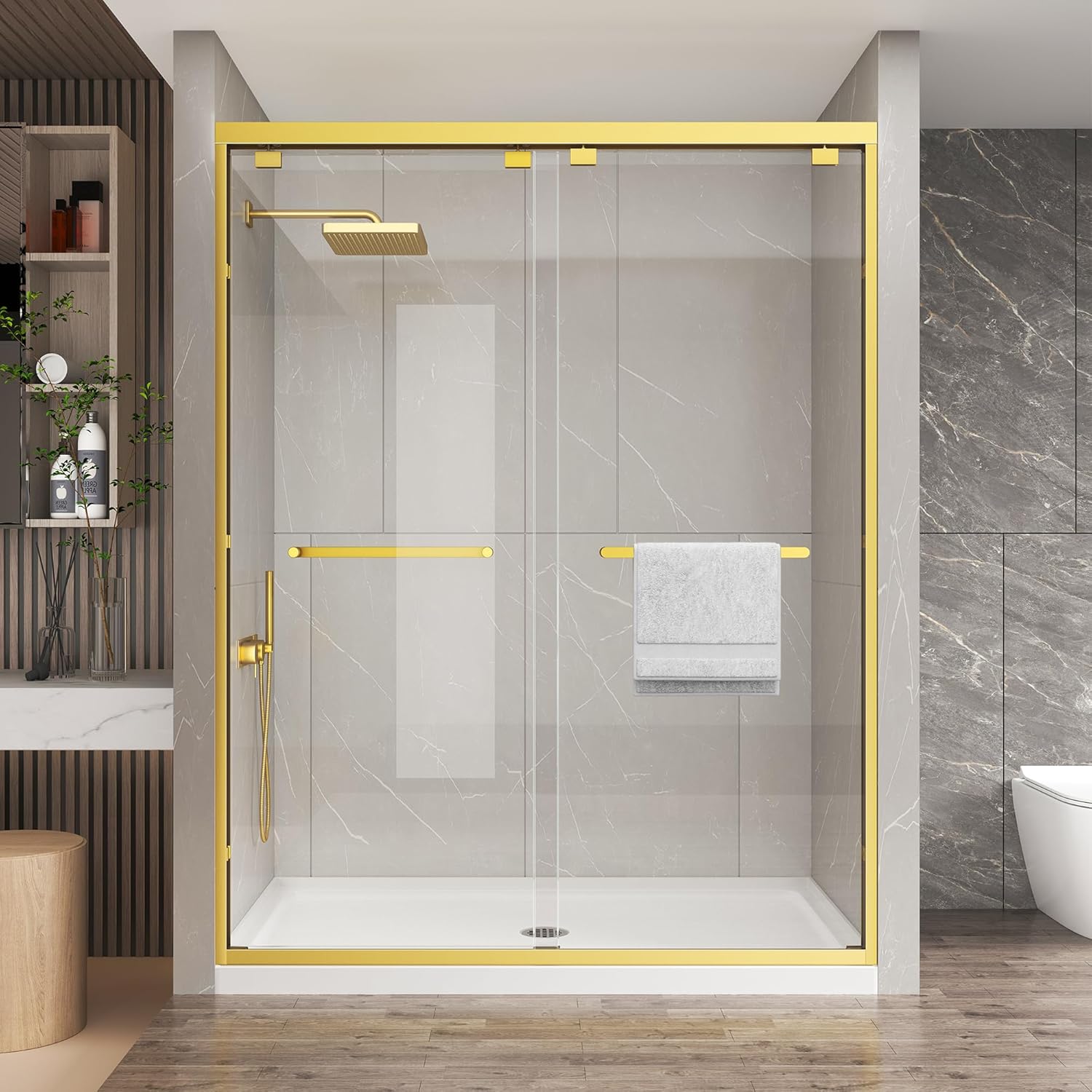
Homeowners ask me this all the time during estimates: "Can you install a sliding shower door without a bottom track?" The short, professional answer is: yes — but only when the site conditions, materials, and water-management strategy are right. As a contractor with 20+ years installing showers in older homes and new builds across the U.S., I’ll walk you through the real-world trade-offs, tolerances, and code-minded decisions you need to make so the job performs for years, not months.
Quick, Direct Answer
Yes, you can install a sliding shower door without a bottom track, but it’s not a default swap on every project. Bottomless or “bottom-exposed” sliding doors require precise framing, a correctly sloped curb, and the right hardware (top-hung rollers or recessed bottom guides). If your shower curb is too low, out-of-plumb walls exceed installation tolerances, or the threshold is porous, skip it — or expect callbacks for leaks and glass binding.
For homeowners who want modern looks with easier cleaning, a bottomless system can be very attractive. For older houses with uneven walls or a shallow curb, a bottom track often becomes the practical choice.

How Bottomless Sliding Doors Work
There are two common approaches to bottomless sliding doors:
- Top-hung systems — rollers carry the weight of the glass from an aluminum header. The bottom edge simply passes over the curb and is kept aligned by small guides (floor guides or minimal bottom rails) attached to the threshold.
- Low-profile bottom guide systems — a shallow recessed channel or single pin guide holds the glass bottom, but there’s no continuous bottom track that traps water and dirt.
Both rely on the curb slope, threshold height, and correct glass clearances. If any of those are off, doors will bind, rattle, or allow water to escape onto the bathroom floor.
Site Conditions & Why They Matter
Before you commit, inspect these real-world factors:
- Wall plumbness — I commonly see walls 1/2" to 1" out of plumb in rehab work. Frameless, bottomless doors tolerate less out-of-plumb than framed systems. Expect to shim or fur out walls to achieve manufacturer tolerances.
- Curb height and slope — the curb must be tall enough and sloped away from the door (minimum slope 1/8" across the curb) to direct water to the drain. A flat curb will leak. Many builders aim for a 2–3/4" minimum height for reliable deflection when using bottomless doors.
- Rough-in dimensions — ensure the opening width and header mounting surface meet the roller manufacturer's specs. If your header isn't solid (e.g., tile without blocking), you must add blocking behind the wall.
- Threshold surface — stone or solid-surface thresholds are preferred. Laminate or damaged tile can wick water or break the seal at guides.
Strongly consider a mock-up measurement: measure corner-to-corner at top and bottom, check floor level, and verify header backing — I do this on every estimate.
Typical Installation Steps (contractor approach)
Below is the practical installation sequence I follow on-site. This is not a substitute for the manufacturer's instructions, but it reflects what actually prevents returns.
- Verify opening dimensions and plumbness. Record any out-of-plumb measurements.
- Install solid 2x blocking in the header cavity if not already present.
- Confirm curb height and slope. Add a sloped mortar bed or adjust threshold as needed.
- Dry-fit glass panels and confirm minimum clearances: typically 1/8" to 3/8" at sides and top depending on glass thickness and hardware tolerances.
- Mount the header and top-hung rollers. Check smooth travel and no glass contact with tile at full travel.
- Install bottom guides or floor pins. Seal penetrations with compatible silicone where required by manufacturer.
- Test with water and adjust seals. Make final torque checks and document clearances.

Costs, Leak Risk & Maintenance
Expect labor to be higher on bottomless systems that require precise prep. The hardware itself can be more expensive if you choose premium top-hung rollers and thicker tempered glass. Here is a quick comparison table I use when advising homeowners:
| Feature | Bottom Track Sliding | Bottomless / Top-hung Sliding |
|---|---|---|
| Appearance | Traditional, visible track | Minimalist, modern |
| Water containment | Better by design | Depends on curb slope and seals |
| Cleaning | Track collects gunk | Easier to clean |
| Tolerance for out-of-plumb | Higher | Lower |
| Cost | Lower to mid | Mid to higher |
Leak management: Bottomless doors are more sensitive to improper threshold slope and missing splash guards. If you prioritize water containment over looks — or have a curbless shower — consider alternatives like a fixed glass panel with a swing door or use a low-profile bottom guide specifically designed for wet rooms.
Safety Standards & Glass Specs
Tempered safety glass is mandatory in shower door installations. In my installs I follow ANSI Z97.1 guidelines for glass safety and adhere to local code interpretations. Typical glass thicknesses:
- 1/4" (6 mm) tempered — common for framed sliding doors.
- 3/8" (10 mm) tempered — preferred for frameless sliding doors and bottomless systems because it resists flex and minimizes chatter in the track.
- 1/2" (12 mm) tempered — used for very large panels or high-end frameless systems.
Installation tolerances matter: you’ll see manufacturer specs that allow +/-1/8" to 3/8" adjustment. If your walls are outside that range, you’ll need shims or rework. For top-hung systems, pay attention to the glass-to-top-rail clearance — inadequate clearance causes binding when the house settles.
For more on professional standards, review NKBA industry guidance and best practices: NKBA.
Real Job Notes — What I See in the Field
Here are a few things only years on the job teach you:
- Old homes are rarely plumb. I once reset a headboard and added a 3/4" shim pack behind the tile to accept a frameless header. The homeowner wanted the clean look; the additional labor fixed an install that would have failed fast.
- Glass sizes are always ordered with a tolerance. I typically ask suppliers for +1/8" clearances on narrow openings to avoid binding when tile thickness varies.
- Curbs that were laminated or veneered after the tile went down often hide slope problems. I always scrape and test the slope before committing to a bottomless system.
- Seals wear. Even with perfectly installed bottomless doors, silicone seals and sweep pieces need replacement every few years depending on use and water chemistry.
FAQ — People Also Ask
Can a bottomless sliding shower door prevent water from getting on the floor?
Short answer: It can, but only if the curb is properly sloped, the threshold is high enough, and the door has adequate bottom guides and seals. I recommend a water test before final sign-off: run a hose for several minutes and check for leaks outside the shower.
Is tempered glass required for bottomless shower doors?
Yes. Tempered glass meeting ANSI Z97.1 is required. For bottomless, frameless systems I typically specify a minimum of 3/8" tempered glass to reduce flex and increase longevity.
How do you handle out-of-plumb walls for frameless bottomless doors?
I install blocking and use shims, then adjust the header location so rails are within manufacturer tolerance. If the required correction exceeds what shimming can safely fix, I recommend a framed system instead.
Final Notes & Related Products
Bottomless sliding shower doors are a valid choice when aesthetics and easy cleaning are priorities. But they demand attention to site geometry, curb construction, and proper hardware selection. If you want a modern look with fewer obstruction lines, plan for additional labor to meet tolerances — that upfront investment prevents callbacks and water damage.
If you’re exploring glass options and hardware packages, check the product range at KPUY Shower Doors for styles that support top-hung installations and frameless options.
Short checklist before you order glass:
- Measure top and bottom widths and diagonals — record differences.
- Confirm curb height and slope; adjust if under 2.5".
- Verify header backing/blocking and decide between top-hung or bottom-guided hardware.
- Decide on glass thickness (3/8" min for frameless bottomless).
- Plan for a water test at completion.
If you want help evaluating your shower opening, I’ll measure tolerances, check curb slope, and give a clear recommendation: bottomless with a risk mitigation plan, or a solid bottom-track system that’s more forgiving on old construction.

Laisser un commentaire
Tous les commentaires sont modérés avant d'être publiés.
Ce site est protégé par hCaptcha, et la Politique de confidentialité et les Conditions de service de hCaptcha s’appliquent.