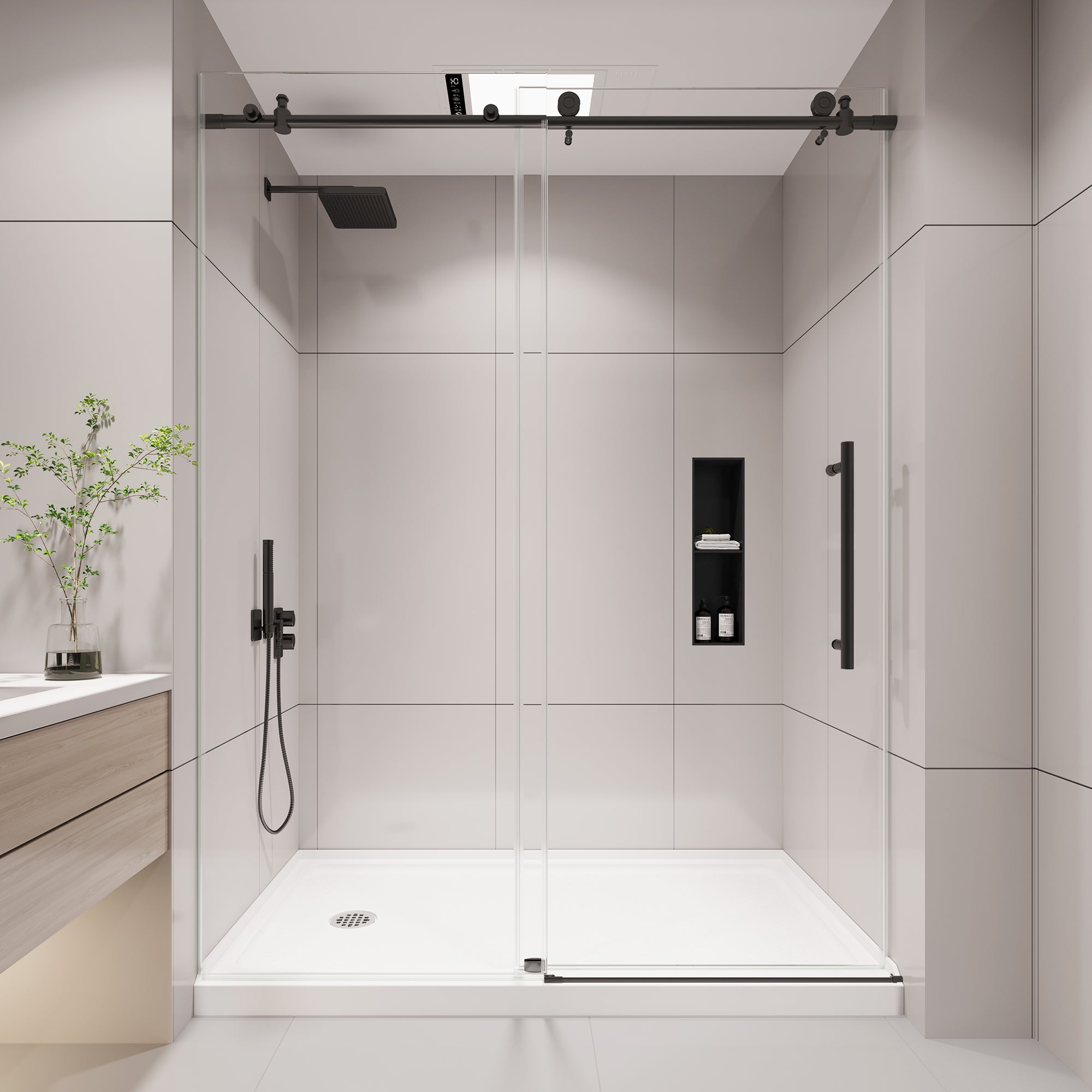
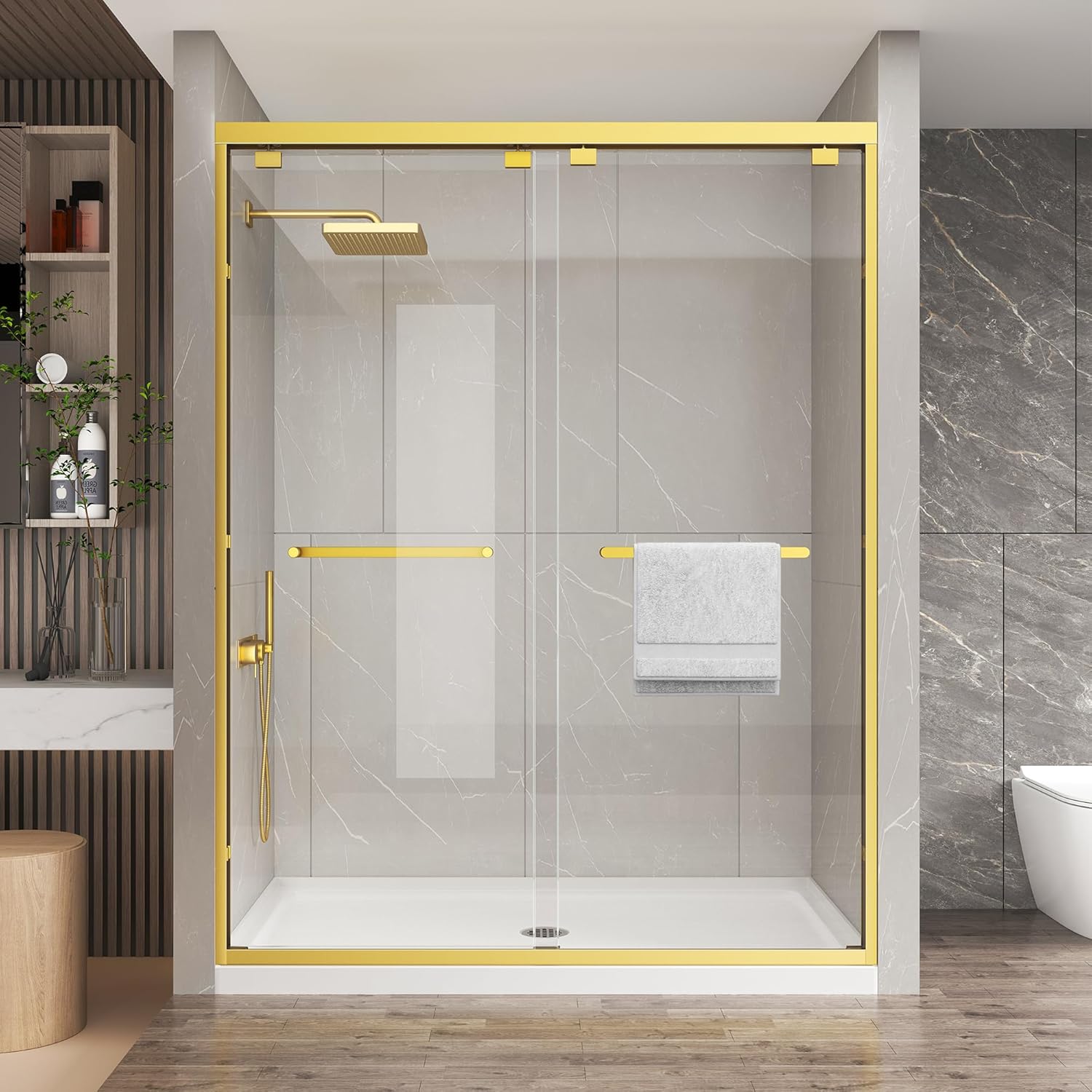
Sliding Shower Doors
Shop sliding shower doors for compact bathrooms, walk-in showers, and tub-shower combinations where saving clearance matters. Explore bypass and frameless sliding shower door styles with adjustable sizing, SGCC-certified tempered glass, smooth-glide hardware, and select soft-close options for a cleaner, more practical enclosure.
Filtres
32 produits
Shop By Shower Door Types
Why Choose Sliding Shower Doors
Sliding shower doors are a practical choice for bathrooms where space needs to work harder. Because the panels glide along a track instead of swinging outward, this style helps keep the shower easy to access without interfering with nearby vanities, toilets, or walkways. That makes sliding shower doors especially useful in compact bathrooms, tub-shower combinations, and layouts where clearance is limited.
Many homeowners choose sliding shower doors when they want a more space-saving enclosure that still feels clean and modern. The horizontal opening design supports everyday convenience, while the overall look can work across a wide range of bathroom styles, from simple updates to more finished remodels. In the right layout, sliding shower doors offer a strong balance of function, visual order, and practical daily use.

Why Sliding Shower Doors Work So Well
Sliding shower doors are popular because they solve one of the most common bathroom layout problems: limited usable space around the shower opening. For many homeowners, they offer a cleaner way to keep the shower easy to use without adding outward door swing, which is why they work so well in compact bathrooms, tub-shower combinations, and everyday family layouts.
Space-Saving Layout
One of the biggest advantages of sliding shower doors is that they do not need extra clearance to open outward. Because the panels move side to side on a track, this style helps preserve usable floor space around the shower. That makes it especially practical in bathrooms where the shower sits close to a vanity, toilet, cabinet, or walkway.
Better Fit for Tub and Shared Bathrooms
Sliding shower doors are often a strong fit for tub-shower combinations and shared bathrooms where layout efficiency matters. In these spaces, a swing door can feel intrusive or awkward in daily use, while a sliding design keeps access simple without adding interference around the tub or surrounding fixtures.
Clean, Modern Visual Flow
Many homeowners choose sliding shower doors because they create a cleaner, more organized look than a curtain setup or bulkier enclosure style. The horizontal lines and glass panels help define the shower area without making the bathroom feel overly crowded, which works well in both straightforward updates and more finished remodels.
Smooth Everyday Access
For busy households, sliding shower doors are often appreciated for how simple they are to use day after day. The side-to-side opening motion feels practical in tighter bathrooms because users can get in and out of the shower without managing a door swing path, which can be especially helpful in layouts where multiple fixtures sit close together.
Easier to Live With in Smaller Spaces
In smaller bathrooms, the best shower door is often the one that creates the fewest layout compromises. Sliding shower doors work well because they support daily function, help reduce visual clutter, and make it easier to keep the shower area feeling intentional rather than crowded. For many homeowners, that balance is the main reason this style stands out.
What to Compare When Shopping Sliding Shower Doors
When comparing sliding shower doors, the most useful details are not just the overall look but how the finish, size range, and glass thickness fit your bathroom and daily use priorities. These are the core features that usually shape both the final appearance and the practical fit of the enclosure.
What to Consider Before Choosing Sliding Shower Doors
Before choosing sliding shower doors, it helps to look beyond style alone. The best option depends on how the shower opening fits the room, how much clearance you have around the enclosure, and how the door will perform in daily use.
Opening Width
Start by confirming the width of the shower opening rather than choosing by appearance first. Sliding shower doors can work across compact and wider layouts, but the right fit depends on the usable opening, how much walk-in space you want, and whether the enclosure needs to suit a tighter bathroom or a more open shower area.
Clearance Around the Shower
One of the biggest reasons homeowners choose sliding shower doors is to avoid outward door swing. This matters most when the shower sits close to a vanity, toilet, cabinet, or walkway. In tighter bathrooms, preserving that surrounding clearance can make daily use feel much easier.
Tub or Stand-Alone Setup
Sliding shower doors can work well in both tub-shower combinations and stand-alone shower enclosures, but the best fit depends on the setup. In bathtub applications, sliding doors are often appreciated because they keep access simple without adding extra door swing. In stand-alone showers, they can help create a cleaner, more organized enclosure.
Track and Water Control
For sliding shower doors, the track and bottom edge design matter more than many buyers expect. A better-managed rail, fitted seals, and a stable sliding system can help improve day-to-day operation and reduce the chance of water escaping onto the bathroom floor. This is worth checking carefully if splash control is a high priority.
Finish and Maintenance
Finish affects both appearance and upkeep. Matte black can create stronger contrast, while brighter metallic finishes can feel lighter in smaller bathrooms. Maintenance expectations can also vary depending on water conditions, visible spotting, and how much track and hardware detail the enclosure includes, so it helps to choose a finish that suits both the room and your routine.
Questions And Answers
1. Are sliding shower doors good for small bathrooms?
Yes. Sliding shower doors are often one of the best options for smaller bathrooms because the panels move side to side instead of swinging outward. That helps preserve usable floor space around the shower opening, which can matter a lot when the enclosure sits close to a vanity, toilet, or narrow walkway.
2. Can sliding shower doors be installed on a bathtub?
Yes, many sliding shower doors can work well on bathtub openings when the width, wall condition, and tub edge are suitable for the enclosure. This style is often preferred for tub-shower combinations because it keeps access simple without requiring extra door swing space in front of the tub.
3. What are the benefits of a double sliding design?
A double sliding design can make daily access feel easier because both panels are built around a side-to-side opening system rather than an outward swing. This can be especially useful in shared bathrooms, tub-shower layouts, and wider openings where homeowners want practical access, smoother operation, and a more balanced enclosure design.
4. Are sliding shower doors easy to maintain?
They can be, especially when the enclosure design suits your water conditions and cleaning routine. Glass panels are usually easy to wipe down, but maintenance can also depend on details such as the track, seals, hardware finish, and how visible water spotting tends to be in your bathroom. Many homeowners find sliding shower doors easier to live with than a curtain setup because the shower area feels more contained and finished.
5. Do sliding shower doors help control water effectively?
A well-fitted sliding shower door should help keep water inside the shower area, but performance still depends on the quality of the installation and the enclosure design. Features such as better-managed bottom rails, overlapping panels, and fitted seals can all help improve water control and reduce the chance of splash reaching the bathroom floor.
6. Is tempered glass safe for sliding shower doors?
Yes. Tempered glass is widely used for sliding shower doors because it is designed to offer better strength and safety for everyday bathroom use. ANSI- and SGCC-certified tempered glass adds another layer of confidence by helping show that the enclosure is built around recognized safety and quality expectations.


