
Everyday family showers demand durability, safety, and low maintenance — not a showroom flourish. After 20+ years installing and repairing showers in real houses, I’ll tell you what holds up best: tough tempered glass with a practical frame strategy, hardware sized for heavy use, and installation practices that account for out-of-plumb walls, uneven curbs, and tight clearances. The 2026 trends favor low-threshold entries and easy-clean coatings, but those features only help if the door type and installation match your household’s habits and the existing rough-in.
Quick Answer (Featured Snippet Style)
For everyday family use, a tempered-glass sliding (bypass) door or framed/partial-framed swinging door with 3/8" to 1/2" tempered glass and heavy-duty hardware is the best all-around choice. These designs combine durability, easy access for kids and seniors, manageable water control, and forgiving installation tolerances when walls are out-of-plumb. If floor space is tight, choose a bypass/inline sliding system; if you want full opening and easier cleaning, a pivot or hinge door with a curb or low-threshold base is preferable.
Shower Door Types Compared
Here’s a contractor’s take on the most common door types and how they perform for a busy household.
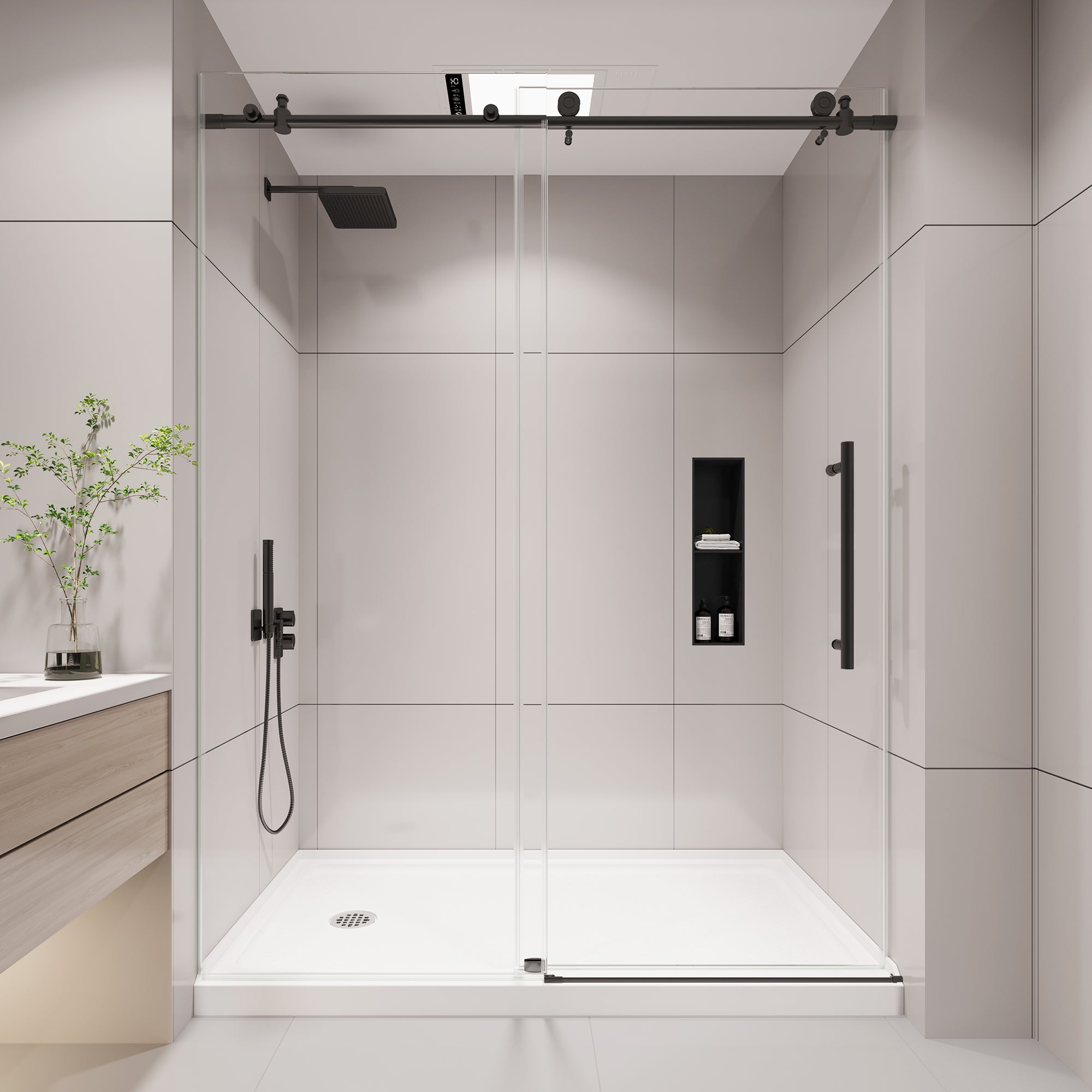
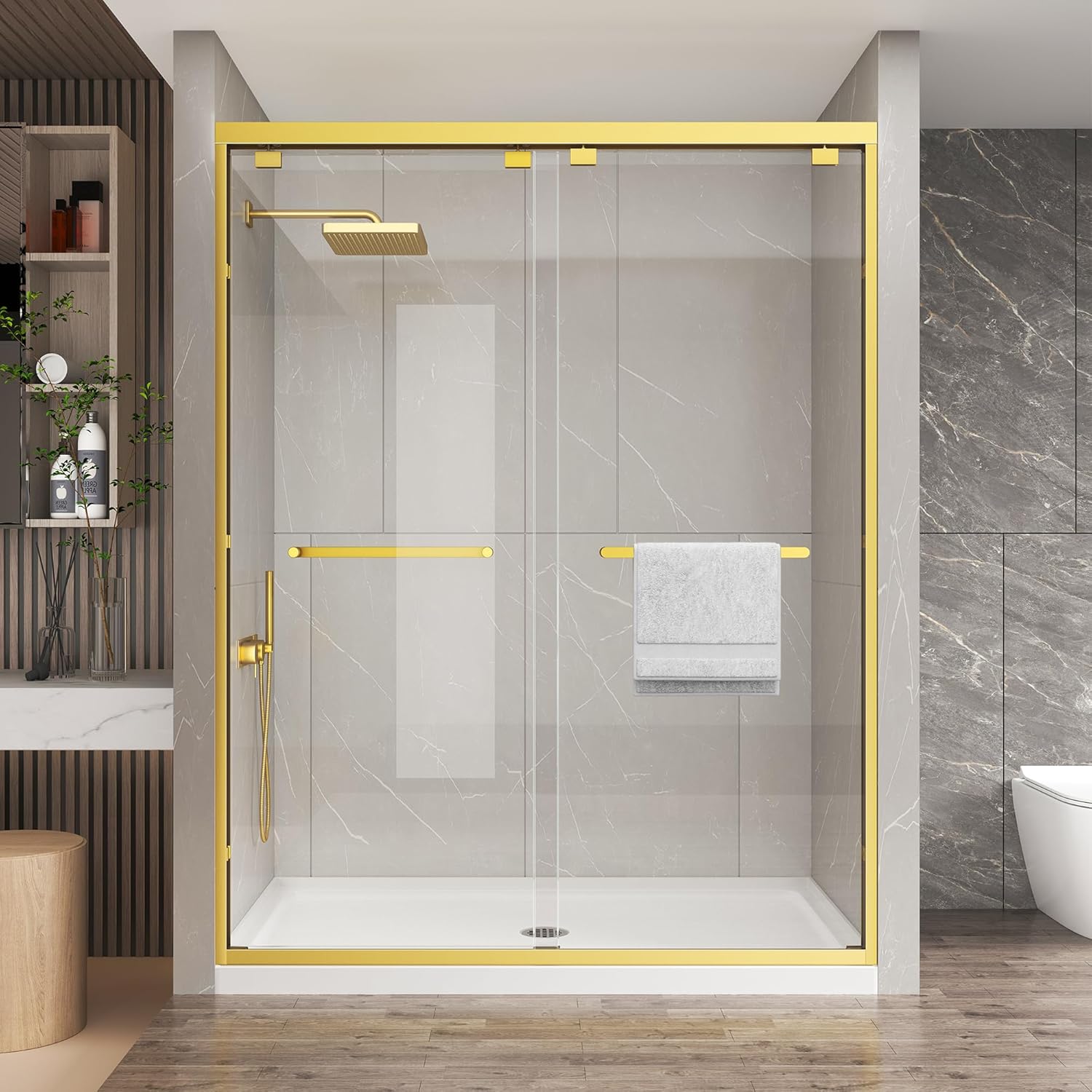
- Sliding (Bypass) Doors — Great for tight bathrooms. Hardware takes the weight off the bottom threshold. Needs routine track cleaning but reduces swing conflicts with towels and toilets.
- Hinged / Pivot Doors — Full opening, easier to step into, better for cleaning. Requires clear swing area and precise hinge installation to avoid leaks.
- Neo-angle Doors — Space-saving in corner installs; look good but often need very accurate glass sizing and are less forgiving of rough framing.
- Bi-fold Doors — Useful where swing clearance is a problem, but the folding mechanism can collect soap scum and wears faster under heavy family use.
- Fixed Panels (Walk-in) — Minimal hardware, excellent for accessibility; may need a longer curb or channel to control spray if not paired with a second panel.
What Works Best for Daily Family Use — Detailed Breakdown
Families need doors that survive daily traffic, tolerate sloppy kids, and require minimal day-to-day care. Focus on these factors:
- Durability: Choose hardware rated for frequent cycles and corrosion-resistant finishes (stainless or high-quality plated finishes).
- Safety: Use fully tempered glass meeting glazing safety standards and consider lower glass thickness for easier operation but not below what’s safe for panels in heavy use.
- Accessibility: Low-threshold options with good drip control for kids and older adults make life easier.
- Cleaning: Coatings that resist soap scum and matte finishes on hardware reduce upkeep.
Practical recommendation: for most family bathrooms I install 3/8" or 1/2" tempered glass sliding doors with top-track support and a framed or semi-frameless profile. They balance cost, durability, and maintenance — and they handle installation tolerances better than ultra-minimal frameless systems when walls are slightly off plumb.
Manufacturer selection matters. If you’re shopping, see a range at KPUY Shower Doors to compare framed, semi-frameless, and bypass options.

Installation Reality: Field Conditions I See on Jobs
Homes are not perfect rectangles. Expect surprises. Here are the on-site realities that influence the best door choice:
- Out-of-plumb walls: Many older homes have walls off by 1/4" to 3/4" over a 6- to 8-foot span. Frameless doors require tighter plumb than framed or semi-frameless systems.
- Rough-in dimensions: Tile thickness, substrate, and flange overlap change clearances. Always measure finished to finished, not rough framing.
- Curb slope and height: A curb that’s too flat or too high disrupts water control and hinge alignment. Aim for a curb slope that encourages water back to the pan and check threshold level before ordering doors.
- Tolerance for glass sizing: I usually leave 1/8" to 1/4" overall clearance per side for glass adjustments. On frameless installs I tighten tolerances; on framed systems I allow larger values.
Real job note: in a 1978 house I retrofitted, the shower knee wall was nearly 5/8" out of plumb and tile set was inconsistent. A semi-frameless sliding door with adjustable jambs absorbed the variance — a frameless pivot would have required expensive rework. That’s the kind of field decision that saves homeowners time and money.
Glass Safety, Thickness & Standards
Safety is non-negotiable for family bathrooms. Always use tempered safety glass that complies with ANSI/CPSC guidelines for architectural glazing. Typical thicknesses for residential shower doors:
- 1/4" (6mm): lightweight applications, less expensive but flexes more; better in framed doors with lots of support.
- 3/8" (10mm): the most common balance of stiffness, cost, and weight for frameless and semi-frameless sliding systems.
- 1/2" (12mm): premium stiffness used on tall panels or heavy-duty frameless installations.
Note: thicker glass increases hinge and track loads and changes hardware specs. Verify hardware ratings for panel weight and cycles. For authoritative guidance on kitchen and bath planning, consult the NKBA standards and recommendations: NKBA. For glazing safety and consumer information, review resources from the U.S. Consumer Product Safety Commission: CPSC.

Maintenance and Finishes That Matter
Busy families hate high-maintenance features. Specify finishes and coatings that survive wet, salty hands and soap residue.
- Finish: Brushed nickel and matte black hide fingerprints; polished chrome looks sharp but needs more wiping.
- Glass coatings: Hydrophobic treatments make daily cleaning easier. They’re not permanent—expect reapplication over years.
- Tracks and seals: Choose track profiles with removable top covers for easy cleaning. Magnetic seals on pivot doors help reduce leaks but wear over time.
Pro tip: install a small access panel or removable trim where the track meets the curb if you anticipate heavy use — it saves time during repair and deep cleaning.
Practical Buying & Installation Checklist (Contractor Checklist)
- Measure finished-to-finished wall spacing at three heights; record the largest and smallest dimensions.
- Check curb height and slope; level the pan and mark the finished threshold plane.
- Decide on glass thickness based on panel height and expected load (3/8" is the safe default).
- Pick hardware rated for frequent cycles and check warranty terms for residential vs. light commercial use.
- Confirm compliance of selected glass with tempered glass safety standards and get the tech sheet.
- Allow installer adjustments: budget for field trimming, minor framing shimming, and grout/tile touch-ups.
Quick Comparison Table
| Door Type | Best For | Durability | Maintenance | Installation Tolerance |
|---|---|---|---|---|
| Sliding / Bypass | Small bathrooms, kids | High | Moderate (tracks) | Good (tolerates out-of-plumb) |
| Hinged / Pivot | Full opening, easy clean | High | Low (fewer tracks) | Fair (needs plumb for seals) |
| Frameless | Modern look, open feel | Moderate-High | Low (glass cleaning) | Poor (requires very plumb walls) |
| Fixed Panel (Walk-in) | Accessible bathing | High | Low | Good |
FAQ — People Also Ask
What shower door is easiest to keep clean for a busy household?
The easiest to clean are doors with hydrophobic coatings and minimal tracks — typically a hinged or fixed panel with an easy-clean coating. Sliding doors accumulate grime in the bottom track, so choose one with removable covers if tracks are unavoidable. Regular squeegeeing after showers reduces buildup regardless of door type.
Is 3/8" or 1/2" tempered glass better for family bathrooms?
For most family applications, 3/8" tempered glass is the best balance of stiffness, weight, and cost. Use 1/2" for very tall panels or heavy-duty frameless installations. Always confirm hardware ratings for the panel weight.
Can a frameless door be installed on an out-of-plumb wall?
Frameless doors are much less forgiving of out-of-plumb walls. If walls are more than about 1/8" to 1/4" over a typical 6-foot run, choose a framed or semi-frameless system or correct the wall with shimming and sibling trim during installation.
Wrap-up
For daily family use, prioritize safety, durability, and installation practicality over pure aesthetics. My go-to for most projects is a 3/8" tempered glass sliding or semi-frameless hinged door with heavy-duty hardware and a low-threshold base. That combo delivers reliable performance, tolerates typical on-site irregularities like out-of-plumb walls, and keeps maintenance reasonable for busy households.
If you want to compare styles and hardware options, check the selection at KPUY Shower Doors to find a system suited to your bathroom’s layout and your family’s needs.
Questions about your specific layout? Measure finished wall-to-wall at three heights, note the curb height, and share those numbers with your installer — the right door starts with accurate measurements.

Laisser un commentaire
Tous les commentaires sont modérés avant d'être publiés.
Ce site est protégé par hCaptcha, et la Politique de confidentialité et les Conditions de service de hCaptcha s’appliquent.