
It’s 2026, and homeowners are finally realizing that the "spa bathroom" trend isn't just about heated floors—it’s about flow. In my 20 years contracting across the States, I’ve seen more bad layouts ruined by the wrong door choice than I can count. You spend $15k on a remodel only to realize your pivot door hits the toilet, or your sliding door track collects grime because the curb wasn't pitched correctly.
Choosing between sliding and pivot shower doors isn't just an aesthetic decision; it is a structural one governed by your bathroom's rough-in dimensions and clearance zones. Whether you are dealing with a tight 5x8 hall bath or a sprawling master wet room, the wrong glass specification will cost you functionality and leaks down the road.
This guide breaks down the mechanics, the code requirements, and the hard truths about living with both styles so you can make a decision that holds up to daily abuse.
Pivot Shower Doors: Mechanics and Best Use Cases
A pivot door, often confused with a standard hinged door, operates on a pivot hinge mechanism. Unlike a side-hinged door that is mounted strictly to the wall, a pivot hinge is secured to the top and bottom of the door frame or glass panel. This allows the door to spin on a vertical axis. In high-end 2026 designs, we are seeing offset pivots that allow for a wider opening clearance.
The Pros: Aesthetics and Accessibility
- Maximum Opening Width: Because these doors swing out (and sometimes in), you can often utilize a larger percentage of the entryway compared to sliders. This is crucial for ADA compliance or aging-in-place designs where a wider clearance is necessary.
- Frameless Appeal: Pivot mechanisms handle heavy KPUY Shower Doors (3/8" or 1/2" glass) exceptionally well. This reduces the need for bulky metal headers, giving you that floating, ultra-modern look.
- Hygiene: No bottom track means no gunk buildup. A simple polycarbonate sweep on the bottom is all that keeps the water in, making these significantly easier to clean.
The Cons: The "Swing" Factor
The biggest killer for pivot doors is the swing radius. You need clear floor space. I’ve had to tell clients they can't have a pivot door because their vanity or toilet is too close to the shower curb. If the door hits a fixture, you are risking shattered tempered glass—a safety hazard even if it adheres to ANSI Z97.1 standards.
Sliding Shower Doors: The Modern Bypass
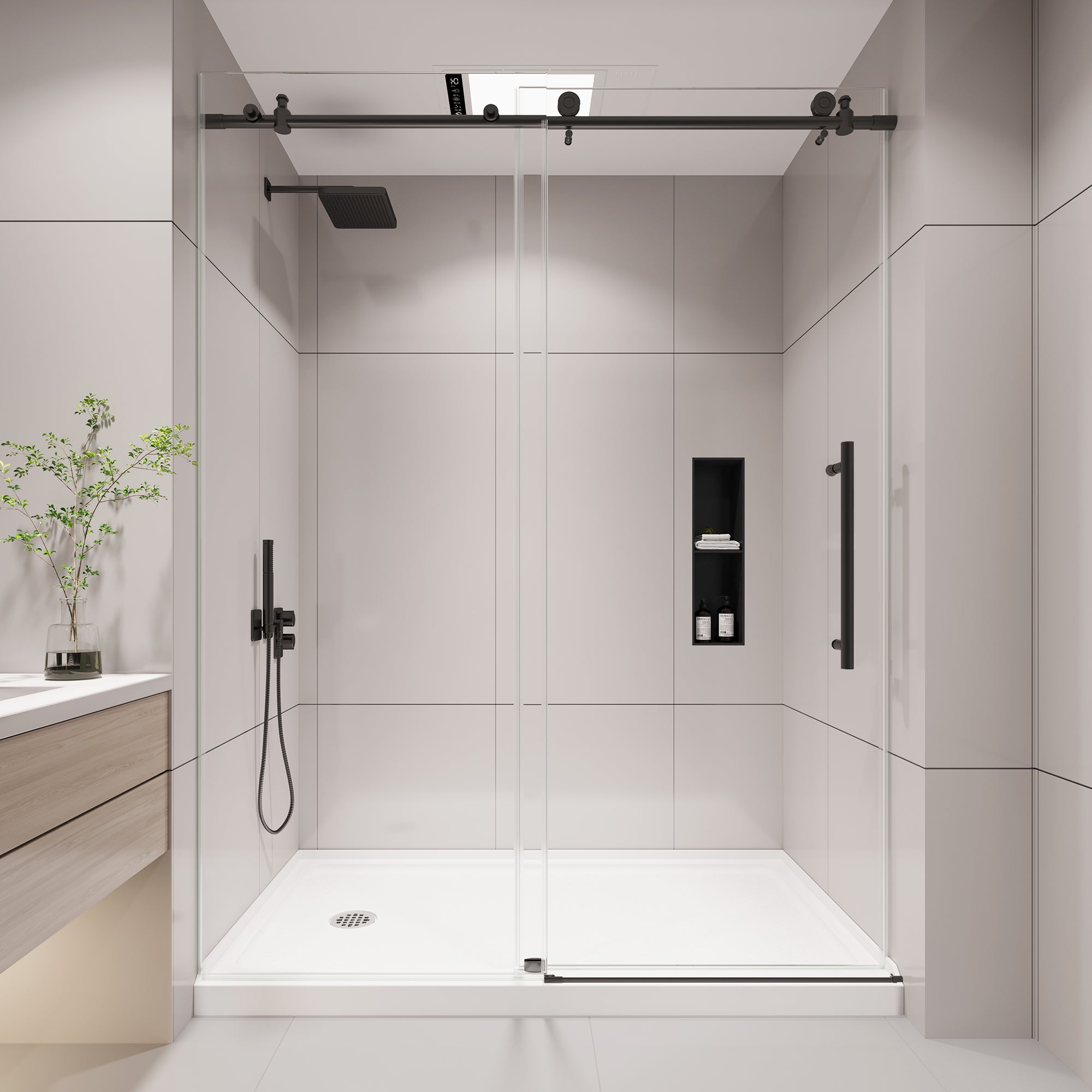
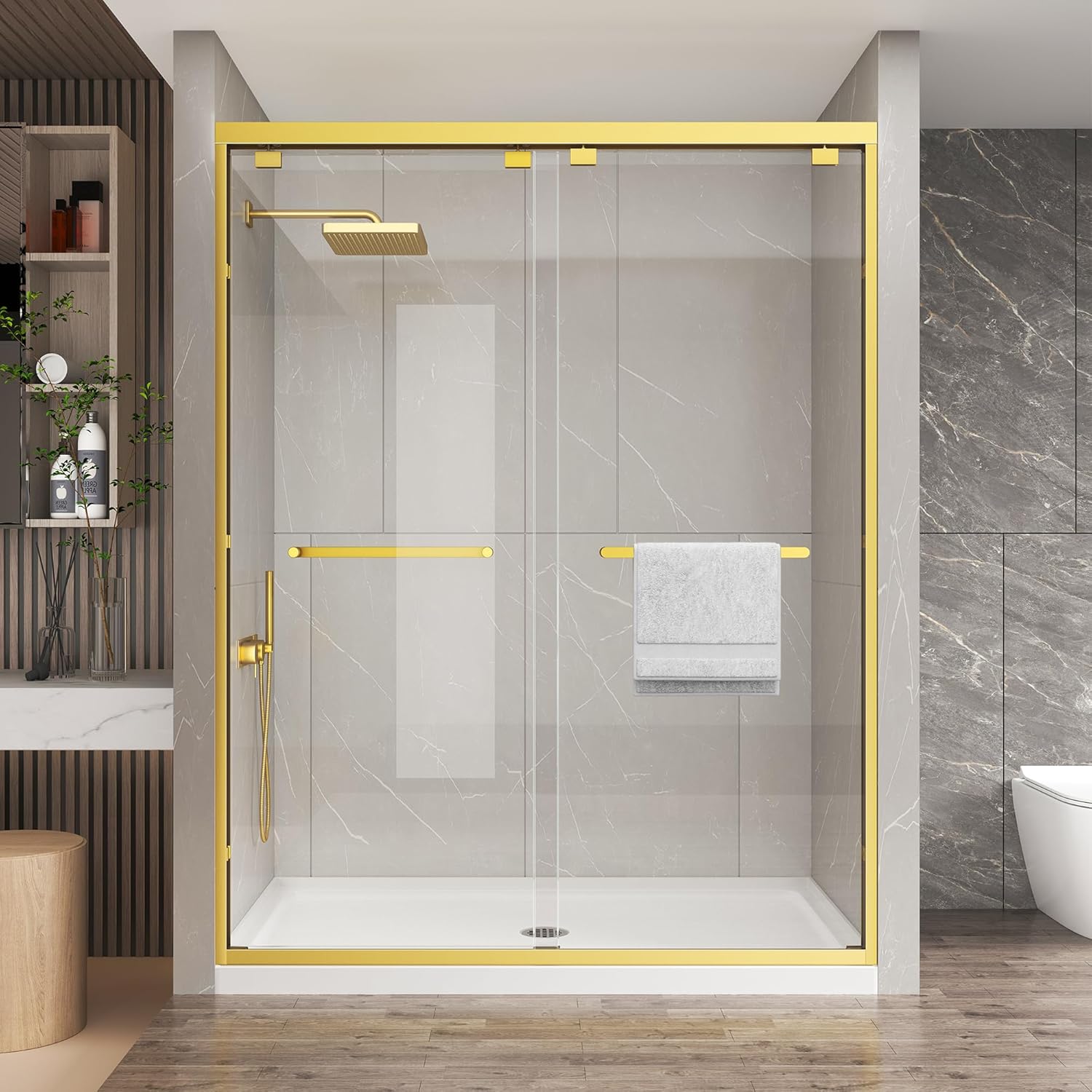
Forget the rattling, brass-framed sliders from the 90s. Modern sliding doors (often called bypass doors) utilize barn-door style rollers on an exposed upper bar. They consist of two panels (or one fixed, one moving) that slide past each other.
The Pros: Space Efficiency
Sliding doors are the kings of small bathrooms. They require zero floor clearance. If your toilet is 10 inches from the shower curb, a sliding door is your only code-compliant option. They essentially disappear into their own footprint.
The Cons: Entry Width and Maintenance
- Limited Access: You can typically only access 50% of the shower width at any time. If you have a standard 60-inch tub-to-shower conversion, your entry is roughly 26-28 inches once you account for the glass overlap and bumpers.
- The Bottom Guide: While modern "frameless" sliders have ditched the massive bottom U-channel, they still require a center guide block to keep the glass from swinging. This small hardware piece needs regular cleaning to prevent mold buildup.

Head-to-Head: The Comparison Chart
Here is how the two stack up when we look at the numbers. As a contractor, these are the specs I look at when drawing up a bid.
| Feature | Pivot (Swing) Doors | Sliding (Bypass) Doors |
|---|---|---|
| Space Requirement | Requires swing clearance (radius) into the room. | Zero floor clearance required. |
| Water Seal | Relies on magnetic strips and bottom sweeps. Higher risk of leakage if curb isn't pitched. | Excellent splash guard; overlapping glass prevents water escape. |
| Glass Thickness | Usually 3/8" (10mm) or 1/2" (12mm) heavy glass. | Usually 1/4" (6mm) to 3/8" (10mm). |
| Cost to Install | Higher. Requires precise wall plumb and often structural blocking. | Moderate. More forgiving of minor wall imperfections. |
| Entry Width | Wide. Can open nearly full width. | Restricted. Max 50% of total opening. |
Critical Space Requirements & Measuring
Before you order any glass, grab your tape measure. We aren't looking for "standard" sizes; we are looking for the reality of your framing.
Measuring for Pivot Doors
For a pivot door, you need to check for "out-of-plumb" walls. If your walls lean out more than 1/4 inch over a vertical span of 72 inches, a frameless pivot door will have massive gaps or bind against the tile.
The Clearance Rule: Measure the distance from the shower curb to the nearest obstruction (toilet, vanity, towel bar). If the door is 28 inches wide, I recommend a minimum of 30 inches of clearance to avoid "trapping" the user in the bathroom entry.
Measuring for Sliding Doors
Sliding systems demand a specific minimum width. Generally, you need a rough opening of at least 48 inches. Anything smaller, and the entry gap becomes too narrow for an average adult to pass through comfortably. For openings between 42-48 inches, a pivot door or a bi-fold is usually the better call.

Contractor Insight: Installation & Water Sealing
The longevity of your shower door comes down to installation quality and the substrate preparation.
Structural Blocking
If you are eyeing those heavy, 1/2-inch thick KPUY Shower Doors in a pivot style, you cannot just screw the hinges into drywall or cement board. During the framing stage, we install 2x4 or 2x6 blocking between the studs exactly where the hinges will mount. Without this, your heavy door will eventually sag, dragging on the curb and shattering.
The Curb Slope
This is where 90% of leaks happen. The top of your shower curb must slope inward toward the drain at a 1/4-inch per foot pitch. Pivot doors rely heavily on this gravity slope. If your tile setter lays a flat curb, water will pool under the sweep and eventually migrate out onto the bathroom floor. Sliding doors are slightly more forgiving here because the track acts as a dam, but a flat curb creates a mildew farm inside that track.
Safety Standards
Always verify the glass stamp. In the US, all shower glass must be tempered and meet Safety Glazing Certification Council (SGCC) standards (ANSI Z97.1). This ensures that if the door breaks, it shatters into small, dull cubes rather than jagged shards.
Frequently Asked Questions
Is a sliding or pivot door better for a small bathroom?
For physically small rooms (tight square footage), sliding doors are superior because they don't consume floor space. However, if the shower opening itself is narrow (under 48 inches), a pivot door is better because a slider would leave you with a tiny, uncomfortable entry gap.
Do frameless pivot doors leak?
They can if installed poorly. Frameless pivot doors have small gaps around the hinges and edges (usually 1/16 to 1/8 inch). While polycarbonate seals are used, direct water spray at these seams can cause leakage. We always position the showerhead so it sprays away from the door to mitigate this.
Which style is more expensive to install?
Generally, frameless pivot doors are more labor-intensive. They require extremely precise measurements and often custom glass cutting if the walls aren't perfectly plumb. Sliding systems, especially those with adjustable rollers, offer a bit more wiggle room during installation, slightly reducing labor costs.
Final Verdict
If you have the floor space and want that luxury, open-concept feel, go with a pivot door. It’s easier to clean and offers a wider entry. If you are retrofitting a standard 60-inch tub alcove or working with a tight footprint, a modern sliding system with exposed rollers is the practical, stylish choice.
Ready to select the hardware that matches your renovation specs? Check out the heavy-glass options in our Shower Door collection to find the exact fit for your rough opening.

Laisser un commentaire
Tous les commentaires sont modérés avant d'être publiés.
Ce site est protégé par hCaptcha, et la Politique de confidentialité et les Conditions de service de hCaptcha s’appliquent.