
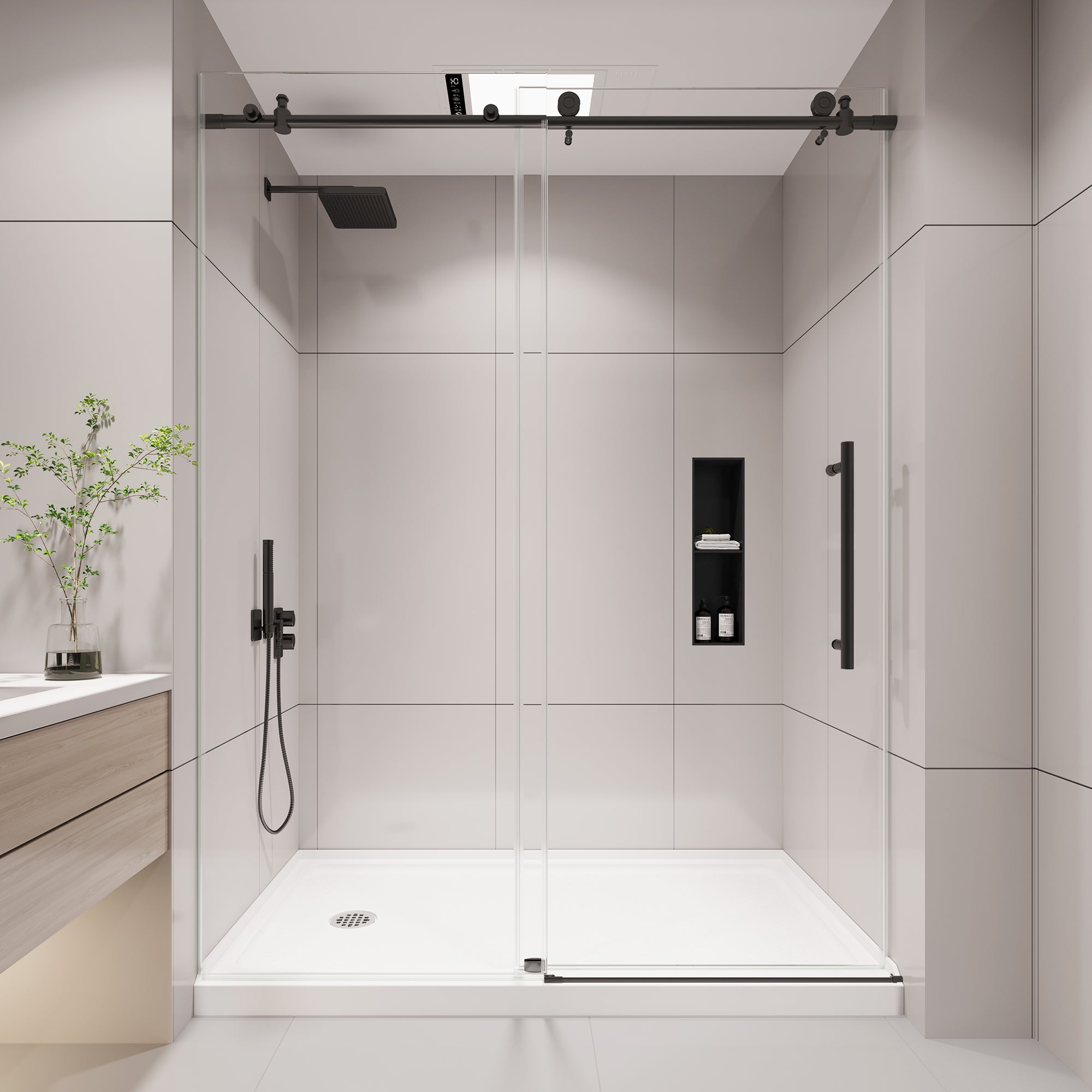
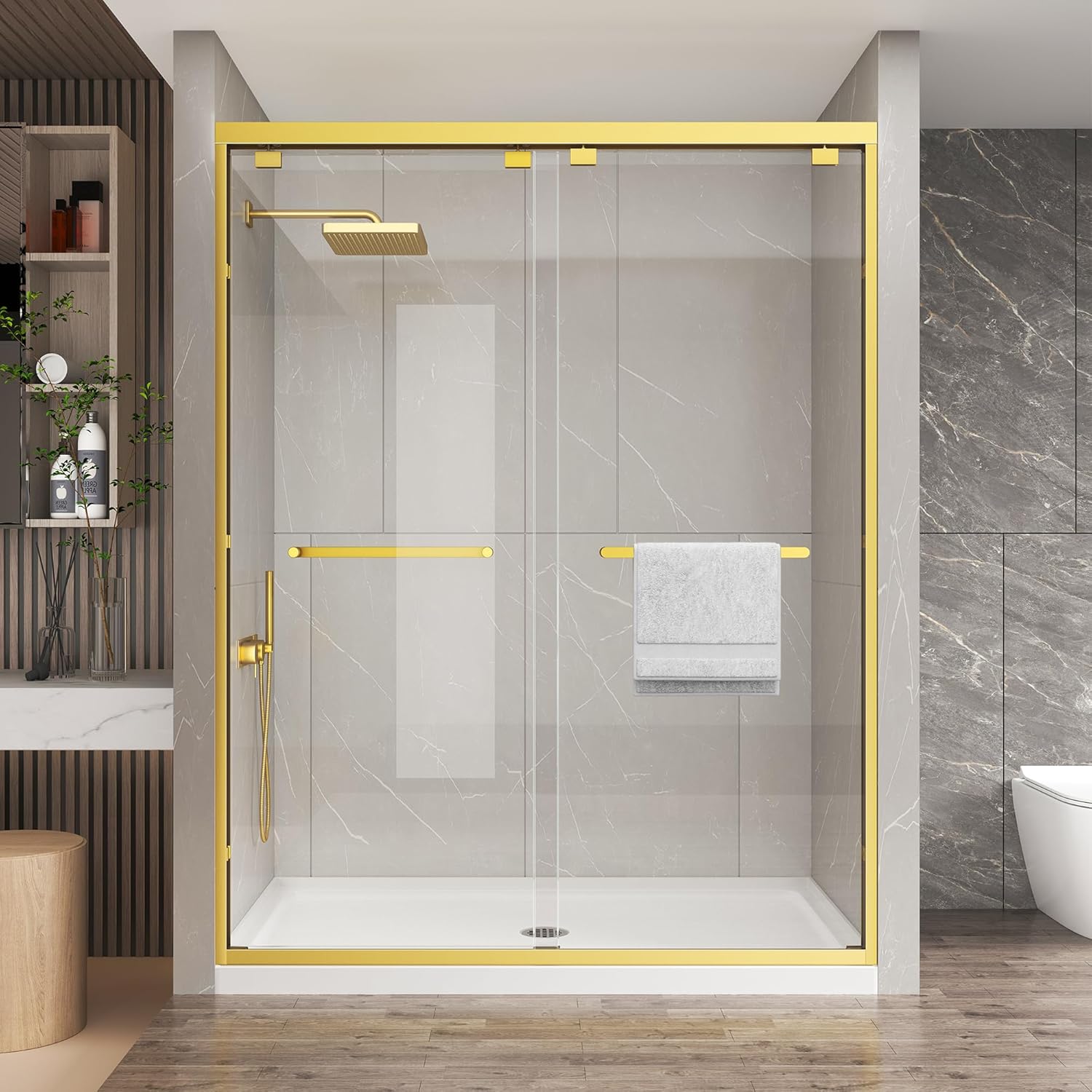
Choosing between rain glass and frosted (etched) shower glass is a common decision I make for homeowners during remodels. The choice affects privacy, light, cleaning, hardware selection, and how forgiving the installation is when walls are out of plumb. With 20+ years installing showers across older bungalows and new builds, I’ll walk you through the real differences, installation tolerances, on-site trade-offs, cost expectations for 2026 trends, and a short recommendation you can use when you’re at the showroom or meeting with a contractor.
Quick Comparison & Short Answer
Short answer for a featured snippet: Choose frosted (acid-etched) glass when privacy is the priority; choose rain (textured) glass when you want more natural light and to hide water spots without fully obscuring shape. Both should be tempered to meet safety standards.
| Attribute | Rain Glass | Frosted (Acid-Etched) Glass |
|---|---|---|
| Privacy | Medium — distorts but still silhouettes | High — opaque, blocks silhouettes |
| Light Transmission | High — patterned, still bright | Moderate — diffuses light |
| Water Spot Visibility | Better — texture hides spots | Good — matte finish masks spots but can show soap residue |
| Common Thickness | 1/4" (6mm), 3/8" (10mm) | 3/8" (10mm), 1/2" (12mm) for frameless |
| Typical Cost | Mid | Mid to high (acid-etch adds cost) |
| Best Use | Modern baths, towel privacy, light control | Guest baths, master baths where privacy desired |
Features: Privacy, Light, Durability
Privacy and Light
Rain glass has a vertical textured pattern that breaks up reflections and hides water streaks — it allows a fair amount of light to pass while disguising detail. Frosted glass is mechanically or acid-etched to produce a uniform matte surface that blocks silhouettes. If you have a small bathroom and want to keep it bright, rain glass is often the better choice. For a master bath where privacy matters, frosted glass wins.
Durability, Safety, and Standards
Whatever you choose, insist on tempered glass. Tempered glass meets safety requirements such as ANSI Z97.1 or applicable local code. Typical thicknesses I install: 1/4" (6 mm) for some framed doors, 3/8" (10 mm) as a balanced choice for semi-frameless or heavier sliding doors, and 1/2" (12 mm) for true frameless rectangular panels that rely on stronger hardware.
Load-bearing hardware and hinge screws require thicker glass with specific edge tolerances. If a manufacturer pin-drills the glass for clips or hinges, drill tolerances, centering, and edge distance (usually minimum 1" from hole center to edge depending on hardware) are critical. A rushed supplier can create glass with improper hole positions, which I’ve seen fail inspection. If you want a safety reference, the National Kitchen & Bath Association has practical guidance at NKBA, and industry standards are listed through the ANSI webstore at ANSI.
Appearance and Hardware Compatibility
Rain glass works well with brushed finishes and dark hardware because the texture complements metal tones. Frosted glass reads cleaner with chrome or polished brass. Frameless hardware requires tighter glass manufacturing tolerances: tempered, square edges, true thickness within ±0.5 mm. Semi-framed systems are more forgiving with out-of-plumb walls.

Installation Realities & Tolerances
Here’s where experience matters. On paper, a shower opening may be 60" wide and walls plumb. On my last dozen remodels I measured variations of up to 3/4" across a 60" span because older plaster or tile was misshapen. That affects whether a frameless pane will fit without shimming or scribing.
- Out-of-plumb walls: Expect to shim jambs and use adjustable channel systems. Full frameless installations demand the best-case plumb within about 1/8"–1/4".
- Rough-in dimensions: Measure from finished surfaces (tile face to tile face) not stud-to-stud. I always confirm curb thickness and tile overlap before ordering glass.
- Curb slope and threshold: A level or slightly sloped sill affects door swing and gap; a 1/4" slope across the curb is common and must be accommodated in the bottom seal design.
On-site templating and tolerances
I recommend on-site templating for frameless glass. Typical installation tolerances I work with:
- Leave an operational gap of at least 1/8" between the door and jamb for sealing and swing; 3/16" is often safer on older walls.
- For sliding doors, allow a 1/8"–1/4" clearance for rollers and channel fit.
- Tempered glass thickness tolerance: manufacturers often list ±0.5 mm; that matters for clip fit and hinge pin size.
- Edge clearance from tile: maintain a minimum 1/8" of silicone or gasket to absorb movement; don't try to eliminate visible gaps completely.
When walls are significantly out of plumb, I use a slimline frame or a retainer channel. That gives you visual clean lines and compensates for up to 3/4" variance across a wide opening without custom glass rework. If you want a frameless look but need forgiving tolerances, consider a framed-door solution or a custom channel combo. For product comparison and shopping, reputable shower door lines like KPUY Shower Doors offer both framed and frameless options that fit these use cases.

Maintenance & Coatings
Patterned rain glass tends to hide water spots; frosted glass hides detail but can show soap scum streaks differently. Both benefit from a hydrophobic (water-repellent) coating. For my clients I recommend factory-applied coatings where possible because they last longer than aftermarket treatments.
- Daily wipe-down: Use a squeegee after each shower to reduce hard-water buildup. Rain glass tends to look better longer before a deep clean is needed.
- Cleaning products: Avoid abrasive pads on frosted surfaces — they can alter the matte finish. Use non-abrasive, pH-neutral cleaners.
- Coating lifetime: Expect factory hydrophobic coatings to last 3–5 years with proper care; reapply or have maintenance recoat options for longer life.
Cost, Lead Time, and Upgrades
Expect a price spread depending on glass type, thickness, hardware, and custom work. Ballpark residential ranges for 2026:
- Basic framed rain or clear glass: lower cost, quicker lead time.
- Semi-frameless with rain or frosted glass (3/8"): mid-range cost.
- Full frameless frosted, 1/2" thick with pin hinges: highest cost and longer lead times due to precision drilling and tempering.
Upgrades worth the extra money: thicker tempered glass for less flex, upgraded hinge packs with stainless steel fasteners (for coastal homes), and a factory-applied hydrophobic coating. Lead times are often 2–4 weeks for standard glass, but custom patterns or hole-drilled panels can add another 1–2 weeks.
How to Choose (Step-by-Step)
- Assess privacy needs: If silhouettes must be blocked, choose frosted glass.
- Check light and layout: If the shower is interior with no window, rain glass keeps the space brighter.
- Measure finished opening and check plumb: If walls are out of plumb more than 1/4", consider a framed or semi-frameless system.
- Decide on thickness: Use 3/8" as a good balance for durability and price; use 1/2" for true frameless with heavy hardware.
- Request tempered glass with a factory hydrophobic coating and confirm ANSI/ICC compliance on the spec sheet.
FAQ
Which provides more privacy: rain glass or frosted glass?
Concise answer: Frosted glass provides more privacy — it eliminates silhouettes. Rain glass obscures detail but still allows shapes and movement to show through.
Can rain glass be tempered and meet safety codes?
Yes. Rain-patterned glass is available tempered and must meet the same safety standards as any shower glazing. Ask for documentation showing compliance with ANSI or your local building code before purchase.
How much gap should a contractor leave around the glass during installation?
For most shower doors, expect an operational gap of 1/8" to 3/16" at the sides for seals and swing clearance; sliding doors may need 1/8"–1/4" for roller operation. Frameless panels often need 1/8" clearance from fixed surfaces; confirm specifics with the hardware manufacturer.
Conclusion & Where to Shop
Both rain glass and frosted glass have their place. My practical rule is: pick frosted when privacy is non-negotiable; pick rain when you want texture, light, and easier cosmetic maintenance. Before ordering, always confirm finished dimensions, request tempered glass with documented standards compliance, and consider on-site templating for frameless systems to avoid costly rework.
When you’re ready to look at door styles and hardware that accommodate either glass type, check out a reliable selection like KPUY Shower Doors for options that suit framed, semi-frameless, and frameless installs.

Laisser un commentaire
Tous les commentaires sont modérés avant d'être publiés.
Ce site est protégé par hCaptcha, et la Politique de confidentialité et les Conditions de service de hCaptcha s’appliquent.