
Kid safety and bathroom design collide in a small space. As a bathroom remodeler with 20+ years on job sites, I see the same questions from parents: which bath screen feels safest, how thick should the glass be, and what hardware actually keeps toddlers from getting hurt? Trends for 2026 favor cleaner, semi-frameless layouts and wet-room panels, but those stylish options must still meet real-world safety and installation needs. This article cuts through marketing and gives straight answers you can use when planning a family-friendly shower or tub area.
Quick answer: Which bath screen feels safest around kids?
Short, direct answer: A short-height, semi-frameless bath screen with tempered glass (minimum 3/16" for tub panels, 1/4" for standalone shower doors), smooth rounded hardware, and a bottom overlap or inward lip that prevents fingers from getting pinched will feel safest around young children. If toddlers are active, a full-height fixed panel (wet-room style) made from thicker tempered glass and anchored to a solid curb/frame provides the most reassurance.
Key safety factors for bath screens
When evaluating safety, consider three realities: material performance, hardware design, and how the screen integrates with the surrounding surfaces. Here are the practical, on-site factors that matter:
- Tempered glass certification: Tempered glass must meet safety standards (look for ANSI/ASTM labeling).
- Glass thickness & span: Larger clear spans need thicker glass to avoid flexing and edge chipping.
- Hinge and seal design: Continuous hinges with concealed fasteners reduce pinch points and snagging.
- Frame support: A bottom rail or continuous vertical post reduces sway and prevents lift-out.
- Edge geometry: Polished or eased glass edges reduce cuts if a panel breaks—tempered glass breaks into small granular pieces.
Standards and references
Confirm the product references ANSI/ASA or ASTM and that installation follows local plumbing and building codes. For design guidance from industry perspectives, see the National Kitchen & Bath Association resources: NKBA. For consumer safety information on glass, consult the U.S. Consumer Product Safety Commission for general guidance: CPSC.
Glass, hardware, and construction details that matter
Below is a practical breakdown you can take to a supplier or contractor. I write specs like this on bids and use them on job sites.
| Feature | Recommended Spec | Why it matters |
|---|---|---|
| Glass Type | Fully tempered safety glass | Breaks into small, blunt pieces; required by many jurisdictions for shower enclosures. |
| Thickness | 3/16" (5 mm) for short tub panels; 1/4" (6 mm) to 3/8" (10 mm) for frameless showers | Prevents flex and reduces edge damage; thicker glass feels more substantial to kids. |
| Hardware | Stainless steel or brass, concealed fixings, continuous hinge option | Strong attachment, corrosion resistance, fewer pinch points. |
| Mounting | Surface-mounted with silicone + mechanical anchors or floor-mounted channel | Allows for installation tolerances and future panel replacement without demolition. |
Edge finish and hinge choices
Edge finish isn’t cosmetic here. I always specify polished edges for frameless panels. For hinges, I prefer spring-loaded pivot hinges with a positive stop at 90° and a soft-close option. On family jobs, soft-close prevents an excited kid from slamming a door and sticking a finger.
Hardware pockets and recessed handles cut down on grabbing and snagging. Avoid low-mounted towel bars on the inside where kids will pull—they create leverage that can damage glass connections.
Installation realities on old houses (real jobsite experience)
Here’s straight talk from the field: older homes rarely have perfect, plumb walls. I measure every wall, and I always plan for out-of-plumb walls and uneven floors. That affects which bath screen will feel stable.
- On a 1920s bungalow I remodeled, the tile face was out-of-plumb by nearly 3/4" over a 7' run. A frameless door would have required custom shims and heavier glass. We used a semi-frameless panel with a trim channel to absorb the variance.
- Rough-in dimensions around tubs can vary; allow a 1/4" to 3/8" fabrication tolerance per panel to avoid on-site cutting that weakens tempered glass edges.
- Curb slope matters. If the curb isn't level, the bottom of a door may not seal—this lets water pool, creating slippery surfaces for kids. I always check curb slope and, if needed, adjust the sill or use a continuous bottom rail.
Because of these realities, I recommend leaving a small, intentional gap for adjustment and using field-adjustable hinges and seal profiles. Those details keep the assembly safe and serviceable over time.
Design options that feel safer around kids
Not every bathroom can handle a full wet-room or high glass. Below are commonly used options and why they appeal to families.
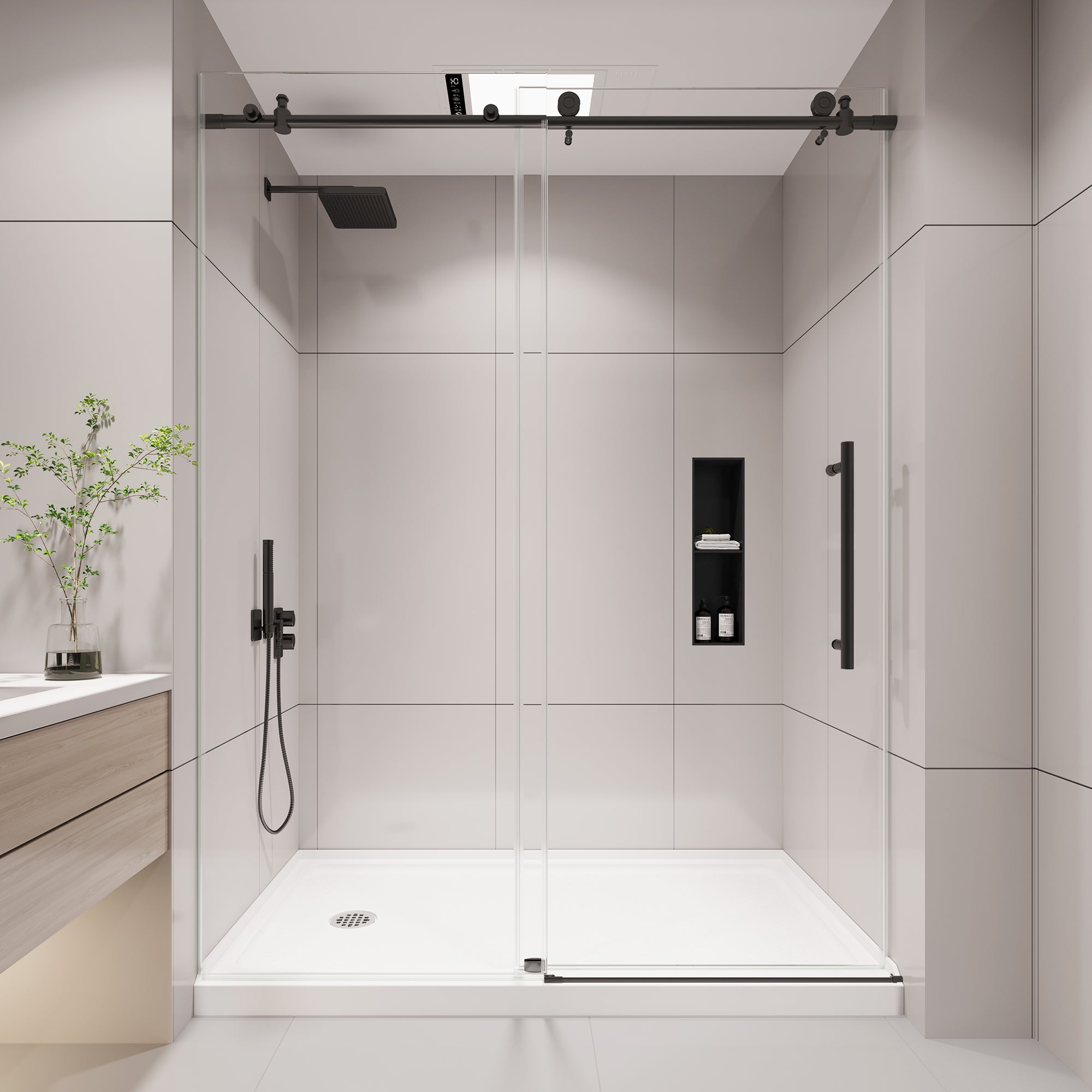
- Fixed, full-height panel (wet-room style) — Best if you want minimal hardware and no swinging doors. Use 1/4"–3/8" tempered glass and fully anchored top clips. This is the quietest, most solid feeling option for parents who worry about fingers and running kids.
- Semi-frameless hinged panel over a tub — A common retrofit for tub-to-shower conversions. The frame supports the glass along the bottom and one vertical edge; hinges mounted to tile or solid stud reduce movement.
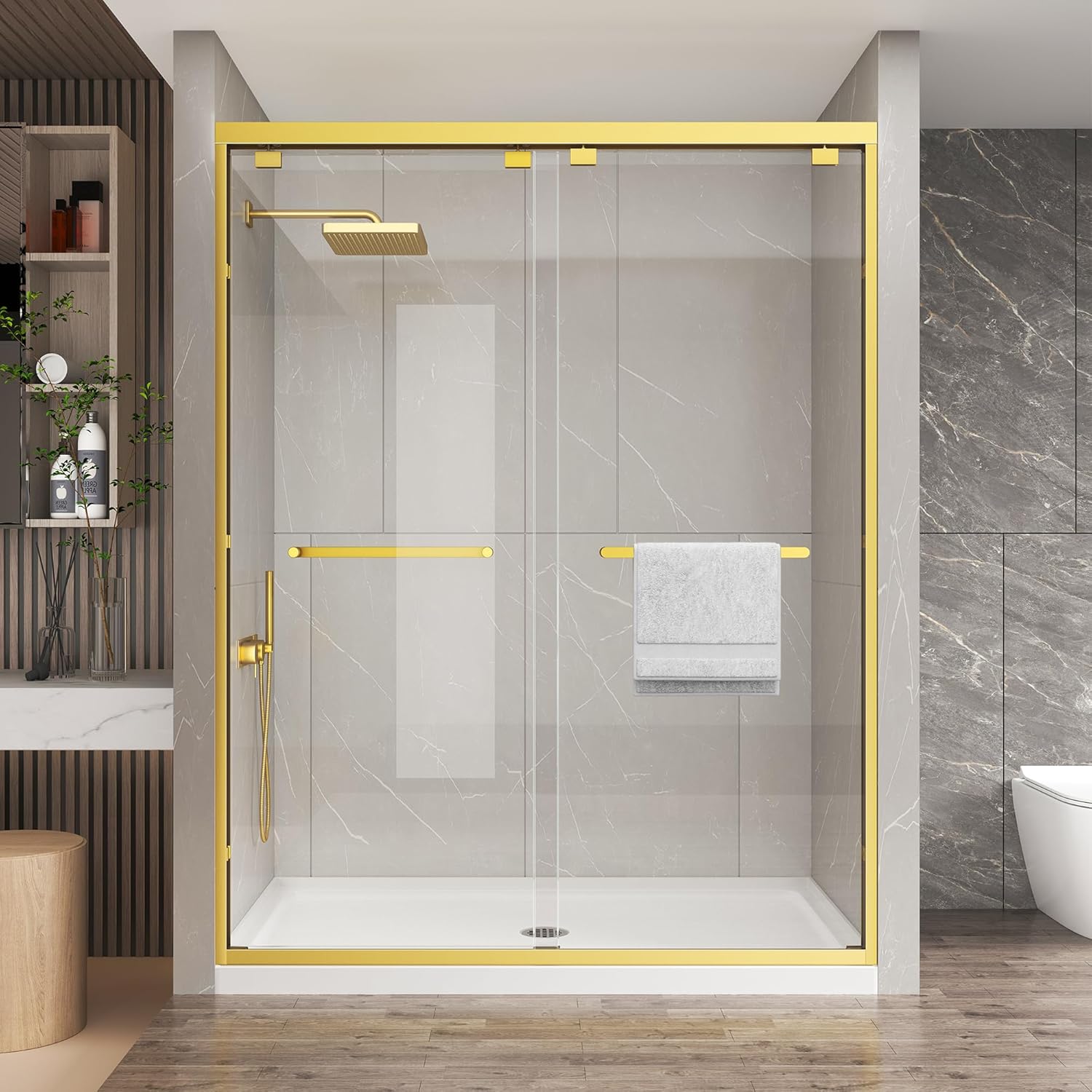
- Framed sliding screen — Adds a bottom track that prevents water migration and provides a physical barrier. Easier for tight spaces and less dependent on perfectly plumb walls.
Each option needs appropriate glass thickness and hardware. For small tubs where kids climb in and out, a shorter panel height (about 52"–56") with an inward-overlap keeps hitting heads and pinches to a minimum while still containing splashes.

Practical safety checklist before you sign off
Use this on-site checklist when reviewing a proposal or inspecting an installation. I hand this to homeowners when I walk a job with them.
- Verify glass labeling: Tempered marking and thickness on the factory edge or documentation.
- Confirm glass thickness: 3/16" minimum for tub panels; go thicker for larger spans.
- Inspect hinge fasteners: Bolts should hit solid substrate or use proper anchors rated for the load.
- Test operation: Soft-close, sweep of door, and check for pinch points at common reach heights for children.
- Check seals and drips: Bottom seals, drip rails, and overlaps should prevent water from pooling on the floor where kids run.
- Confirm tolerance gaps: Look for consistent 1/8"–3/16" gaps where required to accommodate movement without binding.
FAQ — People Also Ask
Is tempered glass safe for kids in the bathroom?
Yes. Tempered glass is the safest glass option for bathrooms because it fractures into small, blunt pieces rather than sharp shards. Make sure the product carries a tempered glass label and is installed with proper edge protection and hardware to reduce the chance of breakage from impact.
Should I choose framed, semi-frameless, or frameless with kids?
For families with young children, I usually recommend semi-frameless or fixed panels. They combine the rigidity of a frame with a cleaner look and fewer exposed gaps than fully framed sliding doors. Frameless can look great but often requires thicker glass and perfectly plumb conditions—something older homes may not provide without costly prep work.
How high should a tub screen be to keep water in and feel safe?
A tub screen height of about 52"–56" usually hits the balance point: tall enough to contain splashes when adults bathe children, but low enough to reduce tipping risk when kids stand on the tub edge.
Final notes and where to look
Designing a bath screen that feels safe around kids is as much about robust details as it is about style. Focus on certified tempered glass, proper thickness, hardware that eliminates pinch points, and an installation that accounts for out-of-plumb walls and curb slope. If you want to explore family-friendly fixed or panel solutions, check professional collections that list specs and installation options—products like Bathroom Screens often include the tempered glass, thickness, and hardware details you'll need to compare.
When planning, ask your contractor to show test-fit conditions, hinge attachment points, and glass labels. That on-site verification is what separates good-looking work from safe, lasting installations.
Ready for the next step? Review product specs, insist on tempered glass labels, and schedule a pre-install inspection to confirm wall plumb and curb level—those two checks alone will keep your installation safe for kids for years.

Hinterlasse einen Kommentar
Alle Kommentare werden vor der Veröffentlichung geprüft.
Diese Website ist durch hCaptcha geschützt und es gelten die allgemeinen Geschäftsbedingungen und Datenschutzbestimmungen von hCaptcha.