
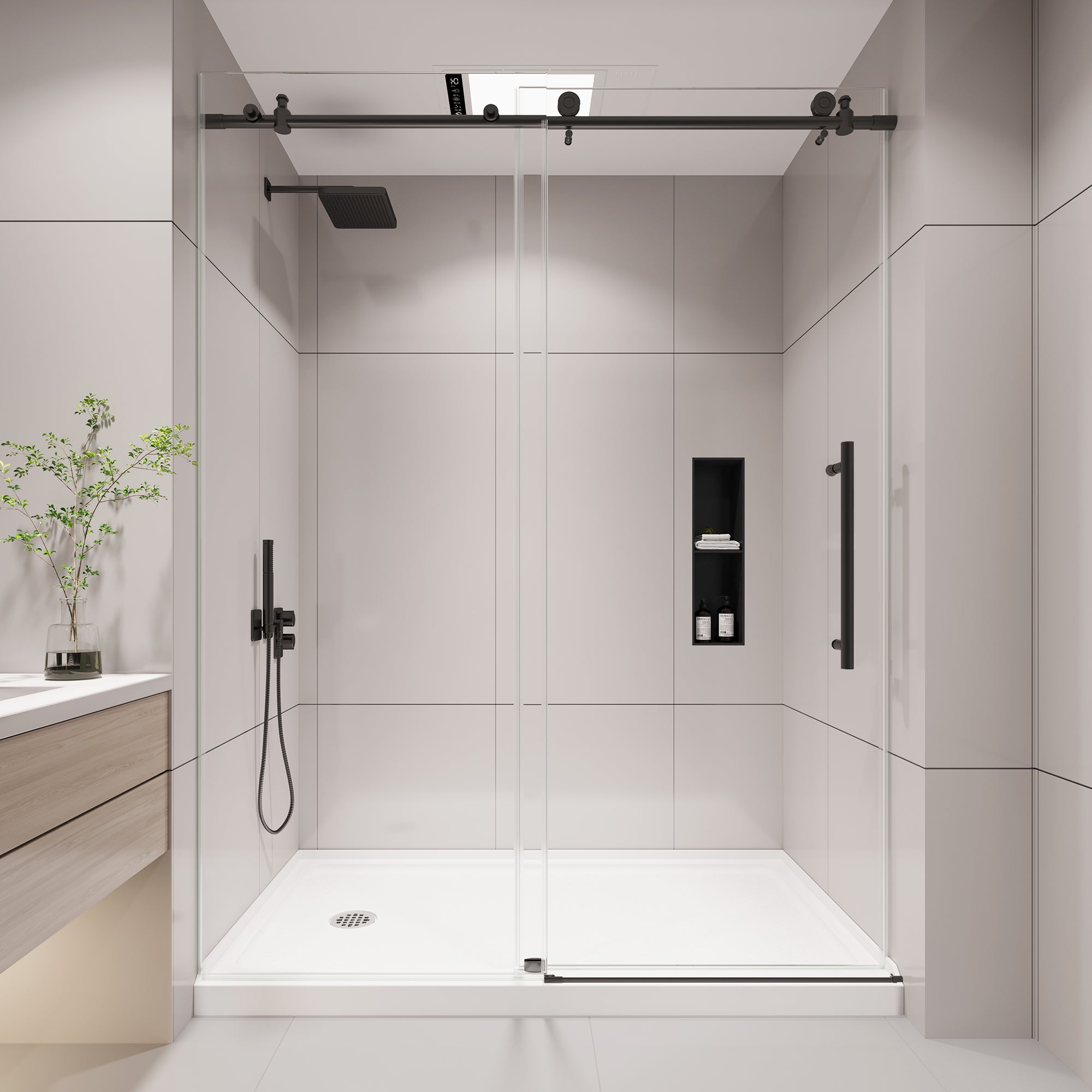
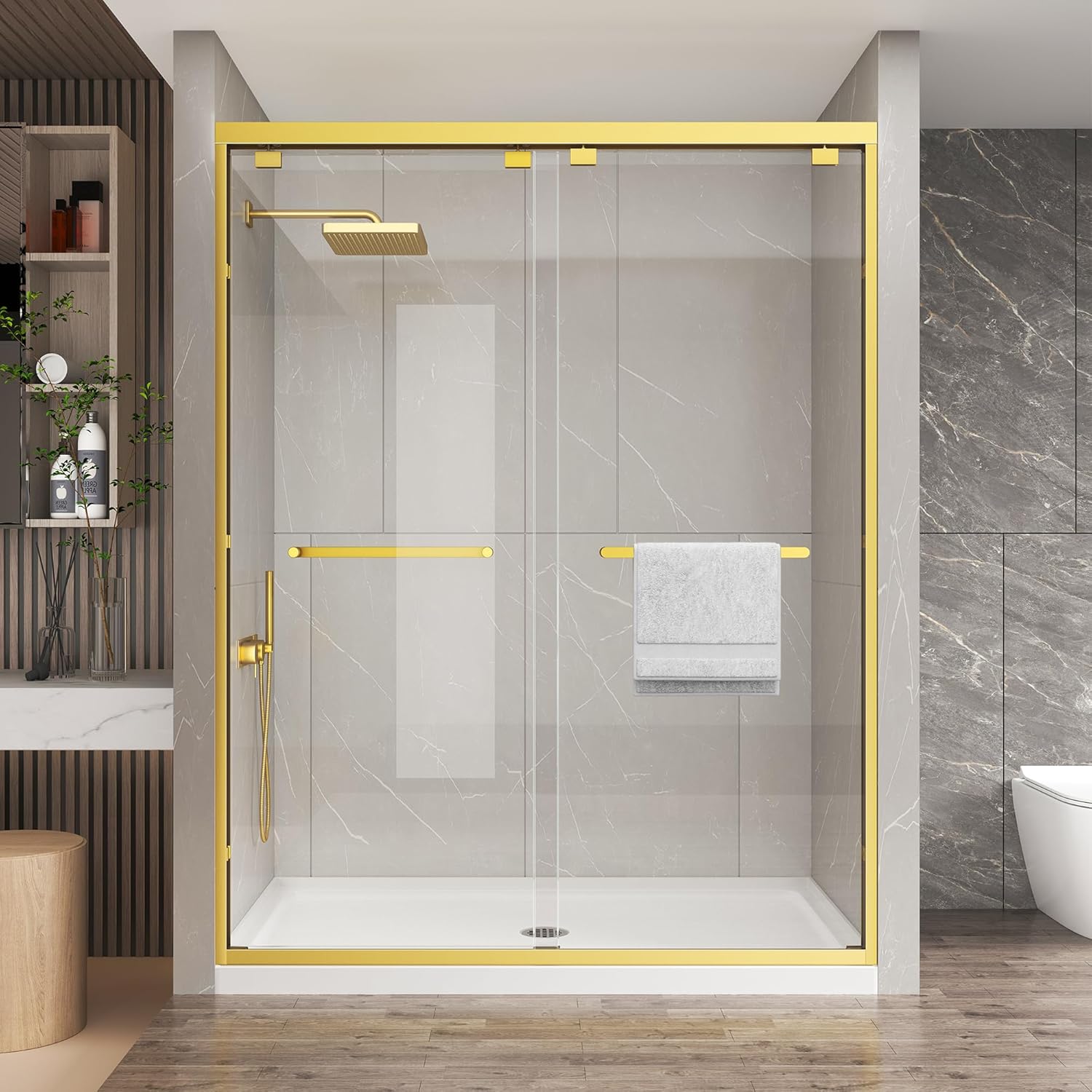
Curbless showers are one of the top interior design trends for 2026 — homeowners want clean sightlines, universal access, and tile-that-reads-like-continuous-flooring. But when the design brief includes a sliding shower door, contractors and designers hit a practical problem: how do you keep water contained without a curb while also keeping a smooth, accessible threshold? As a bathroom remodeler with more than 20 years on the tools, I’ll lay out when a sliding door will work, what details you can’t skip, and how to avoid the common field headaches that turn a beautiful curbless shower into a leak problem.
Quick Answer
Short answer: Yes — but only with specific design controls. A sliding door can work on a curbless shower when you combine a recessed bottom track or low-profile threshold, correct floor slope to a linear drain, properly designed overlapping door panels, and tempered glass rated for exterior wet locations. If any one of those elements is missing, expect water to escape the shower area.
Why Homeowners Choose Curbless
Curbless showers are chosen for three main reasons: accessibility, aesthetics, and easier cleaning. The trend in 2026 is toward wet-room-inspired layouts, larger tiles that continue into the bathroom, and a spa-like, uncluttered look. But the trade-off is water containment: without a curb acting as a physical barrier, the project relies on slope, drains, and door design to control splash and flow.
Designers often pair curbless installations with a linear drain and a single-plane slope of 1/4" per foot toward the drain. That slope is critical — too shallow, and water pools; too steep, and the floor reads wrong underfoot and complicates tile layout.

Can You Use a Sliding Door?
From a practical standpoint, there are two sliding-door approaches that can work with curbless showers:
- Recessed bottom track (flush-mounted) — a shallow channel in the tile floor that houses the bottom guide and captures the door sweep. This gives a near-flat threshold and is my preferred method when tile and substrate allow the cut.
- Low-profile threshold with positive drainage — a thin sill that projects minimally (often 1/4"–3/8") and turns water back into the shower area toward the drain. This is common when substrate depth or structural framing prevents a recessed channel.
A standard center-guided or bypass sliding door that sits entirely on the finished floor surface without a guide will almost always let water escape. You need either an actual channel, a reliable bottom sweep that engages the floor, or a sill that reliably redirects water.
Design & Installation Details That Matter
Here are the design variables that determine success. I list them in the order I check on a job before committing to a sliding solution.
- Drain type and slope: Linear drains at the edge are better for curbless sliding doors. The floor should slope at least 1/4" per foot toward the drain. Test water by running a hose before the glass goes in.
- Bottom track configuration: Recessed aluminum channels set in mortar or Schluter-Kerdi are most reliable. The channel needs to sit perfectly level and be integrated into the waterproofing plane.
- Glass overlap and seals: Sliding doors must overlap panels by at least 1–1.5" and include bottom sweeps and vertical seals. Without overlap, wind or shower spray will force water past the jamb.
- Tempered glass thickness: Most sliding shower doors for curbless conditions are 3/8" (10mm) or 1/2" (12mm) tempered glass. Thicker glass affects roller selection and header capacity.
- Header & roller capacity: Expect heavy-duty rollers for 1/2" glass and a secure header anchored into blocking. Rollers need adjustment range to square out out-of-plumb walls.
- Waterproofing continuity: The bottom channel must sit inside the waterproofing membrane. Any gap equals a path for water behind the flooring.
Installation tolerances matter: I won’t accept more than 1/4" out-of-plumb over 48" when planning a frameless sliding door. If the wall is worse, add a shimmed jamb and a return or change the door style. Sliding hardware typically has +/- 3/16" adjustment; you need to plan for that.
Real Jobsite Experience
On real houses — especially older ones — walls are seldom plumb and floors aren’t perfectly flat. I’ve remodeled Brooklyn brownstones and suburban Ranches where the tile subfloor was out by 5/8" over 8 feet. That’s the difference between a door that glides and one that drags and gaps.
Concrete note: when we cut a recessed track into a mortar bed over a plywood mudset, we always leave 1/8" of adjustment on either side of the channel for final glass fit. In one job, the installer forgot to allow the tile-to-glass clearance and we had to remove the whole sill and re-set the channel — three days of lost time and a frustrated homeowner. That’s why I always mark glass height allowances on the rough-in and confirm with a dry-fit before sealing the waterproofing.

Product Choices & Specs
When specifying sliding doors for curbless showers, here’s what I write on my submittal sheet:
- Glass: Tempered safety glass conforming to ANSI Z97.1, 3/8" or 1/2" thickness. Heat-treated flat glass only.
- Hardware: Top-hung or top-rolled system with concealed bottom guide. Stainless steel or anodized aluminum finish for corrosion resistance in wet environments.
- Track: Recessed channel integrated with waterproof membrane. Channel depth and width must match the door bottom guide. Provide manufacturer templates for tile cutouts.
- Seals: Replaceable bottom sweep and vertical edge seals rated for wet areas.
For product selection, I frequently specify pre-engineered shower door systems rather than custom frameless panels when dealing with curbless thresholds — the integrated tracks and sweeps are engineered to control leakage. If you want a reliable ready-made option, check out KPUY Shower Doors for hardware systems I’ve used as drop-in solutions on similar jobs.
Pros & Cons
| Item | Sliding Door on Curbless | Notes |
|---|---|---|
| Accessibility | Good | Sliding doors preserve the no-step entry when track is flush or minimal |
| Water containment | Conditional | Depends on channel/seals and drain capacity |
| Maintenance | Medium | Bottom tracks can collect grime; choose removable guides |
| Cost | Moderate–High | Recessed channels and extra waterproofing add labor |
Step-by-Step Installation Checklist
- Confirm substrate depth and tile thickness before ordering channel and glass.
- Verify floor slope to drain — perform a water test.
- Order tempered glass with specified overlaps and cutouts; include 1/8"–1/4" field adjustment allowance.
- Install waterproofing (sheet or liquid-applied) and set recessed channel into mortar or manufacturer-specified setting bed.
- Tile to the channel edge; grout and cure fully.
- Install hardware and hang glass; adjust rollers and bottom guides to maintain consistent gap and sweep engagement.
- Apply final vertical seals and test again with a heavy spray for at least 10 minutes to confirm no leakage.
Pro Tip: When I’m on site I do the “hose test” twice: once after the channel and tile are done and again after glass is installed. If the water goes where it shouldn’t, you catch it before trim and caulk are applied.
Frequently Asked Questions
Will a sliding door leak more than a swinging door on a curbless shower?
Not necessarily. A swinging door can seal better because it compresses against stops, but a sliding door with a properly designed recessed channel and bottom sweep will contain water equally well. The key factors are drain capacity, overlap between panels, and continuous waterproofing. If you can’t install a recessed channel, a slim threshold with a positive slope plus proper seals is the next best option.
What glass thickness is required for a sliding shower door?
Most installers use either 3/8" (10mm) or 1/2" (12mm) tempered glass for sliding shower doors. Thicker glass increases hardware load and may require heavier-duty rollers and a reinforced header. All shower door glass must meet safety standards such as ANSI Z97.1; check your local code and the manufacturer’s recommendations.
Are there code or guidance resources I should read?
Yes. For safety and design guidance consult the National Kitchen & Bath Association (NKBA) resources on wet-area design and accessibility (NKBA). For glass safety standards and building code references, the International Code Council is a primary source for code interpretations (ICC).
Wrap-up & Where to Look
If your goal is a seamless, accessible curbless shower with a sliding door, plan for the details up front: recessed channel or low threshold, linear drain and correct slope, tempered glass (3/8"–1/2"), and hardware rated for wet installations. On the jobsite, expect to correct out-of-plumb walls and allow glass sizing tolerances — a field allowance of 1/8"–1/4" on height and width saves reinstall headaches.
For homeowners looking for ready-made systems that integrate tracks and sweeps, a quality selection of sliding shower doors can simplify the process — take a look at KPUY Shower Doors for options that are commonly used in curbless installations.
If you want a site-specific recommendation, give me the rough dimensions, tile thickness, and whether you plan a linear drain or center drain. With those numbers I can tell you whether a sliding door is a safe, reliable choice for your curbless shower or if an alternate door style will serve you better.

Hinterlasse einen Kommentar
Alle Kommentare werden vor der Veröffentlichung geprüft.
Diese Website ist durch hCaptcha geschützt und es gelten die allgemeinen Geschäftsbedingungen und Datenschutzbestimmungen von hCaptcha.