
Wet Room vs Walk-In Shower: Drainage, Glass Panels, and Layout Differences
Wet room and walk-in shower layouts solve different problems. A wet room gives you an open, fully water-managed space with the floor doing most of the work. A walk-in shower keeps water contained w...
Square Shower Base Buying Mistakes: Drain Location, Door Fit, and Space Planning
Square shower base buying mistakes usually show up after the tile is in and the door is hanging: the drain misses the rough-in, the curb lands where the door needs to move, or the footprint fits on...
Black Frame Shower Door vs Frameless Glass: Which Look Fits Your Remodel?
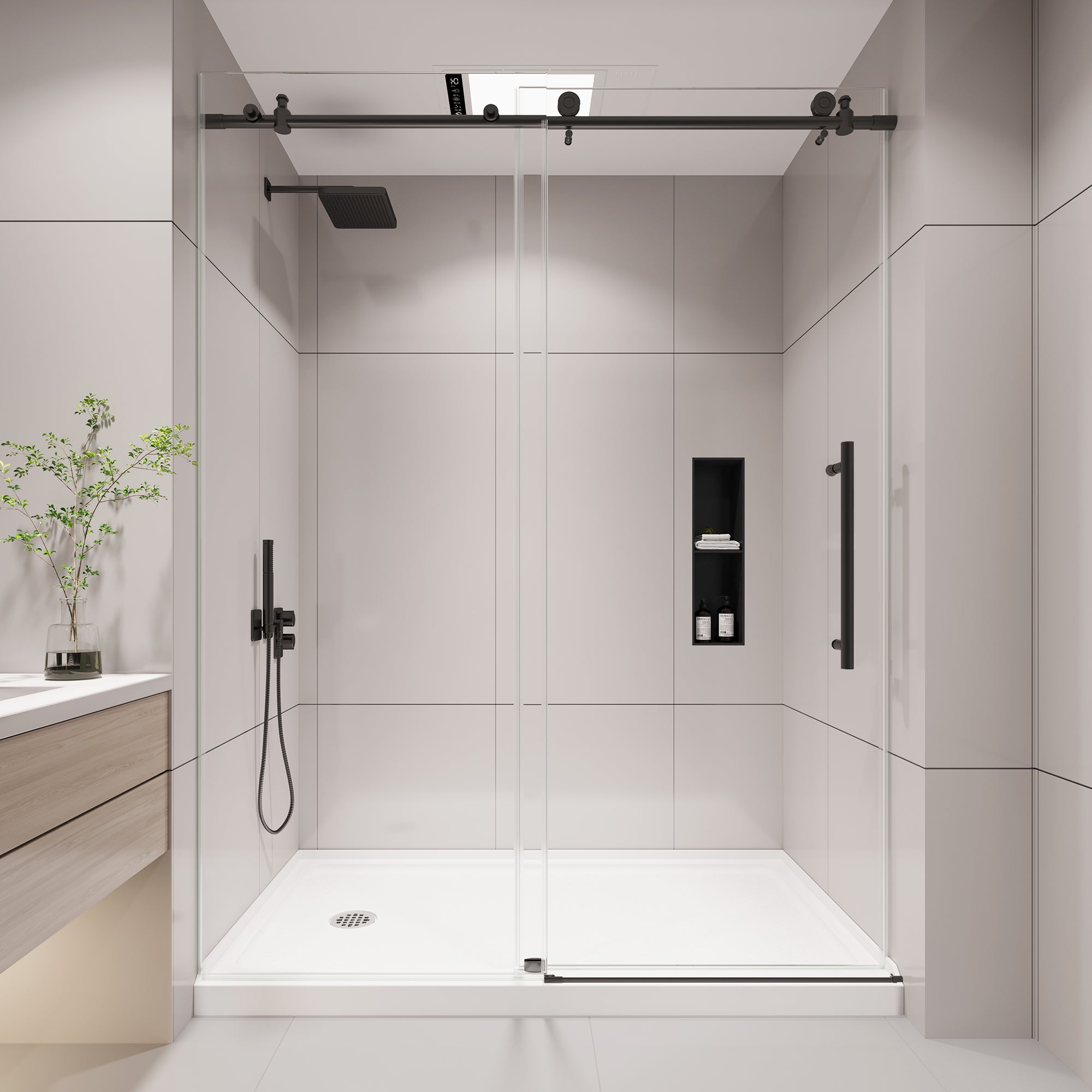
Black frame shower doors and frameless glass can both fit a remodel, but they solve different problems. If the room is tight, the black frame can give the opening more visual structure and hide min...
Door and Panel Shower Doors: When a Fixed Panel Works Better Than a Full Door
In a tight bathroom remodel, a fixed shower panel often works better than a full door when swing clearance is limited, the opening is wide enough to control splash, or the wall layout makes a hinge...
Water Pooling Near the Shower Entrance: Is It the Base, Drain, or Door Sweep?
Water pooling near the shower entrance usually means one of three things: the base is not sending water back toward the drain, the drain location or slope is not doing its job, or the door sweep is...
Standard Shower Door Sizes: Width, Height, and Opening Space Explained
Standard shower door sizing starts with the finished opening, not the old shower curtain rod or the rough framing behind the walls. If the opening is too narrow, too short, or out of plumb, a door ...
Bottom Track vs Low-Threshold Sliding Shower Doors: Which Is Easier to Use?
In a real remodel, the question is not just which door looks cleaner. It is which one feels easier every day, fits the finished opening, and does not create a clearance problem at the vanity, toile...