
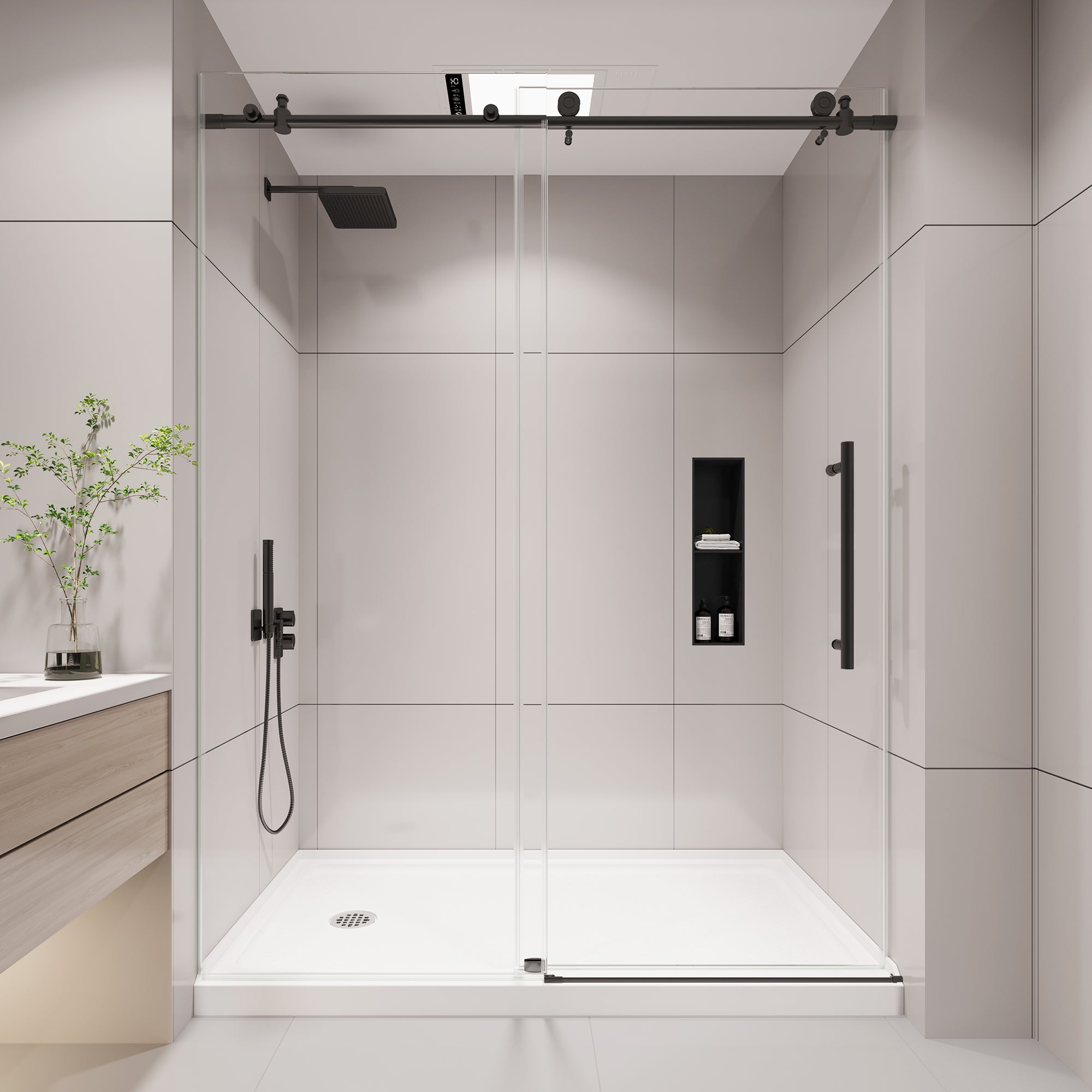
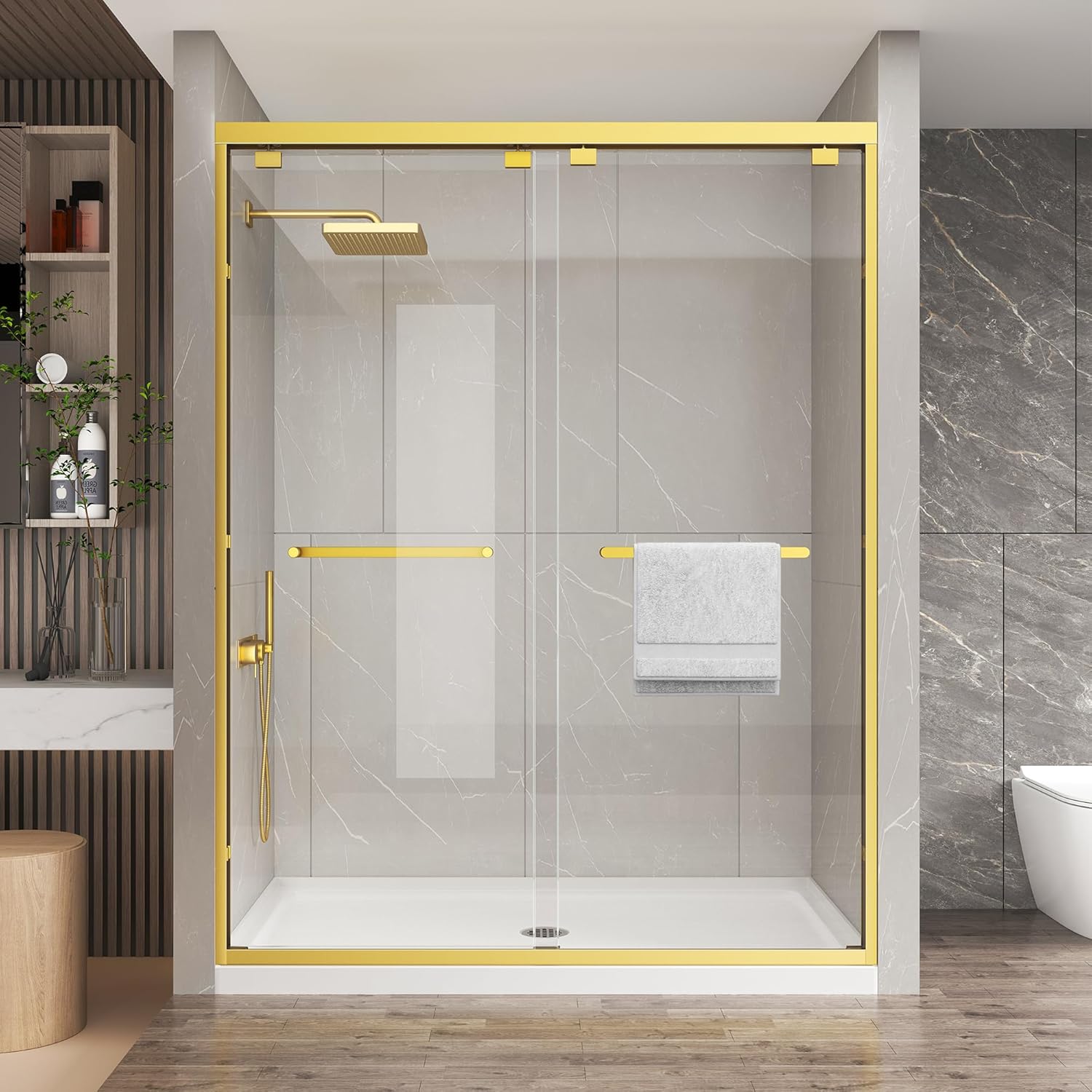
Black frame shower doors and frameless glass can both fit a remodel, but they solve different problems. If the room is tight, the black frame can give the opening more visual structure and hide minor wall imperfections better. If you want the enclosure to feel lighter and more open, frameless glass usually does that better. The right choice depends on your finished opening, wall plumb, cleaning tolerance, and how much visual contrast you want in the room.
The Short Answer
If you want a remodel to feel more open and bright, frameless glass usually fits better. If you want stronger visual definition, more contrast, and a look that is forgiving of slight wall irregularities, a black frame shower door is often the safer design choice. As a rule of thumb: frameless works best when the opening is accurate and the walls are close to plumb; black frame works best when you want structure, contrast, and a little more tolerance for real-world remodel conditions.
Which Look Fits Your Remodel
The decision is not just about style. It is also about how the door sits in the room, how much glass you want to see, and how much installation forgiveness you need. In older homes, the opening often measures differently at the top, middle, and bottom. Tile thickness, trim details, and out-of-plumb walls can change the final fit more than homeowners expect.
A frameless enclosure usually feels lighter because the glass and hardware do most of the visual work. That makes it a strong option for bathrooms that already have clean tile lines, enough natural light, and a careful remodel with accurate measurements. A black frame enclosure adds visible lines around the opening, which can help the shower read as a defined feature instead of blending into the wall.
If your bathroom is small, a frameless look can help the room feel less crowded. If the room is busy with dark flooring, bold tile, or black plumbing fixtures, the black frame can tie the whole layout together without feeling disconnected.
One practical caution: a door can fit the opening and still feel wrong if it blocks the vanity path, crowds the toilet, or swings into a doorway. Measure the room, not just the shower opening.
Common remodel factors that push the choice one way or the other
- Finished opening accuracy: frameless usually needs tighter measurement discipline.
- Wall plumb: black frame layouts can be a little more forgiving of slight variation.
- Visual weight: frameless looks lighter; black frame looks more defined.
- Cleaning visibility: black finishes show mineral spots and soap residue differently than clear hardware.
- Hardware presence: frameless relies more on hinges, clamps, and precise alignment.
- Room size: frameless tends to help compact bathrooms feel less boxed in.
- Tile contrast: black frame stands out more against white or light tile.
For homeowners comparing enclosure styles in a broader remodel, the most practical starting point is the overall shower opening and the room layout. If you are still deciding between multiple enclosure types, the full KPUY Shower Doors collection is a useful place to compare styles once the measurements are clear.
Black Frame vs Frameless at a Glance
| Option | Best for | Limitations | Remodel note |
|---|---|---|---|
| Black frame shower door | Contrast-focused bathrooms, tile with strong lines, remodels that need more visual structure | More visible framing, finish spots may stand out, less of an airy look | Helpful when the room needs definition or the walls are not perfectly square |
| Frameless glass | Open-feeling bathrooms, lighter visual design, homeowners who want the glass to disappear more | Requires careful measurement, plumb walls, and good hardware planning | Best when the opening is accurate and the surrounding finishes are already clean and consistent |
A black frame does not automatically mean a better fit, and frameless does not automatically mean a better look. The better choice is the one that matches your opening, your room, and the amount of installation tolerance your remodel actually gives you.

What to Check Before You Order
This choice becomes easier once the opening is measured correctly. Start with the finished opening, not the old door label and not the rough framing. Tile, backer board, and finish trim all change the final dimension. If you measure before the wall finish is complete, you can end up with a door that is slightly too wide, too narrow, or out of alignment with the curb and wall lines.
On site, the top, middle, and bottom width are not always the same. The left and right heights may also differ. That matters more on frameless glass because the margins are tighter. A black frame door can sometimes absorb a small amount of visual irregularity better, but it still needs a sound, square opening.
Check these items before you choose the style:
- Finished opening width at the top, middle, and bottom
- Finished height on both sides of the opening
- Wall plumb from curb to top of tile
- Tile thickness and how it changes the finished wall plane
- Door swing clearance near the toilet, vanity, and towel bars
- Hardware clearance for hinges, handles, and glass edges
- Whether the curb or threshold is level enough for the selected enclosure
Older bathrooms often reveal a detail only after the old enclosure comes out: the wall may lean just enough that a frameless panel needs adjustment, or a black frame may sit straighter visually because the frame line gives the eye something to follow. That is not a reason to hide bad preparation. It is a reason to measure carefully before the order is placed.
- Measure the finished opening after wall tile is complete, or after all finish layers are known.
- Record width at the top, middle, and bottom of the opening.
- Record height on the left and right sides.
- Check plumb on both walls and note any lean.
- Verify the curb or threshold is sloped to move water back into the shower.
- Confirm there is clearance for the door path, handle reach, and nearby fixtures.
- Review hardware mounting locations for stud backing or solid support.

Design and Maintenance Tradeoffs
The visual difference between black frame and frameless glass is obvious in photos, but it is worth thinking about how the shower will live in the room every day. Frameless glass tends to show the room behind it more clearly, which can make a small bathroom feel less closed in. It also puts more attention on the tile and fixtures, so the rest of the room needs to be visually resolved.
Black frame shower doors create a stronger outline. That can work well when the vanity mirror frame, faucet finish, lighting, or tile grout lines already lean in that direction. It can also help balance a bathroom with white walls and pale tile by giving the shower a sharper edge.
From a maintenance standpoint: clear glass and black frame hardware both need regular wiping, but they age differently in everyday use. Clear glass shows water spots. Black hardware can show mineral residue and soap film more clearly along edges and joints. Neither finish removes cleaning work. The difference is mostly in what stands out first.
If the bathroom is used by multiple people, a frameless enclosure may be easier to visually integrate with mixed finishes, while a black frame can help define the shower zone in a room that lacks strong architectural lines. If the bathroom already feels narrow, a heavy frame can make the enclosure look more prominent than intended. If the space feels unfinished, the frame may actually help it look more intentional.
For a design-first remodel where the enclosure itself is part of the room’s contrast plan, black shower doors can be a practical fit. If the goal is to keep the shower visually quiet, frameless glass usually does that job better.
One wrong-choice problem to avoid: picking frameless glass for a wall set that is visibly out of plumb can lead to uneven gaps, frustrating adjustments, and a final look that feels off even if the glass technically fits. Picking a black frame without checking finish coordination can create a shower that feels too heavy for the room.
Frequently Asked Questions
Do black frame shower doors make a bathroom look smaller?
They can, but not always. Black frames add visual lines, which makes the shower more noticeable. In a small bathroom, that can either define the space or make it feel busier depending on the tile, lighting, and room layout. If the rest of the room is light and open, the frame may be a clean contrast rather than a visual burden.
Is frameless glass harder to install than a black frame shower door?
Usually, yes, because frameless glass depends more on accurate measurement, sound wall support, and close attention to plumb and level conditions. A black frame can sometimes tolerate a little more visual variation because the frame masks minor irregularities. That said, both styles need proper support, correct hardware placement, and a finished opening that matches the product design.
What should I measure first in a remodel: the old door or the finished opening?
Measure the finished opening. The old door can be misleading because the new tile thickness, wall build-up, curb height, and finish trim can all change the final dimensions. A shower that measured one way before demolition may land differently after the walls are rebuilt. Use the completed wall surfaces whenever possible, especially if you are choosing frameless glass.
Final Takeaway
Use black frame shower doors when you want more definition, stronger contrast, and a bit more visual forgiveness in a real-world remodel. Use frameless glass when the opening is accurate, the walls are close to plumb, and the goal is a lighter, more open feel. The right answer is usually found by measuring the finished opening, checking swing clearance, and thinking through how the shower fits the room, not just how it looks in a close-up photo.
If you are ready to narrow the style after measuring, start with the enclosure type that matches the room first, then compare details inside the Frameless Shower Doors collection or the Black Shower Doors collection based on the look and installation tolerance your remodel allows.

Leave a comment
All comments are moderated before being published.
This site is protected by hCaptcha and the hCaptcha Privacy Policy and Terms of Service apply.