
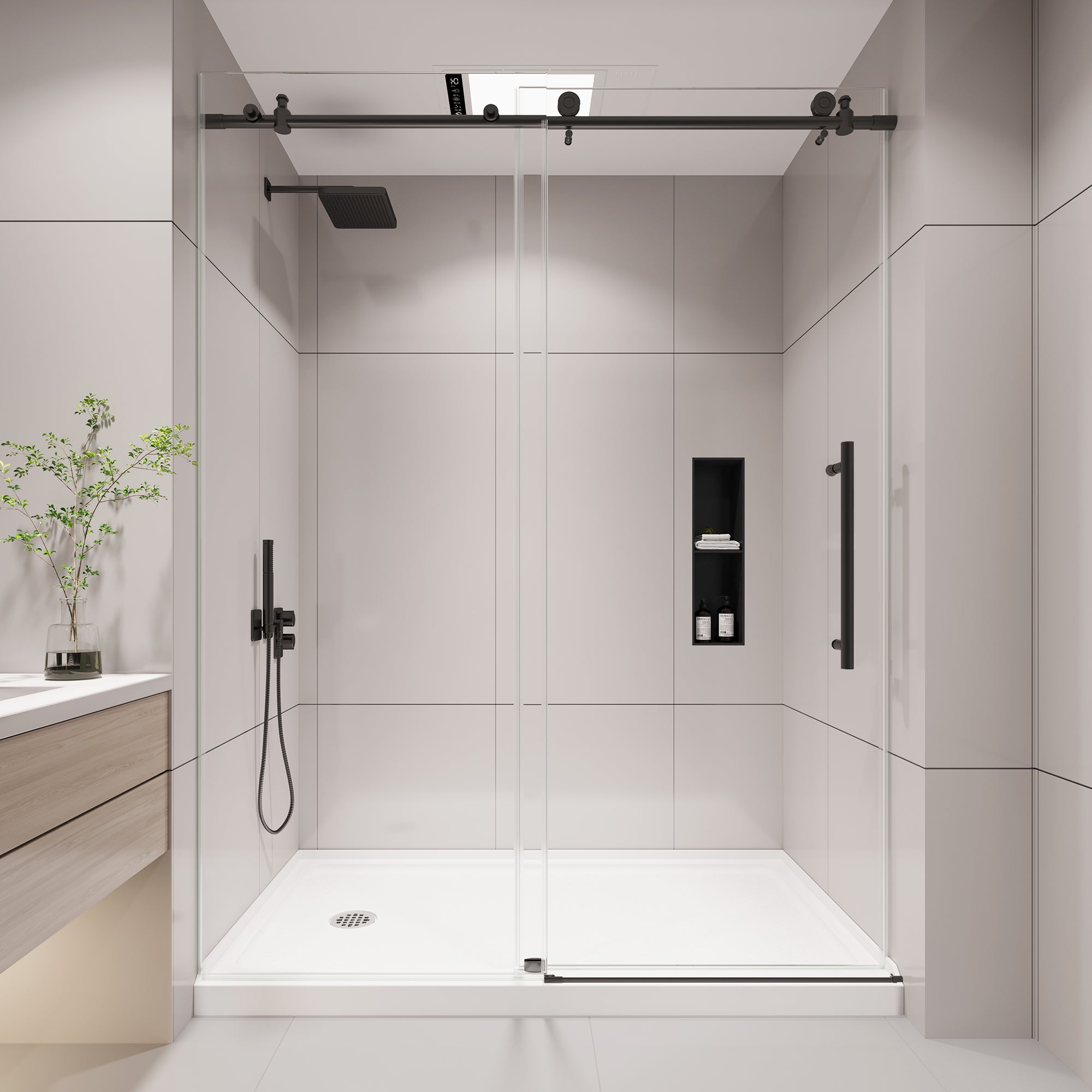
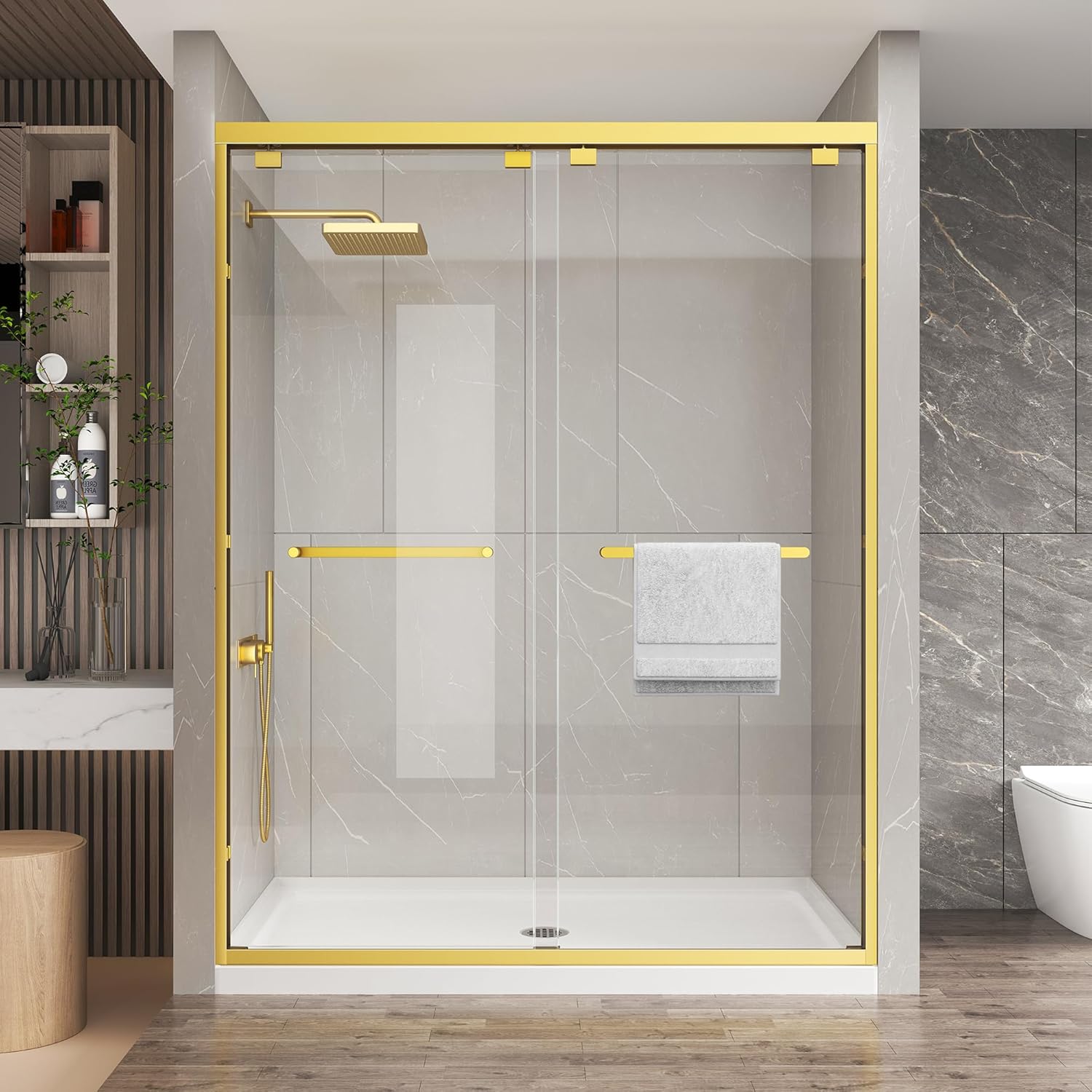
Matte black hardware changes the whole read of a shower enclosure. In a bathroom with white tile, light wood, or simple concrete-look finishes, a sliding shower door can look intentional instead of purely functional. The catch is that the hardware finish should match the room style, the layout, and the amount of visual contrast you actually want, not just the latest trend.
In 2026 remodel work, matte black is still popular because it gives a clear outline to the shower without making the room feel busy. It works especially well in spaces where the door needs to feel anchored, such as an alcove shower, a compact primary bath, or a guest bath with clean lines. The best match depends on the bathroom style, the tile color, the amount of natural light, and how much the room needs to feel open.
The Short Answer
Sliding shower doors with matte black hardware match best with modern, transitional, industrial, farmhouse, and minimalist bathrooms. They work especially well when the room already has black fixtures, clean tile lines, or strong contrast between light walls and darker trim. The style fit is strongest in alcove showers where space-saving function matters and the hardware can act as a visual frame.
Bathroom Styles That Match Best
Matte black hardware is flexible, but it is not neutral in the same way chrome or brushed nickel can be. It creates a defined edge. That is useful in some bathrooms and too heavy in others. The style has to support that visual weight.
Modern and minimalist bathrooms
This is the easiest match. A sliding shower door with matte black hardware fits a bathroom that uses flat surfaces, simple tile, and limited ornament. In these rooms, the hardware outlines the shower without fighting the design. White subway tile, large-format porcelain, and low-profile vanities all work well with the finish.
Transitional bathrooms
Transitional spaces often mix traditional layout with cleaner details. Matte black can bridge that gap if the rest of the room stays restrained. Think soft gray tile, warm wood vanity finishes, and straightforward plumbing fixtures. The door reads current without forcing the room into a full modern look.
Industrial-inspired bathrooms
Matte black hardware belongs naturally in industrial work. It pairs well with darker tile, concrete textures, black-framed mirrors, and exposed or dark-toned lighting. In these rooms, a sliding door helps keep the shower practical while the finish reinforces the structure of the space.
Farmhouse and modern farmhouse bathrooms
Farmhouse bathrooms often use warmer materials, but matte black can still work if it is repeated in the mirror frame, faucet, or light fixtures. A sliding door keeps the footprint efficient, which is helpful in many farmhouse layouts that are not oversized. The result is usually strongest when the rest of the room stays simple and bright.
Small bathrooms
Matte black hardware can help a small room feel organized. Instead of making the enclosure disappear, it gives the shower a clear boundary. That can be useful in a bathroom with limited square footage, where the shower needs to look deliberate. A sliding door is often a practical fit because it avoids swing clearance. For product browsing, the Sliding Shower Doors collection is the most relevant place to start.
Bathrooms where the style match is weaker
Matte black is not ideal in every room. It can feel too sharp in very ornate bathrooms with heavy decorative trim, ornate wall tile, or highly reflective finishes that already create a lot of visual activity. In those spaces, the finish may still work, but it needs more careful coordination so the shower does not become the only dark object in the room.
Older homes often have walls that are not perfectly plumb, and that matters here. Matte black hardware can make alignment issues more visible because the lines are easier to see. If the walls lean, the track and panel lines need to be set carefully so the enclosure looks intentional rather than slightly off.

What to Check Before You Choose
Style matters, but the fit starts with the opening. A sliding shower door does not forgive sloppy measuring. Start with the finished opening, not the old product label. If tile, backer board, or wall finish is changing, measure after the wall build-up is complete.
Take width measurements at the top, middle, and bottom of the opening. Do the same for height if the floor is uneven. In real remodels, a shower opening may measure differently by more than a quarter inch across the span, especially in older homes or on floors that have settled.
Also check:
- Wall plumb: A leaning wall can change how the door tracks sit and how the panels close.
- Tile thickness: Wall finish changes the finished opening width and can affect hardware placement.
- Threshold height: The curb needs enough height for proper water containment without making entry awkward.
- Track alignment: A sliding door needs level support so the rollers or guides operate correctly.
- Hardware clearance: Make sure handles, towel bars, and trim do not interfere with nearby walls or fixtures.
- Drain and base fit: If the shower base is being replaced, the drain location should be verified before anything is ordered.
A base that fits the footprint still needs the drain to land in the right place. That becomes especially important in remodels where the previous shower was custom-built or the plumbing was shifted during an earlier renovation.
How Matte Black Changes the Room
Matte black hardware does more than match a faucet. It changes how the shower enclosure reads inside the bathroom. Lighter rooms gain contrast. Darker rooms gain structure. Neutral rooms gain definition. That is why the same sliding door can look perfect in one bathroom and too heavy in another.
Best visual partners for matte black usually include:
- White, off-white, or pale gray tile
- Warm wood vanities or oak-tone cabinets
- Concrete-look or stone-look surfaces
- Simple grid or stacked tile patterns
- Black mirror frames or light fixtures with similar finish tone
Less forgiving pairings can include glossy tile with lots of grout contrast, highly decorative wall patterns, or a room that already has several competing metal finishes. In those cases, matte black may still work, but the room needs a cleaner design plan.
From a field perspective, matte black also tends to show dust and hard-water residue differently than bright chrome. It is not harder to maintain in every case, but the finish makes water spots, soap film, and silicone lines more visible if the room is not wiped regularly.
For homeowners planning a full shower replacement, the hardware finish should be coordinated with the enclosure style early. If you are looking at door options and finish direction at the same time, the Sliding Shower Doors collection is a practical starting point because it keeps the layout and finish discussion in one place.
Style and Layout Comparison
| Bathroom style | Why matte black works | What to watch for | Best layout fit |
|---|---|---|---|
| Modern | Clean contrast and strong lines | Keep other finishes simple | Sliding or frameless sliding |
| Transitional | Bridges traditional and current design | Balance with warm materials | Sliding in alcove showers |
| Industrial | Matches darker fixtures and bold outlines | Avoid too many competing metals | Sliding or fixed-panel combinations |
| Farmhouse | Adds structure against light, simple finishes | Needs repetition elsewhere in the room | Sliding for space savings |
| Small bath | Makes the shower feel intentional | Check sightlines so it does not look heavy | Sliding to avoid swing clearance |
Installation Planning Notes
Style is only half the story. A sliding shower door with matte black hardware has to fit the opening, the wall conditions, and the shower base. The finish does not change the fact that glass needs proper support and the enclosure needs correct sealing.
Before ordering, verify these jobsite points:
- Measure the finished opening at top, middle, and bottom.
- Check whether the walls are plumb and whether the curb is level enough for the door system.
- Confirm the shower base or pan dimensions and make sure the drain location works with the new layout.
- Locate studs or backing where anchors will land.
- Review glass thickness, handle projection, and track clearance so nearby tile and trim do not interfere.
- Plan silicone sealing at the fixed edges and along water-prone joints.
One common remodel surprise is a wall that looked square before demolition but is not square after tile comes off. Another is a floor that slopes more than expected, which affects the base height and the threshold line. These are small issues until the door goes in, and then they become visible immediately.
Code and safety details matter too. Tempered glass and safe installation practices are standard expectations for shower enclosures, and it is smart to stay aware of guidance from groups like the NKBA for bathroom planning and the CPSC for home safety considerations. Local code requirements can vary, so confirm details with the applicable authority or a qualified professional when the project involves structural, plumbing, or electrical changes.
Electrical planning matters in the same remodel if you are adding a smart toilet, new lighting, or better task illumination. It is easier to plan outlets, lighting location, and wall backing before tile is installed than after finishes are in place.

Frequently Asked Questions
Do matte black shower doors make a small bathroom look smaller?
They can, if the room is already dark or visually busy. In a light bathroom, matte black usually does the opposite: it gives the shower a clear outline and helps the room feel organized. The effect depends on tile color, lighting, and how many other dark elements are in the space.
Are sliding shower doors a good match for matte black hardware?
Yes, especially in alcove showers where swing clearance is limited. The combination works well because the sliding motion stays practical while the black hardware gives the enclosure a defined frame. It is a strong fit for modern, transitional, and space-conscious remodels.
What should I measure before ordering a sliding shower door?
Measure the finished opening at the top, middle, and bottom, then confirm height, wall plumb, curb condition, and tile thickness. If the shower base is being replaced, verify the drain location too. Small differences in the opening can affect track placement and panel fit.
Final Takeaway
Sliding shower doors with matte black hardware match best in bathrooms that already lean clean, structured, or contrast-driven. Modern, transitional, industrial, farmhouse, and small-space layouts all work well when the rest of the room supports the finish. The real decision point is not just style, though. It is the finished opening, the wall conditions, the shower base, and how the enclosure will sit in the room once tile and trim are complete.
If you are planning a shower remodel and want to compare layouts, dimensions, and finish direction in one place, start with the Sliding Shower Doors collection. Then verify the measurements, check the wall and drain conditions, and choose the hardware finish that fits the room you actually have, not the one on the old spec sheet.

Leave a comment
All comments are moderated before being published.
This site is protected by hCaptcha and the hCaptcha Privacy Policy and Terms of Service apply.