
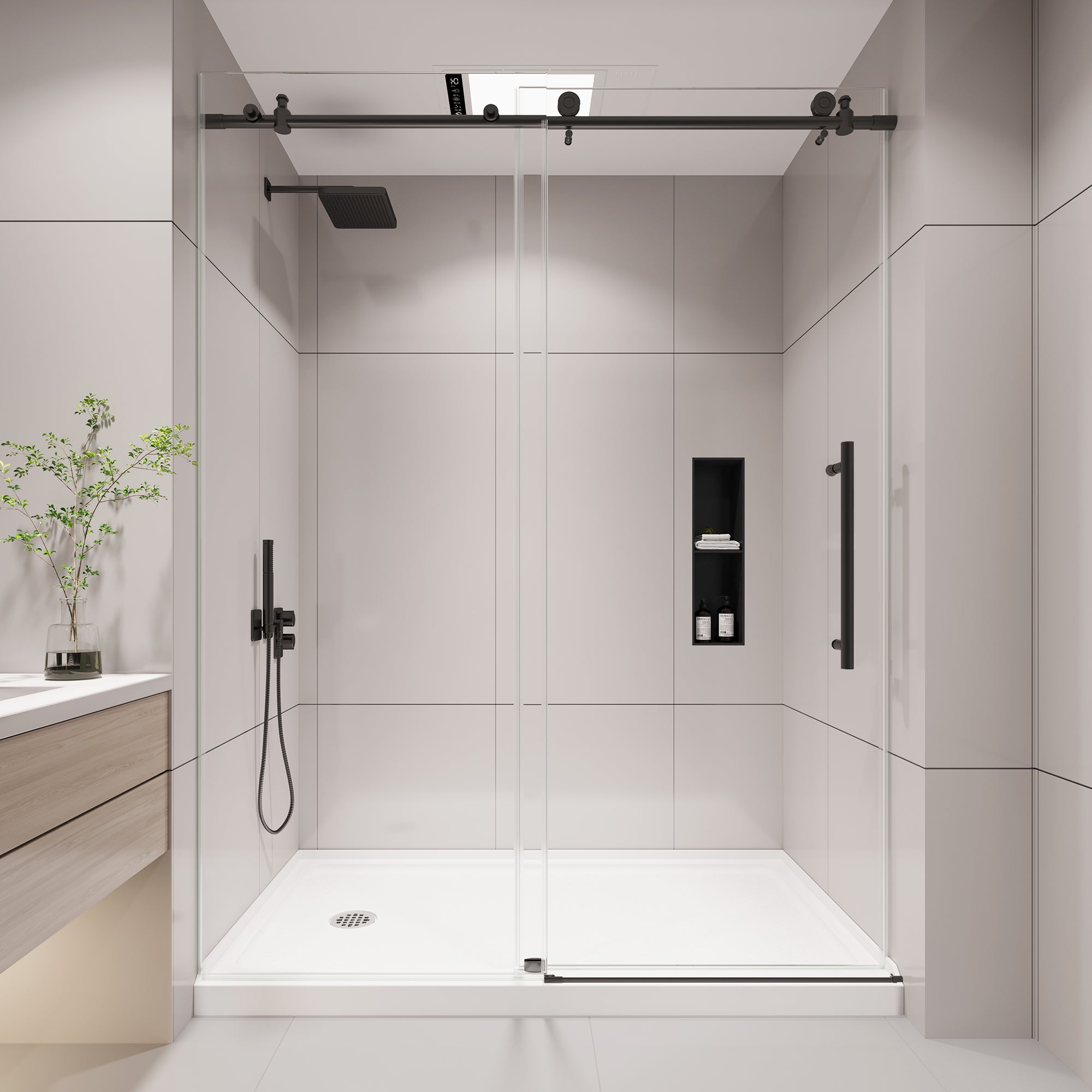
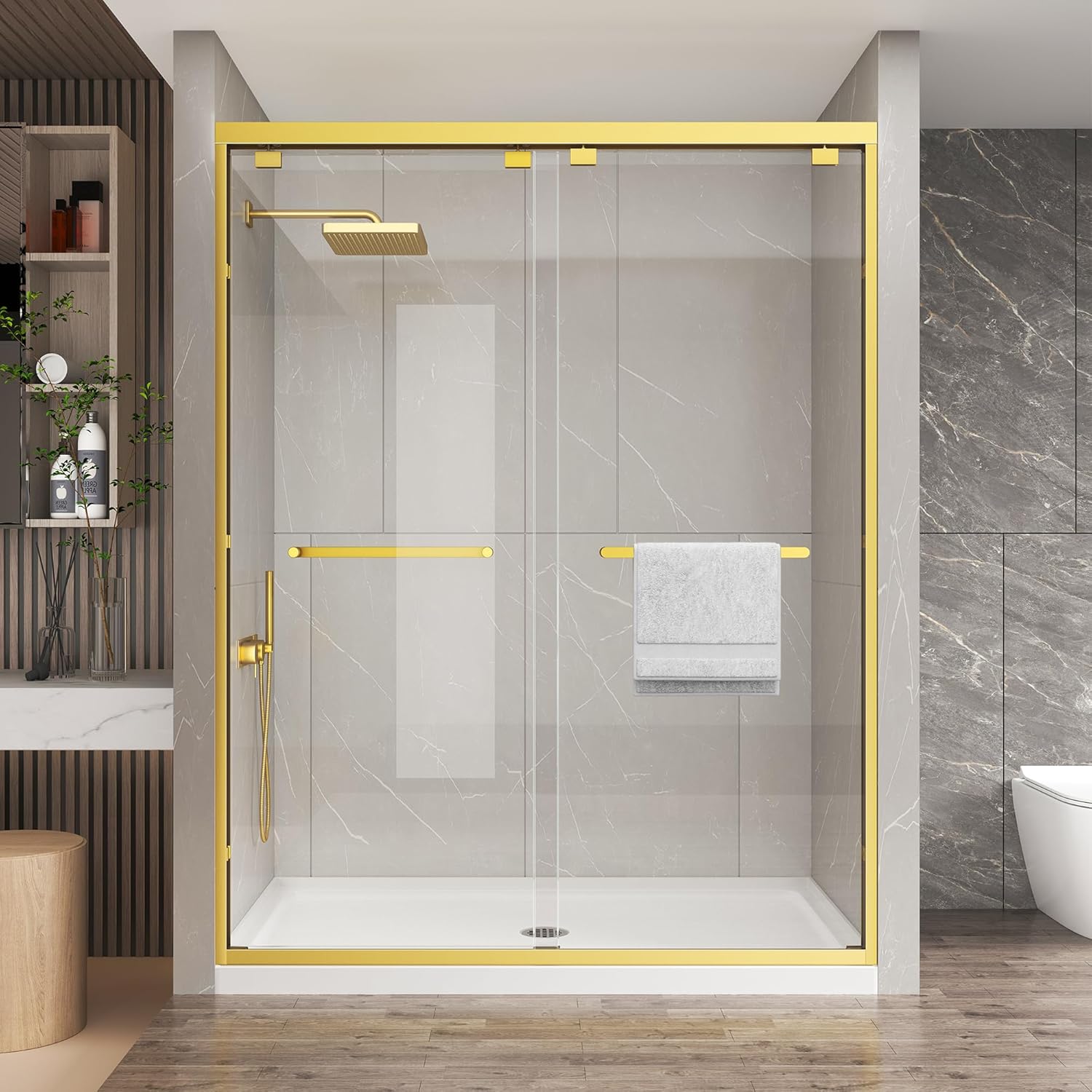
If your tub-shower opening is tight, a sliding bathtub shower door usually solves the swing-clearance problem better than a fixed tub screen. A fixed screen is simpler, more open, and easier to wipe down, but it gives less splash protection and depends more on your layout and showerhead placement. The right choice comes down to water control, access, cleaning, and how much room you have around the tub.
The Short Answer
Sliding bathtub shower doors are usually better if your main goal is better splash control and a cleaner finished look around the tub. Fixed tub screens are better if you want a simpler layout, less hardware, and easier access for bathing or cleaning. If your bathroom is tight, measure the opening carefully and consider how much spray your showerhead throws before deciding.
How Sliding Doors and Fixed Screens Work
A sliding bathtub shower door uses overlapping glass panels that move along a track. It is a good fit when you want a contained showering area without needing extra swing room. That matters in bathrooms where the toilet, vanity, or door casing sits close to the tub. A sliding system also tends to keep more water inside the tub area, especially with a high-use family bath.
A fixed tub screen is a stationary glass panel mounted at one side of the tub. It does not move, so there is no rolling track and no door overlap. That makes the look lighter and the cleaning routine simpler. The tradeoff is coverage. If the showerhead is aimed too far outward, water can escape past the open side of the screen. In small bathrooms, that can mean wet floors and more silicone upkeep over time.
For homeowners comparing tub enclosures, KPUY’s Bathtub Shower Doors collection is the most relevant starting point because it matches the actual layout problem: controlling water around a tub without crowding the room.
Field note: on older remodels, the tub opening often measures slightly different at the top, middle, and bottom. A wall that looks straight from five feet away can still lean enough to affect glass fit and sealing.
Comparison Table
| Factor | Sliding Bathtub Shower Door | Fixed Tub Screen |
|---|---|---|
| Space needed | No swing clearance; useful in tight rooms | Very compact; no moving panels |
| Water containment | Usually stronger, especially with full overlap | Depends on showerhead direction and screen length |
| Access | Panel movement can make entry easier | Open side access is simple for bathing and cleaning |
| Cleaning | More tracks and edges to maintain | Fewer parts, usually easier to wipe down |
| Installation sensitivity | Track alignment and level matter more | Wall plumb and anchor placement matter more |
| Best for | Busy bathrooms, stronger splash control, tighter layouts | Simpler baths, lighter visual look, easier maintenance |
That table is the practical difference in the field: a sliding door gives you more containment, while a fixed screen gives you fewer moving parts. The better option is the one that matches your room, not just your style preference.
For planning purposes, think about the finished tub surround, not just the tub itself. Tile thickness, wallboard build-out, and any trim pieces can change the opening by more than homeowners expect. A one-half-inch difference can matter when a panel meets a wall channel or a sliding track needs a clean mounting surface.
Measurement and Installation Factors
Start with the finished opening, not the rough tub size. Measure after wall surfaces are complete if the tile is already going in. If the remodel is still in progress, account for the thickness of backer board, tile, and any edge trim. That is where a lot of tub enclosure mistakes happen.
- Measure the tub opening at the top, middle, and bottom.
- Check the wall plumb on both sides of the tub surround.
- Confirm the tub deck or threshold is level enough for the glass system you want.
- Locate studs before drilling for channels or hinges.
- Check showerhead position and spray direction before finalizing panel length.
- Verify that handles, towel bars, and nearby fixtures will not interfere with panel movement.
- Plan for silicone sealing at the wall channels and any lower contact points.
Sliding units usually depend on track alignment and consistent level along the tub edge. If the track is out of level, doors can drag, gap unevenly, or fail to close cleanly. Fixed screens are less mechanical, but they still need a stable wall mount and proper anchoring. If the wall is out of plumb, the glass can look crooked even when the tub is square.
Another point homeowners miss is hardware clearance. A sliding door handle, guide, or overlap zone may seem fine on paper but still conflict with a shampoo niche edge or nearby faucet trim. A fixed panel can also interfere with tub spouts or mounted accessories if the panel width is not planned carefully.
For bathrooms where the main decision is between splash protection and a low-profile look, KPUY’s bathtub-focused enclosure options can help you match the enclosure style to the actual opening rather than forcing the layout to fit a generic size.
Jobsite reality: a drain or overflow location does not affect the door directly, but the tub’s placement in the room often does. If the tub was shifted slightly during rough-in correction, that small change can affect where the panel lands relative to the wall and tile edge.
Bathroom planning standards from organizations such as NKBA are helpful when you are thinking through clearances, access, and comfort in a remodel, especially in a bathroom that needs to serve more than one user.

Which Layout Fits Which Bathroom
There is no universal winner. The better choice depends on the room and how the tub is used.
- Choose a sliding bathtub shower door if the bathroom is narrow, the tub is used frequently for showers, or you want stronger water containment.
- Choose a fixed tub screen if you want fewer moving parts, easier cleaning, and a more open visual feel.
- Choose sliding if the showerhead spray reaches beyond the midpoint of the tub wall.
- Choose fixed if the open side can stay relatively dry and the room does not need full splash containment.
- Choose sliding if a swinging door would interfere with a toilet, vanity, or closet door nearby.
- Choose fixed if your main priority is easy access for bathing children or washing pets.
Sliding doors often make more sense in a family bath or a shared hallway bath where water on the floor is a daily nuisance. Fixed screens often make more sense in a guest bath or a lighter-use space where the bathroom layout already helps contain spray. The more aggressive the shower spray, the more useful a longer enclosure becomes.
One practical way to decide is to stand in the tub and imagine where the water will travel. If the showerhead is high and angled outward, a short fixed panel is usually asking for splash issues. If the showerhead stays lower and the bath wall is deep enough, a fixed panel can work well with fewer parts to maintain.
Homeowners also need to think beyond the glass. If the remodel includes new tile, a vanity update, or better lighting, the visual balance of the bathroom changes too. A full sliding door can feel more substantial, while a fixed screen can keep the room feeling lighter. That is a design choice, but it is one that should still be driven by function first.
When a fixed screen makes sense
A fixed screen makes sense when you want the simplest path to a cleaner, more open tub area. It works best if the shower spray is controlled and the opening is long enough to reduce splash escape. It is also a strong option when you want fewer tracks and less daily maintenance.
When a sliding door makes sense
A sliding door makes sense when the bathroom is tight, the tub is used often, or splash control matters more than visual openness. In remodels where every inch counts, the lack of swing clearance is a real advantage.
Common Mistakes to Avoid
Most problems come from measuring too early or ignoring the finished surfaces.
- Measuring the tub before tile or wallboard is installed.
- Assuming the walls are plumb without checking both sides.
- Overlooking handle and track clearance near faucets or niches.
- Forgetting that a fixed screen may not block enough spray in a high-use bath.
- Ignoring stud location and trying to anchor into weak wall material.
- Skipping proper silicone sealing at wall channels and edges.
- Not checking whether the tub rim or threshold is level enough for the selected enclosure.
These are small errors on paper and expensive ones after installation. A panel that fits the wrong finished opening is not a trim issue; it is often a replacement issue. That is why careful field measurement matters more than assumptions based on the old curtain rod or outdated door size.
For code and safety awareness, especially if you are coordinating with other remodel work, it helps to review general building and product safety guidance from the CPSC and plumbing-related references such as IAPMO when local requirements or product details need confirmation.

Frequently Asked Questions
Do sliding bathtub shower doors leak less than fixed screens?
Usually, yes, because sliding doors cover more of the opening and reduce the path for water to escape. That said, a poor installation, out-of-plumb wall, or uneven track can still cause leaks. A fixed screen can work well if the showerhead spray is controlled and the screen is long enough for the tub layout.
Is a fixed tub screen easier to clean?
In most cases, yes. A fixed screen has fewer moving parts, no bypass track, and fewer places for soap residue to collect. Sliding doors can still be manageable, but the track, rollers, and overlap areas need regular attention. If low-maintenance cleaning is a priority, a fixed screen has the simpler upkeep.
What should I measure before ordering a tub shower enclosure?
Measure the finished opening at the top, middle, and bottom, then check wall plumb, tub level, and the location of studs or solid backing. Also account for tile thickness, faucet placement, and any nearby fixtures that could interfere with the glass. Those details matter more than the old curtain width or the tub’s nominal size.
Final Takeaway
If your priority is water containment in a tight bathroom, a sliding bathtub shower door is usually the stronger choice. If your priority is simple construction and easier cleaning, a fixed tub screen often makes more sense. Either way, the right answer starts with the finished opening, not the old setup.
Measure carefully, check wall conditions, and think through how the room is actually used. If you are still narrowing down the enclosure style, the most relevant place to start is KPUY’s Bathtub Shower Doors collection, which matches the layout decisions discussed here without forcing a one-size-fits-all approach.

Leave a comment
All comments are moderated before being published.
This site is protected by hCaptcha and the hCaptcha Privacy Policy and Terms of Service apply.