
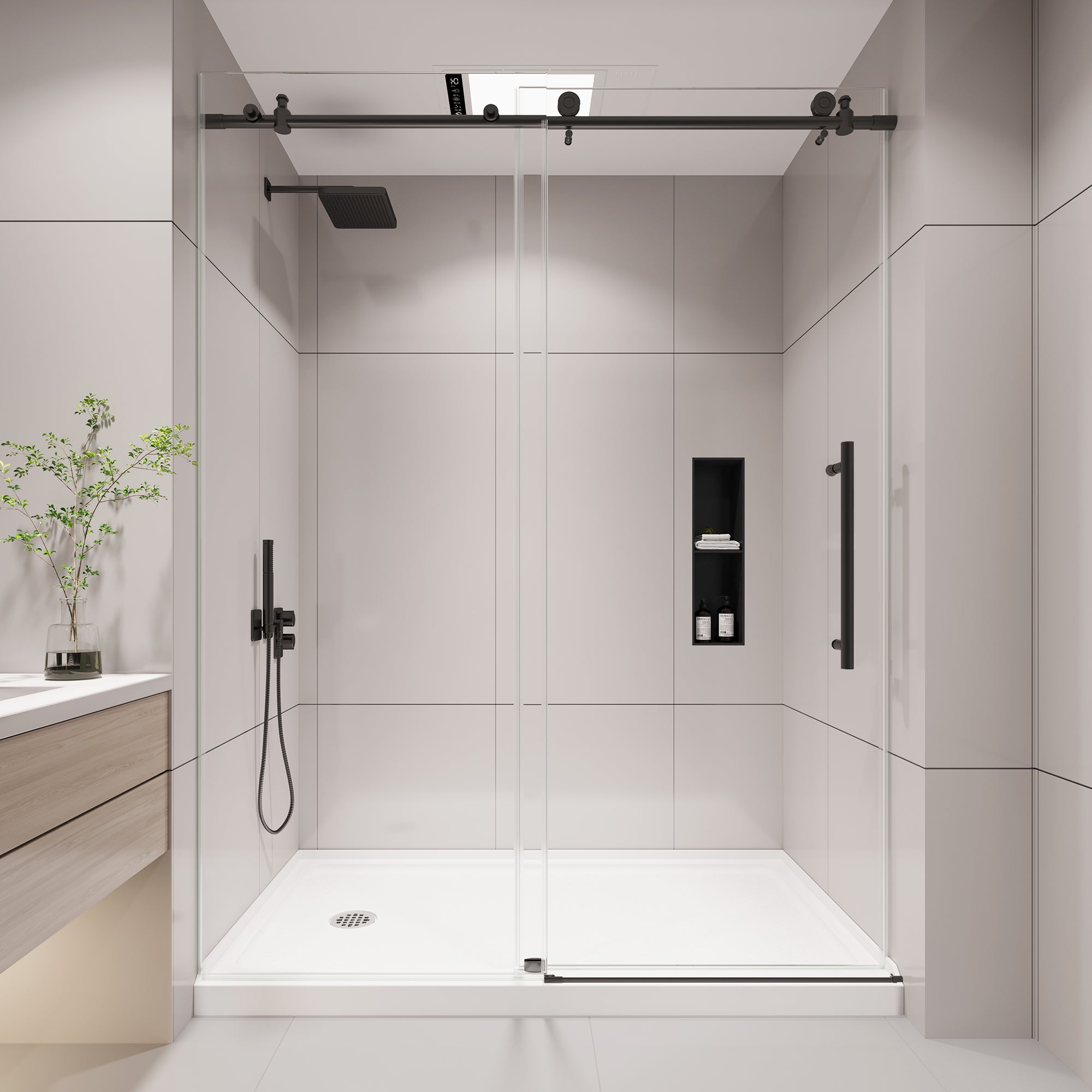
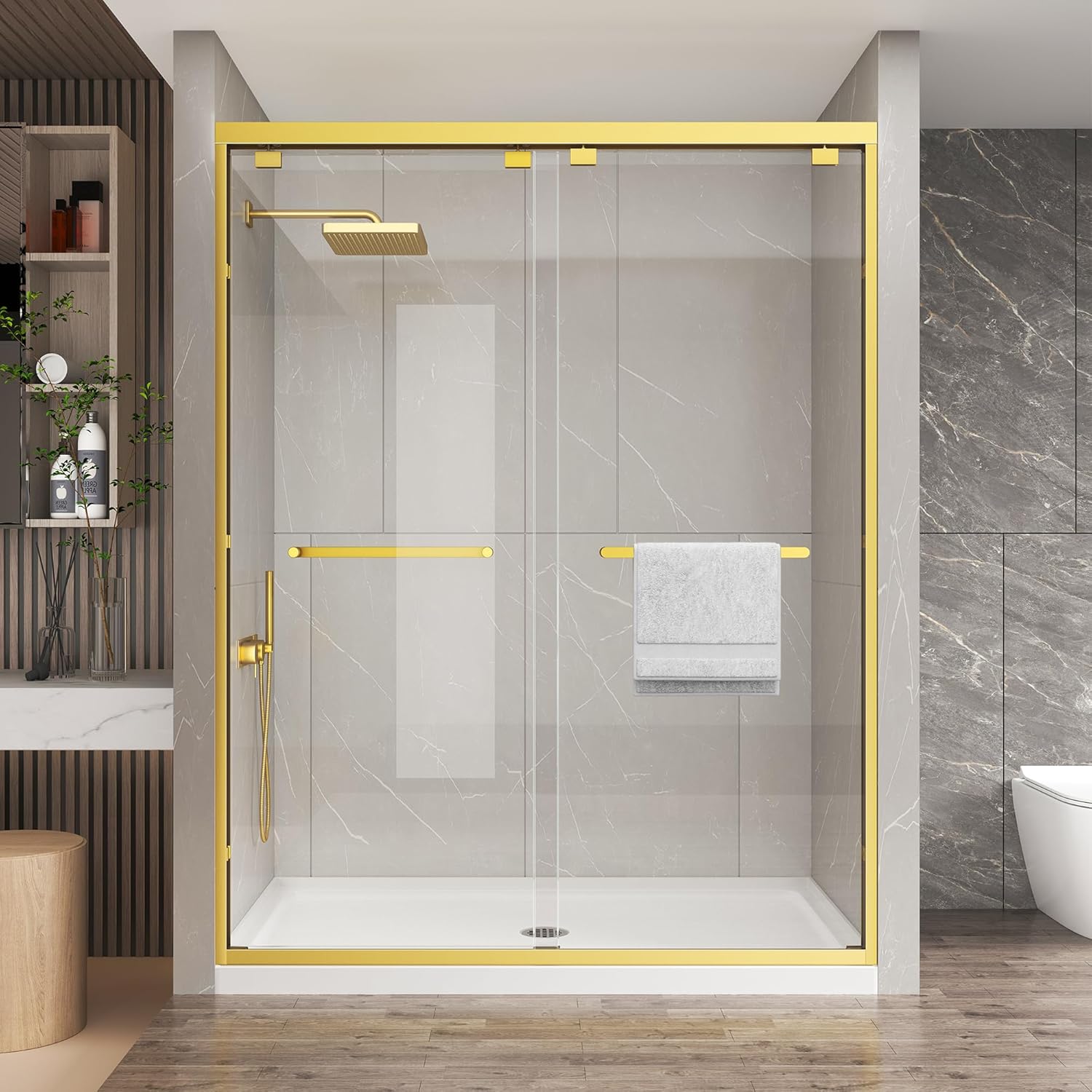
Buying a shower base and door separately sounds simple until the opening is slightly out of square, the tile changes the finished width, or the drain lands where the new base does not. That is where a lot of remodels slow down. The right approach is to measure the finished opening, confirm the base dimensions, and check how the door will move before anything is ordered.
The Short Answer
Shower base and shower door compatibility comes down to three things: the finished opening size, the base footprint and drain location, and the door’s operating clearance. Measure after tile or wall panels are in place, confirm the base fits the alcove or corner space, and make sure the door style can open or slide without hitting the vanity, toilet, or curb. Older walls are often not perfectly plumb, so check width at the top, middle, and bottom.
What to Measure Before You Buy
Start with the finished opening, not the old unit. A shower base may fit the rough space on paper and still miss the actual drain or wall line once the surfaces are built out. Tile thickness, backer board, and drywall can all change the final dimensions enough to matter.
For the door, take three width measurements across the opening: top, middle, and bottom. If the numbers vary, the opening is out of plumb or the walls are not parallel. That is common in remodel work, especially in older homes. A door that fits the widest point may be too tight at the narrow point, and a frameless panel can show that problem quickly.
For the base, check these items before you order:
- Footprint size: the length and width of the shower base must match the finished alcove, corner, or custom opening.
- Drain location: center, offset, or linear drain placement has to line up with the plumbing or planned reroute.
- Threshold height: the curb or low-threshold edge affects entry comfort and water containment.
- Floor conditions: uneven subfloors can change how the base sits and where shims or mortar support may be needed.
- Wall finish thickness: tile, stone, or wall panels can reduce the clear opening for the door.
Here is a jobsite-style reality check: a drain that looks centered from the old shower may not land correctly for the new base once the surrounding wall thickness changes. That is why base selection should happen alongside plumbing planning, not after the fact.
For bathroom planning references, the NKBA offers useful guidance on layout and clearances, while the CPSC is a good source for home safety context around glass and household installations.
Compatibility Factors That Matter Most
Shower doors and shower bases do not fail to match because of one dramatic mistake. It is usually a stack of small issues: a wall that leans, a curb that is not level, a hinge that needs more room than expected, or a track that has to sit perfectly straight on a surface that is not.
| Compatibility Check | What to Confirm | Why It Matters |
|---|---|---|
| Finished opening | Width at top, middle, and bottom | Shower doors are sized to the real opening, not the rough framing |
| Wall plumb | Whether the walls lean in or out | Out-of-plumb walls can throw off glass fit and seal alignment |
| Base footprint | Exact length, width, and curb position | The base must fit the finished space without crowding the walls |
| Drain location | Center or offset placement | The drain must match the plumbing plan and slope direction |
| Door movement | Swing space or slide path | The door cannot hit a vanity, toilet, towel bar, or adjacent wall |
Hardware and glass thickness also matter. Frameless doors typically need cleaner, more accurate opening dimensions and enough wall support for anchors and brackets. Sliding doors need track alignment and enough straight, level surface for smooth operation. If the wall tile is thick or uneven, the available glass opening can shrink more than a homeowner expects.
For code context on plumbing and fixture installation, use the IAPMO site as a reference point and verify local requirements with your installer or inspector. For building code information, the ICC is a reliable general resource.

Door Types and Base Layouts
The door style should match the base layout and how the room is used. A good fit on paper can still be awkward in daily use if the door swings into a toilet, blocks a vanity, or leaves no room to step in comfortably.
Sliding doors are usually the safest choice where swing clearance is limited. They work well with alcove showers and many rectangular bases because the panels move side to side instead of outward. The tradeoff is track alignment: if the walls or curb are out of square, the rollers and panels may need extra adjustment.
Pivot or hinged doors need more room in front of the shower. They can feel more open at entry, but they demand a clear path outside the shower. If the toilet is close, the vanity is tight, or the room is narrow, measure the swing arc before you buy.
Frameless doors create a cleaner look, but they are less forgiving. They need more accurate measurements, solid wall anchoring, and enough room for glass thickness and hardware clearances. This is where a precise finished opening matters most. KPUY’s Frameless Shower Doors collection is most relevant for homeowners planning a minimal-hardware layout.
Fixed glass panels work well for walk-in showers and open entries, but they depend heavily on the base slope and splash control. If the shower base is shallow or the opening is wide, the panel size and placement become part of the water containment strategy. For that type of layout, KPUY’s Shower Glass Panels collection is the closest match.
Base shape matters just as much. A rectangular shower base is often the better fit for alcoves and tub replacement footprints, while a square base can be easier in compact or corner layouts. The base shape should support the door style, not fight it.
Older homes often have walls that are not perfectly plumb. If the opening narrows by even a small amount from top to bottom, a sliding door can sometimes tolerate that better than a rigid swing door. But if the curb is out of level, neither style will perform well without correction.

Pre-Order Planning Checklist
A careful order starts with the room, then the products. Rushing straight to a door style or base shape often leads to returns, delays, or field adjustments that cost more than the original choice.
- Measure the finished shower space after wallboard, tile backer, or wall panels are installed.
- Record width at the top, middle, and bottom of the opening and note any out-of-plumb condition.
- Check the floor for slope and flatness where the shower base will sit.
- Confirm drain placement against the planned base footprint before plumbing rough-in is finalized.
- Verify door movement clearance for swing, slide, or pivot operation.
- Account for finish thickness from tile, stone, or wall panels.
- Locate studs and anchor points before choosing hardware and mounting locations.
- Confirm nearby fixtures such as a toilet, vanity, or towel warmer will not interfere with the door.
- Plan sealing and water containment at the curb, wall edges, and door jambs.
- Review local code needs or ask a qualified professional if the remodel includes plumbing changes or structural adjustments.
Silicone sealing is not a substitute for proper fit, but it does matter. A base that sits slightly proud, a panel that stops short of the curb, or a door that leaves a gap at the wall can all need clean, controlled sealing. Use the sealant to finish the installation, not to hide a bad measurement.
For homeowners planning a door-and-base combination in one project, reviewing KPUY’s Shower Bases collection alongside the door choice can help keep the dimensions and drain planning aligned from the start.
Common Mistakes That Cause Fit Problems
Most compatibility issues are preventable. The biggest mistake is assuming the rough opening is the final opening. It usually is not.
- Measuring only once instead of checking the opening at multiple heights.
- Ignoring tile thickness and then finding the door opening is smaller than expected.
- Forgetting door swing clearance near a vanity, toilet, or linen cabinet.
- Choosing a base before drain planning is confirmed.
- Skipping wall plumb checks and assuming the shower enclosure will self-correct.
- Using hardware anchors without studying stud locations or wall backing requirements.
- Relying on sealant to fix poor fit instead of correcting the installation conditions.
A small mismatch can create a big problem in daily use. For example, a vanity drawer may clear the room in the open position and still hit the door casing when a shower door swings outward. That kind of conflict only shows up when the finished room is checked, not when the original framing is still exposed.
Choosing Features That Fit Real Use
Shower base and door compatibility is not just about measurements. It is also about how the bathroom is used every day. A family bath, a guest bath, and a primary suite usually have different needs.
If the bathroom is tight, a sliding layout usually makes more sense than a swing door. If the room is wide open and the shower entry needs a cleaner look, a pivot door or fixed panel may be a better fit. If accessibility is a concern, threshold height and entry width deserve as much attention as style.
Finish coordination also matters, but it should come after fit and function. Matte black hardware can create contrast in a light bath, while brushed or chrome-like finishes tend to disappear more visually. Either way, the finish should work with the tile, lighting, and faucet choices rather than forcing the layout to change.
Electrical planning can also come into play during a full remodel. If lighting, ventilation, or smart toilet features are part of the project, plan outlet locations and fixture placement before walls are closed. That keeps the shower layout from being squeezed around later decisions.
For broader bathroom design planning, the NKBA is a useful reference for space planning and comfort-oriented layout thinking.
Frequently Asked Questions
How do I know if my shower opening is straight enough for a glass door?
Measure the width at the top, middle, and bottom. If the numbers vary, the opening is not perfectly square or plumb. Small differences may be manageable depending on the door style, but a frameless or hinged door will usually need tighter conditions than a sliding layout. The finished wall surface matters more than the rough framing.
Can I buy the shower base first and the door later?
You can, but the base should still be selected with the door plan in mind. The base footprint, curb height, and drain position affect how the door will fit and function. If the door is delayed, keep the final finished opening measurements and wall build-up notes so the enclosure can be sized correctly later.
What is the most common reason a shower door does not fit after tile is installed?
The most common issue is losing width to tile and wall build-out. Another frequent problem is an out-of-plumb wall that was not obvious during framing. A door sized to the rough opening may end up too wide or too tight once the finished surfaces are in place.
Before You Choose
Shower base and shower door compatibility is easiest to manage when the job is measured in the right order. Confirm the finished opening, verify the base footprint and drain location, and check how the door will move in the actual room. That approach prevents most of the fit problems that show up late in a remodel.
If you are still in the planning stage, review the room layout first and then narrow the product type. For homeowners comparing shower enclosure styles and measurements, KPUY’s shower door options can be a practical place to start, especially alongside the matching Shower Bases collection when you are planning both parts together.

Leave a comment
All comments are moderated before being published.
This site is protected by hCaptcha and the hCaptcha Privacy Policy and Terms of Service apply.