
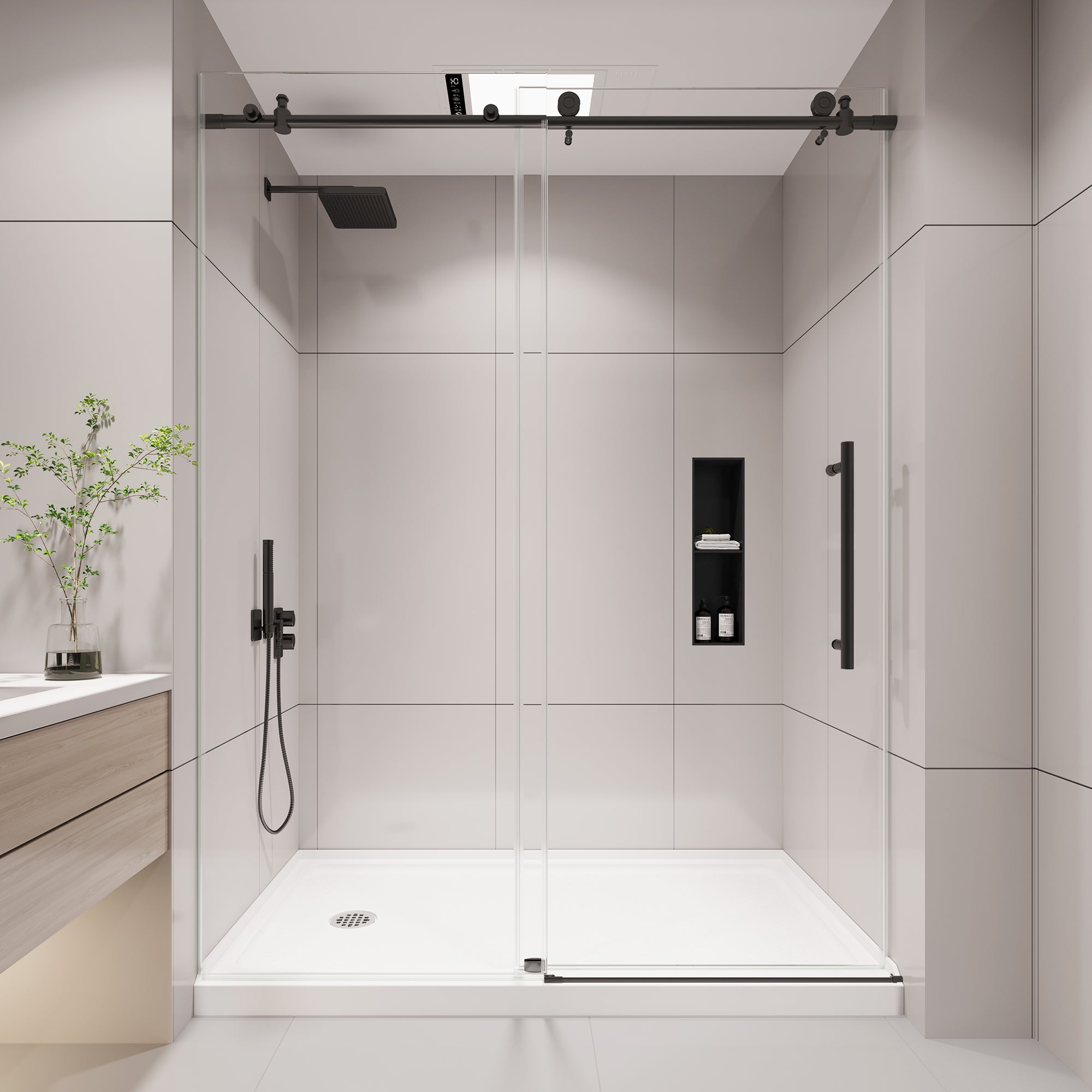
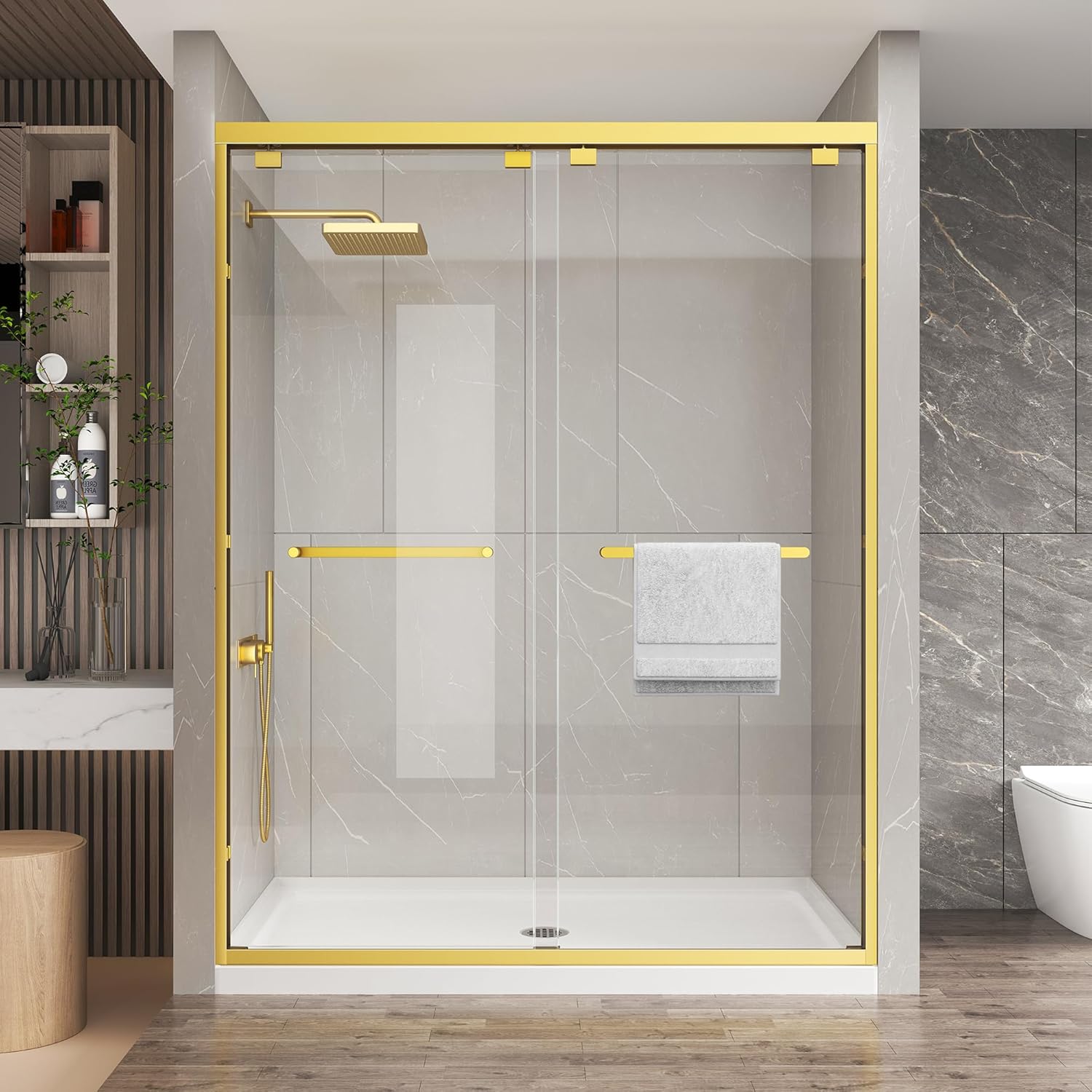
Picking a shower door sounds simple until the opening is measured after tile, the wall is a little out of plumb, and the new base does not line up with the old drain. For a remodel in 2026, the real choice is usually about how much room you have, how much water you want to contain, and how clean you want the finished look to feel.
The Short Answer
Frameless shower doors are usually better if you want a cleaner look, fewer visible metal parts, and a more open feel, but they depend more on accurate measurements and solid wall conditions. Framed shower doors are usually better for tighter budgets, less-than-perfect openings, and situations where you want a more forgiving installation with stronger built-in support. The better choice depends on your opening, your wall plumb, and your water-containment needs.
How Frameless and Framed Doors Differ
The biggest difference is not just appearance. It is how each door handles structure, fit, and installation tolerance. A frameless shower door uses thicker glass with minimal metal framing, so the enclosure feels lighter and more open. A framed shower door uses metal framing around more of the glass perimeter, which helps hold the panels in place and can make fit-up easier on older or slightly irregular openings.
In a new or recently remodeled bathroom with straight walls and accurate finished dimensions, frameless glass can look very clean. In an older home, especially where the studs, tile, or curb are not perfectly true, a framed door often gives installers more adjustment room. That matters because a shower opening may measure differently at the top, middle, and bottom.
For homeowners comparing door types while planning the rest of the shower, KPUY’s Frameless Shower Doors collection is a useful place to look at the style category itself, even if the final decision is still driven by measurements and layout.
There is also a practical difference in how each style handles water. Frameless doors rely heavily on precise alignment, quality sealing, and good slope at the base or curb. Framed doors often include more perimeter coverage, which can help with splash control in everyday use. Neither type should be treated as a substitute for a properly built shower base, correct drain placement, and good wall waterproofing.

Measure Before You Choose
The finished opening matters more than the rough opening. Measure after tile, backer board, and any curb or threshold work is complete. If the wall surface is still changing, the door size can end up wrong by enough to cause a bad fit or extra fabrication.
For either door type, take three width measurements: top, middle, and bottom. Also measure the height at both sides and in the center. Older homes often have walls that are not perfectly plumb, and that can change the panel reveal enough to matter with frameless glass.
Use this simple order of operations:
- Confirm the finished wall surfaces, not the rough framing.
- Measure the opening at top, middle, and bottom.
- Check for out-of-plumb walls with a level.
- Verify curb height or threshold height after tile.
- Confirm door swing clearance, towel bar clearance, and nearby fixture spacing.
- Check whether the shower base drain location matches the new layout.
A base that fits the footprint still needs the drain to land in the right place. That sounds basic, but it is one of the most common remodel surprises after demolition. A drain that looked centered in the old shower may not match the new base design, especially in retrofit work.
Tile thickness also matters. A finished opening can tighten up after tile is installed, and that can affect both framed and frameless systems. With frameless glass, even small changes can alter hardware alignment. With framed doors, the system may be more forgiving, but the opening still has to be checked carefully.
Installation Factors That Change the Decision
Frameless doors place more importance on support, anchoring, and wall quality. The glass is typically thicker, and the hardware depends on solid fastening points. If wall studs are not where you need them, or if the wall surface is weak or uneven, the installer may need blocking or other reinforcement before hanging the door. Wall anchors alone are not always the answer when loads are concentrated at hinge or clamp points.
Framed doors are less demanding in some respects because the framing helps stabilize the assembly. That does not mean they are loose-fit products. It just means they tend to tolerate slight irregularities better, which can be useful in a remodel where the walls have seen more than one renovation cycle.
Door movement also affects the decision. A framed swing door can work well where there is enough clearance to open inward or outward without hitting a toilet, vanity, or linen cabinet. A frameless door may still need the same clearance, but the reduced visual bulk can help a smaller room feel less crowded. If you are dealing with a narrow alcove, sliding options may solve the clearance problem better than either framed or frameless swing doors.
Water containment is another point that gets overlooked. A frameless setup can look very open, but if the shower base does not have enough slope, or if the threshold is too low for the room conditions, water can migrate outside the shower. Good silicone sealing and proper overlap at the strike edge matter more than looks alone.
- Choose frameless if you have accurate finished dimensions, solid framing support, and want a lighter visual profile.
- Choose framed if the opening is less forgiving, the walls are slightly off, or you want more built-in support.
- Check swing clearance before choosing a hinged door near a toilet, vanity, or cabinet.
- Check base slope and curb height so the door style matches water-containment needs.
- Verify hardware clearance around tile edges, handles, and adjacent trim.
For the shower floor itself, KPUY’s Shower Bases collection is relevant because door performance depends on the base as much as the glass. A well-fitted door cannot compensate for a drain location or threshold that was not planned correctly.

Frameless vs. Framed Comparison
| Factor | Frameless Shower Door | Framed Shower Door |
|---|---|---|
| Visual style | Cleaner, more open, minimal metal | More visible frame, more defined edge |
| Installation tolerance | Less forgiving of out-of-plumb walls and uneven tile | More forgiving in irregular openings |
| Glass and support | Typically depends on thicker glass and precise anchoring | Frame adds support around more of the perimeter |
| Water containment | Depends heavily on alignment and sealing | Often offers stronger perimeter coverage |
| Best fit for | Modern remodels, accurate openings, open visual design | Older homes, budget-sensitive projects, less perfect walls |
| Common limitation | Requires tighter measurement discipline | Can look heavier and more closed in smaller spaces |
Which One Fits Your Bathroom Better?
The better door is the one that matches the room, not just the style board. A frameless door often makes sense in a remodeled primary bath where the shower is a visual focal point and the opening was built with modern tolerances. It can also work well if you want the tile to stay visible and the shower to feel less boxed in.
A framed door often makes more sense in a hall bath, a guest bath, or an older remodel where the shower opening is not perfectly square. If there is a little more movement in the wall, if the tile edges are uneven, or if the curb and threshold vary more than expected, framed hardware can reduce installation friction.
Think about daily use too. If kids, guests, or multiple family members use the shower, a framed door may be easier to live with if the room gets wet often and the layout needs a bit more splash control. If the bathroom is tight, the room may feel larger with frameless glass, even though the actual footprint does not change.
Also consider the rest of the remodel. A vanity drawer might clear the room but still hit the door casing. The same kind of clearance issue happens with shower doors. A swing door can clash with a toilet tank or cabinet edge even when the shower itself measures correctly. Planning the bathroom as one coordinated layout is the safer move.
For planning lighting, mirrors, and cabinet spacing around a new shower area, the NKBA offers helpful bathroom planning context. It is especially useful when you are balancing door swing, aisle width, and general room function.
What to Check Before Ordering
Before you order any shower door, verify the conditions that affect the final fit. The door style is only one part of the system.
- Finished opening size: confirm the final width and height after tile.
- Wall condition: check for plumb, flatness, and any bowed sections.
- Base and curb: confirm slope, threshold height, and water containment path.
- Drain location: make sure the base and plumbing line up before the floor closes.
- Clearance: test swing radius, adjacent fixtures, and entry path.
- Anchoring points: identify studs or approved reinforcement locations.
- Hardware finish: coordinate with other bathroom fixtures for a consistent look.
Hardware finish is partly aesthetic and partly practical. A matte black frame can create a stronger contrast against light tile, while a brighter metal finish often reads more quietly. The finish does not change the structural fit, but it does affect how visible the door is in the room and how much attention it draws to the enclosure edges.
If you are comparing swing doors, sliding doors, and fixed-panel layouts, it helps to think in terms of room geometry. Sliding layouts are usually better where swing clearance is tight. Fixed panels are useful in walk-in setups where you want less hardware and a more open entry. For general shower door options, KPUY’s Frameless Shower Doors collection is a practical reference point for the minimalist enclosure style.
Frequently Asked Questions
Is a frameless shower door harder to install than a framed one?
Usually, yes. Frameless doors require tighter measurements, better wall plumb, and more careful anchoring. Small errors show up faster because there is less framing to hide them. A framed door is often more forgiving in older bathrooms or remodels where the walls are not perfectly square.
Which shower door keeps water in better?
That depends more on the shower base, curb height, and sealing than on the door style alone. Framed doors can offer more perimeter coverage, while frameless doors rely on precise installation and good seals. If water containment is a concern, check slope, threshold, and opening placement before choosing the glass style.
Can I use a frameless door in a small bathroom?
Yes, if the opening is measured correctly and the room layout allows enough clearance. Frameless glass can make a small bathroom feel less crowded because there is less visual bulk. Just make sure the swing path will not interfere with a toilet, vanity, or nearby wall edge.
Final Takeaway
Frameless doors are usually the better choice for a clean, open look and a modern remodel, but they demand better measurements and stronger installation conditions. Framed doors are usually the better choice when you need a more forgiving fit, stronger perimeter support, or simpler water containment in a less-than-perfect opening. Start with the finished dimensions, not the rough framing, and make the shower base, curb, and drain work with the door before you order.
If your project is still in the planning stage, begin with the shower opening and the base layout first, then match the door style to those conditions. For homeowners comparing enclosure styles, the most relevant starting point is KPUY’s Frameless Shower Doors collection, especially if the remodel is aiming for a cleaner glass-forward look.

Leave a comment
All comments are moderated before being published.
This site is protected by hCaptcha and the hCaptcha Privacy Policy and Terms of Service apply.