
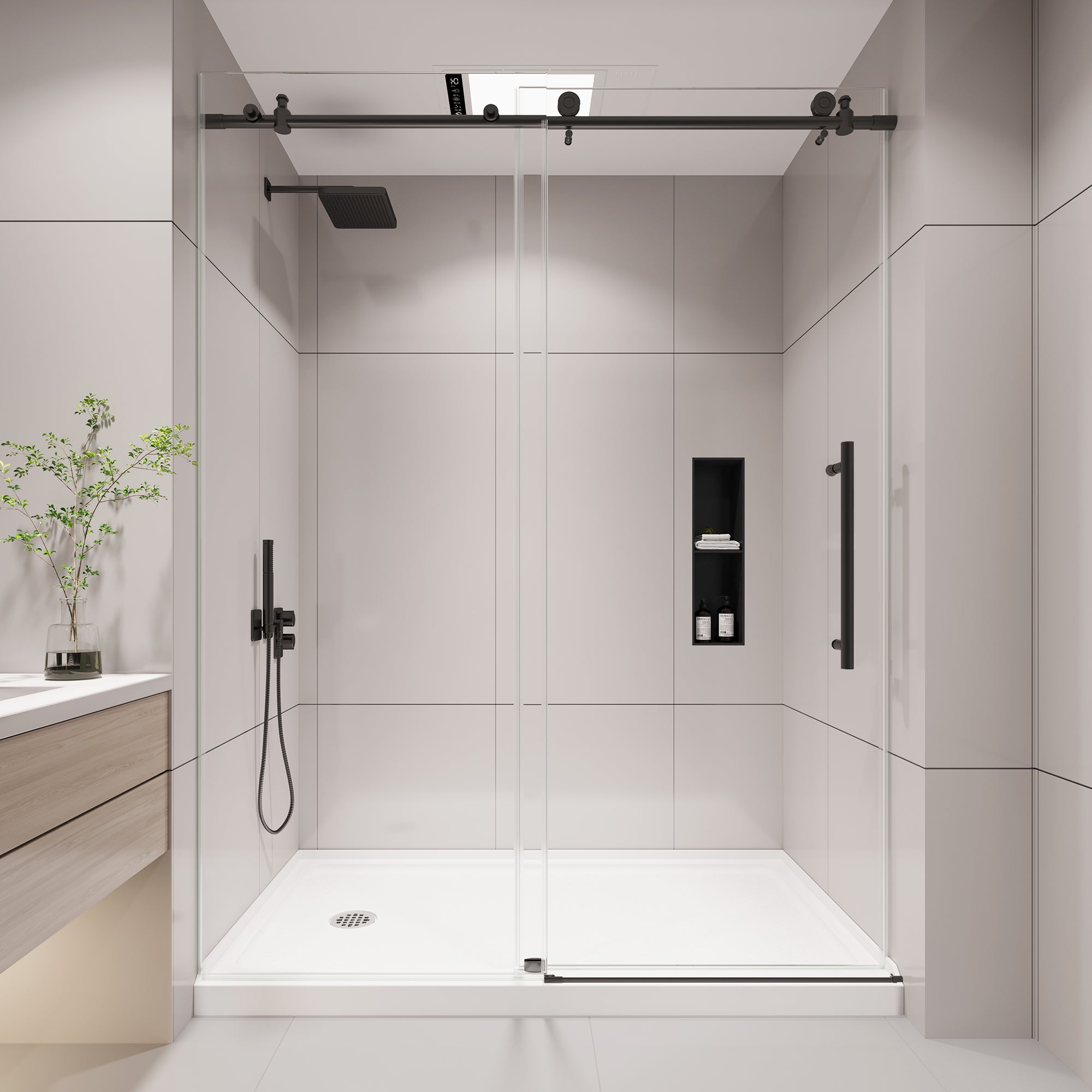
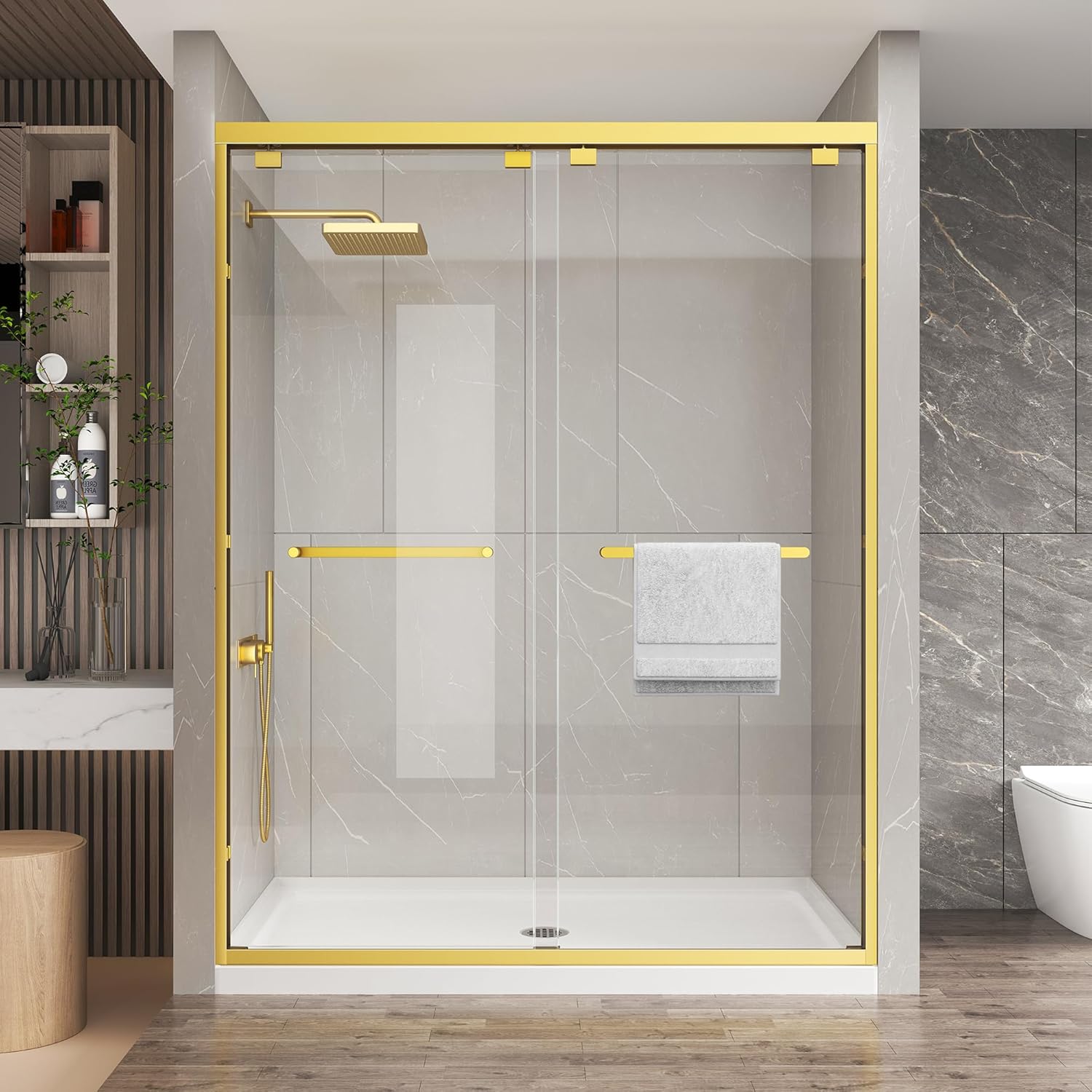
Most shower door problems start before the glass ever arrives. Homeowners measure the old opening instead of the finished one, ignore out-of-plumb walls, or overlook tile thickness and hardware clearance. The result is a door that binds, leaks at the edge, or fails to line up with the curb and surrounding trim. A careful layout check, especially on remodels, prevents most of the costly surprises.
The Short Answer
The biggest shower door installation mistakes are measuring the rough opening instead of the finished opening, assuming walls are plumb, ignoring tile thickness, and choosing a door type that does not match the available clearance. Homeowners also run into trouble by skipping stud location checks, using poor sealing methods, or overlooking the shower base slope and threshold height. A correct layout starts with the finished space, not the old fixture.
Most Common Shower Door Installation Mistakes
Shower doors are unforgiving. A difference of a quarter inch can matter once tile is in place and hardware is mounted. That is why many remodel failures trace back to planning errors, not the glass itself.
One of the most common problems is measuring only once. A shower opening should be measured at the top, middle, and bottom because older walls often lean slightly. If those numbers are different, the opening is not square, and the door must be selected and installed around the real condition of the wall.
Another frequent mistake is treating the shower base as a separate issue from the door. The base, curb, and finished wall surface all influence where the door sits. If the curb slopes too aggressively, the door may not seat evenly. If the threshold height is too low or the framing is off, water containment becomes harder to manage.
Homeowners also underestimate hardware and swing space. A pivot door may look fine on paper, but it can strike a toilet, vanity, or towel bar once the room is in use. In tighter bathrooms, a sliding layout or fixed panel may fit the space more realistically than a swing door.
- Measuring the old opening instead of the finished tile-to-tile space.
- Assuming the walls are plumb in an older home or remodeled bath.
- Skipping stud checks and relying on anchors where support is weak.
- Ignoring tile thickness, backer board, and finished trim buildup.
- Choosing the wrong door movement for a tight or busy bathroom layout.
- Underestimating sealing needs at corners, thresholds, and wall edges.
For a broader look at door styles and layout fit, KPUY’s KPUY Shower Doors collection is a useful starting point once the finished opening is known.
Measure Before You Order
Start with the finished opening, not the old product label. A shower door that replaced a 60-inch opening ten years ago may no longer fit if new tile, backer board, or a thicker base has changed the dimensions.
On real job sites, the opening often measures differently at each point. A common remodel pattern is a wall that is slightly out of plumb and a floor that is not perfectly level. That means the top of the opening may be a different width than the bottom, and the door cannot be ordered from one number alone.
Use this sequence before making any purchase decision:
- Measure the finished opening at the top, middle, and bottom.
- Check both side walls for plumb with a level.
- Confirm the curb or threshold height after tile is installed.
- Locate studs before selecting wall anchors or mounting points.
- Verify door swing clearance or sliding track space.
- Compare the opening to the door style, not just the nominal size.
Tile thickness is another place where mistakes happen. A wall that looked close during framing can shrink or grow once cement board, waterproofing layers, and tile are installed. That change affects glass fit, bracket placement, and sometimes the clearance needed for handles or hinges.
| Installation Check | Why It Matters | Common Mistake |
|---|---|---|
| Finished opening width | Confirms the real size after tile and wall finishes | Measuring framing instead of finished surfaces |
| Top, middle, and bottom measurements | Reveals walls that are not square or plumb | Using only one width measurement |
| Threshold and curb height | Affects water control and door alignment | Ignoring the slope or final build-up |
| Wall support | Determines where hardware can be safely anchored | Assuming anchors alone are enough |
| Door clearance | Prevents contact with toilets, cabinets, or fixtures | Not checking actual swing or track space |
For shower pan planning, drain location matters just as much as glass sizing. A base that fits the footprint still needs the drain to land in the right place. If the drain is offset from the new base design, the installer may need plumbing adjustments or a different base layout. KPUY’s Shower Bases collection can help homeowners compare base layouts before final measurements are locked in.
Building code context also matters when planning shower construction, especially around drainage and safety details. Homeowners do not need to become code experts, but it helps to understand that shower work should be aligned with local requirements and recognized standards from groups such as IAPMO and the ICC.

Choose the Door Type That Matches the Room
The right door style depends on clearance, entry direction, and how much water the shower needs to contain. A beautiful door can still be a poor fit if the room does not have the swing room or wall space it requires.
Here is a practical way to compare common options:
| Door Style | Best For | Main Caution |
|---|---|---|
| Pivot door | Bathrooms with enough front clearance | Needs swing room and careful hinge support |
| Sliding door | Tight bathrooms and alcove layouts | Track alignment must be precise |
| Frameless door | Modern glass layouts and cleaner sightlines | Requires accurate walls, clearances, and solid mounting points |
| Fixed panel | Walk-in layouts with open entry space | May allow more splash if the panel is undersized |
Frameless setups look simple, but they demand accurate conditions. Glass thickness, hinge placement, and wall support all matter more when there is less framing to absorb error. If the walls are out of plumb or the tile edges are inconsistent, the installer may need more adjustment range than a minimal-hardware system allows. That is why homeowners should not choose by appearance alone.
Sliding doors are often the practical answer where a pivot door would hit nearby fixtures. They also help in shared bathrooms because they do not project into the room. Still, the track must be level and the rollers or guides must be properly aligned. A door that slides smoothly on day one can become noisy or sticky if the track is not set correctly.
Pivot doors need the most clearance planning. Check the toilet location, vanity edge, towel bars, and even the path a person takes when stepping out of the shower. In smaller rooms, a door that opens outward can create daily friction even if the opening technically fits.
For homeowners comparing glass-based enclosure options, the broader Frameless Shower Doors collection is helpful when the goal is to understand how minimal hardware changes the layout requirements.
Common fit problems that show up late
Some mistakes do not appear until the glass is ready to set. A wall anchor may miss a stud, a hinge may land too close to tile edge trim, or a handle may strike a towel bar. Older homes often have walls that are not perfectly plumb, so the reveal between the door and wall can change from top to bottom.
When that happens, installers sometimes have to stop and reassess the layout rather than forcing the part into place. That is normal. Forcing the fit usually creates bigger problems later.
Use ANSI Z97.1 as a safety-glass reference point when discussing tempered glass expectations, and confirm the actual product details before ordering or installing. For overall bath planning and safety awareness, the homeowner-facing guidance from CPSC is also useful.
Jobsite Mistakes That Lead to Leaks or Rework
Many shower door problems are not design failures. They are installation mistakes that show up as drips, gaps, or loose hardware. These are the ones homeowners should watch for during a remodel.
- Mounting before verifying stud locations. Solid support matters for hinges, rails, and stabilizers.
- Using too little sealant. Silicone at the right joints helps with water containment, but excess or poor placement can look messy and still fail.
- Ignoring uneven floors. A base or curb that is out of level can throw off door alignment.
- Checking only one side of the opening. Both walls and the threshold need to be evaluated.
- Assuming a tight fit means a better fit. Too little allowance can make the door bind when humidity changes or building movement occurs.
Silicone sealing should be neat and functional, not a substitute for correct fit. Good sealing supports the installation; it does not fix a badly sized opening. Pay special attention to corners, the bottom edge, and any points where water can migrate behind trim or hardware.
It is also smart to think ahead about nearby bathroom upgrades. If the remodel includes lighting, mirrors, or a smart toilet, electrical outlet planning should happen before walls are closed. That same habit applies to shower doors: coordinate the glass with the finished room, not just with one isolated opening.
For homeowners who are still in the planning phase of a full bath remodel, the NKBA offers practical design context around bathroom flow, clearance, and layout decisions.

Final Takeaway
The best way to avoid shower door installation mistakes is to plan from the finished space inward. Measure the opening after tile decisions are set, confirm wall plumb and floor level, match the door type to the available clearance, and verify support points before ordering hardware. A small mistake in the opening can become a big problem once the glass is on site.
If you are comparing layouts or checking whether a sliding, pivot, or frameless setup makes sense for your bathroom, start with the room conditions first. Then narrow the search to the right style and size. For many homeowners, reviewing a focused collection like KPUY Shower Doors is a practical next step once the measurements are confirmed.
Frequently Asked Questions
How do I know if my shower opening is out of square?
Measure the width at the top, middle, and bottom, then check both side walls with a level. If the numbers change, the opening is not perfectly square or plumb. That does not automatically rule out a door, but it does affect which style will fit cleanly and how much adjustment the installer will need.
Should I measure before or after tile is installed?
Measure after the finished wall surfaces are in place. Tile thickness, backer board, trim buildup, and curb height can change the final opening enough to matter. For remodels, the finished opening is the number that counts, not the framing or rough-in dimension.
What is the biggest reason shower doors leak?
Most leaks come from poor fit, bad sealing, or a base and curb that were not planned together with the door. Water can also escape if the door style does not suit the room layout. A proper slope, correct threshold, and neat silicone placement all help control splash and runoff.
Plan the remodel before you buy. Once the opening is measured correctly and the room layout is clear, it becomes much easier to choose a door that works in daily use. Start with the shower base, confirm the finished opening, and then narrow the door style that fits the space and the way your bathroom is used.

Leave a comment
All comments are moderated before being published.
This site is protected by hCaptcha and the hCaptcha Privacy Policy and Terms of Service apply.