
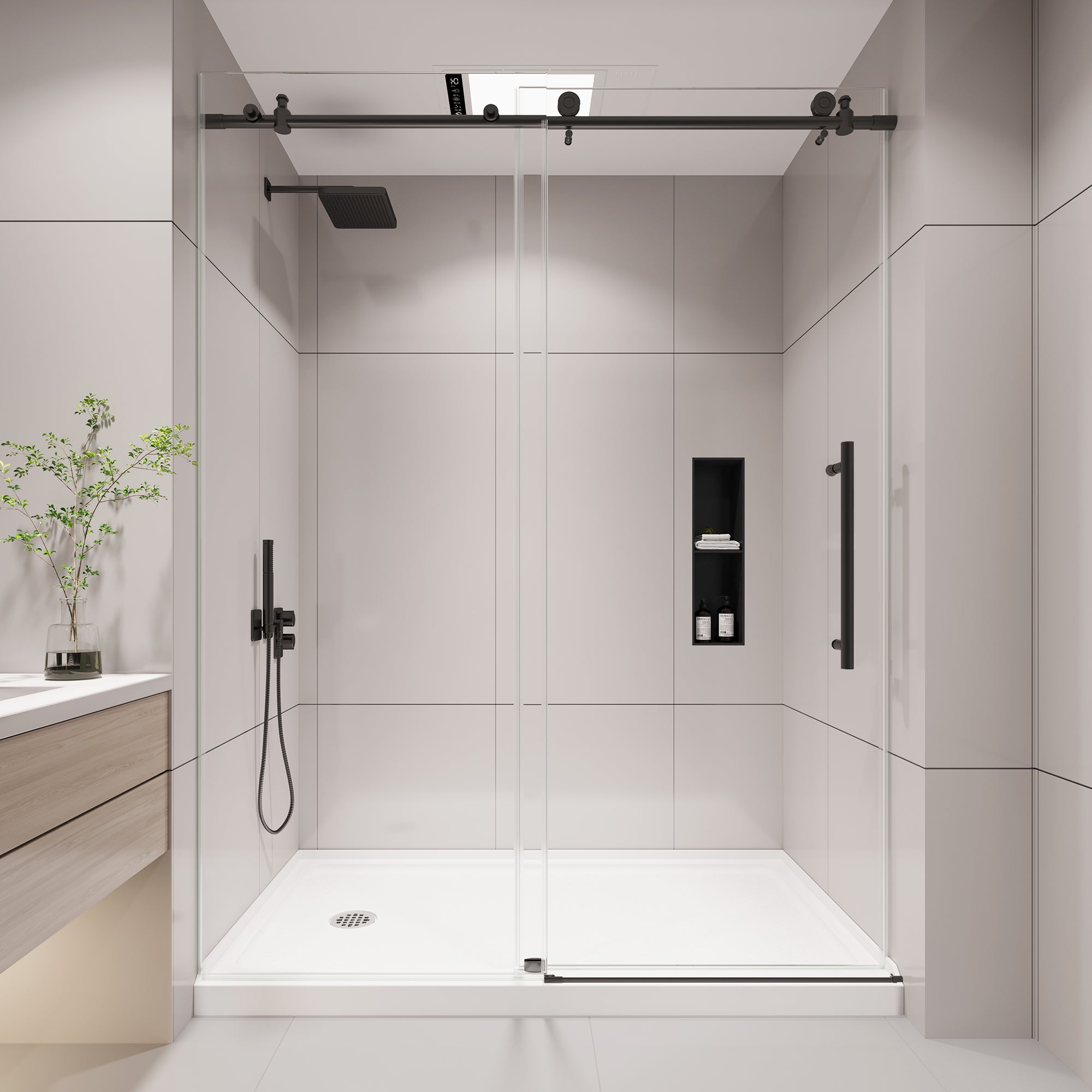
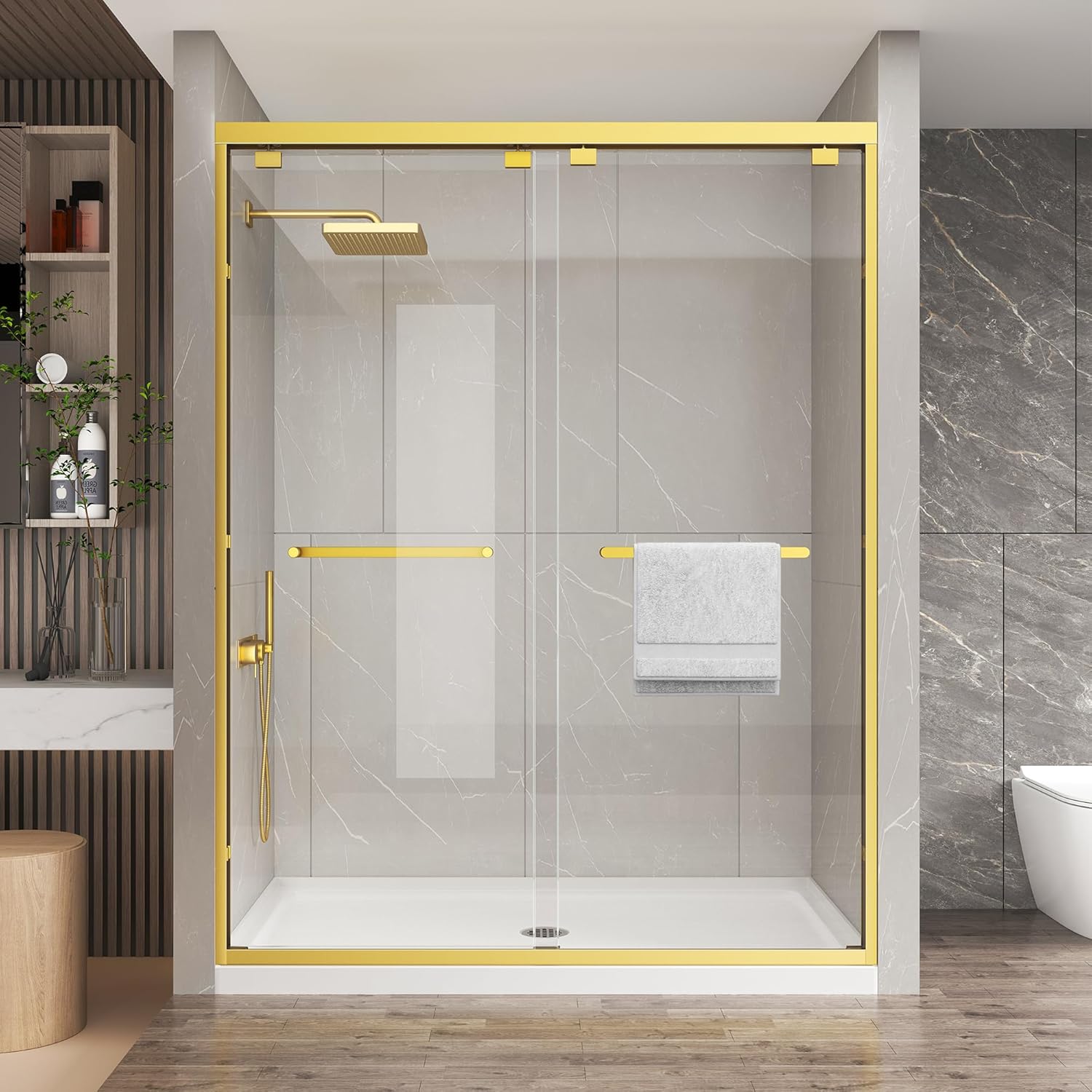
Many shower door problems start with one assumption: that the opening is “standard.” In real remodels, the finished opening often shifts after tile, drywall, backer board, and waterproofing are all in place. A tub surround can be even trickier because the tub rim, tile edge, and wall plumb all affect the final fit. If you are planning a replacement, start with the finished dimensions, not the old curtain rod or the original rough opening.
The Short Answer
Not exactly. Tub shower doors come in common size ranges, but they are not one universal standard size. Most are made to fit adjustable openings, and the exact fit depends on the finished width, wall condition, tub ledge, and door style. A door that fits a 60-inch tub alcove may still need a specific adjustment range to work correctly after tile and wall buildup.
What “Standard Size” Really Means
In bathroom remodeling, “standard” usually means a common category, not a fixed dimension. A tub shower opening is often based on a 60-inch tub, but the finished wall-to-wall measurement may land slightly under or over that number once tile and backer board are installed. Older homes can vary even more because walls are rarely perfectly plumb, and the tub may not sit square to the room.
For tub shower doors, most buyers should think in terms of size range and adjustability. A door system may be built for a nominal 60-inch opening but still allow a few inches of adjustment. That adjustment is what makes the door workable in a real house, where the opening at the top, middle, and bottom may not match exactly.
This is also why tub shower doors are not the same as a framed cabinet or a prefinished furniture piece. The installation has to account for the tub rim, wall surface, and the way the door seals at the front edge. If you are comparing layouts, the Bathtub Shower Doors collection is a useful place to understand the common enclosure styles used over tubs.
How to Measure a Tub Shower Opening
Start with the finished opening, not the old product label. If tile is already installed, measure from the finished wall surface to finished wall surface. If the surround is still open, measure only after you know the final wall thickness. Tile and backer board can change the opening enough to matter, especially on older tub alcoves where every fraction of an inch counts.
Measure at three points: top, middle, and bottom. Use the smallest width if the opening varies. That number usually tells you more than the “nice round” number you were expecting. If the top is wider than the bottom, the walls may lean inward. If the sides bow outward, the door may need more tolerance or a different mounting approach.
Also check the tub rim itself. A tub shower door depends on the front edge of the tub and the wall line working together. If the tub is not level, the door seals may sit unevenly. A tape measure is not enough here; a level or laser line helps you see whether the opening is truly square enough for the door you want.
- Measure the finished wall-to-wall width at the top, middle, and bottom.
- Check the tub rim for level and note any visible slope.
- Measure the height from the tub deck to the top mounting area if the door style uses fixed glass or a frame rail.
- Inspect the wall surfaces for tile thickness, trim buildout, and uneven corners.
- Confirm where studs or solid backing are located for anchors and support.
- Verify that the chosen door style has enough adjustment range for the smallest opening.
A practical jobsite observation: older homes often have walls that are not perfectly plumb. A door can look fine on paper and still bind at the top if the wall leans just enough to change the angle. That is one reason field measurements matter more than the nominal tub size.
Common Tub Shower Door Sizes
Most tub shower door systems fall into familiar opening categories, often centered around the common 60-inch alcove tub. The actual adjustment range varies by design, hardware, and whether the door is framed, frameless, sliding, or pivoting. The table below shows how homeowners usually think about the fit.
| Typical Opening Situation | What to Check | Why It Matters |
|---|---|---|
| Standard 60-inch tub alcove | Finished wall-to-wall width, tub rim level, tile thickness | Most common replacement case, but still needs exact measurements |
| Older tub with uneven walls | Top, middle, bottom width; wall plumb | Variation can affect rail alignment and sealing |
| Tub with new tile surround | Final wall buildout and trim edges | Tile can reduce the opening enough to change door fit |
| Tub with limited side clearance | Door swing or sliding track space | Determines whether a swing or bypass design is practical |
For homeowners who want a cleaner glass look and a more open feel, a framed or frameless tub enclosure can change the visual weight of the room. That does not change the need for accurate sizing. It only changes how much hardware tolerance and wall support you need. If your remodel is focused on a tub alcove layout, KPUY’s Bathtub Shower Doors collection is the most relevant starting point for understanding the main door categories.
In practical terms, the most common issues are not the door itself. They are the opening dimensions, wall condition, and installation plane. A door can fit the nominal size and still be hard to install if the tile edge is proud, the wall is bowed, or the tub apron is not aligned with the surrounding framing.
What Usually Causes a Bad Fit
Most fit problems show up before the door is even hung. The first issue is usually out-of-plumb walls. The second is a finished opening that changed after tile or wall board was added. The third is hardware clearance, especially where hinges, tracks, or a bottom sweep need enough flat, stable surface to do their job.
Common fit problems to watch for:
- Wall surfaces that are not plumb or square
- Opening widths that differ between top, middle, and bottom
- Tile thickness reducing the usable opening
- Tub rims that slope or sit out of level
- Stud locations that do not line up with planned anchor points
- Door swing interference with a vanity, toilet, or nearby wall
- Insufficient space for seals, stops, or track hardware
Another issue comes from assuming the drain or the tub placement is perfectly centered. In some remodels, the tub may be set slightly off center because of framing, plumbing, or wall conditions. That does not always affect the shower door directly, but it often affects the overall symmetry of the surround and the way the enclosure looks once it is installed.
Code and safety considerations also matter. Shower and tub enclosures should use safety glass where required, and tempered glass requirements are commonly tied to shower door applications. For broader safety and planning guidance, the CPSC is a useful public source, and local code officials can clarify what applies in your area.

Choosing the Right Door Style
“Standard size” also depends on the style you choose. A sliding setup, a pivoting panel, and a fixed glass panel all need different amounts of clearance and tolerance. On a tub, that decision matters because the top of the tub, the room depth, and the nearby fixtures can limit what actually works.
Here is a practical comparison of common tub shower door choices:
| Door Style | Space Need | Best Use Case | Main Limitation |
|---|---|---|---|
| Sliding | Low swing clearance | Compact bathrooms and tight tub alcoves | Track alignment must be accurate |
| Pivot or swing | Needs room to open | Bathrooms with enough front clearance | Can conflict with nearby vanities or toilets |
| Fixed panel with partial opening | Moderate open space | Walk-in style tub setups or splash control | Water containment depends on wall and splash zone |
| Framed enclosure | More forgiving | Repairs and remodels with uneven walls | Bulkier visual profile |
A sliding layout usually works better where swing clearance is tight. A pivot door may be the better fit if the room has enough front space and you want easier access. Fixed glass panels can help with water containment, but they still depend on proper sizing, slope, and sealing at the tub edge. For homeowners focusing on the glass look and simplified sightlines, KPUY’s shower door options can be reviewed in the broader Bathtub Shower Doors collection.
Glass thickness and hardware clearance matter too. Thicker glass changes the feel and the hardware requirements, while lighter framed systems may tolerate a slightly less perfect wall condition. Neither option removes the need for solid anchoring, especially if the wall tile is already finished.

Pre-Order Planning Steps
Before you order anything, confirm the layout of the whole bathroom. A shower door does not exist in isolation. It has to work with the vanity, towel bars, baseboard trim, flooring transition, and the location of nearby outlets or switches. In 2026 remodel planning, homeowners are paying more attention to functional clearance, easier cleaning, and cleaner visual lines, but the measurement basics have not changed.
- Identify the exact tub alcove width after all wall finishes are complete.
- Check whether the wall surfaces are plumb and the tub rim is level.
- Decide on sliding, pivot, or fixed-panel access based on room clearance.
- Confirm stud locations or solid backing for anchors and hardware.
- Verify the location of nearby fixtures, including vanities, towel bars, and outlets.
- Review the door’s adjustment range against your smallest measurement.
- Plan silicone sealing and water containment details at the tub edge and wall joints.
- Check local code or ask a qualified professional if anything about the opening is unusual.
Plumbing and building-code context can matter if the remodel includes more than a door swap. If you are also changing the shower base, drain location, or wall structure, a plumbing or building-code reference from the IAPMO or ICC can help frame the planning conversation, especially where local requirements differ.
One more field note: a vanity drawer may clear the room on paper but still hit the door casing once the new trim goes in. The same kind of surprise can happen with shower doors. Always check the full movement path, not just the opening width.
Frequently Asked Questions
Are most tub shower doors made for 60-inch openings?
Many are designed around a 60-inch tub alcove, but that does not mean every door is a fixed 60-inch size. Most have an adjustment range to account for real walls, tile thickness, and small out-of-square conditions. Measure the finished opening before you order.
Should I measure before or after tile?
Measure after tile if the wall surface is changing. Finished wall thickness affects the final opening, and even a small change can affect fit. If you are still in framing or backer board stage, use those numbers only as a rough planning reference.
What if my tub opening is not perfectly square?
That is common in older homes. Slightly out-of-square openings often call for a door with more adjustment or a different style that tolerates irregular walls better. The key is to measure top, middle, and bottom and compare the readings before choosing hardware.
Final Takeaway
So, are tub shower doors standard size? They are common-size products, not one universal size. The right door depends on the finished opening, wall plumb, tub rim condition, and the way the door will move in the room. If you plan the opening carefully, most installations become straightforward. If you guess from the old door or curtain width, the fit can go wrong fast.
For homeowners mapping out a tub replacement or shower door update, start with accurate field measurements and a clear decision on door style. If you want to review tub-specific enclosure options, the most relevant place to begin is KPUY’s Bathtub Shower Doors collection. From there, compare the opening requirements against your actual finished dimensions before you order.

Leave a comment
All comments are moderated before being published.
This site is protected by hCaptcha and the hCaptcha Privacy Policy and Terms of Service apply.