
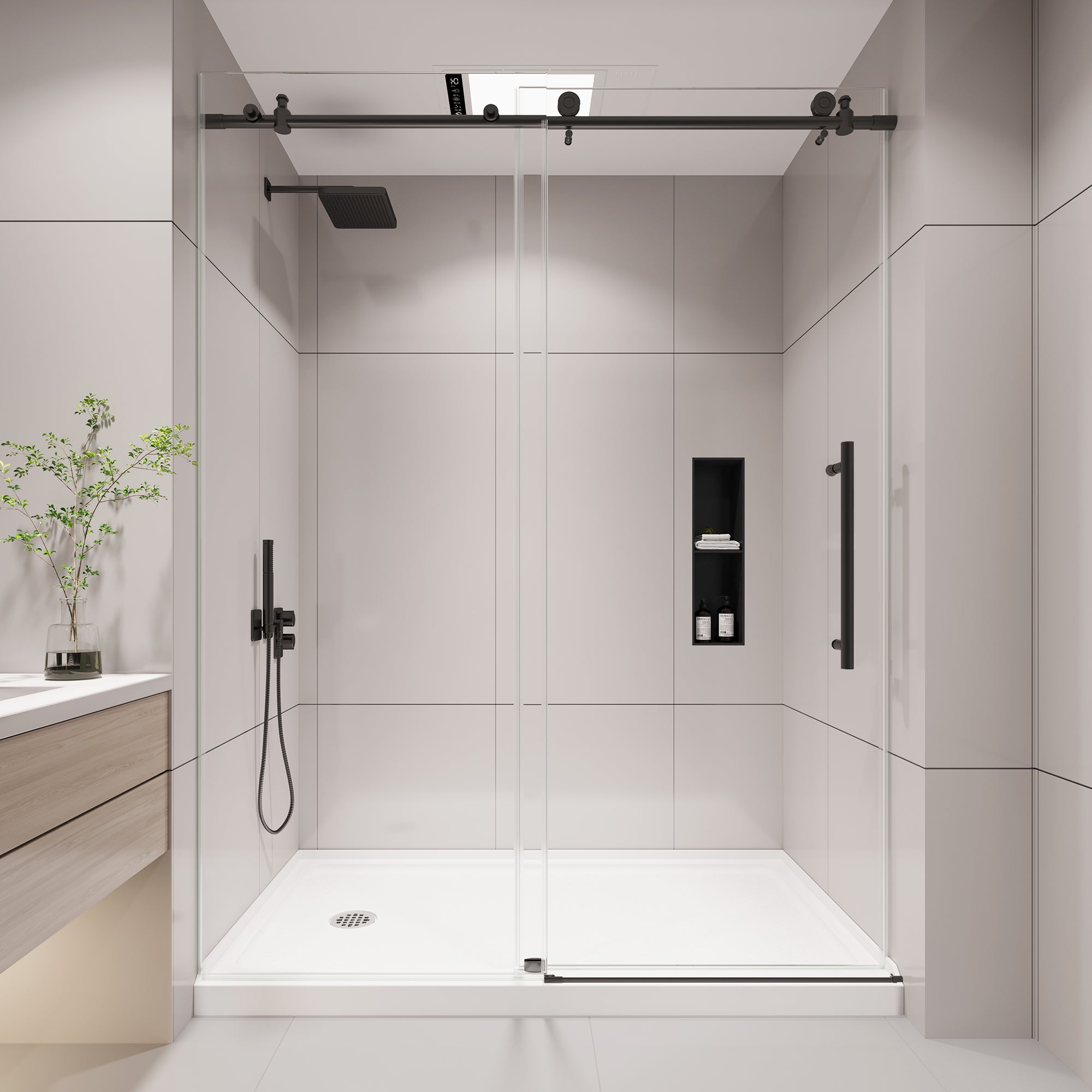
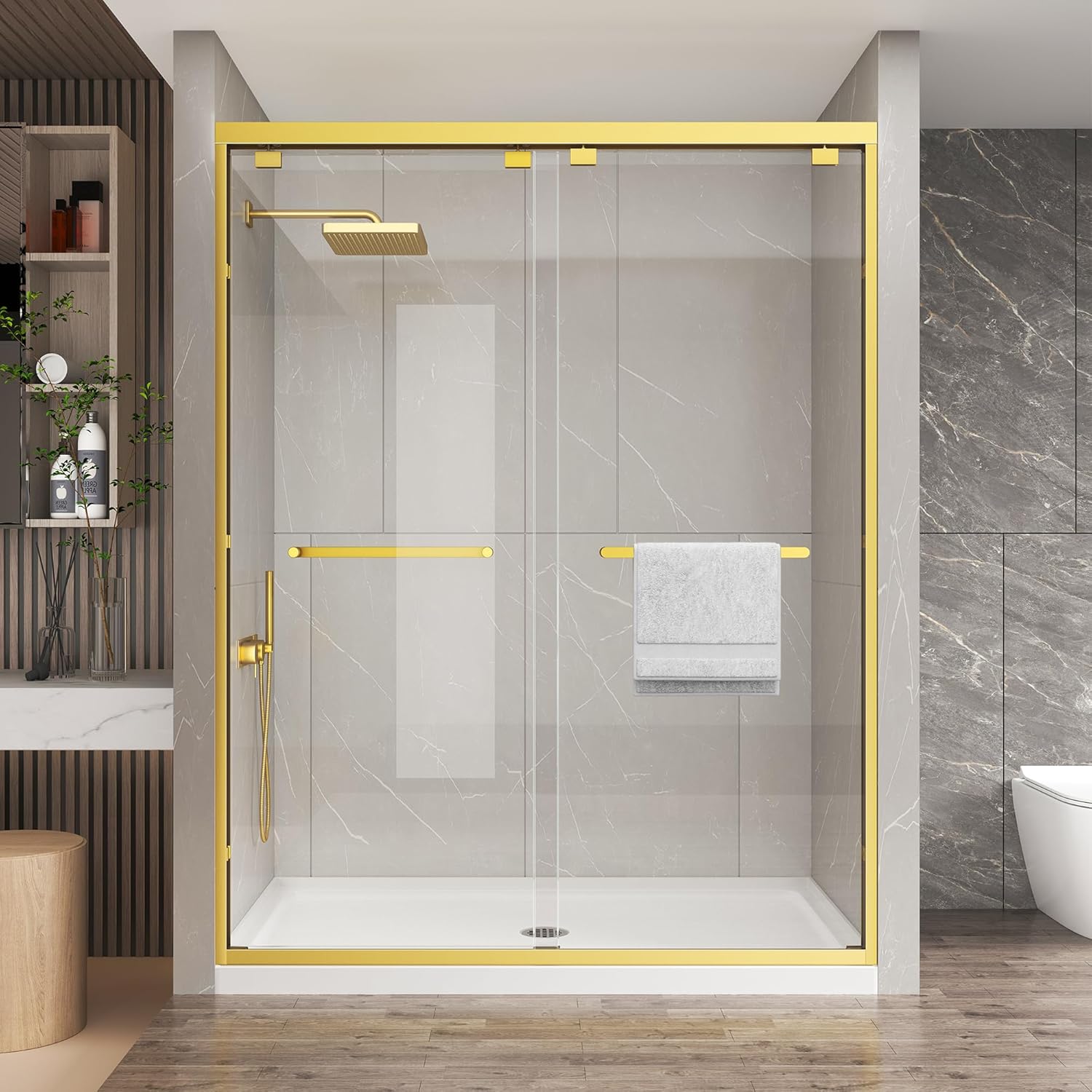
Choosing between 8mm and 10mm shower glass is not just a design preference. It affects the weight of the door, the hardware required, the wall support behind the tile, the long-term stability of the enclosure, and the overall feel of your bathroom. For most residential shower doors, 8mm glass provides the best balance of durability, weight, cost, and smooth daily operation. 10mm glass is better when the design needs a heavier frameless look, larger fixed panels, or a more premium architectural feel.
The simplest rule is this: choose 8mm glass for most sliding, semi-frameless, and high-traffic family bathrooms; choose 10mm glass for large frameless pivot doors, oversized fixed panels, and luxury bathrooms with proper structural wall support. Both options can be safe and durable when the glass is tempered, certified, and installed correctly.
Quick Answer: Should You Choose 8mm or 10mm Shower Glass?
If you want a reliable, smooth-operating shower door for a standard residential bathroom, 8mm glass is usually the smarter choice. It is lighter, easier on rollers and hinges, easier to install, and still strong enough for quality shower door systems when properly tempered and supported.
If you want a true frameless enclosure with larger panels, heavier hinges, minimal metal framing, and a more solid luxury feel, 10mm glass is usually the better choice. It feels more rigid, resists flex better, and gives the shower enclosure a heavier architectural presence. The tradeoff is higher weight, stricter wall requirements, heavier hardware, and higher installation cost.
| Best Choice | Recommended Glass Thickness | Why It Works |
|---|---|---|
| Sliding shower doors | 8mm | Lighter weight helps rollers glide smoothly and reduces long-term hardware stress. |
| Semi-frameless shower doors | 8mm | Strong enough for daily use while remaining cost-effective and easier to install. |
| Frameless pivot doors | 10mm | Greater rigidity gives the door a more solid feel and reduces visible flex. |
| Large fixed glass panels | 10mm | Extra stiffness helps larger panels feel more stable, especially in open shower layouts. |
| Budget-conscious remodels | 8mm | Provides a premium feel without the higher material, hardware, and labor cost of 10mm glass. |
The Basics: 8mm vs 10mm Dimensions
In the US market, 8mm shower glass is commonly described as approximately 5/16 inch, while 10mm shower glass is commonly described as approximately 3/8 inch. The difference sounds small, but that extra 2mm changes the weight, stiffness, hardware requirements, and installation difficulty.
Both 8mm and 10mm glass are considered heavy shower glass compared with thinner 6mm glass often found in basic builder-grade enclosures. Moving into the 8mm and 10mm range allows manufacturers to reduce bulky metal framing and create a cleaner, more open bathroom look.
The important difference is not safety classification alone. When properly tempered and certified, both thicknesses can be safe. The real difference is mechanical behavior: 8mm glass is lighter and more efficient, while 10mm glass is heavier and more rigid.

Safety First: ANSI Standards and Tempered Glass
Before comparing thickness, start with safety. Standard plate glass should not be used in a bathroom shower enclosure. Shower doors and glass panels should use tempered safety glass that meets recognized safety glazing standards such as Safety Glazing Certification Council (SGCC) certification and ANSI Z97.1 impact requirements.
Tempered glass is heat-treated and rapidly cooled during manufacturing. This process creates surface compression that makes the glass much stronger than ordinary glass. If tempered glass breaks under extreme impact, it is designed to break into small, blunt pieces rather than long, sharp shards.
Both 8mm and 10mm shower glass can go through the same tempering and certification process. Thickness does not replace certification. A thicker piece of uncertified glass is not automatically better than a properly certified thinner one. For shower doors, the ideal choice combines the right thickness, tempered safety glass, suitable hardware, and correct installation.
For a deeper safety explanation, review our guide on why SGCC certification matters for shower glass safety.
8mm Shower Glass: Practicality and Engineered Performance
8mm shower glass, roughly 5/16 inch thick, is one of the most practical choices for modern residential bathrooms. It offers a strong balance between durability, weight, cost, and ease of use. Contractors commonly use 8mm glass for sliding shower doors, bypass systems, semi-frameless enclosures, and family bathrooms where the door will be used multiple times every day.
Advantages of 8mm Glass
- Lighter weight: 8mm glass weighs approximately 4 pounds per square foot, placing less strain on rollers, hinges, wall profiles, and installation crews.
- Smooth mechanical operation: Because it is lighter than 10mm glass, 8mm glass is especially suitable for sliding systems where roller performance matters.
- Lower hardware stress: Lighter panels can reduce long-term wear on rollers, brackets, and tracks, especially in high-traffic bathrooms.
- Installation efficiency: 8mm panels are easier to maneuver and set in place, which can reduce installation difficulty and labor cost.
- Cost-effective performance: 8mm glass delivers a premium look without the higher material, hardware, and installation cost associated with 10mm systems.
Drawbacks of 8mm Glass
- More visible flex: In a large completely frameless pivot-door setup, 8mm glass may show slight movement when pulled from the handle.
- Less monolithic feel: It does not have the same heavy, rigid, luxury feel as 10mm glass.
- May need more support: Larger fixed panels may require U-channels, stabilizer bars, or other support hardware to reduce movement.
For many homeowners, these drawbacks are not deal breakers. In fact, 8mm glass is often the better engineering choice when the goal is smooth daily operation rather than maximum weight and stiffness.
10mm Shower Glass: The Gold Standard for Frameless Luxury
10mm shower glass, roughly 3/8 inch thick, is commonly used in premium frameless shower enclosures. It has a heavier feel, stronger rigidity, and a more substantial exposed edge. When people describe a frameless shower door as feeling like a luxury hotel enclosure, they are often reacting to the mass and stiffness of 10mm glass.
Advantages of 10mm Glass
- Superior rigidity: 10mm glass resists flex better than 8mm glass, which makes it feel more stable in larger frameless designs.
- Premium door feel: A 10mm pivot door has a heavier, more solid movement when opened and closed.
- Better for true frameless layouts: Larger frameless designs with minimal metal support often benefit from the extra stiffness of 10mm glass.
- Stronger visual presence: The thicker polished edge can make the enclosure feel more custom and architectural.
- Large panel support: Larger fixed panels and tall glass sections often feel more secure with the added rigidity of 10mm glass.
Drawbacks of 10mm Glass
- Heavier load: 10mm glass weighs approximately 5 pounds per square foot. A large door or fixed panel can become extremely heavy.
- Stricter wall requirements: Heavy frameless doors should be mounted into solid blocking behind the tile, not just drywall, backer board, or weak anchors.
- Higher cost: The glass, hardware, transportation, and labor usually cost more than an 8mm setup.
- More difficult installation: The extra weight often requires a skilled two-person installation crew.
10mm glass is excellent when the bathroom structure supports it. It is not automatically the best choice for every project. If the wall framing is weak, the shower opening is out of plumb, or the design uses a sliding mechanism where lighter movement matters, 8mm may be the better practical choice.
Direct Comparison: 8mm vs 10mm
Use this side-by-side comparison to evaluate which glass thickness fits your bathroom layout, door type, hardware, and budget.
| Technical Specification | 8mm Glass / 5/16" | 10mm Glass / 3/8" |
|---|---|---|
| Approximate Weight | ~4.0 lbs per sq. ft. | ~5.0 lbs per sq. ft. |
| Primary Advantage | Lighter, smoother, more cost-effective | Heavier, more rigid, more premium |
| Best Application | Sliding doors, semi-frameless doors, family bathrooms | Frameless pivot doors, large panels, luxury custom builds |
| Structural Rigidity | Good, but may flex in large unsupported panels | High rigidity with a more solid feel |
| Hardware Requirements | Quality rollers, U-channels, standard heavy-duty profiles | Reinforced hinges, stronger clamps, solid wall support |
| Wall Blocking | Recommended | Strongly recommended and often essential |
| Installation Difficulty | Moderate | Higher due to weight and precision requirements |
| Cost | Lower overall project cost | Higher glass, hardware, and labor cost |
| Best Look | Sleek, clean, modern, lightweight | Bold, architectural, premium, substantial |
Best Thickness by Shower Door Type
The best glass thickness depends less on the bathroom as a whole and more on the type of shower door you plan to install. A sliding system, pivot door, frameless enclosure, and fixed walk-in panel all place different stress on the glass and hardware.
Sliding Shower Doors
For most sliding shower doors, 8mm glass is usually the more practical choice. It provides a solid, premium feel while keeping the panels light enough for smooth roller operation and reduced long-term hardware wear. If you are building an alcove shower or replacing an older bypass door, explore sliding shower doors with tempered safety glass.
Frameless Shower Doors
For true frameless shower doors, 10mm glass offers stronger rigidity and a heavier architectural feel. It is especially useful when the design uses minimal metal framing, exposed hinges, or larger glass panels. For a cleaner open look, compare frameless shower doors designed for modern bathrooms.
Pivot Shower Doors
Pivot shower doors place direct stress on wall-mounted hinges, so glass weight and wall support matter. 8mm glass can work well in engineered semi-frameless systems, while 10mm glass is better suited for heavy frameless pivot designs with proper wood blocking behind the wall. See pivot shower doors for flexible bathroom layouts.
Fixed Shower Glass Panels
Fixed panels depend on panel width, panel height, wall support, and whether a stabilizer bar or return panel is used. Smaller panels may work well with 8mm glass, while larger walk-in panels often benefit from the extra stiffness of 10mm glass. For open shower layouts, browse fixed shower glass panels for walk-in showers.
All Shower Doors
If you are still comparing different door types, start with the full KPUY Shower Doors collection to compare sliding, frameless, pivot, and glass panel options by size, finish, and installation style.
Contractor Advice: Field Variables to Consider
Selecting glass thickness on paper is only part of the decision. Actual field conditions often determine whether an 8mm or 10mm system will perform better. Before ordering glass or hardware, evaluate the wall structure, plumb condition, curb slope, opening width, and installation method.
Out-of-Plumb Walls
Walls are rarely perfectly vertical, especially in older homes. A wall is considered plumb when it is straight up and down from floor to ceiling. If your tiled walls are out of plumb by more than about 1/4 inch, a frameless glass panel may not sit evenly, which can create gaps and water leakage points.
10mm frameless glass is less forgiving because it is heavier and typically relies on more precise hinge and panel alignment. Many 8mm systems use adjustable wall profiles or U-channels that can compensate for minor wall irregularities while still maintaining a clean look.

Curb Pitch and Waterproofing
The shower curb should slope inward toward the drain. If the curb is flat or slopes outward, water can collect under the door sweep and leak toward the bathroom floor. This matters for both 8mm and 10mm glass, but it becomes especially important with heavy frameless doors because the bottom seal must align properly with the curb surface.
If water is already pooling near your shower door or threshold, glass thickness alone will not solve the issue. You may need to correct the slope, seal, drain location, or shower base design. For related troubleshooting, read our guide on how to tell if a shower door threshold needs better slope.
Hinge Support and Framing
A heavy frameless pivot door places dynamic stress on the wall every time the door opens and closes. If you choose 10mm glass, do not rely on weak anchors or thin backer board alone. The safest approach is to install solid wood blocking behind the tile at the planned hinge locations.
- Rough-in phase: Install solid wood blocking where the hinges, brackets, or clips will mount.
- Waterproofing phase: Apply the correct waterproofing system over the wall assembly before tile installation.
- Tile phase: Avoid running plumbing lines through hinge mounting zones to prevent drilling conflicts later.
- Glass measuring phase: Measure for glass only after tile and grout are fully finished and cured.
Hardware Compatibility
Shower door hardware is engineered for a specific glass thickness. Hinges, rollers, brackets, gaskets, and wall channels are not always interchangeable between 8mm and 10mm glass. A hinge designed for 8mm glass may not fit 10mm glass, and a roller system designed around 8mm panel weight may not be appropriate for heavier 10mm panels.
Design Fit: Minimalist vs Heavy Architectural Look
The visual difference between 8mm and 10mm glass is subtle from a distance but noticeable in the overall feel of the enclosure. The right choice depends on whether you want the shower to disappear into the room or stand out as a heavy architectural feature.
The Minimalist Shower Look
If your bathroom uses detailed tile, natural stone, or a lighter design palette, 8mm glass can help the enclosure feel less visually heavy. The thinner edge profile keeps the shower clean and open without overpowering the surrounding materials.
The Heavy Architectural Look
If your bathroom uses matte black hardware, bold metal finishes, larger panels, or a luxury frameless layout, 10mm glass can look more substantial. The thicker polished edge and heavier door movement can make the enclosure feel more custom and high-end.
Neither look is automatically better. A well-designed 8mm sliding shower door can feel more refined than an oversized 10mm enclosure installed on weak walls. The best result comes from matching the glass thickness to the enclosure type, hardware, and structure behind the wall.
Frequently Asked Questions
Is 8mm glass safe for a frameless shower door?
Yes, 8mm tempered glass can be safe for shower doors when it is properly certified, correctly supported, and installed with compatible hardware. However, safety and optimal performance are not the same thing. In large frameless pivot doors or oversized fixed panels, 10mm glass may feel more rigid and stable.
Is 10mm glass always better than 8mm?
No. 10mm glass is heavier and more rigid, but it is not automatically better for every shower door. For sliding systems, 8mm glass often performs better because it reduces roller stress and keeps the door easier to operate. For true frameless pivot doors or large fixed panels, 10mm glass may be the better choice.
Does 10mm glass require special structural reinforcement?
For heavy frameless doors, solid wall support is strongly recommended. A 10mm door should be mounted into proper blocking or strong framing behind the tile. Installing heavy hinges into weak wall material can lead to sagging, cracked grout, alignment problems, or long-term hardware failure.
Is 10mm glass harder to clean than 8mm?
The glass thickness itself does not make cleaning harder. Maintenance depends more on the coating, frame design, track layout, and number of metal edges where soap scum can collect. Frameless 10mm designs may have fewer metal channels, while many 8mm sliding systems are easier to operate and clean when designed with accessible tracks and coated glass.
Can I replace 8mm shower glass with 10mm glass later?
Usually, no. Shower door hardware is designed around a specific glass thickness and weight. Hinges, rollers, channels, seals, and brackets that fit 8mm glass may not fit 10mm glass. If you want 10mm glass, decide before purchasing the enclosure and confirm that the wall structure and hardware support the added weight.
What is the cost difference between 8mm and 10mm shower glass?
10mm glass usually costs more than 8mm glass, but the glass itself is only part of the total cost. The larger difference often comes from heavier hardware, more difficult handling, stronger wall preparation, and more specialized installation. In many residential remodels, 8mm glass provides the best performance-to-cost ratio.
Which thickness is better for a small bathroom?
For many small bathrooms, 8mm glass is the better choice because it feels lighter, cleaner, and less visually bulky. It also works well with sliding doors, which are often practical in smaller spaces where a swinging door may not have enough clearance.
Which thickness is better for a luxury bathroom?
For a luxury bathroom with strong wall support and a true frameless design, 10mm glass often provides the heavier, more architectural feel homeowners expect. It works especially well with large fixed panels, pivot doors, and minimal metal hardware.
Final Thoughts for Your Remodel
The 8mm vs 10mm shower glass decision is not about choosing the thickest glass possible. It is about matching the glass thickness to the shower door type, wall structure, hardware system, and design goal.
Choose 8mm shower glass if you want a smooth, reliable, cost-effective system for sliding doors, semi-frameless enclosures, smaller bathrooms, or high-traffic family use. Choose 10mm shower glass if you want a heavier frameless look, larger fixed panels, stronger rigidity, and your walls are properly reinforced for the added weight.
Both options can deliver a safe, modern, and durable shower enclosure when the glass is tempered, certified, and installed correctly. To compare real door styles by layout, finish, and size, browse the full KPUY Shower Doors collection.

Leave a comment
All comments are moderated before being published.
This site is protected by hCaptcha and the hCaptcha Privacy Policy and Terms of Service apply.