
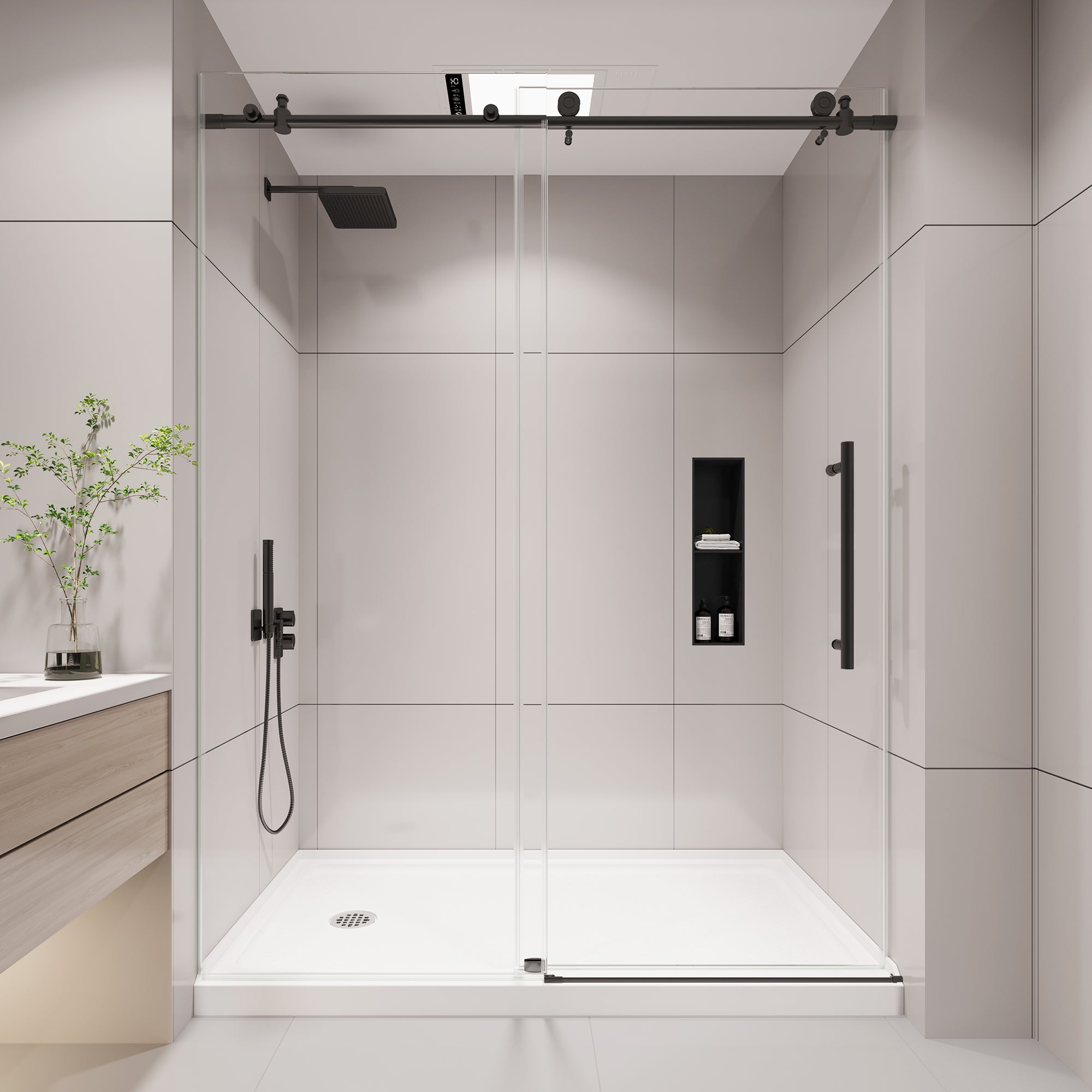
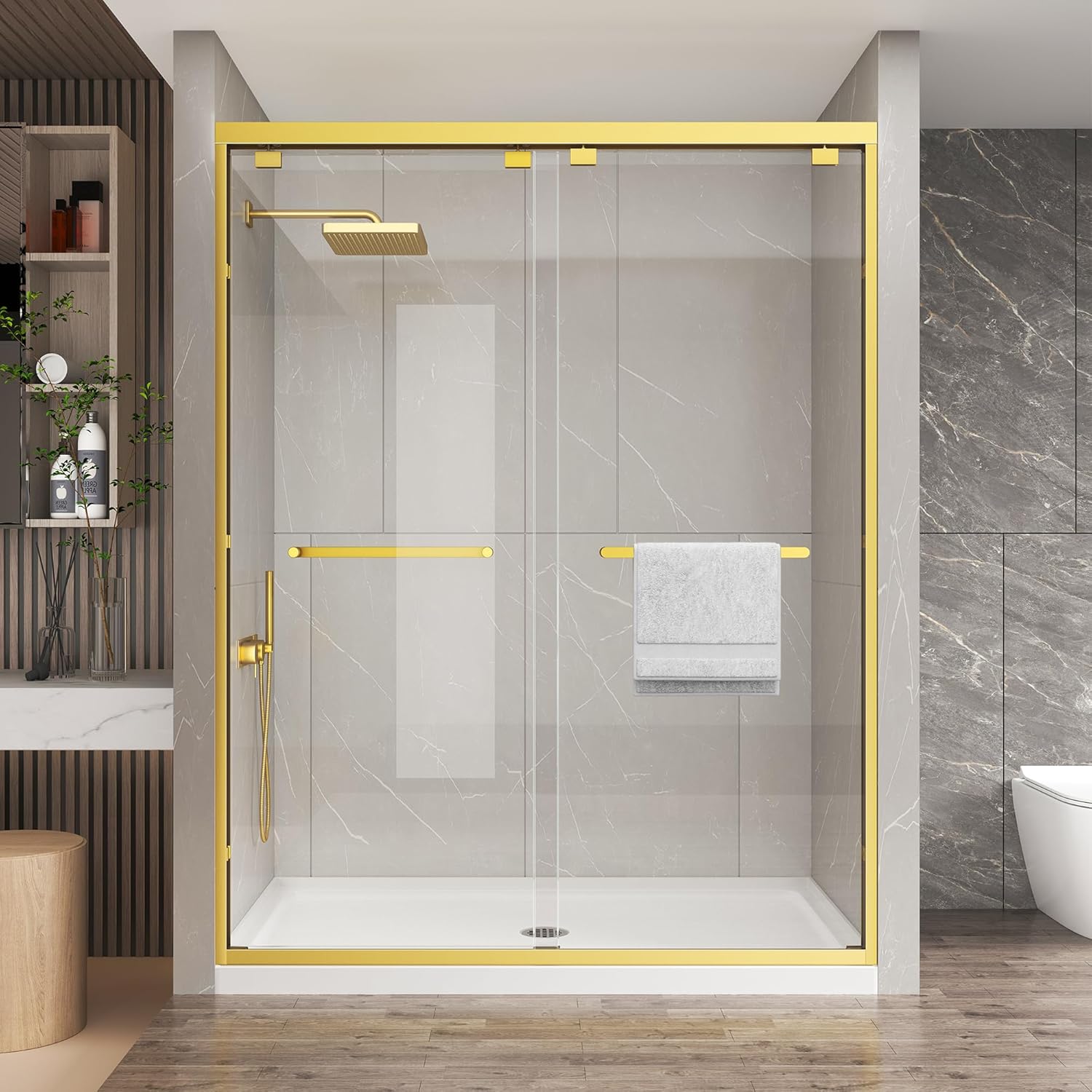
Homeowners in 2026 want shower doors that feel modern, durable, and functional — not just a pretty face. From slim-profile frameless systems and low-iron glass to smart hardware that actually makes daily use quieter and safer, the upgrades that read as “current” now are practical improvements that survive a real renovation. This article walks through the specific sliding shower door features contractors are installing right now, what to look for on-site, and how those choices affect water containment, long-term maintenance, and resale value.
Quick answer: What sliding shower door features feel current in 2026?
Frameless or minimal-frame construction with low-iron clear tempered glass (3/8" or 1/2"), soft-close/anti-jump rollers, concealed or slimline hardware in matte black or satin brass, and hydrophobic glass coatings for easy cleaning. Prioritize tempered glass that meets ANSI Z97.1 and hardware with stainless components rated for wet environments. For accessibility, choose doors with smooth threshold transitions and handles that work as grab surfaces when specified for safety.
Top sliding shower door features for 2026
- Low-iron clear glass for the "invisible" edge — gives a high-end look compared with standard green-tint glass.
- 3/8" (10 mm) to 1/2" (12 mm) tempered glass as the go-to thicknesses; 1/2" feels sturdier and reduces flex on larger panels.
- Soft-close rollers and anti-jump mechanisms — reduces maintenance calls and prevents glass from dislodging on out-of-plumb tracks.
- Slimline top and bottom rails or completely frameless top-hung systems when wall framing and header capacity allow.
- Durable finishes like PVD-coated brass, satin nickel, and matte black that resist corrosion better than plated finishes.
- Hydrophobic coatings and easy-clean glass treatments that reduce mineral build-up in hard-water areas.
- Accessible thresholds with discreet tapering and scented seal options for better water containment without tripping hazards.
Glass, safety and code basics
Use only tempered glass for shower doors. Tempered glass must meet ANSI Z97.1 safety glazing standards to be acceptable for wet-area doors and enclosures. For straight sliding doors, 3/8" tempered glass is the most common choice; 1/2" is preferred for wider panels over 30–36 inches to reduce deflection and improve perceived quality.
For authoritative reading on product standards and best practices, consult the National Kitchen & Bath Association guidance and the Glass Association of North America resources: NKBA and GANA.
Hardware, operation, and finishes
Hardware options matter more now than ever because homeowners notice how a door feels. Cheap rollers and thin aluminum tracks create noise, binding, and early failure. Invest in systems with sealed stainless-steel bearings, stainless fasteners, and corrosion-resistant finish coatings. Soft-close rollers are no longer a luxury; they cut down on slam damage and make a door feel premium.
Common finishes that read as contemporary in 2026:
- Matte black — pairs well with warm natural stone and white tile.
- Satin brass / satin gold (PVD) — trending as a modern warm metal that resists tarnish.
- Brushed nickel / stainless — durable and low-visibility for busy bathrooms.
When specifying hardware, check the load rating, roller diameter, and track depth. A deeper track helps keep water and debris from fouling the rollers and is a small tradeoff that saves service calls. Look for systems with replaceable rollers and a documented parts list — that’s a sign the manufacturer expects the product to be serviced, not thrown away.

Jobsite realities and installation tolerances (real-world experience)
I'll be blunt — houses are messy. Older homes almost always have out-of-plumb walls; I've measured walls 3/4" out over a 7-foot height. That makes frameless sliding doors tricky without shims and fillers. Expect to build in adjustability: allow 1/4" to 3/8" of shim space under tracks, and confirm wall plumb before ordering glass. Glass gets cut to the finished opening, and most fabricators work with a glass tolerance of +/- 1/8". Plan for that.
On rough-in details: check the curb slope and drain location before committing to a door style. Standard shower floor slope is about 1/4" per foot to the drain; if the slope runs perpendicular to the sliding door track, you need a threshold profile that still makes contact along the track length to prevent leakage. Also verify the header or top jamb can support a top-hung system if you want frameless top support — some remodels need blocking added behind finished walls.
Practical installer tips:
- Measure twice — measure wall plumb, tile depth, and finished threshold height. Record out-of-plumb at top and bottom.
- Order glass after tile/stone is set unless you are doing a fully prepped alcove; tile variation changes the opening by up to 1/4".
- Specify glass edgework and hole locations for handles/rollers to match the actual installed position; moving holes is expensive.
- Leave a minimum edge clearance of 1/8" between glass and studs/trims and a typical bottom rail clearance of 1/4".
From field experience, the most common service call comes from improper leveling of the top track or undersized rollers. If the track is off even 1/16", the door won't seat properly and water will find the smallest gap. Tight tolerances at install save callbacks.

Cost, ROI, and what to prioritize
Not every luxury feature delivers the same return. Prioritize features that reduce long-term maintenance and callbacks:
- Tempered low-iron glass and quality rollers — higher initial cost, fewer repairs, and better resale appeal.
- Corrosion-resistant hardware — especially in coastal or hard-water homes.
- Hydrophobic coatings in hard-water areas — reduces cleaning time and keeps glass clear longer.
If budget is tight, save on decorative extras and spend on functional upgrades: thicker glass, soft-close rollers, and good seals. These show up when a buyer inspects the bathroom. A clean, smooth-operating sliding door has outsized influence on perceived quality compared with a budget framed unit that leaks or squeaks.
Quick spec comparison
| Feature | Why it matters | Common spec | Installer note |
|---|---|---|---|
| Glass type | Clarity and safety | Low-iron tempered, 3/8" or 1/2" | Order after tile; allow +/-1/8" tolerance |
| Rollers | Smooth operation, longevity | Stainless bearings, sealed | Check load rating for panel width |
| Finish | Durability and look | PVD or powder-coated stainless | Avoid plated finishes in coastal homes |
| Seals | Water containment | Magnetic or drip rails | Test with 1–2 gallons after install |
FAQs
How thick should sliding shower door glass be?
For most sliding doors, use 3/8" (10 mm) tempered glass as a minimum. For panels wider than ~30–36 inches, consider 1/2" (12 mm) to reduce panel flex and feel more solid. Fabricators will quote a glass tolerance (commonly +/- 1/8"), so factor that into on-site measurements.
Are frameless sliding doors better than framed?
Frameless or minimal-frame systems look more contemporary and are easier to clean because there are fewer ledges where soap scum accumulates. However, they require more precise walls and blocking and usually cost more. If walls are substantially out-of-plumb or you lack adequate blocking, a semi-frameless system can be the practical choice that still reads modern.
How do I prepare my bathroom for a sliding shower door installation?
Quick checklist:
- Confirm finished tile depth and threshold height.
- Measure wall plumb top and bottom and note any out-of-plumb distances.
- Ensure blocking in the header if using top-hung hardware.
- Plan for tolerances and order glass after tile is set.
Wrap-up
In 2026, practical quality reads as modern: low-iron tempered glass, corrosion-resistant hardware, well-engineered rollers, and details that account for real-world jobsite tolerances. On real remodels I do, those are the features that keep homeowners happy and reduce service calls. If you’re shopping for a sliding system, look for parts lists, serviceable rollers, and clear installation tolerances before buying.
Want to see current production options that match these practical trends? Browse the selection at KPUY Shower Doors to compare styles, glass thicknesses, and hardware finishes.

Dejar un comentario
Todos los comentarios se revisan antes de su publicación.
Este sitio está protegido por hCaptcha y se aplican la Política de privacidad de hCaptcha y los Términos del servicio.