
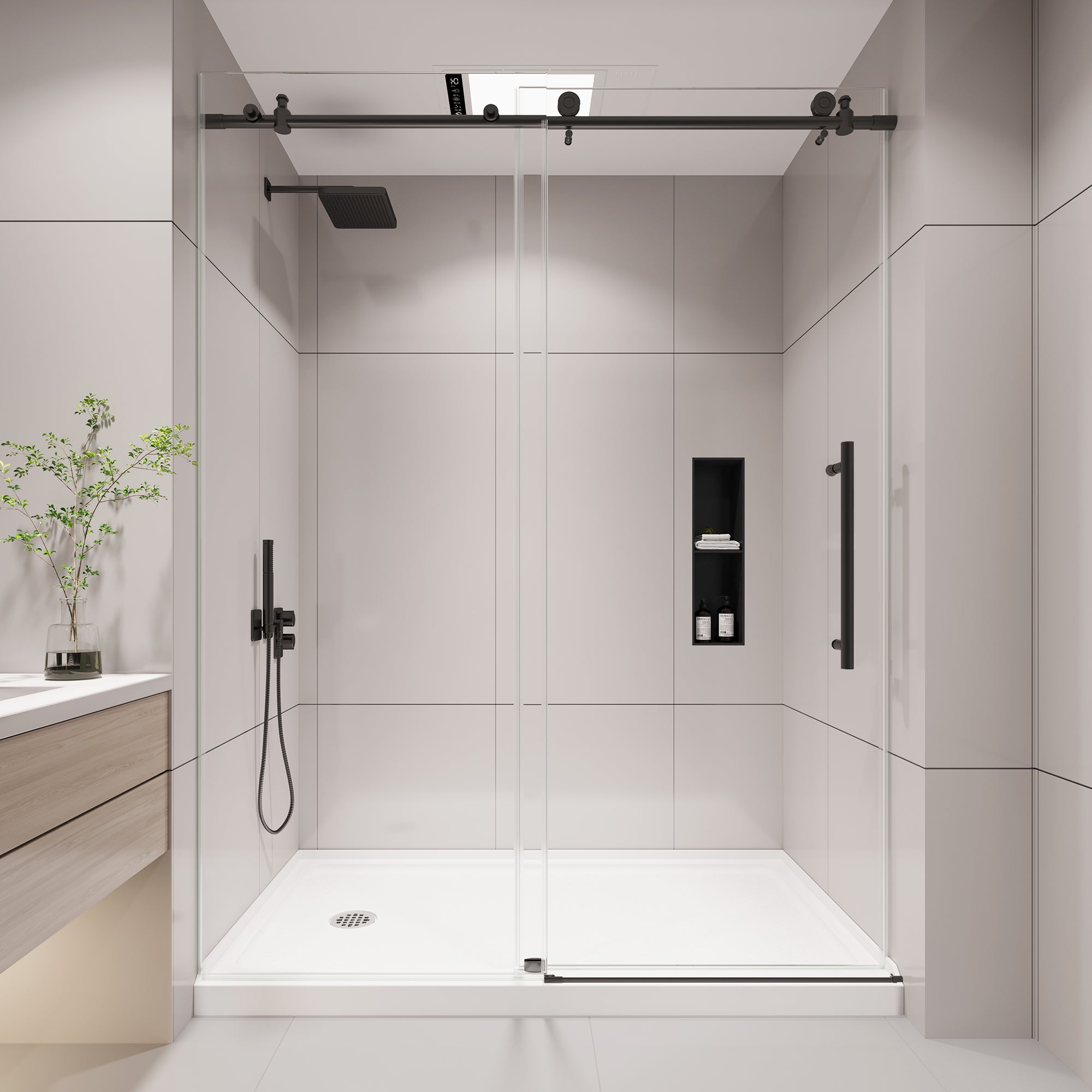
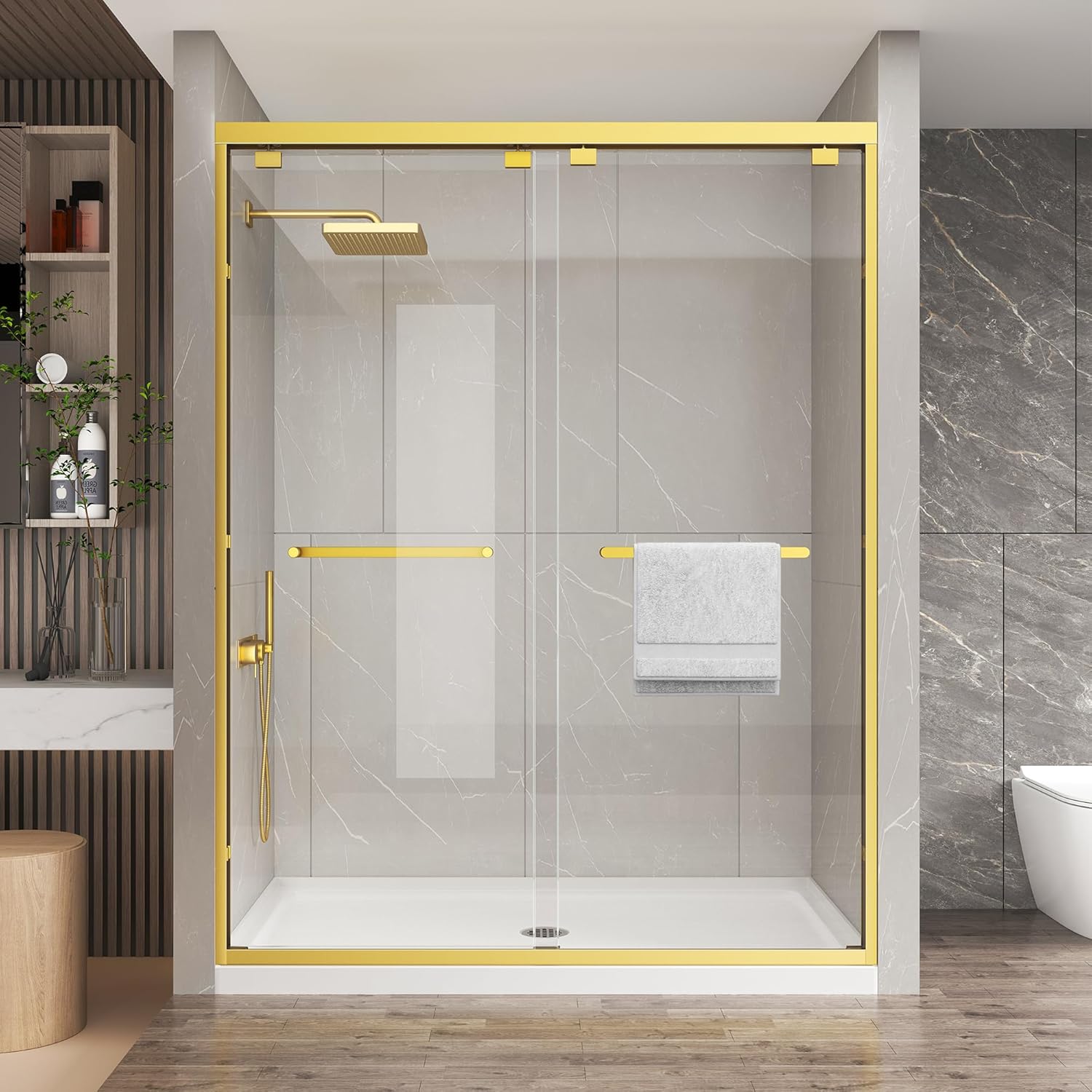
Most homeowners ask what makes a shower door look "heavy" or "visually bulky." From decades of on-site installs I can tell you: the single biggest visual offender is the frame and profile width around the glass. That metal edge becomes the eye's border — thin, minimal profiles keep the glass reading as open space; wide extrusions or thick headers make the enclosure read as a box. Below I break down the real-world factors that create visual bulk, how they interact with site conditions like out-of-plumb walls and curb slope, and the practical choices that get you a light, modern look without sacrificing code-compliant safety or performance.
Quick Answer (Featured Snippet)
Shortest answer: The profile and frame width around the glass affects visual bulk the most. A thin frameless or semi-frameless system with minimal top header and narrow side channels will make the shower read much lighter than thicker framed systems, even if the glass thickness is high. In practice, choose minimal profiles, clear tempered glass, and finishes that blend with the tile to reduce perceived mass.
Why the Frame/Profile Width Matters Most
The eye naturally tracks edges. When you have a 1/4" to 1/2" gap and polished edge glass, the glass disappears and the space feels open. When you add a 1" or wider aluminum extrusion, that outline becomes the dominant visual line. Here are the key points to understand:
- Profile takes up visual real estate: A 1" metal frame around a 60" opening equals 4" of visual obstruction across the plane; that’s not trivial.
- Headers and channels read heavier than bottoms: People notice top lines first. A bulky header or rail across the top makes the entire enclosure feel boxed in.
- Framed vs. frameless vs. semi-frameless: Frameless (minimal clips and hinges) reads lightest. Semi-frameless (thin vertical stile) adds a little weight. Fully framed is the heaviest visually.
Practical takeaway: if visual lightness is the priority, push for a frameless or low-profile semi-frameless solution and details that minimize exposed metal width.

Glass Thickness, Clarity, and Edge Finish
Many homeowners worry that thicker glass will look heavier. In reality, thickness plays second fiddle to profile width. But it does matter for safety and perceived depth.
| Factor | Typical Range | Visual Impact |
|---|---|---|
| Tempered glass thickness | 3/8" (10mm), 1/2" (12mm) common | Medium — thicker glass looks more solid but still reads transparent if edges are polished |
| Glass clarity (low-iron) | Standard vs. low-iron (extra clear) | High — low-iron reduces green edge and looks cleaner |
| Edge finish | Polished, ground, beveled | Medium — polished thin edges disappear best |
Practical job note: I specify 3/8" to 1/2" tempered glass based on door size and hinge type. For door widths under 30", 3/8" is fine. For larger panels and inline walls, 1/2" reduces flex. Always confirm with glass fabricator and local code. Also, low-iron glass reduces the green cast on thicker pieces and makes the edge look thin from a distance, which helps the overall lightness.
Hardware Finish, Color, and Visual Weight
Hardware finish influences perceived weight. Dark matte finishes create contrast and can make profiles read heavier. Brushed nickel, chrome, or polished stainless tend to reflect tile tones and reduce contrast.
- Choose finishes close to tile grout or metal accents in the bathroom to minimize contrast.
- Use continuous pulls and minimal visible fasteners for a cleaner line.
- For frameless doors, select hinges and clips that are compact and proportionate to glass thickness.
Pro tip: A slim, stainless hinge with matching pull in the same plane as the wall makes the door disappear more effectively than a bold black or bronze finish.

Site and Structural Factors (Real Job Notes)
On real remodels we rarely start with perfect walls and floors. Out-of-plumb walls, inconsistent tile returns, and curb slope force hardware choices that affect visual bulk.
- Out-of-plumb walls: We often see walls out by 1/4"–1/2" over a 6' height. That requires jambs, shims, or a wider channel to square the door, which increases visible profile.
- Rough-in dimensions: If the opening isn't true to plan, glass shops will add stop edges or thicker returns. That shows as extra metal around the glass.
- Curb slope: A poorly sloped curb may need a raised threshold or wider bottom channel to properly seal the door — again increasing bulk.
From a 20+ year perspective, I always tell homeowners: budget time and money for squareing the rough opening. Spending a day to build a true plumb jamb or use thin shims and custom glass reduces the need for heavy extrusions later.
Installation Tolerances That Affect Look
Installation tolerance is where the architect's drawing meets the reality of the house. Here are common tolerance-related factors that change the visual outcome:
- Glass edge clearance: Typical factory tolerance is ±1/8" to ±1/4". Allowing an even 1/8" gap gives neater reveal lines; large gaps need wider gaskets or channels.
- Hinge stop and w/door swing: Incorrect hinge location may force a wider jamb or butt plate visible on the face of the wall.
- Tile reveal differences: If tile depth varies between the curb and return wall, installers will use a filler or channel to hide the step, adding an obvious line.
On an old mid-century home I worked on, walls bowed and the glass shop recommended a 1" vertical stile on the outboard side to hide a 3/8" out-of-plumb condition. That single 1" metal line added more perceived bulk than the glass itself — and the owners regretted not spending for a proper shim and re-tile.
What Homeowners Can Control — Quick Checklist
Here’s a practical checklist to get the lightest-looking shower door the first time:
- Prioritize minimal profile systems (frameless or narrow semi-frameless).
- Specify low-iron tempered glass if clarity matters.
- Match hardware finish to surrounding tile/fixtures to reduce contrast.
- Address out-of-plumb conditions at rough-in — it avoids bulky fixes later.
- Ask your glass fabricator for polished thin edges and exact tolerances.
- Confirm curb and floor transitions so bottom channels aren’t oversized.
Decision flow for homeowners: If you want the lightest visual result, choose a frameless system, low-iron glass, slim hardware in a finish that blends with tile, and correct the opening before glass is measured.
Frequently Asked Questions
Does thicker glass make a shower look bulkier?
No, not by itself. Thicker tempered glass can actually look more luxurious without adding visual bulk when edges are polished and profiles are minimal. Glass thickness is more about structural performance and limiting flex on large panels than about visual weight.
How much does hardware finish affect perceived size?
Quite a bit. High-contrast finishes like matte black or oil-rubbed bronze create a strong visual line that reads heavier. Lighter, reflective finishes that match adjacent fixtures reduce that effect. If you want the glass to "disappear," choose hardware that visually blends with the tile or wall color.
What standards should I ask about for safety?
Ask that all glass be tempered and labeled per local code and industry standards. Professional installers follow standards and local plumbing codes; you can also reference industry guidance from the NKBA and product standards from trade organizations like IAPMO for installation practices (IAPMO).
Final Note & Where to Look
If you want the least visual bulk, start the project with the intent to minimize profiles and correct any out-of-plumb conditions. Remember: it's often cheaper to fix framing and tile at the start than to mask problems with wider metal later. If you’re exploring designs or need a ready-made selection of minimal-profile options, check out KPUY Shower Doors for examples of frameless and low-profile systems that I typically recommend to clients.
Final contractor tip: When ordering glass, always ask for a site measurement after tile and trim are completed. That 30–60 minute verification prevents the most common cause of heavy-looking fixes: surprise gaps that demand wide channels or decorative covers.

Dejar un comentario
Todos los comentarios se revisan antes de su publicación.
Este sitio está protegido por hCaptcha y se aplican la Política de privacidad de hCaptcha y los Términos del servicio.