
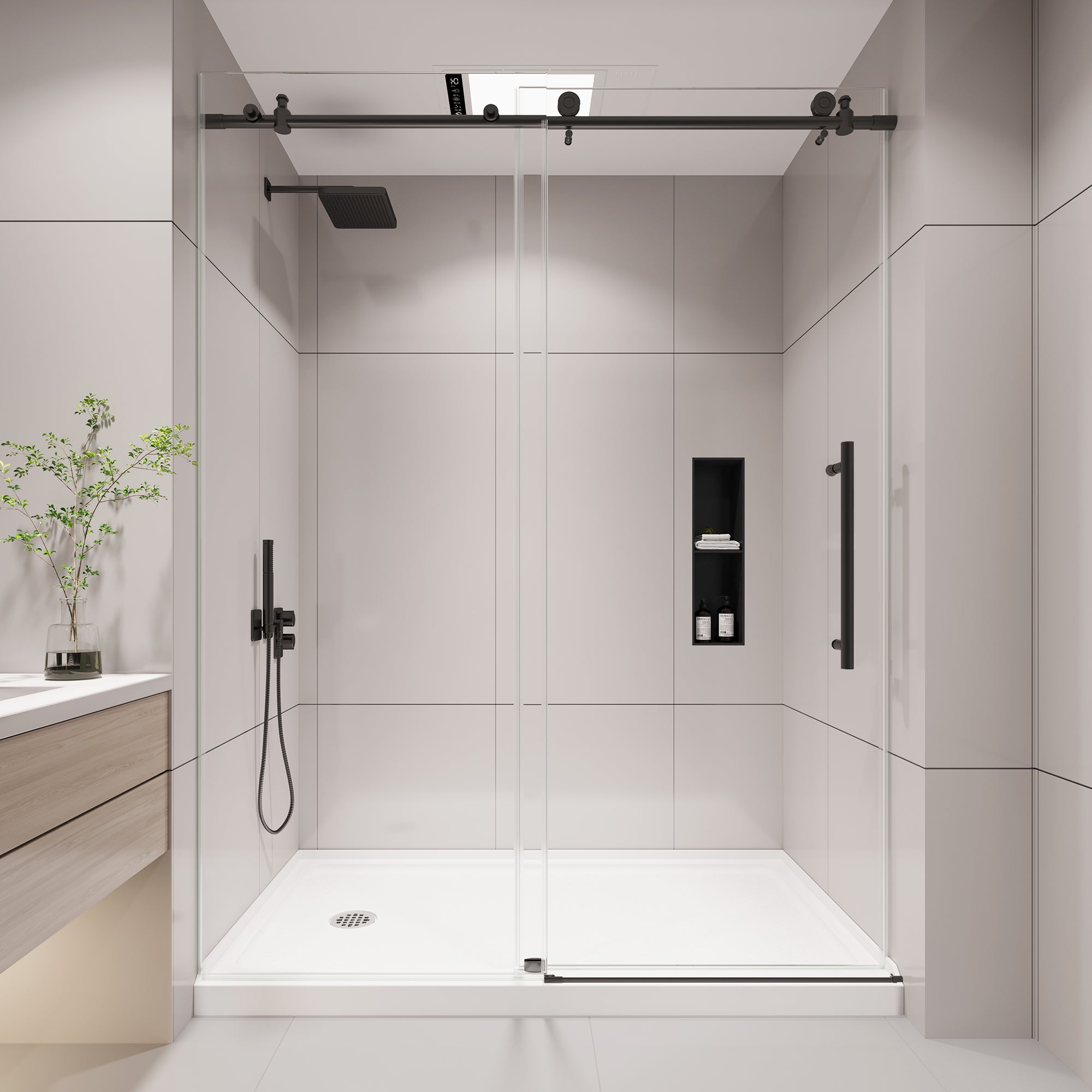
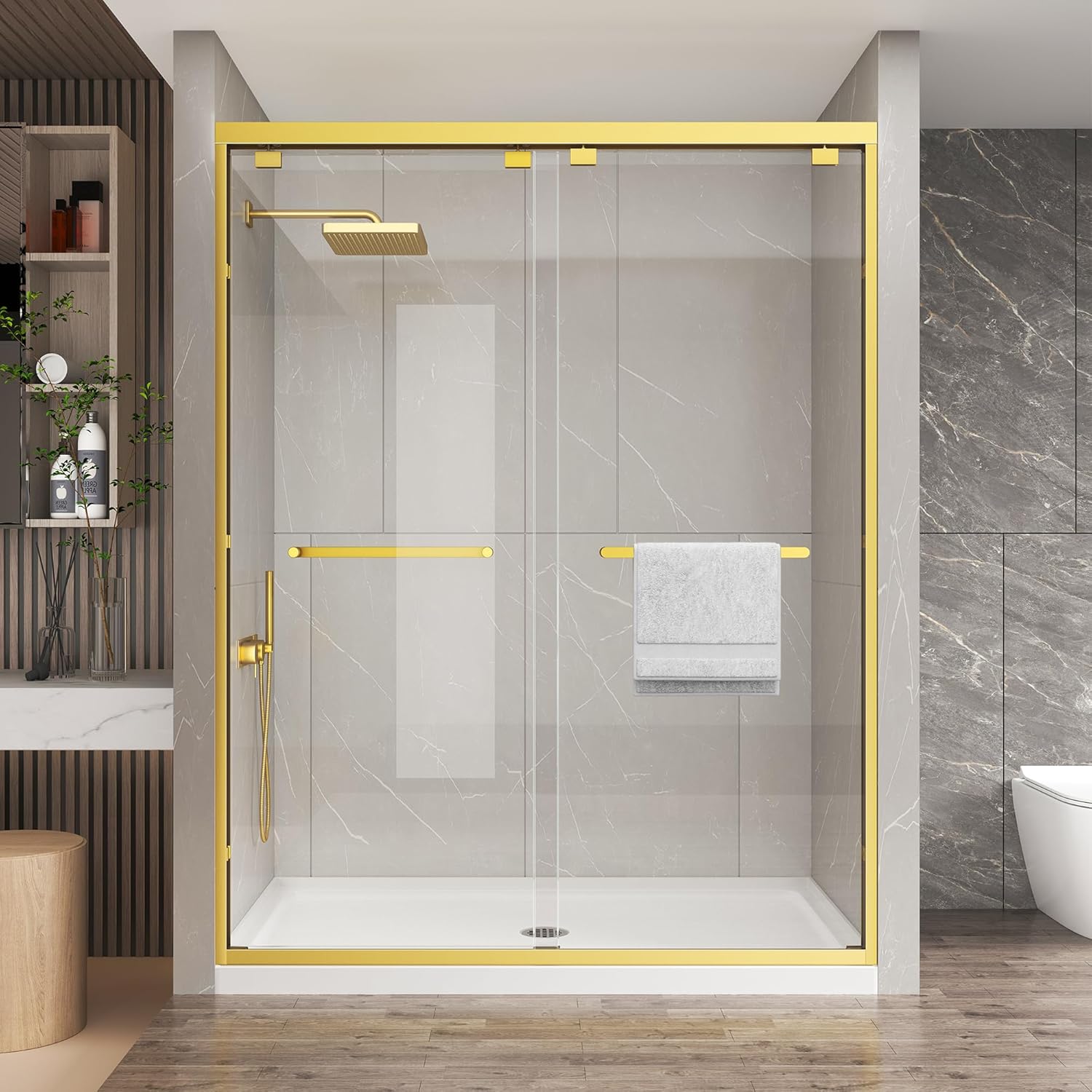
Measuring for a sliding shower door is one of those jobs that looks simple on paper and becomes complex on-site. As a bathroom contractor with 20+ years of frontline experience, I’ve measured dozens of openings in new builds and struggled through older houses with out-of-plumb walls, uneven curbs, and tile that changed the rough opening by 1/2" after it was set. This guide gives clear, practical steps—what to measure, where tolerances matter, and the real-world adjustments you’ll need so the door fits, operates, and stays watertight.
Quick answer: What to measure for a sliding shower door
Short version—measure the finished opening width at three points (top, middle, bottom) and the finished height at three points (left, center, right). Use the smallest width and height measurements when ordering. Account for tile thickness, threshold height, and a 1/8"–1/4" installation clearance per side unless product specs say otherwise.
Tools & materials you’ll need
- 25' tape measure with a stiff blade (for long runs)
- Metal level 48" or longer to check plumb and straight
- Combination square or digital angle finder
- Shims, pencil, masking tape and drop cloth
- Notebook or phone to photograph walls and jot measurements
- Product spec sheet for the door model (reveal, track size, glass thickness)
Step-by-step measuring process
The goal is to record the smallest workable opening so the manufacturer can fabricate glass and tracks that fit within site tolerances. Don’t assume walls are plumb or floors are level—measure them.
Width: top, middle, bottom
- Measure inside-to-inside at the top of the opening—right at the tile or finished wall surface where the vertical jamb will sit.
- Measure inside-to-inside at the middle (about 36" from the curb) and at the bottom of the opening (floor or curb edge).
- Record all three measurements and use the smallest one as your ordering width. If the variance is more than 1/4", you’ll need to address out-of-plumb conditions before ordering.
Why the smallest? Sliding doors need a predictable track alignment. If you give the manufacturer the largest value and the actual opening is narrower at the bottom, the door will bind or the track will have to be shimmed aggressively.
Height: left, center, right
- Measure from the top of the curb (or finished floor) up to the underside of the header or ceiling at the left, center, and right points where the top track will mount.
- Subtract any planned head clearance required by the door system (this is on the spec sheet). Again, use the smallest height.
Note: If tile thickness or a curb extension hasn’t been installed yet, measure anticipated finished dimensions and document the assumption for the installer/manufacturer.

Common field issues and how to handle them
Here’s where real job-site experience matters. I've measured openings that changed after tile was set, encountered quarter-inch variations between top and bottom, and seen curbs sloped more than 1/4". Expect this—plan for it.
- Out-of-plumb walls: If one wall leans in or out more than 1/4" over the height of the opening, the door jamb or track may need shimming or a custom header. Call out plumb readings on your order form.
- Tile or backer board not installed yet: Always specify whether measurements were taken to the subwall or finished surface. For tile-on-blockers, permit a tile allowance (often 1/8"–1/2").
- Curb slope: If the curb slopes towards the drain more than 3/8", confirm the bottom rollers and threshold style will seal correctly.
- Rough-in and drain location: Make sure the drain and pan haven’t forced a different curb height that would affect door clearance.
On older homes I renovate, I often leave a 1/8"–3/16" extra clearance per side when ordering glass and then final-fit the door after tile is installed. That means ordering the glass slightly shorter and trimming fillers or using thicker jambs to cover gaps—a practical compromise that avoids re-cutting glass.
Common dimensions, glass thickness, and tolerances
Below is a quick reference table I use on-site. These are typical values; always confirm with the manufacturer's spec sheet before ordering.
| Item | Typical Value | Recommended Allowance / Tolerance |
|---|---|---|
| Sliding door opening width | 28"–60" per panel options | Measure at 3 points; use smallest. Allow 1/8"–1/4" total clearance. |
| Glass thickness (tempered) | 1/4" (6 mm), 3/8" (10 mm), 1/2" (12 mm) | 3/8" is the most common for strength and rigidity on residential sliding doors. |
| Height above curb | 70"–78" common | Confirm track mounting and head clearance; use smallest measurement. |
| Track projection | 3/8"–1" | Verify clearances for door swing and towel bars. |
Ordering and installation notes
Before you place an order:
- Confirm whether the product is wall-mounted or cutout style. Wall-mounted systems need finished wall measurements. Cutout or jamb-mounted systems measure to the subwall.
- Check the spec sheet for the required headroom and floor clearance. Some sliding hardware requires a few inches above the top of the glass for rollers and seal profiles.
- Determine glass options: clear, low-iron, frosted, and handle location. Each affects fabrication lead time.
- Verify tempered glass standard compliance and safety: glazing should meet ANSI Z97.1 or equivalent local codes. You can refer to the NKBA for design guidance and the ICC for code information NKBA, ICC codes.
When you buy, have these items ready for the manufacturer:
- Exact smallest width and height measurements
- Plumb and level notes (for example: left wall out-of-plumb 1/4" in)
- Tile thickness and finished curb height
- Which side the fixed panel and sliding panel will be located
Many homeowners choose a standard thickness like 3/8" tempered glass because it balances strength and cost. If you need more rigidity for larger panels, specify 1/2" and ensure the hardware is rated for that glass. Never assume standard sizes—glass is fabricated; exact measurements matter.

Real on-site experience: stories that matter
Two quick examples from job sites:
- In a 1920s bungalow, the finished tile job reduced the bottom opening by 5/16" compared to the rough opening. We re-ordered a slightly narrower glass and used a thicker bottom seal to maintain water tightness. If I’d ordered to the rough opening, the door would have bound at the curb.
- On a new-build, the contractor framed the opening 1/4" out of plumb. By noting plumb readings and ordering with the manufacturer’s tolerance, the installer used tapered shims to square the track and avoided re-fabrication.
These are the sorts of practical observations that save time and money: measure finished surfaces, photograph irregularities, and communicate tolerances with the fabricator.
FAQ — People Also Ask
How do I measure the width for a sliding shower door?
Measure inside-to-inside at the top, middle, and bottom of the finished opening. Use the smallest measurement. Subtract any tile or trim allowances only if you’re measuring to a sub-surface—otherwise measure to the finished surface. Provide the manufacturer with the smallest width and note plumb issues.
How much clearance do you need for a sliding shower door?
Most manufacturers require 1/8" to 1/4" total clearance (split between sides) to allow for shimming and seal compression. Check the product spec for exact clearance. If walls are out-of-plumb more than 1/4", expect to shim or use a custom solution.
What glass thickness should I choose for a sliding shower door?
Common residential choices are 1/4", 3/8", and 1/2" tempered glass. For most sliding doors, 3/8" is the sweet spot—stiff enough to resist flex on larger panels while keeping hardware costs reasonable. For panels over 60" wide, consider 1/2" glass and confirm hardware rating.
Wrap-up
Measuring right is the single best way to avoid delays and extra cost. Take multiple width and height readings, document tile and curb conditions, and communicate plumb/level notes to the fabricator. When you’re ready to shop for hardware and glass, check models and spec sheets—and if you want a place to browse options and match measurements to products, see KPUY Shower Doors for common styles and spec guidance.
If you run into an unusual on-site condition, take photos and call your supplier—most glass shops will offer a quick review and help you decide whether to trim, shim, or rework framing. Strong measurement habits keep projects moving and owners happy.

Dejar un comentario
Todos los comentarios se revisan antes de su publicación.
Este sitio está protegido por hCaptcha y se aplican la Política de privacidad de hCaptcha y los Términos del servicio.