
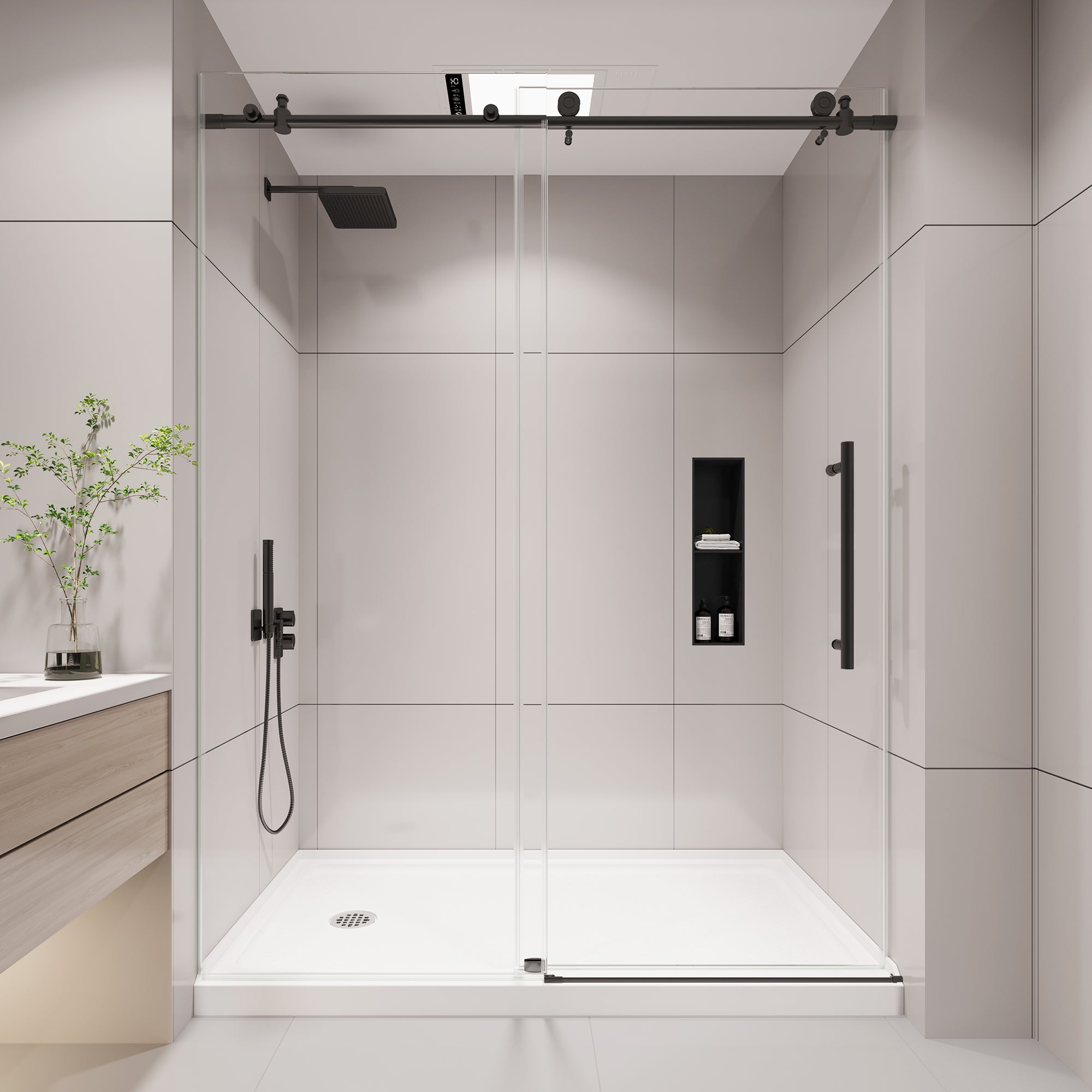
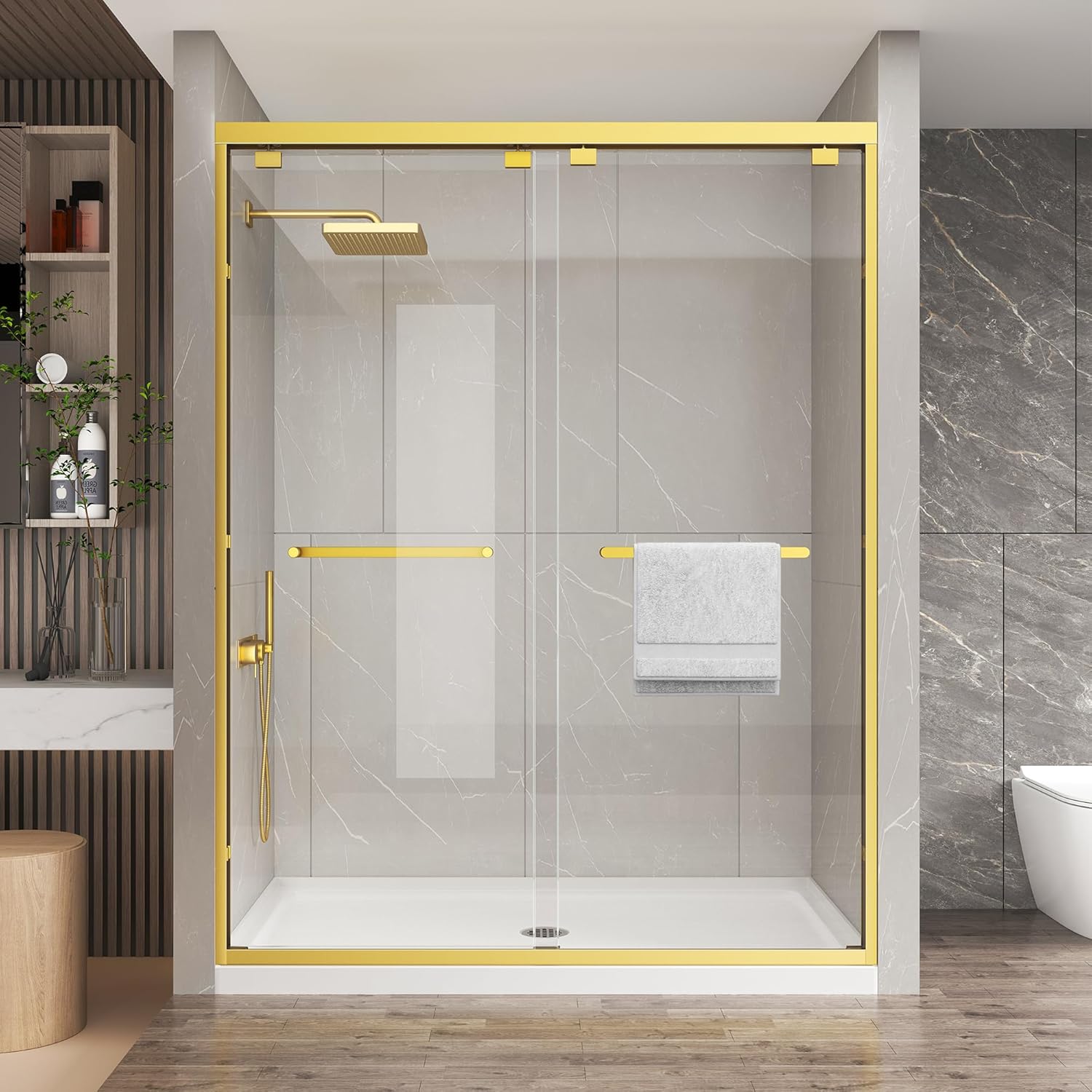
Small bathrooms expose every design mistake. A bulky framed enclosure, a dark finish, or a door that eats into the room can make a decent layout feel cramped fast. Frameless shower doors help because they reduce visual clutter, let light move through the shower, and make tile and wall surfaces read as one larger space. In 2026 remodels, that lighter look is still one of the simplest ways to make a bathroom feel bigger without changing the footprint.
The Short Answer
Frameless shower doors make bathrooms look larger and brighter because they remove heavy visual lines, let more light pass through the shower, and reveal more of the tile and wall surfaces. With less metal framing blocking the view, the room feels more open. That effect is strongest in compact bathrooms, alcove showers, and remodels where the wall finishes and lighting are already clean and consistent.
Why Frameless Glass Feels Larger
A shower door takes up very little floor area, but it can dominate the eye. Thick frames, overlapping metal trim, and opaque panels interrupt the room’s sightlines. Frameless glass does the opposite. It keeps the enclosure visually light, so your eye moves past the shower instead of stopping at the door line.
This matters most in bathrooms with limited square footage. A room that is only a few inches short on width or depth can feel tighter if the shower enclosure has a lot of visual weight. Frameless construction helps the bathroom read as one continuous space instead of a room chopped into pieces.
That openness also works with current design trends. Homeowners are moving toward simpler wall finishes, larger-format tile, and better natural-light use. Frameless glass supports that look without forcing a full layout change. If the shower opening is sized correctly, the glass becomes a quiet part of the room rather than the focal point.
For many remodels, the biggest gain is not actual square footage. It is visual square footage. The room feels less crowded because the enclosure no longer blocks the view from vanity to shower to back wall.
How It Improves Brightness
Light behaves better in a bathroom when there are fewer barriers. Clear frameless glass lets daylight and task lighting move through the space with less interruption. That is especially useful in bathrooms with one small window, a skylight, or a single overhead fixture.
Frameless doors also show the tile behind them more clearly. Light-colored shower walls, polished tile, and consistent grout lines reflect more light than dark or heavily patterned surfaces. A frameless enclosure lets those finishes do their job. Even a modest bathroom can look brighter if the shower no longer acts like a visual dead end.
Lighting design still matters. Warm or cool light, fixture placement, and mirror glare can all change how large the room feels. For planning around overall brightness, the NKBA has useful bathroom design guidance that lines up with the practical side of remodel planning.
One jobsite-style observation: an older bathroom can have good lighting on paper and still feel dim once the shower is enclosed. The difference is often the enclosure itself, not the bulb. A frameless door reduces that problem better than a heavy framed unit with dark trim.
Measurements That Matter Before You Order
Start with the finished opening, not the old product label. If you are replacing a shower door, tile thickness, backer board, and finished wall build-out can change the actual opening by more than many homeowners expect. Measure after the wall surface is final whenever possible.
For a frameless setup, the opening needs more accuracy than a basic framed system. Glass can be adjusted in the field only within a limited range, so your measurements should be tight and honest. Walls that look straight often are not. Older homes especially may lean enough to affect glass fit at the top or bottom.
| Measurement point | Why it matters | What to watch for |
|---|---|---|
| Top width | Shows the opening near the header line | Can differ from the bottom if walls are out of plumb |
| Middle width | Helps reveal bowed walls | Do not assume it matches top or bottom |
| Bottom width | Critical for curb and threshold fit | Tile buildup can change the finished dimension |
| Plumb check | Shows whether the walls lean in or out | Out-of-plumb walls affect hinge and panel alignment |
| Threshold level | Supports proper sealing and door operation | Uneven curbs can create gaps or rubbing |
Use a level and measure in at least three places: top, middle, and bottom. If those numbers are different, do not average them casually and hope for the best. A glass order often needs to account for the smallest safe dimension and the actual wall condition.
If the project also includes a new shower base, confirm the drain location and curb height before ordering glass. A base that fits the footprint still needs the drain to land correctly, and the finished curb must support proper sealing. For base planning, the Frameless Shower Doors collection is useful for understanding how clean opening dimensions and panel placement work together, especially in tight remodel spaces.
Layout Choices That Support the Look
Frameless glass looks largest when the layout keeps sightlines open. A full-width fixed panel with a swing door can work well in a larger shower, but in tighter bathrooms, a simpler opening with minimal hardware often reads cleaner. The less metal and overlap you add, the more the room feels open.
Compare these common layout factors:
- Sliding doors save swing space, but the track and overlap create more visible structure.
- Pivot or swing doors give a cleaner opening, but they need clearance in front of the shower.
- Fixed panels create the most open look, but they may not contain water as well in every layout.
- Clear glass opens the room visually better than frosted or heavily patterned glass.
- Minimal hardware keeps the enclosure from becoming the main visual object in the bathroom.
In a compact remodel, a frameless door often pairs well with a light-colored shower base and a simple wall tile layout. If the shower walls are already busy with mixed tile sizes or strong contrast, the glass still helps, but the visual gain is smaller. A clean wall finish plus clear glass usually gives the strongest result.
Frameless does not mean every room should use the same door style. The right layout depends on clearance, door swing, and how the shower is accessed day to day. A bathroom that looks open on paper can still become awkward if the door hits the vanity, toilet, or a drawer front.

Installation Details That Affect the Final Result
Frameless glass depends on accurate installation. The hardware may be minimal, but the tolerances are not. If the opening is out of plumb, the door may bind, the panel may sit unevenly, or the gap at the threshold may look wrong even when the glass itself is cut correctly.
Here are the installation details that matter most:
- Confirm the finished opening after tile, wall board, and any curb material are in place.
- Check wall plumb at both jambs so you know whether shims or adjustment are needed.
- Locate studs or solid blocking before setting hinges, clips, or support bars.
- Verify threshold slope so water drains into the shower instead of toward the room.
- Plan silicone sealing at the right contact points without over-sealing moving parts.
- Test door swing clearance against the vanity, toilet, towel bar, and entry path.
Hardware clearance matters more with frameless systems because there is less forgiveness. Glass thickness, hinge type, and handle projection all affect how the door moves. A door that clears the opening on paper can still feel cramped if the handle hits a light fixture or the door edge contacts nearby trim.
Subfloor and curb conditions matter too. If the floor is not level, the shower base or curb can shift the apparent opening height. That affects the final door line and the seal at the bottom. A drain that looks centered in the old shower may not line up with a new base design, so confirm that before demolition is complete.
Silicone should support water containment, not replace proper slope and fit. A good seal helps, but it will not fix a base that pitches the wrong way or walls that leave a large open gap. Local code and installation practices can vary, so it is smart to check with the product instructions and a qualified pro if the project has unusual conditions. Plumbing and building code guidance is also available through the ICC.
Planning Checklist for a Brighter, Bigger-Looking Bathroom
Before you order, work through the room as a whole. A frameless shower door makes the most difference when the rest of the bathroom supports that clean visual line.
- Use light or medium-toned wall finishes near the shower opening.
- Keep the shower hardware finish consistent with other fixtures if possible.
- Avoid oversized trim that cuts into the glass sightline.
- Check vanity drawer and door clearance near the shower entry.
- Plan lighting so the shower area does not fall into shadow.
- Measure after tile if wall thickness or curb height is changing.
Bathroom storage can affect the visual feel as much as the shower door. A vanity that crowds the entry or a cabinet that blocks light makes the room feel tighter. Even if the shower opening is correct, a drawer that clears the room on paper may still hit the door casing once it is installed. Small spacing mistakes show up fast in compact bathrooms.
For homeowners comparing enclosure styles and looking for a narrower visual profile, KPUY’s Frameless Shower Doors collection is a practical place to review enclosure types that keep the room feeling open.

Frequently Asked Questions
Do frameless shower doors really make a small bathroom feel bigger?
Yes, usually they do. The effect comes from reduced visual clutter and better light flow, not from adding space. Clear glass and minimal hardware let the shower blend into the room instead of breaking it up. The improvement is strongest when the walls, lighting, and tile are also kept visually simple.
Are frameless shower doors harder to install?
They are less forgiving than framed doors. The opening needs to be measured carefully, the walls should be close to plumb, and the threshold needs to be right. Small errors in tile thickness, slope, or stud placement can affect fit. That is why planning before ordering matters so much.
What bathroom layouts work best with frameless glass?
Alcove showers, walk-in layouts, and compact bathrooms that need a lighter visual profile are strong candidates. Frameless glass also works well when the goal is to keep tile visible and maximize brightness. If swing clearance is tight, a fixed panel or a different door movement may fit the room better.
What to Do Before You Order
If your goal is a bathroom that feels larger and brighter, frameless glass is one of the most effective visual changes you can make without changing the footprint. The key is not just choosing the look. It is matching that look to the finished opening, wall condition, curb slope, and daily clearance in the room.
Measure the opening after the walls are finished, confirm the drain and threshold details, and make sure the hardware will not interfere with nearby fixtures. Once those pieces are right, the shower door can do what it is supposed to do: keep the room open, let light move, and avoid adding visual weight.
For homeowners planning that kind of remodel, the Frameless Shower Doors collection is a useful starting point for comparing enclosure styles before you finalize measurements and installation details.

Leave a comment
All comments are moderated before being published.
This site is protected by hCaptcha and the hCaptcha Privacy Policy and Terms of Service apply.