
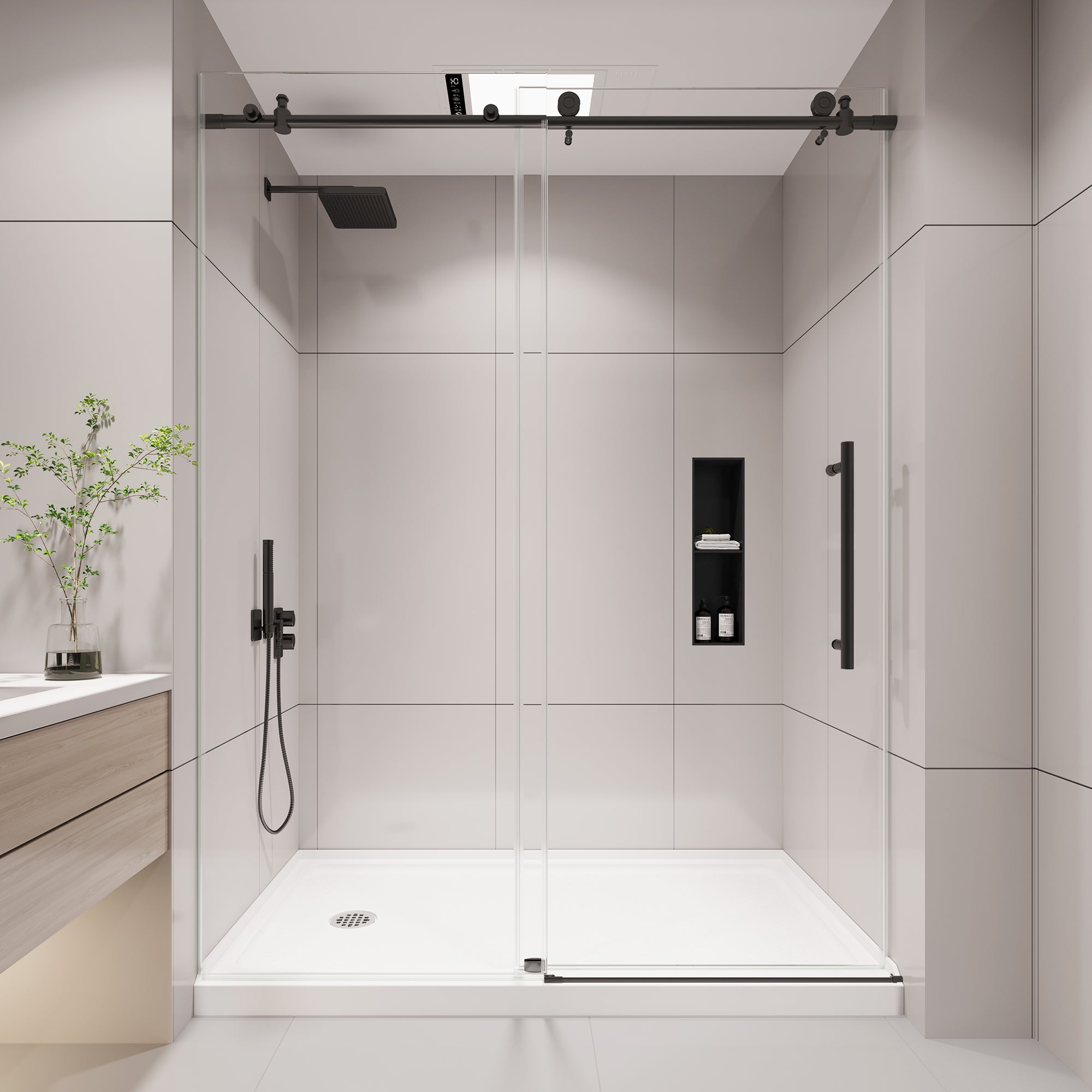
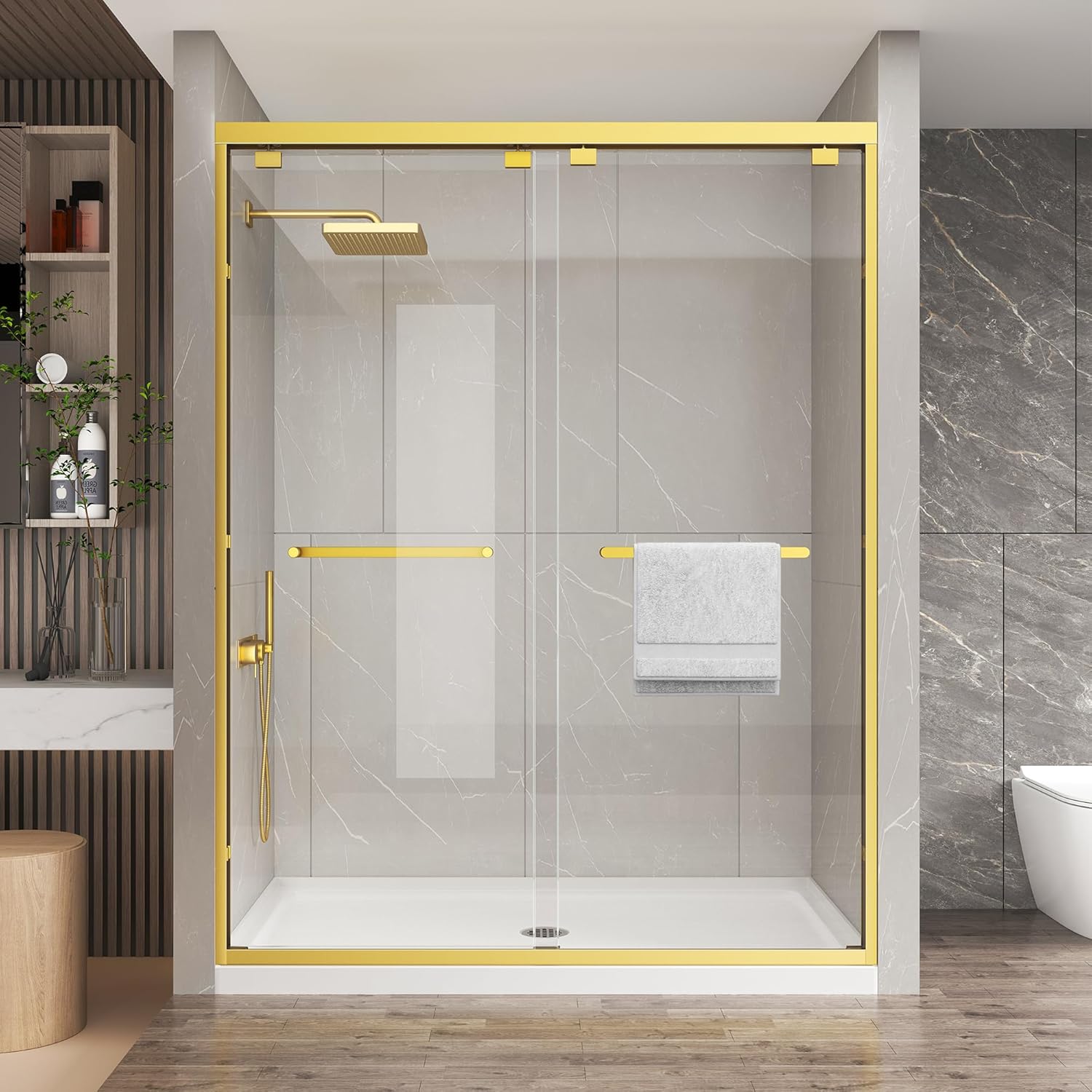
Before a frameless shower door fits cleanly, the real question is usually not the glass itself. It is the tile, the wall plumb, the finished opening, and the curb. A shower can look square at first glance and still be off enough to affect door alignment, sweep contact, or water containment. In remodel work, those small deviations are what decide whether the installation feels crisp or becomes a problem later.
The Short Answer
For frameless shower doors, the key tile and wall conditions are the finished opening width, wall plumb, tile thickness, curb level, and solid mounting points. Measure after the final wall surface is complete, check the opening at the top, middle, and bottom, and confirm the wall can support anchors where hardware lands. If the walls lean or the curb slopes poorly, the door may need adjustment or a different layout.
Start With the Finished Opening
Frameless doors are made around the finished opening, not the rough framing. That means the measurement must account for the tile, backer board, mortar build-out, and any surface treatment that changes the wall thickness. If you measure too early, the final tile can steal space from the opening and leave the glass too wide or the gap too tight.
Measure at three points: top, middle, and bottom. A shower opening may be 59 7/8 inches at the top, 60 inches in the middle, and 59 3/4 inches at the bottom. That difference matters. Older homes often have walls that are not perfectly plumb, and the final glass dimension needs to follow the actual opening, not the ideal one.
For a frameless layout, you also want to know how the door will sit relative to adjacent tile edges. A clean corner can still hide a slight bow in the wall, which affects hinge alignment and magnetic closure on some designs. If the project is still in planning, the broader Frameless Shower Doors collection is the relevant starting point for understanding how opening accuracy and wall condition affect the final fit.

Tile and Wall Conditions That Affect Fit
Tile affects frameless door planning in more ways than appearance. Tile thickness changes the finished opening, especially if the tile varies from wall to wall or if one side has added buildup from thinset or waterproofing layers. Even a small difference can change how the door swings, how the fixed panel sits, or how much sealant is needed at the edges.
Wall plumb is just as important. If one jamb leans in or out, the glass edge may need to be cut or set to match that slope. Most frameless doors can tolerate some variation, but there are limits. The larger the out-of-plumb condition, the more likely you will see uneven gaps, stressed hardware, or a door that does not close with the same feel across the opening.
Floor conditions matter too. A shower curb or threshold should be level enough for the door system, but it also needs proper slope on the shower side for water management. If the curb is twisted, crowned, or pitched inconsistently, the glass may look level on one side and off on the other. That kind of issue often shows up during installation, not on the drawing board.
For remodels that involve a new shower base or corrected threshold, it helps to think about the base and the door together. KPUY’s Frameless Shower Doors collection is most useful when the opening is already being finished with accurate surfaces and solid support behind the tile.
What to check on the walls
- Tile thickness on all sides of the opening.
- Out-of-plumb walls from top to bottom.
- Flatness at hinge and clamp locations.
- Solid backing or studs where anchors will land.
- Edge conditions where tile meets drywall or glass contact points.
Common Conditions and What They Mean
| Condition | Why It Matters | Planning Impact |
|---|---|---|
| Opening measures differently at top, middle, and bottom | Signals walls may not be plumb or the curb may be out of square | Glass sizing and hinge placement need to match the actual finished dimensions |
| Tile adds uneven thickness | Changes the finished wall line | Can affect panel alignment, door clearance, and seal placement |
| Studs are not where hardware lands | Frameless hardware needs reliable support | May require blocking or alternate anchor planning before final installation |
| Curb is not level or has poor slope | Door and water control both depend on the threshold | Can create gaps, uneven operation, or splash issues |
| Nearby vanity or toilet is too close | Door swing clearance may be limited | May favor a different door movement or a fixed panel layout |
Measure Before You Order
For a frameless shower door, the safe approach is to measure the finished tile-to-tile opening after the walls are complete. If the project is mid-remodel, wait until the wall surface is in place and the shower base or curb is finalized. This is especially important in renovation work where the existing framing may be sound but the finished enclosure ends up slightly smaller than expected.
Use a step-by-step checklist so nothing gets missed:
- Confirm the wall finish is complete where the door will mount.
- Measure the opening at the top, middle, and bottom.
- Check both walls for plumb with a level or laser.
- Verify curb height and the top surface slope.
- Locate studs or backing where hinges or clamps will attach.
- Measure nearby clearances for swing, handles, and towel bars.
- Record any trim, tile edge, or niche detail that may interfere with glass.
It also helps to think about the shower as a system. If the base is not finished yet, the door opening can change after tile. If the curb is built slightly high or the tile adds extra thickness, the opening can shrink enough to matter. That is why measurement should happen after the final surface is in place, not from the rough framing alone. For projects where the threshold and floor are already part of the planning, the Frameless Shower Doors collection fits best when the finished dimensions are known.
Use an authority source like the NKBA for broader bathroom planning and clearance thinking, especially if the bathroom is being reworked for better daily use or future accessibility.
Water Containment and Hardware Clearance
Frameless glass depends on accurate placement and sensible water control. You do not want the door so tight that it binds, and you do not want it so loose that water escapes around the edges. The sweet spot is usually a carefully planned gap with proper seals where needed and a curb or floor slope that supports drainage back into the shower.
Hardware clearance deserves attention early. Hinges, handles, towel bars, and brackets all take up space. A door can fit the opening on paper and still hit a nearby wall, vanity edge, or toilet paper holder once the hardware is installed. That is why a real field check includes swing path, door arc, and the room around the shower, not just the glass size.
For wall-mounted hardware, look for solid structure behind the finished surface. Tile alone is not enough. The best installations land into studs or properly installed blocking. If anchors must miss a stud, the wall assembly still needs to support the load according to the hardware design and local conditions.
Practical water-control details
- Use the correct seal location for the door style, not extra sealant everywhere.
- Keep the curb surface consistent so the bottom sweep sits evenly.
- Check that the shower floor slopes to the drain, not toward the opening.
- Leave room for the glass to move slightly without scraping tile edges.
- Test the door with a slow close before final silicone cleanup.
Frameless layouts are popular in 2026 remodels because they make a small bath feel more open, but the clean look only works if the wall conditions are handled correctly. That is why finish quality matters more than just door style.

Jobsite Details That Get Missed
One common jobsite surprise is a drain that looks centered but does not match the new shower base or the intended floor slope. Another is a vanity drawer that clears the room on paper but still hits a door casing once everything is installed. In shower work, the same problem shows up with tile: the opening may look square until you measure from finished surface to finished surface.
Here are a few practical issues to watch before ordering glass:
- Tiles can vary slightly in thickness, especially across different production lots.
- Mortar build-up can move a wall face by more than expected.
- Out-of-plumb corners can make a fixed panel sit cleanly at one end and tight at the other.
- A curb that is too wide or too narrow changes handle clearance and seal placement.
- Loose backing behind tile can become obvious only when hardware is installed.
Plumbing and building-code context should still be checked against the local authority having jurisdiction. For code-related planning and safety references, the ICC and IAPMO are useful resources for understanding the standards framework behind bathroom work, even though the exact requirements depend on location and project scope.
Frequently Asked Questions
How much out-of-plumb can a frameless shower door handle?
That depends on the specific door design and hardware, but the wall should be reasonably plumb for a clean result. Small deviations are common in remodels, especially in older homes. If the wall leans noticeably, the glass may need custom adjustment, or the layout may need to shift to keep gaps even and the door operating smoothly.
Should I measure before or after tile?
Measure after tile, or after the final wall surface is in place. Tile thickness, mortar buildup, and trim details all change the finished opening. A rough framing measurement is useful for planning, but it should not be the final number used to size frameless glass.
Do I need studs behind every hinge or clamp?
Solid backing is important wherever hardware is mounted. In many cases that means studs or added blocking behind the finished wall. Tile and backer board are not enough by themselves. The exact support needs depend on the door style, hardware, and wall assembly.
What to Do Before You Order
Start with the finished opening, not the old shower or the framing dimensions. Check wall plumb, tile thickness, curb level, and hardware clearance before you commit to glass. If the shower area is still under construction, wait until the surfaces are complete so the numbers reflect the real opening. That one step prevents most sizing problems on frameless projects.
If your remodel is centered on a clean, open glass enclosure, the most relevant place to continue planning is the Frameless Shower Doors collection. Use it after you have the measurements, wall conditions, and mounting points confirmed so the installation plan is based on the bathroom you actually have, not the one in the framing stage.

Leave a comment
All comments are moderated before being published.
This site is protected by hCaptcha and the hCaptcha Privacy Policy and Terms of Service apply.