
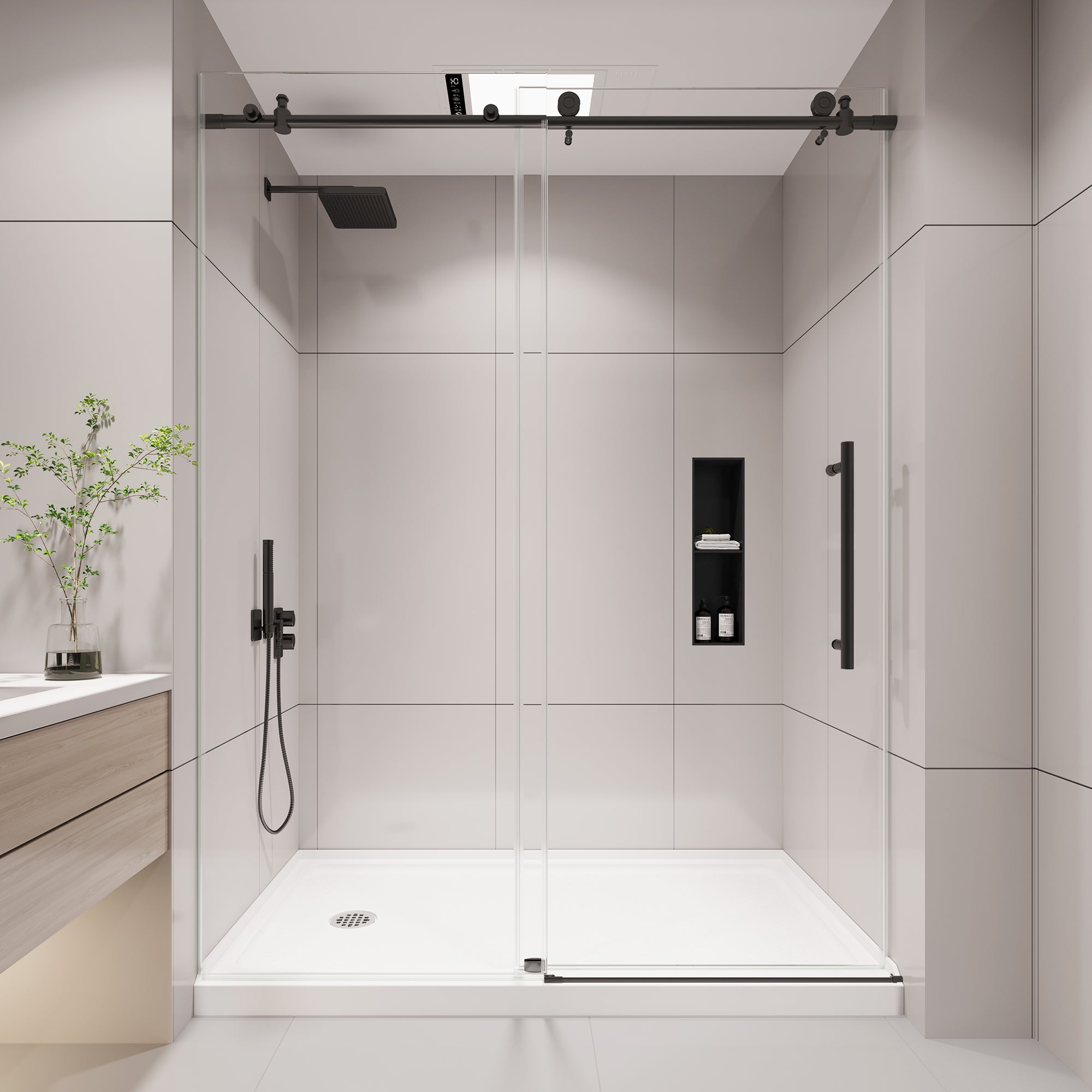
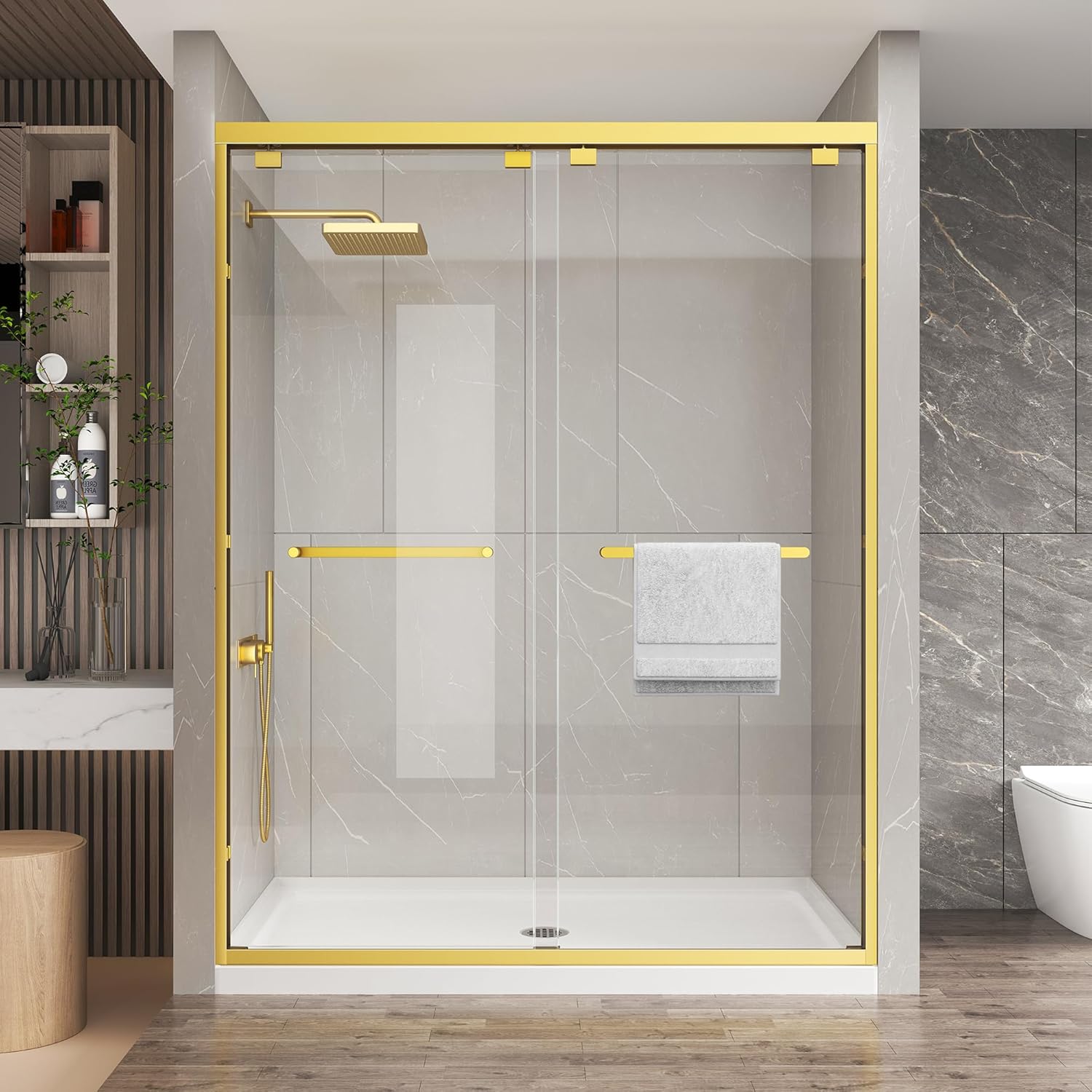
Guest bathrooms are different animals. They’re often tight on square footage, used intermittently, and need to be both forgiving and low-maintenance. In 2026 I’m seeing homeowners choose clean, durable solutions—minimal hardware, tempered glass, and designs that make the room feel larger without breaking the budget. As a contractor with more than two decades of kitchen and bath remodeling under my belt, I focus on what actually works on-site: ease of use for guests, resistance to water splash, and realistic installation tolerance for older homes with out-of-plumb walls.
Quick Answer: Best Shower Door Style for Guest Bathrooms
Short answer: For most guest bathrooms a sliding (bypass) or single-panel hinged door with a fixed side panel—framed or semi-frameless—is the most practical choice. These styles save space, control splash, and are tolerant of modest out-of-plumb walls. If you want a more upscale look without fragile tolerances, a framed or semi-frameless model with 3/8" tempered glass is the sweet spot.
Shower Door Styles Compared
Below I break down common styles I install in guest baths and why they work or don’t. I’m talking real-world issues—threshold clearance, pivot room, and serviceability—rather than marketing fluff.
Sliding (Bypass) Doors
- Best for: Narrow bathrooms, tub-shower combos, and locations where a swinging door would hit a toilet or vanity.
- Pros: Space-saving, easy for guests to use, affordable in framed and semi-frameless options.
- Cons: Tracks collect soap scum and require occasional cleaning; slight water leakage possible if not installed with proper sill and sweep.
Hinged (Pivot) Doors
- Best for: Larger guest showers where you can spare swing room; offers a more open entry feel.
- Pros: Easier to clean exterior edges; can handle heavier glass like 1/2" for a luxury feel.
- Cons: Needs clearance outside the shower; more sensitive to out-of-plumb walls—pivot tolerances matter.
Fixed Panel / Walk-In
- Best for: Modern guest baths that want an airy, hotel-like look and minimal hardware.
- Pros: Very low maintenance, fewer seals to fail, fast drying.
- Cons: Splash control can be tricky; requires proper curb or slope of the pan to keep water inside.
Neo-Angle & Space-Saving Options
Good when a corner shower has limited footprint. These designs often need custom glass and careful measurement—expect higher glass fabrication costs.
For product selection and to see popular models I recommend, check the range at KPUY Shower Doors for framed, semi-frameless, and frameless options that work well in guest bathrooms.
Site Conditions & Measurements You Can’t Ignore
Choosing a door is half design, half site verification. Here are the real measurements and checks I do before ordering glass or hardware:
- Measure the finished opening width at three heights (top, middle, bottom). Expect up to 3/8" variation in older homes due to out-of-plumb walls.
- Measure the floor level across the shower track—verify curb top is level or has intended slope. A curb slope greater than 1/8" over 2' will affect door alignment.
- Check the rough-in drain location and pan height—this affects the threshold and where seals must sit.
- Confirm ceiling height and any soffits that may limit vertical adjustments on pivot hinges.
Rough-in example: Typical tub-shower rough openings are 60" long by 32–36" wide. For sliding doors you need a minimum 2" headroom above a tub flange to install the track. For a curbless walk-in, note that a frameless fixed panel often requires a small return panel or door sweep to handle splash control.
For safety, all shower glass should be tempered and meet ANSI Z97.1 or equivalent safety standards. Typical thicknesses I specify for guest baths are 3/8" (10mm) for semi-frameless and 1/2" (12mm) for full-frame-less frameless doors where the opening is large.
Field Experience: Installation Realities I See Often
Having installed hundreds of guest-bath showers, here are the truths that affect door choice:
- Out-of-plumb walls are common in houses built before the 1990s. You’ll need 1/4"–3/8" adjustment per side in your frame or hinge system. Frameless doors have less tolerance for that without site cutting or shimming.
- Track cleanliness and slope: Sliding doors require a perfectly set track and level—or intentionally tapered—so the rollers don’t bind. I configure the track to shed water toward the drain, not the bathroom floor.
- Glass sizing clearance: I always leave at least 1/8" to 3/16" clearance around new glass panels for silicone and thermal movement—less than that invites cracking during install.
- Curb slope: If the curb is not sloped correctly toward the pan, you’ll get standing water at the threshold. That’s when a full-frame sill or a better sweep is necessary.
When renovating an older guest bath, my go-to is a semi-frameless sliding kit. It absorbs wall irregularities, is less prone to leaks than a fixed panel with a poor curb, and is inexpensive to repair or replace. If you need a cleaner look, I’ll only recommend frameless glass when walls are within a 1/8" plumb tolerance or when we install a shimmed and reinforced jamb.
How to Choose the Right Door for Your Guest Bath
Use this short checklist on-site or while measuring to decide the style:
- Measure clearances: swing space for a hinged door or headroom for a sliding track.
- Decide on maintenance tolerance: do you want low-maintenance tracks or spotless glass?
- Verify subfloor and curb: will the threshold need a pan or new curb? Check curb slope.
- Pick tempered glass thickness: 3/8" is a good balance; go 1/2" for larger openings or a premium feel.
- Choose finishes that hide wear: matte black or brushed nickel age better in guest baths.
Quick installation tolerance guidance: allow at least 1/4" of site adjustment for frames and 3/16" for frameless installs. If you’re buying stock doors, plan for standard tub opening variances—custom glass will be needed when tolerances exceed what the hardware allows.
If you’d like to browse a variety of practical options that hit these marks, take a look at KPUY Shower Doors for framed, semi-frameless, and frameless options suitable for guest bathrooms.
At-a-Glance Comparison Table
| Style | Best For | Typical Glass Thickness | Field Tolerance | Maintenance |
|---|---|---|---|---|
| Sliding (Bypass) | Small baths, tubs | 1/4"–3/8" | High (adjustable frame) | Moderate (tracks need cleaning) |
| Hinged / Pivot | Larger entries, single showers | 3/8"–1/2" | Moderate (pivot adjustments) | Low (easy to wipe) |
| Fixed Panel / Walk-In | Modern look, hotel-style | 3/8"–1/2" | Low (needs excellent floor/wall condition) | Very Low |
| Neo-Angle | Corner showers | 3/8"–1/2" | Low to Moderate | Low to Moderate |
FAQs
Can I use a frameless door in an old house with crooked walls?
Short answer: you can, but it’s riskier. Frameless glass is less forgiving of out-of-plumb conditions. If walls deviate more than 1/8" over the height, plan on shimmed studs, site-cut jambs, or a semi-frameless system that hides irregularities. For safety and code compliance, confirm tempered glass specs and installation per local code.
What glass thickness is safe for guest bathroom doors?
I usually specify 3/8" (10mm) for most guest-bath doors—this balances cost, weight, and durability. For larger spans or a more premium feel, 1/2" (12mm) is common. Always insist on tempered (safety) glass—refer to CPSC guidelines for safety standards and breakage behavior.
How do I prevent water from leaking under the door?
Good question. The solution is a combination of a proper curb slope toward the drain, door sweeps or bottom seals, and a correctly installed threshold. If you’re seeing leaks, check that the curb is not feathered or too low on one side and that silicone seals are continuous. For sliding doors, maintain the weep path in the track so water drains to the pan and not out into the bathroom.
Wrap-up & Next Steps
For most guest bathrooms, a sliding or semi-frameless hinged door offers the best mix of functionality, cost, and tolerance for imperfect walls. Be conservative on glass thickness and always account for 1/8"–3/8" of site tolerance when ordering. If you want to browse practical options that hit those installation realities, review KPUY Shower Doors for systems that balance durability and style.
For official design guidance, the National Kitchen & Bath Association has helpful installation and layout recommendations you can reference: NKBA.
Next step from here: measure your opening at three heights, photograph the curb and adjacent walls, and bring those measurements to a pro or your supplier. That simple step prevents the most common ordering mistakes I fix on site.

Leave a comment
All comments are moderated before being published.
This site is protected by hCaptcha and the hCaptcha Privacy Policy and Terms of Service apply.