
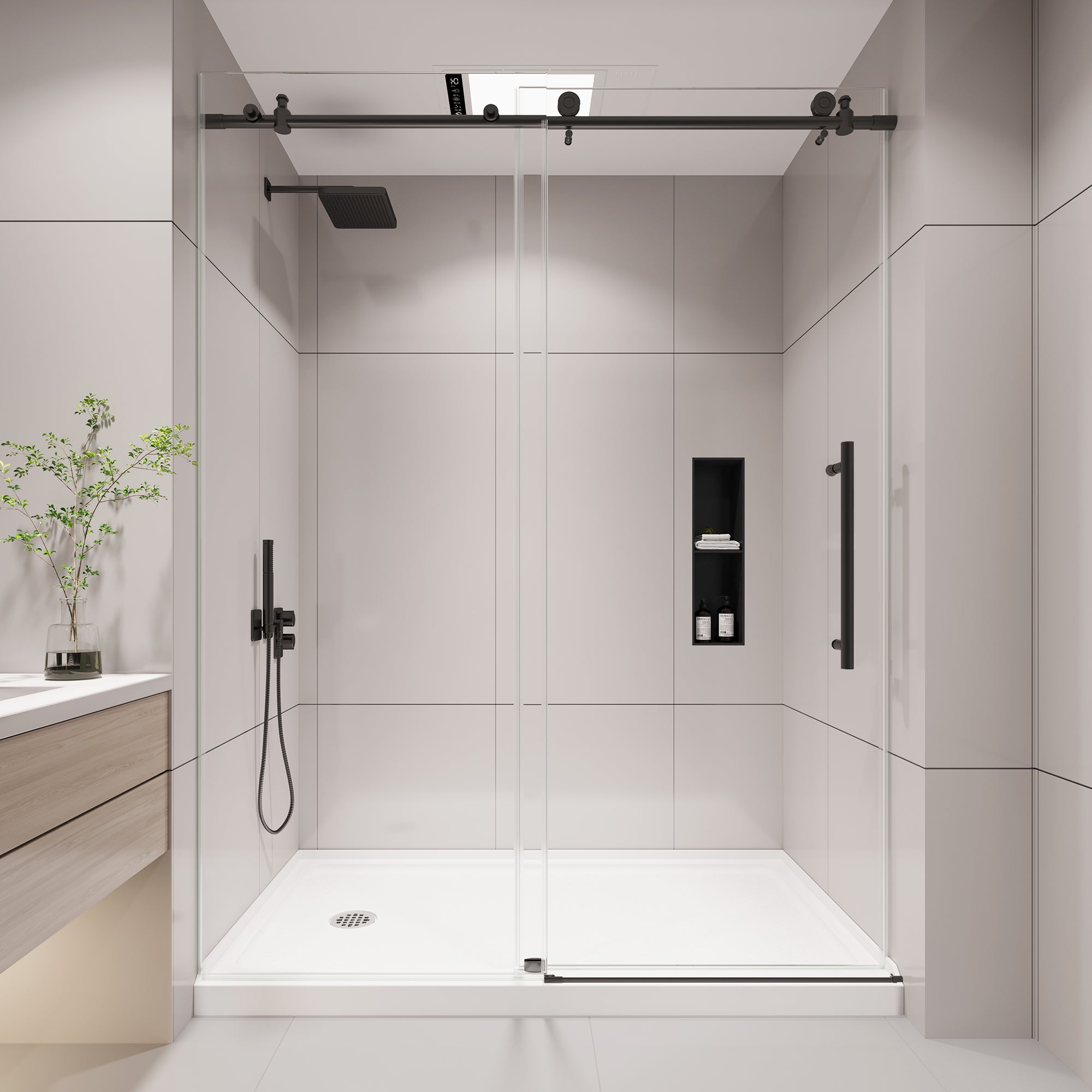
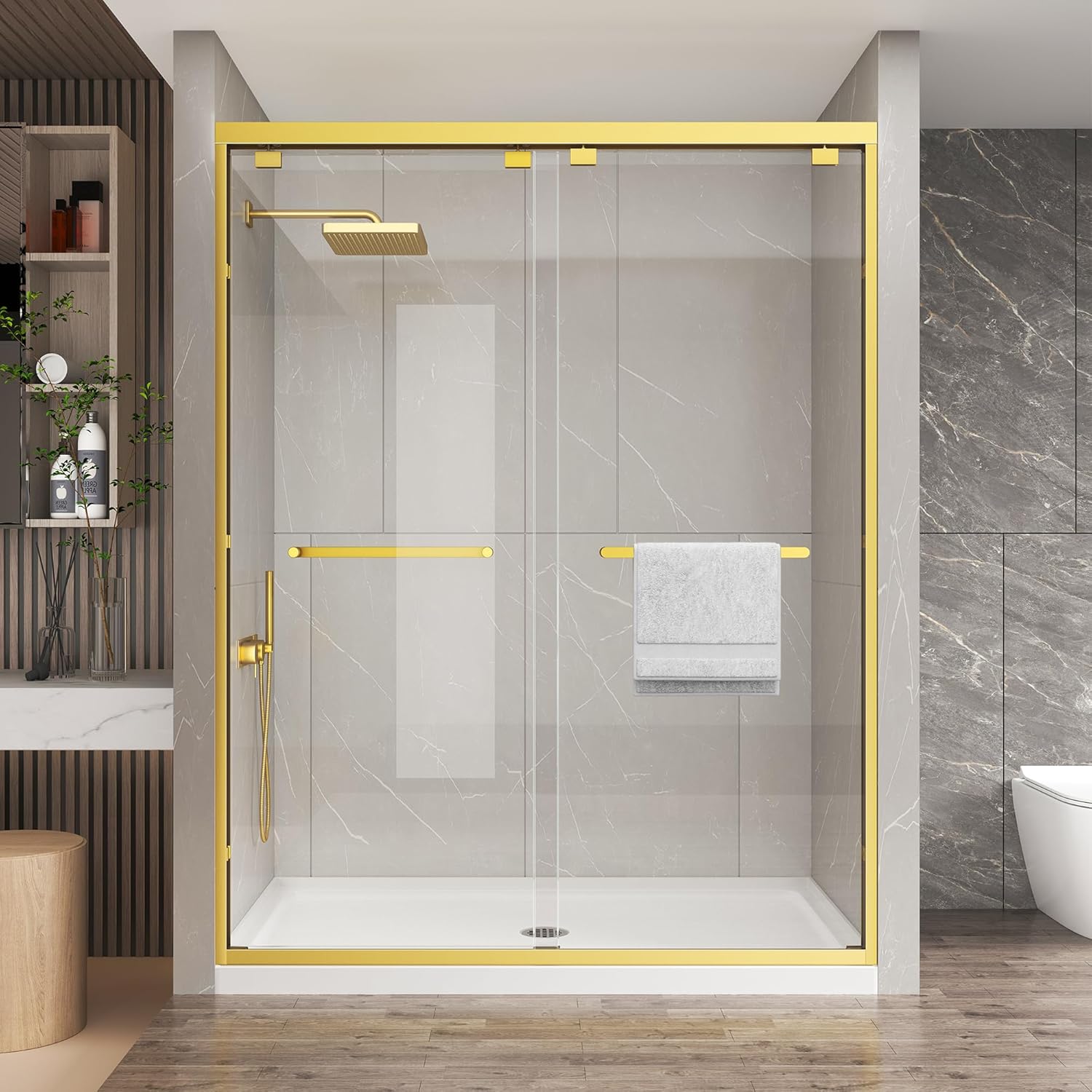
If your shower has a built-in foot rest (also called a foot ledge or shin shelf), the door layout you pick matters more than most homeowners realize. A foot rest changes circulation inside the stall, the swing path of a door, and how water hits the glass and curb. After 20+ years installing and repairing showers across the U.S., I’ll cut to the chase: layout, clearances, and glass choices drive long-term performance. Below I explain which door types work best with a foot rest, how to plan clearances and tolerances, and what I see go wrong on-site so you can avoid costly callbacks.
Short answer: best door layout for a shower with a foot rest
Short answer: For most stalls with an integrated foot rest, a swinging pivot or in-swing/framed swinging door combined with a return panel or fixed panel gives the best balance of clearance and water containment. If the foot rest narrows the walk-in path, a bypass/sliding configuration or a bi-fold is a close second. Frameless pivot doors work well if you have adequate curb depth and door swing clearance.
Why? Because the foot rest reduces usable floor space at one side of the stall and can interfere with a door’s swing or threshold clearance. You want a layout that avoids the door striking the foot rest and minimizes water tracking along the ledge.

Common layouts that work (and why)
Below are the layouts I specify on jobs that include a foot rest. I list the pros, cons, and typical installation notes based on real remodels.
| Layout | Best when | Clear opening | Notes |
|---|---|---|---|
| Pivot / Swing (out or in) | Enough swing room; deeper curb | Large clear opening | Works with return panel; must allow swing path to clear foot rest |
| Sliding (bypass) | Tight bathrooms; foot rest blocks swing | Moderate - depends on track overlap | Less leak-prone with good sill; requires head track support |
| Bi-fold or folding door | Very narrow entry or obstructive foot rest | Compact clear opening | More hardware; good for retrofit where curb is shallow |
| Neo-angle / corner with angled door | Small stalls, corner foot rest | Efficient footprint | Custom glass sizes common; careful measurement required |
Measurements, tolerances and what to plan for
Accurate measurements are everything. When a foot rest is present, leave extra tolerance for glass and hinge placement. Here are the field measurements I use on every job:
- Curb depth: Measure from finished tile face to inside face of curb—typical range 2"–4". If curb is under 2", a swinging door may hit the foot rest.
- Foot rest depth: Commonly 4"–8". Anything over 6" starts to crowd the door swing.
- Clear opening width: Minimum comfortable entry is ~22" clear; for accessibility aim for 32".
- Out-of-plumb walls: Measure at top, middle, and bottom—note up to 3/4" variance in older houses.
- Door swing arc: Mark swing on floor with a chalk line or tape before ordering glass.
Pro tip: I leave a 1/8" to 3/16" per side fabrication allowance on glass for field adjustments. For frames or hardware clips, expect ±1/8" installation tolerances.
Real jobsite realities — what you’ll actually run into
On renovation sites I see the same problems over and over: out-of-plumb walls, uneven curb slopes, substrate that wasn't built flat, and previous owners who modified the foot rest without waterproofing. Here are realistic notes from projects:
- Many older homes have walls out-of-plumb by 1/2" to 3/4". That throws off a fixed glass return panel—plan for adjustable channel or shim packs.
- Curb slope matters. If the curb slopes inward toward the foot rest, water will run down the ledge and pool at the door. Re-slope the curb if possible to shed water to the drain.
- Glass needs tempered safety compliance—ANSI Z97.1 requires specific marking and thickness. I typically specify 3/8" (10 mm) for frameless doors on standard stalls; 1/2" (12 mm) for large panels or where flex is a concern.
- Always dry-fit hardware and mark hinge points relative to the foot rest elevation. If the foot rest is higher or lower than tile field, hinges can bind or leave gaps.
On a recent remodel in a 1930s bungalow, the tiled side wall leaned 5/8" in at the top. We ordered a frameless pivot with a custom return and added a 3/8" thick silicone shim line behind the channel. It looks clean and the homeowner has had zero leaks in three years.

Glass, thickness, hardware and code considerations
Let’s be blunt: hardware and glass specs will make or break the install. Here’s what I always confirm before ordering glass or locking in the layout.
- Tempered glass: Must be tempered and labeled per ANSI/ICC; thickness usually 3/8" or 1/2". Thinner glass flexes more and increases risk of leaks at thresholds.
- Seals & sweeps: Expect to use a bottom sweep or rail when the foot rest interrupts a flush entry. Sweeps help water containment along the ledge.
- Hinge selection: Choose offset hinges or pivot hardware that allow the door to clear the foot rest. Some hinges can be set slightly off-center to get the needed swing clearance.
- Thresholds & weep holes: Ensure weep channels in the curb are clear. If you have a foot rest that channels water to the curb, those weep holes are critical.
For product options I often specify heavy-duty hinges with 1/2" adjustment and neoprene gaskets where the glass meets tile. Consider a fixed return panel to route water away from the foot rest. If you’re shopping glass doors, compare hardware warranties and look for tempered safety markings. You can browse options like KPUY Shower Doors when planning your layout.
Recommended layouts by scenario
Here’s a practical breakdown you can use when deciding.
1) Full-width entry with a shallow foot rest (≤6")
Best layout: frameless pivot door with a short return panel. The pivot keeps the swing clean and a return panel protects the foot rest from direct spray.
2) Narrow opening or foot rest encroaching on entry
Best layout: sliding bypass or bi-fold. Sliding doors eliminate swing conflicts; bi-folds fold in tight and avoid long sweep strips.
3) Corner or neo-angle with built-in foot rest
Best layout: neo-angle door with custom-angle return or a small swinging door that opens away from the foot rest. Measure angles carefully—templating on-site is often required.
4) Accessibility priority (grab bar, low threshold)
Best layout: wide swinging door with in-swing option (if clearance allows) and a beveled or low curb. Make sure swing doesn’t force contact with the foot rest; consider a removable sweep for wheelchair access.
Installation checklist (what I verify before cutting glass)
- Final tile, grout, and curb are completed and fully cured.
- Measure finished dimension top, middle, bottom; list out-of-plumb variances.
- Mock the door swing with cardboard or a full-size template. Confirm it clears foot rest at all swing positions.
- Confirm glass thickness, tempered marking, and fabrication allowances (usually 1/8"–3/16").
- Verify hinge or track mounting substrate—make sure solid blocking is present.
- Plan for sealant joints and sweeps; test slope and weep hole function.
On tolerances: I usually allow 1/8"–1/4" per side for field adjustments when ordering custom glass. If your walls are more than 1/2" out of plumb, factor in custom framing or shim systems.
FAQ — People also ask
Will a pivot door hit my foot rest?
It can. Check the foot rest depth and mark the swing arc. If the arc crosses the foot rest, choose a different hinge offset, use an in-swing option, or choose a non-swinging door like a sliding or bi-fold. Short, practical test: tape cardboard to simulate full-scale swing before ordering glass.
Is 3/8" glass thick enough when a foot rest is present?
Yes for most standard-sized stalls. For panels wider than 30–36 inches or for larger doors where stiffness is critical, go up to 1/2". Also consider the extra load if the foot rest will be used as a step—hardware should be rated for any expected loads.
How do I prevent water from pooling around the foot rest?
Make sure the curb slopes toward the drain and add a small return panel or deflector at the end of the foot rest to block spray. Proper sealing at the tile-to-curb joint and functioning weep holes are crucial.
Wrap-up
Choosing the right shower door layout when you have a foot rest is about balancing clearances, water control, and real-world installation tolerances. My practical recommendation: mock the swing, measure finished surfaces, and prefer a pivot/swing with a return panel or a sliding/bi-fold if space is tight. For ready-made options and hardware choices, review commercial offerings like KPUY Shower Doors and confirm tempered glass marking per ANSI standards. For design guidance and industry best practices, see the NKBA resources at NKBA and the ANSI tempered glass standard references at ANSI.
If you want a quick site review before ordering glass, take these photos: full-width shots of the shower from outside, close-ups of the foot rest showing depth, and a shot of the top-to-bottom wall plumb measurement. That gets you a useful remote assessment and avoids surprises on install day.

Leave a comment
All comments are moderated before being published.
This site is protected by hCaptcha and the hCaptcha Privacy Policy and Terms of Service apply.