
Small square showers are common in older homes, apartment renovations, and tight master-bath makeovers. Homeowners ask the same practical questions over and over: How small is too small? Can I get a curbless shower in a 36" square footprint? What about door swing and glass thickness? As a bathroom contractor with 20+ years on the tools, I’ll give you straightforward answers rooted in real jobsite experience, current 2026 design trends, and the codes and standards we actually build to.
How small can a square shower be?
The short, practical answer: the smallest functional square shower in a single-family home is typically 32" x 32", but that’s tight and meant for occasional use. For daily comfort and ADA-friendly maneuvering, aim for at least 36" x 36". Many of my clients settle on 36" or 42" squares because they give room for a showerhead, storage niche, and a door without feeling claustrophobic.
Minimums will depend on local codes, the user’s mobility, and the chosen door type. For example, a shower with a swinging glass door needs clearance for the door arc; a sliding door or fixed panel can save space. When planning, always consider the rough-in plumbing positions and whether the stall will be curbed or curbless—those decisions impact usable floor area.
Layout Questions Homeowners Ask
Door type and swing: Which is best for a small square shower?
- Swing doors (inward or outward) require clearance. Outward swing can interfere with hallways; inward swing reduces interior space. Most single-family remodels use an outward swing with a swing radius of 20"–26".
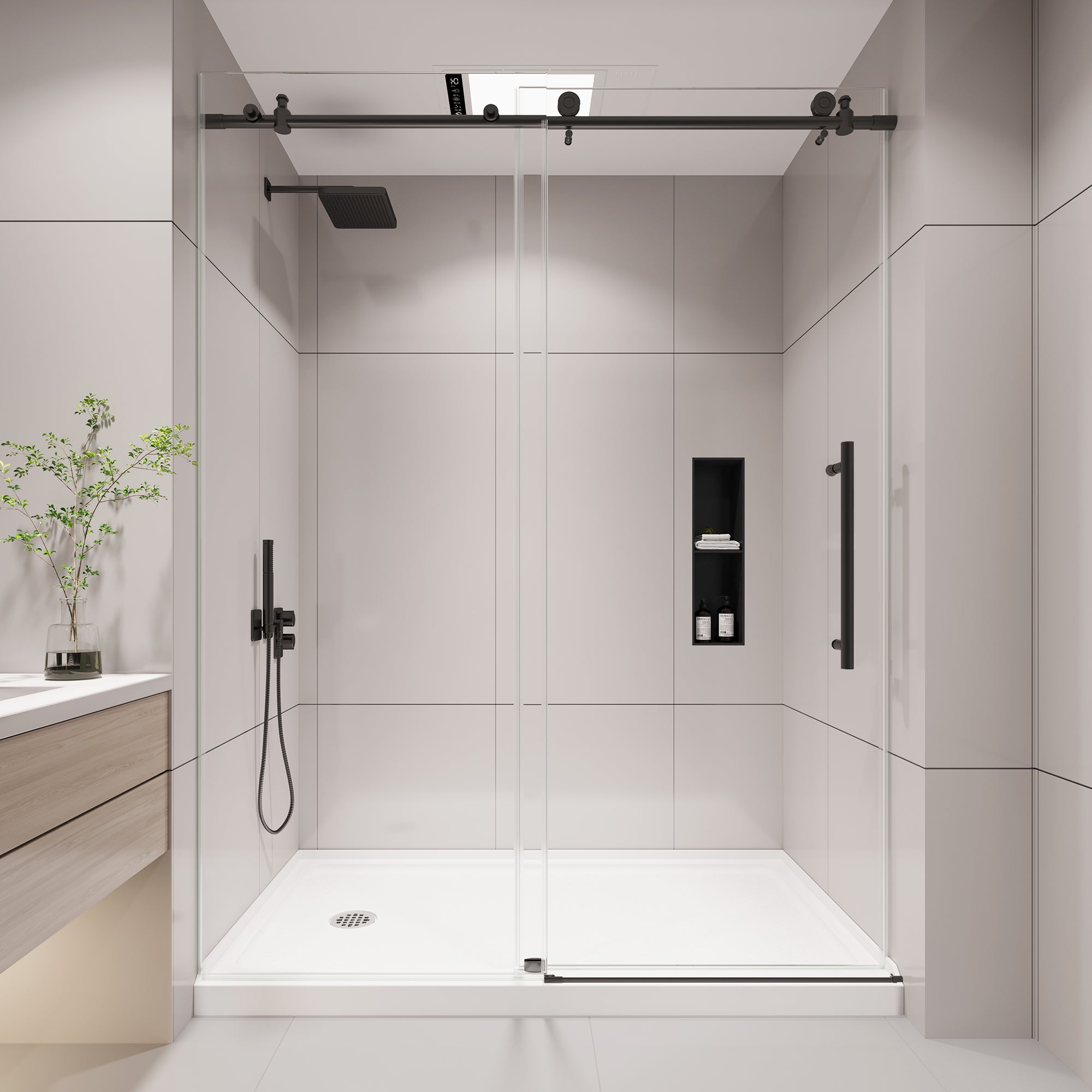
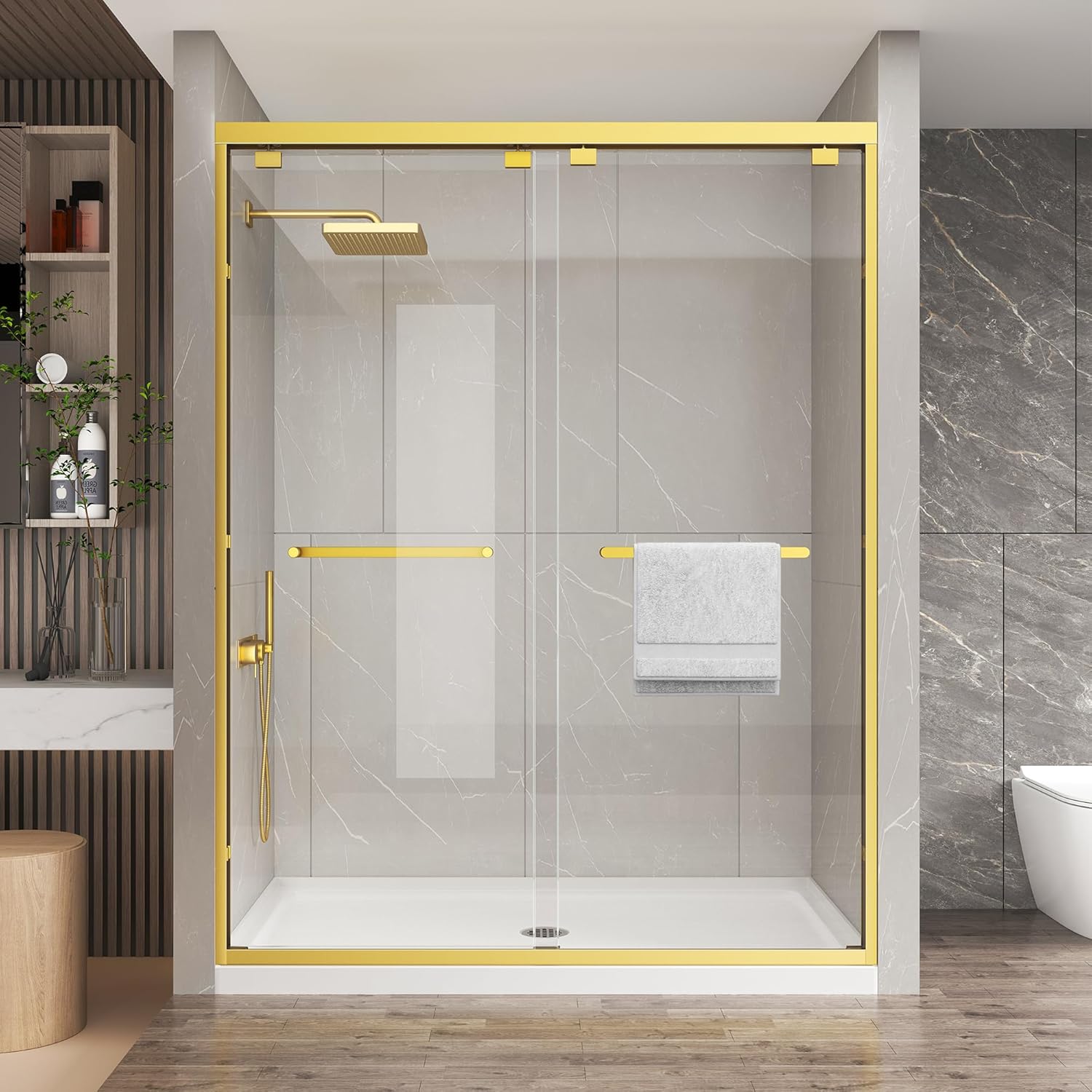
- Sliding doors save floor clearance but need a wider opening (overlap of two panels). They’re great when you want a full-height glass look without a big swing radius.
- Fixed glass panels (partial opening) offer a modern look and maximize usable shower space—good for very tight 36" footprints.
If you’re choosing glass, remember tempered panels have standard thickness ranges. For a small square framed or semi-frameless shower I commonly use 3/8" (10mm) tempered glass for a sturdy feel; for lighter frameless installs 1/2" (12mm) gives the best long-term stiffness and fewer installation tolerances.
Curb vs curbless: Can you do curbless in a small square shower?
Yes, but it’s more work. Curbless showers need a low-profile or linear drain and the floor must be sloped correctly toward the drain. That usually means a remodel that opens the adjacent floor to reframe and lower the finish floor assembly, or using a pre-sloped pan system.
- For curbless in a 36" square, plan for a linear drain on one wall and a minimum slope of 1/4" per foot across the shower floor.
- If you can’t alter floor framing, a low-threshold preformed base is a good compromise—less trim, still keeps water in.
- Check subfloor height tolerances—if you’re within 1/4" of the threshold, it’s hard to make a curbless install work without opening the floor.
Drain location and curb slope: What should I know?
Drain placement affects everything: tile layout, drain slope, and whether you can use a single small square tile or need mosaics to handle slope transitions. For a square shower I prefer center or slightly offset drains when a tiled mud bed is used. For curbless or very shallow pan installs, a linear drain on the low side simplifies slope and makes water management predictable.
Tile layout and waterproofing
Tile size matters. Large-format tile in a 36" shower can look modern, but it forces more aggressive water management. For small square floors we often use 2" or 3" mosaic tiles to keep grout joints and slope manageable. Waterproofing should be continuous—liquid waterproofing membranes or bonded sheet membranes are my go-to, and for older homes I insist on addressing the substrate first.
Common Site Realities: Field Notes from 20+ Years
Here’s where experience matters. You’ll hear designers talk about perfect walls and square rooms; on the jobsite walls are often out of plumb by 1/2" to 1". Subfloors might have 1/4" deflection. Old houses hide plumbing in odd places. If we don’t measure and adapt, glass and tile fit will suffer.
- Out-of-plumb walls require glass panels to be field-measured and sometimes shimmed or slightly notched. Pre-cut glass ordered to theoretical measurements will rarely fit perfectly.
- Rough-in dimensions for shower valves and heads are simple on paper but frequently need relocation by a few inches to line up with niches or benches.
- Installation tolerances: frameless glass tolerances are tighter—expect ±1/8" adjustments on site. Semi-framed doors tolerate more variance.
When I remodel older homes I always allow a contingency for hidden issues—rot, out-of-square studs, or previous repairs. Those realities affect the final footprint and whether you can use a pre-manufactured base or need a mud bed. If you want a frameless door in a tight square shower, plan for field templating the glass after the tile goes in—this saves headaches and reorders.
Quick Snippet Answers (Featured Snippet Style)
Can a 36" square shower be comfortable? Yes—most homeowners find a 36" x 36" shower functional for daily use if you choose a sliding door or fixed panel and keep fixtures compact.
Minimum slope for shower floor? 1/4" per foot toward the drain for tiled floors; linear drains may allow slightly different patterns but still require consistent slope.
Tempered glass thickness for small showers? Use at least 3/8" for framed or semi-frameless, and 1/2" for true frameless to limit flex and leak paths.
Materials, Codes & Glass Notes
Stick to code and manufacturer recommendations. For safety glass standards, ANSI Z97.1 governs tempered glass performance—most shower glass is tempered and labeled accordingly. Plumbing follows local code but the industry widely references IPC/UPC standards for rough-in heights and drain sizing.
| Item | Recommended for Small Square Shower | Reason |
|---|---|---|
| Minimum footprint | 36" x 36" | Comfort and fixture clearance |
| Glass thickness | 3/8"–1/2" | Strength, reduced flex, installation tolerances |
| Floor slope | 1/4" per foot | Proper drainage, prevents pooling |
| Drain type | Center or linear | Tile layout flexibility and curbless options |
For design guidance and industry best practices consult organizations like the National Kitchen & Bath Association (NKBA) and the International Code Council (ICC). They publish planning guidelines and code references that I follow on every job.
Cost and Timeline Expectations
A straightforward small square shower replacement with a preformed base and semi-frameless door typically runs shorter and cheaper than a mud-bed tiled pan with curbless detail. Expect:
- Demo & prep: 1–2 days
- Plumbing & waterproofing: 1–3 days
- Tiling and curing (if tiled): 3–7 days
- Glass installation and trim: 1 day (glass often templated after tile)
Costs vary by market, finishes, and whether you choose a shop-fabricated glass door. Allow extra time for field measurement of glass—this is where most projects get delayed if the contractor orders before tile is set.
Most homeowners prefer to browse door options after we finalize tile and curb details. If you want a frameless look without the hassle, check reliable options like KPUY Shower Doors—their product range gives a sense of hinge styles and glass options that fit small-square footprints.
Frequently Asked Questions
What is the most space-efficient door for a 36" shower?
Sliding doors or a fixed glass panel with a partial opening are the most space-efficient. Swing doors need clearance and will make a 32"–36" shower feel smaller.
Can I install a bench in a small square shower?
You can, but benches reduce circulation space. A fold-down seat or a small 12"–15" corner seat is usually better in a 36" shower. Make sure the bench doesn’t interfere with drain slope or waterproofing transitions.
Do I need 1/2" tempered glass for safety?
Not always—3/8" is acceptable for many installs and cheaper. For frameless setups where panel span is large or there’s higher use and risk, 1/2" reduces flex and long-term leak/failure risk. Always verify manufacturer and local code requirements.
Every remodel has trade-offs between footprint, style, and cost. If you want help sizing a small square shower in your home, start with measurements and photos. I can tell you whether a 36" square will work, whether the curb can be removed, and what glass thickness and door type will give you the longest-lasting result. For door options that fit tight footprints, see KPUY Shower Doors for real-world hardware and configuration ideas.

Leave a comment
All comments are moderated before being published.
This site is protected by hCaptcha and the hCaptcha Privacy Policy and Terms of Service apply.