
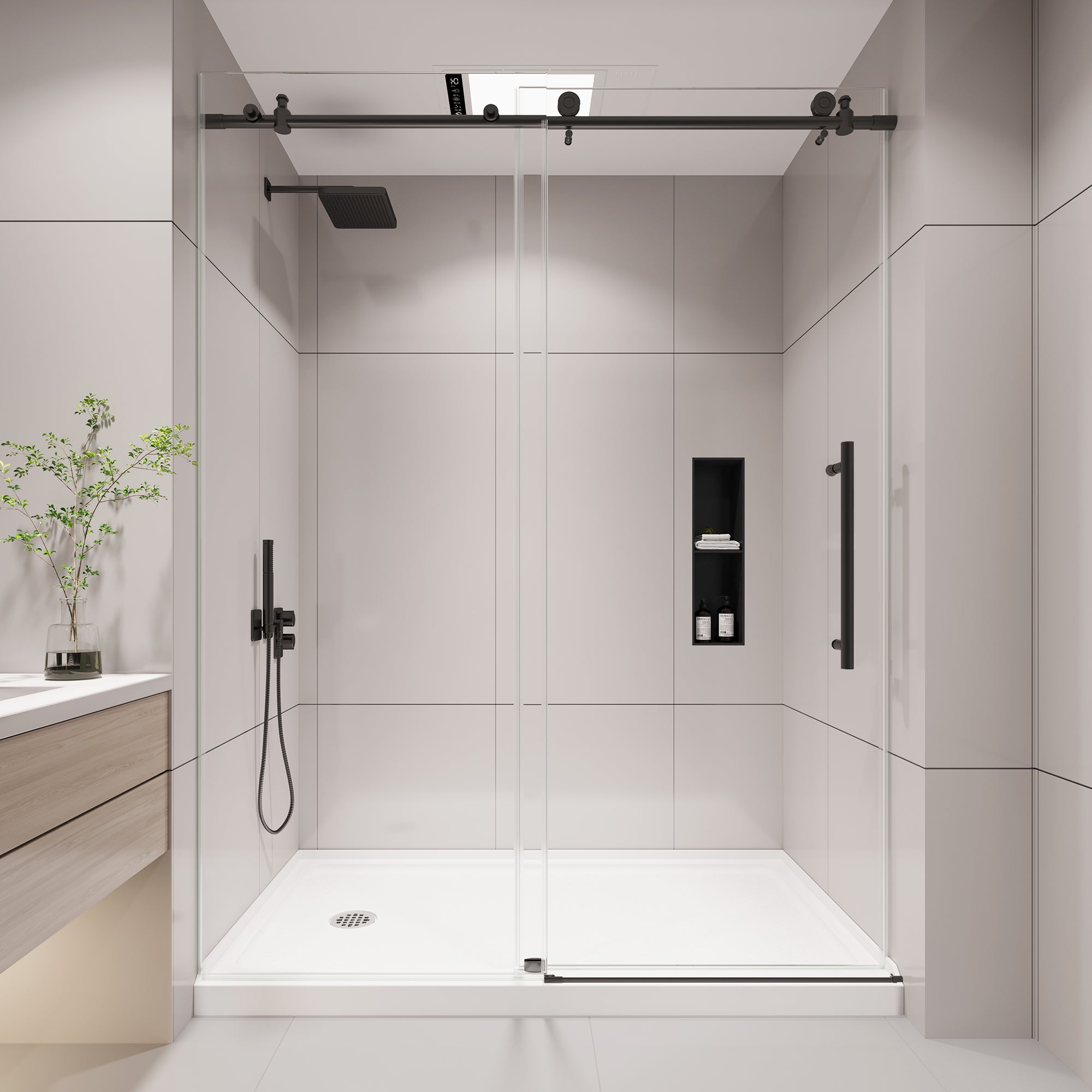
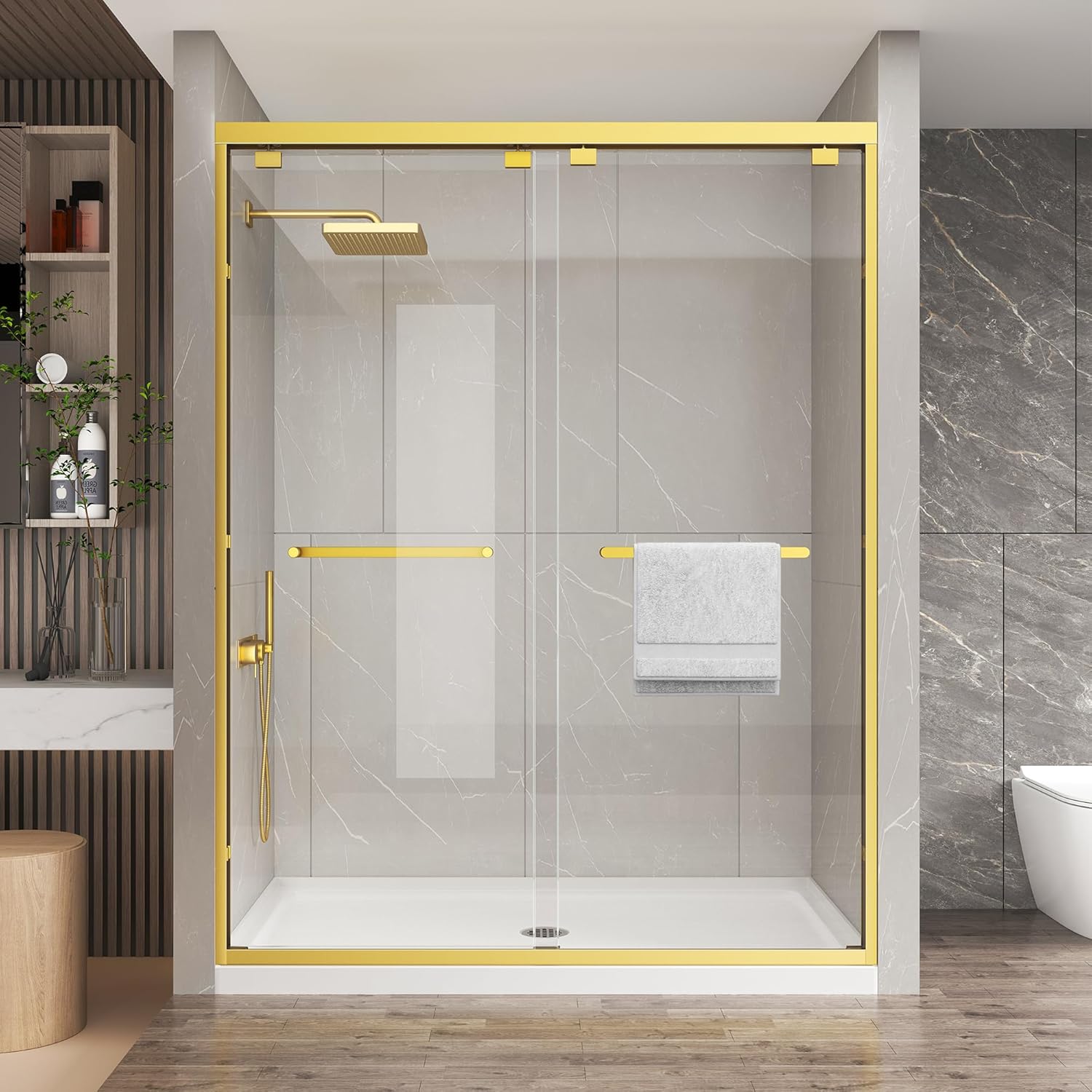
Sliding shower door track problems usually show up as dragging, noisy rollers, water escaping the bottom edge, or a door that never seems to stay aligned. The fix depends on whether the issue is simple maintenance, a wall that is out of plumb, a bad track install, or a layout that never had enough clearance to begin with. A useful rule of thumb: if the door binds after cleaning and roller adjustment, start checking the track, level, and wall conditions before replacing the entire enclosure.
The Short Answer
Most sliding shower door track problems come from one of four things: dirt or mineral buildup, worn rollers, a track that is not level, or walls that are out of plumb and pulling the door out of alignment. Start with cleaning and roller checks, then verify the finished opening, track level, and wall condition. If the track is bent, the opening is out of square, or the door keeps jumping the rail, replacement is usually the practical fix.
What Usually Causes Track Problems
Sliding shower doors depend on a lot of small details working together. The rollers need a clean path. The track needs to stay straight. The opening needs to be measured from the finished wall surface, not the framing behind it. In older bathrooms, even a door that looked fine on day one can start dragging after tile, settling, or repeated moisture exposure changes the conditions around it.
Here are the most common causes I would check first:
- Soap scum and hard-water scale on the track or rollers, which creates drag and uneven movement.
- Roller wear, especially if one side carries more weight than the other.
- Out-of-plumb walls, which make the door run downhill on one side even when the track is technically level.
- Improper track slope or pitch, where the rail is not set to the manufacturer’s requirements.
- Loose wall anchors, missing studs, or weak backing that let the track move under the door’s weight.
- Finished opening mismatch after tile, backer board, or trim changes the actual width.
- Debris inside the guide channel that causes the door to bind near the bottom.
- Glass-to-hardware clearance issues where the door is forced against stops or guides.
One field detail that surprises homeowners: a shower opening can measure differently at the top, middle, and bottom. If the walls lean even slightly, the track may be straight but the glass still runs crooked. That is why finished measurements matter more than the old rough framing dimensions.
Symptoms, Likely Causes, and Practical Fixes
If you can describe the symptom, you can usually narrow the problem quickly. The table below helps separate simple maintenance from a true installation or replacement issue.
| Symptom | Likely Cause | Practical Fix |
|---|---|---|
| Door drags in one section of the track | Dirty track, worn rollers, or a rail that is slightly out of level | Clean the track fully, inspect rollers, then check level from end to end |
| Door pops off the rail or feels unstable | Loose hardware, damaged rollers, or a track that is bent | Verify fasteners and wall anchors; replace damaged hardware if needed |
| Water escapes the bottom edge | Missing or worn sweep, poor overlap, or track geometry that does not control splash well | Check seals and overlap; confirm the opening and door style fit the shower base |
| Door scrapes only on one side | Walls out of plumb or frame set to an uneven finished opening | Measure the opening top, middle, and bottom; verify wall alignment before resetting |
| Rollers make noise even after cleaning | Bearing wear or mineral buildup inside the roller assembly | Inspect the rollers for flat spots, corrosion, or rough movement |
| Track keeps loosening over time | Weak anchoring, missing blocking, or repeated movement from a heavy door | Check for proper backing and secure attachment points before reinstalling |
If the issue is tied to layout rather than wear, a replacement door may solve the symptom better than another repair. For example, a tight alcove with limited side clearance often performs better with Sliding Shower Doors that match the finished opening correctly than with a door style that needs more swing room or hardware clearance.
Track problems can also point to a broader shower-door planning issue. A door can fit the width on paper and still fail in the room if the walls are bowed, the threshold slopes the wrong way, or the base and door were not matched to the finished dimensions after tile.

What to Check Before You Replace Anything
Before ordering new hardware or a full replacement, start with a basic diagnosis. That saves time and helps you separate cleaning issues from installation problems.
- Clean the track completely. Remove soap residue, scale, hair, and grit from the upper and lower rails, guide channel, and roller path.
- Inspect the rollers. Look for flat spots, cracks, seized bearings, or rust. A roller that turns unevenly will usually show it immediately.
- Check the track with a level. A rail that is not true can make the door drift, bind, or fail to close consistently.
- Measure the finished opening. Take width measurements at the top, middle, and bottom, then compare them to the height on both sides.
- Check wall plumb. Older homes often have walls that lean enough to change glass alignment even when the opening looks square.
- Look at the threshold and curb slope. If the threshold pitches the wrong way, water can run out regardless of track condition.
- Verify fasteners and anchors. If the track has loosened, check whether it is anchored into solid backing or just surface material.
- Test door travel under load. Move the door slowly and watch where it binds, jumps, or rubs.
Finished opening matters more than the rough opening because tile thickness, backer board, and trim change the actual dimensions the door sees. That is a common remodel mistake: the opening that worked before demo does not match the opening after the walls are finished.
- Do not assume a centered drain or curb means the track will line up. Drain placement and shower base geometry can affect the overall layout.
- Do not force a door into a slightly off opening. Small alignment errors become roller and seal problems later.
- Do not ignore repeated loosening. If hardware backs out more than once, the wall support needs attention.
- Do not treat water on the floor as only a seal problem. Poor slope, a bad threshold, or door overlap can be the real cause.
How to Prevent the Problem From Coming Back
Good prevention starts with the remodel plan, not just the final cleanup. The track and rollers should match the opening, the wall structure, and the shower base below them. That means thinking about finished dimensions early, especially if tile thickness, curb height, or a new base is part of the project.
Keep these practical points in mind:
- Measure after surface buildup is known. If tile, cement board, or wall panels are going in, measure the finished wall condition, not just the framing.
- Confirm wall support before hanging heavy glass. Track systems and rollers depend on solid attachment points.
- Check hardware clearance near tile edges. Tight clearances can create rubbing that is hard to see during rough installation.
- Plan for cleaning access. A track that traps debris will create repeat drag and water issues.
- Match the door style to the opening. Sliding layouts are often the practical choice where swing clearance is tight and nearby fixtures limit movement.
For homeowners comparing enclosure styles as part of a larger remodel, the decision often comes down to space and access. If the shower opening needs a bypass-style layout or a low-clearance solution, reviewing Sliding Shower Doors can help you focus on doors designed for that movement pattern rather than trying to retrofit the wrong type into the opening.
When Replacement Makes More Sense
Not every track problem should be repaired forever. If the rail is bent, the rollers are worn out repeatedly, or the opening is too far out of square for stable operation, replacement usually costs less frustration than continued patching. That is especially true in remodels where tile, wall backing, or the shower base has already changed the original dimensions.
Replacement becomes the better route when:
- The door continues to bind after a full cleaning and roller check.
- The track no longer sits straight because the wall support has shifted.
- The bottom guide and rollers are wearing out together.
- The opening has enough width on paper but not enough true clearance in the finished room.
- The door leaks because the track style does not match the threshold and base design.
For a bath remodel, this is also the point where it helps to look at the full enclosure instead of only the damaged part. A system with the wrong opening width, weak support, or poor water control can keep creating the same issue even with new parts. If the project involves a shower opening change, it is worth reviewing Sliding Shower Doors as part of the final selection process so the replacement fits the actual finished opening.
Frequently Asked Questions
Why does a sliding shower door get harder to move over time?
Most of the time, the cause is buildup on the track or rollers, followed by wear in the roller assembly. If the door used to move smoothly and now drags, check for mineral deposits, soap residue, or a rail that has loosened. If cleaning does not help, the rollers or alignment are usually the next place to look.
Can a track problem be caused by the shower walls?
Yes. Walls that are out of plumb can make the door run unevenly even if the track itself is straight. That is common in older homes and remodels where tile thickness changes the finished opening. Measure the opening at the top, middle, and bottom, then compare both sides before assuming the hardware is the only problem.
How do I know if the problem is maintenance or replacement?
If the door moves better after cleaning and a small adjustment, it is likely a maintenance issue. If it still binds, leaks, or comes off the track, the problem is more likely structural or hardware-related. Bent tracks, loose anchors, and badly out-of-square openings usually point toward replacement instead of another repair.
What to Check Next
Start with the easy fixes, but do not stop there if the same issue keeps returning. Clean the track, inspect the rollers, and verify the finished opening before deciding the door itself is the problem. If the layout is the real issue, the replacement needs to fit the shower opening, wall conditions, and clearance constraints in the room. For homeowners planning that kind of reset, Sliding Shower Doors is the most relevant place to narrow the choice after the measurements are confirmed.

Leave a comment
All comments are moderated before being published.
This site is protected by hCaptcha and the hCaptcha Privacy Policy and Terms of Service apply.