
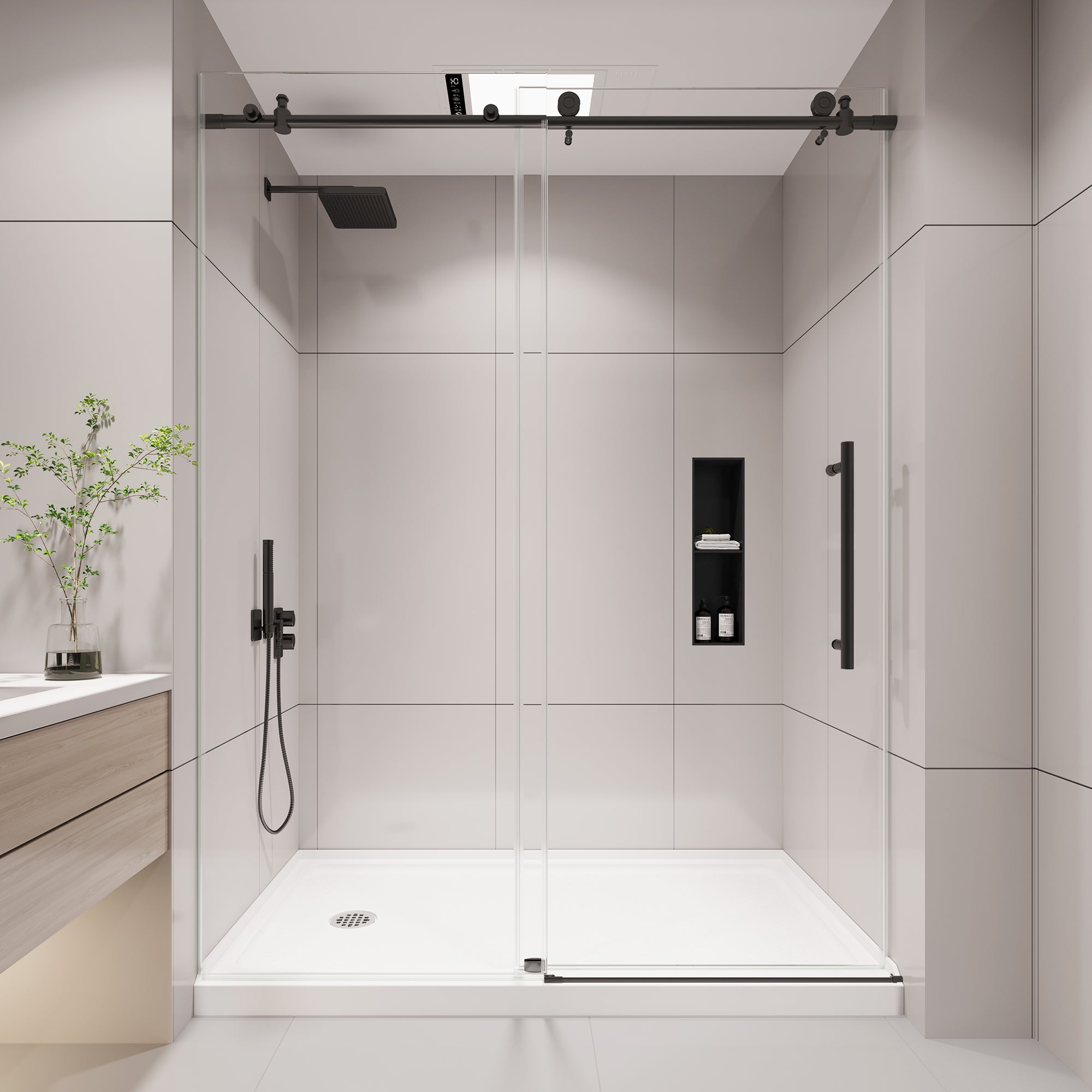
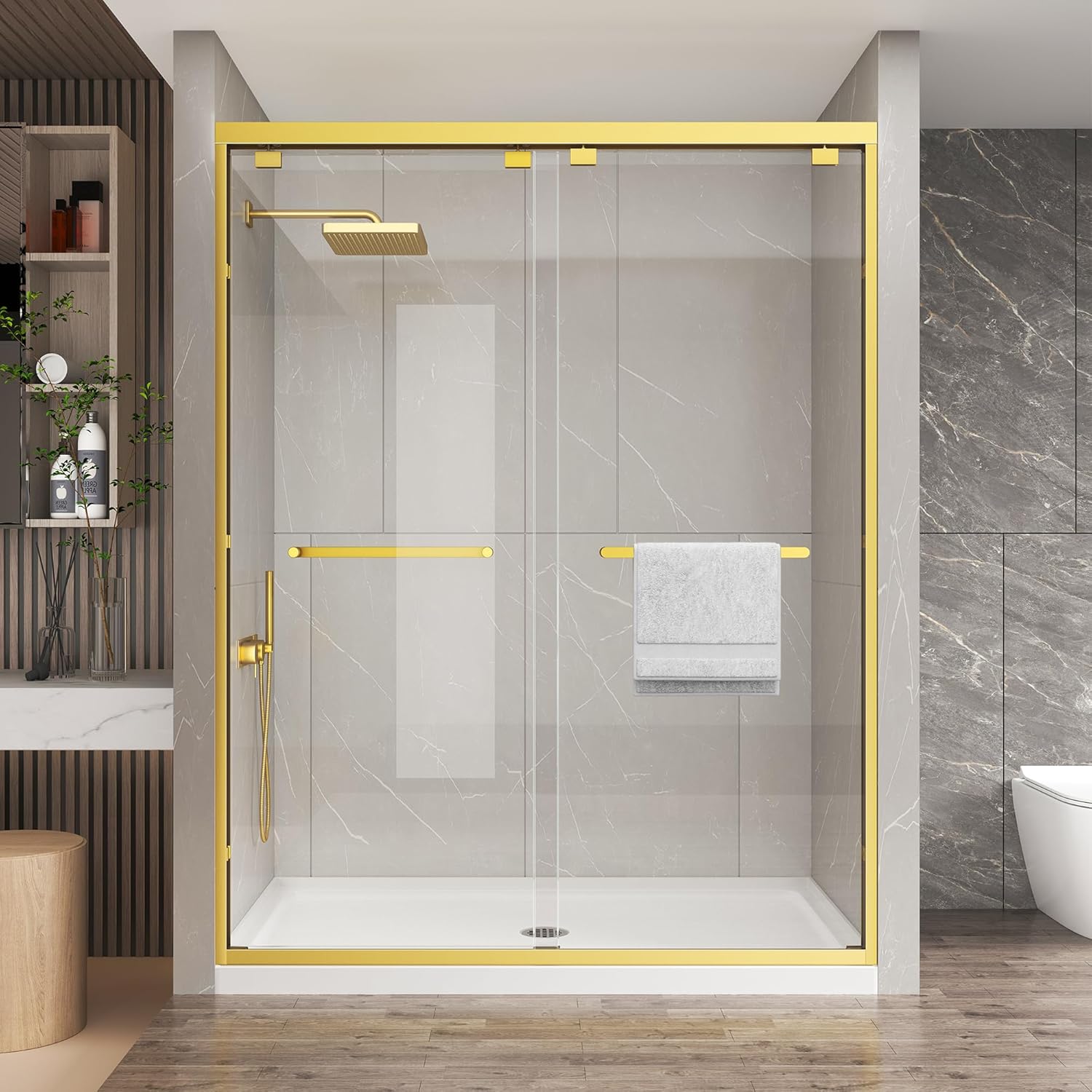
Water around a sliding shower door track usually comes from a controllable issue, not a mysterious one: the track is out of level, the door is misaligned, the curb or threshold slopes the wrong way, the wall surfaces are out of plumb, or water is simply being pushed beyond the enclosure during use. In a remodel, the key rule is simple: a sliding door can manage splash, but it cannot correct a bad opening, bad slope, or poor sealing.
The Short Answer
Yes, sliding shower doors can leak around the track, but usually because of installation, slope, or sealing issues rather than the sliding style itself. Water at the track often points to a bottom guide that is not centered, a threshold that slopes toward the bathroom, gaps at the wall or glass edge, or spray being aimed at the opening. If the opening is tight, start with a sliding shower doors layout that fits the finished opening correctly, then check plumb, level, and sealing before replacing hardware.
What Usually Causes Water Around the Track
Most sliding-door water problems come from a few predictable conditions. A track can collect water if the door is not sitting square in the opening, if the threshold is too flat or pitched the wrong way, or if the glass leaves a small opening at the ends where spray gets through. In older remodels, walls are often just crooked enough to make the rollers, guide, or magnetic contact line inconsistent.
One jobsite detail shows up often: a shower opening can measure one size at the top, another in the middle, and another at the bottom. If the bottom is narrower, the track and rollers may still fit, but the door can ride unevenly and leave a water path at the overlap. The same happens when tile thickness changes the finished opening after demolition. The rough opening may have looked fine, but the finished width is what the door actually has to handle.
| Symptom | Likely cause | Practical fix |
|---|---|---|
| Water pools at the bottom track | Track not level, poor seal, or spray hitting the lower gap | Check level, clean the track, and confirm the door closes fully against the wall or overlap |
| Water escapes near the wall side | Wall out of plumb or side seal not contacting | Measure top, middle, and bottom width; verify the wall surface before adjusting or replacing |
| Water gets past the front edge | Spray pattern too direct or overlap too small | Adjust showerhead direction, add proper sealing where allowed, or choose a better-fitting enclosure |
| Leak appears only after long showers | Minor gap plus repeated splash pressure | Inspect threshold slope, door alignment, and bottom guide contact |
| Track stays wet but floor does not flood | Normal splash accumulation with slow drainage | Dry the track after use and inspect caulk lines, but do not assume the door is failing |

How to Tell What Is Actually Leaking
Before replacing the door, separate track condensation, splash, and real water escape. Track condensation is just moisture collecting on cool metal or glass. Splash is water that hits the door during normal use and drips down. Real leakage means water is moving past the enclosure line and onto the floor in a repeated way.
- If water shows up directly under the track: check threshold slope, track fasteners, and bottom seal contact.
- If water appears at one end only: look for out-of-plumb walls, uneven tile, or a door that is not closing fully.
- If water appears after someone sprays the showerhead at the door: the problem may be use pattern, enclosure choice, or inadequate overlap.
- If the floor outside the shower is damp but the track is not: the curb or base edge may be sending water outward.
- If the door drags or rattles: rollers, guides, or track alignment may be off, which often leads to poor closure and more water escape.
A sliding door that fits the opening can still leak if the threshold is flat or pitched out. That is a common remodel mistake. The curb should help send water back into the shower, not let it migrate toward the bathroom floor. On curbed systems, the slope matters as much as the glass. On low-threshold layouts, the track and sealing details matter even more.
What to Check Before You Replace the Door
If you are deciding whether the problem is maintenance or replacement, start with measurements and visible conditions. A new door will not fix a misbuilt opening. A better fit starts with the finished surfaces, not the original framing.
- Measure the finished opening at the top, middle, and bottom. Do not use the old door size as the reference.
- Check both side walls for plumb with a level. Older homes often lean enough to matter.
- Measure the threshold or curb slope and confirm water runs back into the shower.
- Look at the drain area and pan edge for standing water or a low spot that feeds splash outward.
- Inspect the track and bottom guide for gaps, loose fasteners, or missing seals.
- Confirm nearby clearance for towel bars, vanity drawers, toilet tanks, and door casings.
- Check glass overlap and close-off points so the panels meet where water pressure is highest.
- Verify hardware clearance if the glass is thicker or the wall finish changed after tile was installed.
For homeowners planning a full remodel, this is also the point to match the door style to the opening. If the project needs a space-saving bypass layout, browsing sliding shower doors makes more sense than forcing a swing door into a tight alcove. If the layout is open and you are considering a fixed return or partial enclosure, shower glass panels may be the better planning reference for splash control.
Wrong choice causes a very specific problem: a door that fits the nominal width can still leak if the wall finish, curb slope, or closing gap is wrong. That is why finished dimensions matter more than rough framing numbers in a remodel.
Installation Details That Affect Water Control
Sliding shower doors depend on alignment. The track has to sit straight, the glass has to travel cleanly, and the closing edge has to meet the wall or overlap consistently. If the opening is out of plumb, the rollers may still work, but the closure line can shift enough to create a water path. That is especially noticeable on wider openings or on walls with heavy tile build-up.
Tile thickness is another common surprise. A wall that seemed on-size before tile may end up too tight after finish materials are added. Even a quarter inch can matter once glass, hardware, and side seals are in play. Likewise, a base can fit the footprint and still create a problem if the drain rough-in does not match the pan design or if the curb pitch sends water the wrong way.
Hardware clearance matters too. Thicker glass or a heavier track system may need stronger wall support, better fastener locations, and more careful spacing around the jamb. If the wall anchor lands in weak material, the system can shift over time, and small movements are enough to open up a leak point.
For safety and layout planning, bathroom remodeling standards from NKBA are a useful reference point for clearances and practical planning, especially when a shower door sits close to a vanity, toilet, or room entry.
Common field conditions that make leaks more likely
- Walls that are slightly out of plumb from floor to ceiling
- A curb that looks level but actually pitches outward
- Track sections installed over uneven tile or grout buildup
- Bottom guides that are loose or not centered
- Showerheads aimed directly at the door edge
- Oversized gaps left for tolerance without proper sealing detail
If you are early in the remodel and still choosing the enclosure, a general look at KPUY Shower Doors can help you compare sliding, pivot, and fixed-panel planning without committing to a layout that fights the room. The goal is not just to close an opening; it is to make the opening work with the room around it.
Frequently Asked Questions
Do sliding shower doors leak more than pivot doors?
Not automatically. Sliding doors often do well in tight bathrooms because they do not need swing clearance, but they are more dependent on track alignment, overlap, and threshold slope. Pivot doors have different clearance issues, but they can also leak if the opening is out of plumb or the sweep does not contact correctly.
Can caulk fix water around the track?
Caulk can help at specific joints, but it does not fix a door that is misaligned or a curb that slopes outward. If water is getting past the track because of an opening problem, caulk is only a limited patch. Use it for proper sealing lines, not as a substitute for fit, slope, or enclosure design.
How do I know if the shower base is part of the problem?
If the track looks dry but the floor outside the shower gets wet, the base or curb may be part of the issue. Check whether water is moving back toward the bathroom side, whether the drain area is holding water, and whether the threshold directs runoff inward. A base that fits the footprint can still perform poorly if the drain or slope is wrong.
What to Do Next
If water keeps showing up around a sliding shower track, start with the opening and the slope before you blame the door. Measure the finished width at three points, check plumb, inspect the curb pitch, and confirm that the closing edge actually seals under real use. If the layout still supports a sliding system, a properly sized enclosure from sliding shower doors is the right next place to look. If the opening, wall conditions, or splash pattern are the real issue, the fix may be in the remodel plan, not the hardware.

Leave a comment
All comments are moderated before being published.
This site is protected by hCaptcha and the hCaptcha Privacy Policy and Terms of Service apply.