
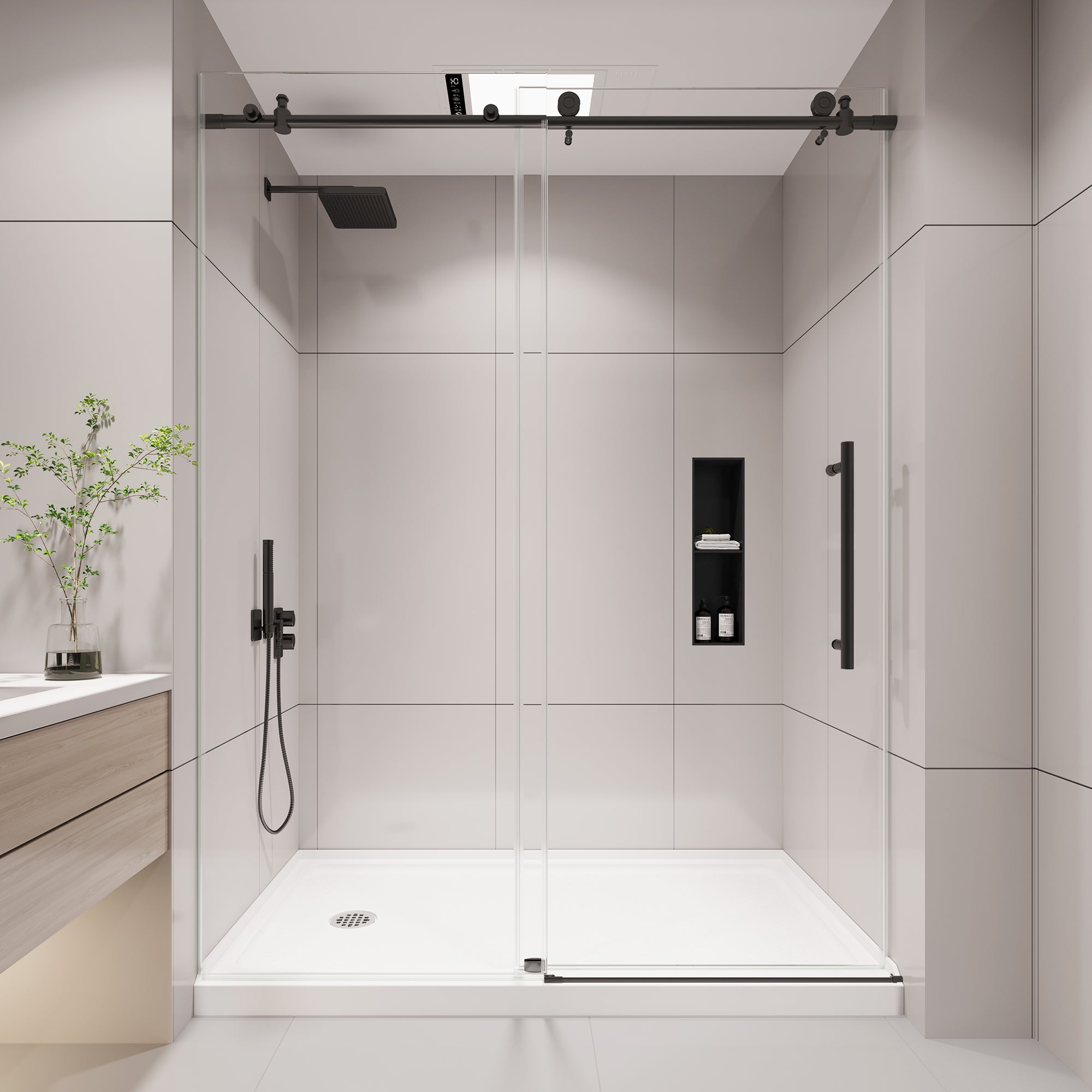
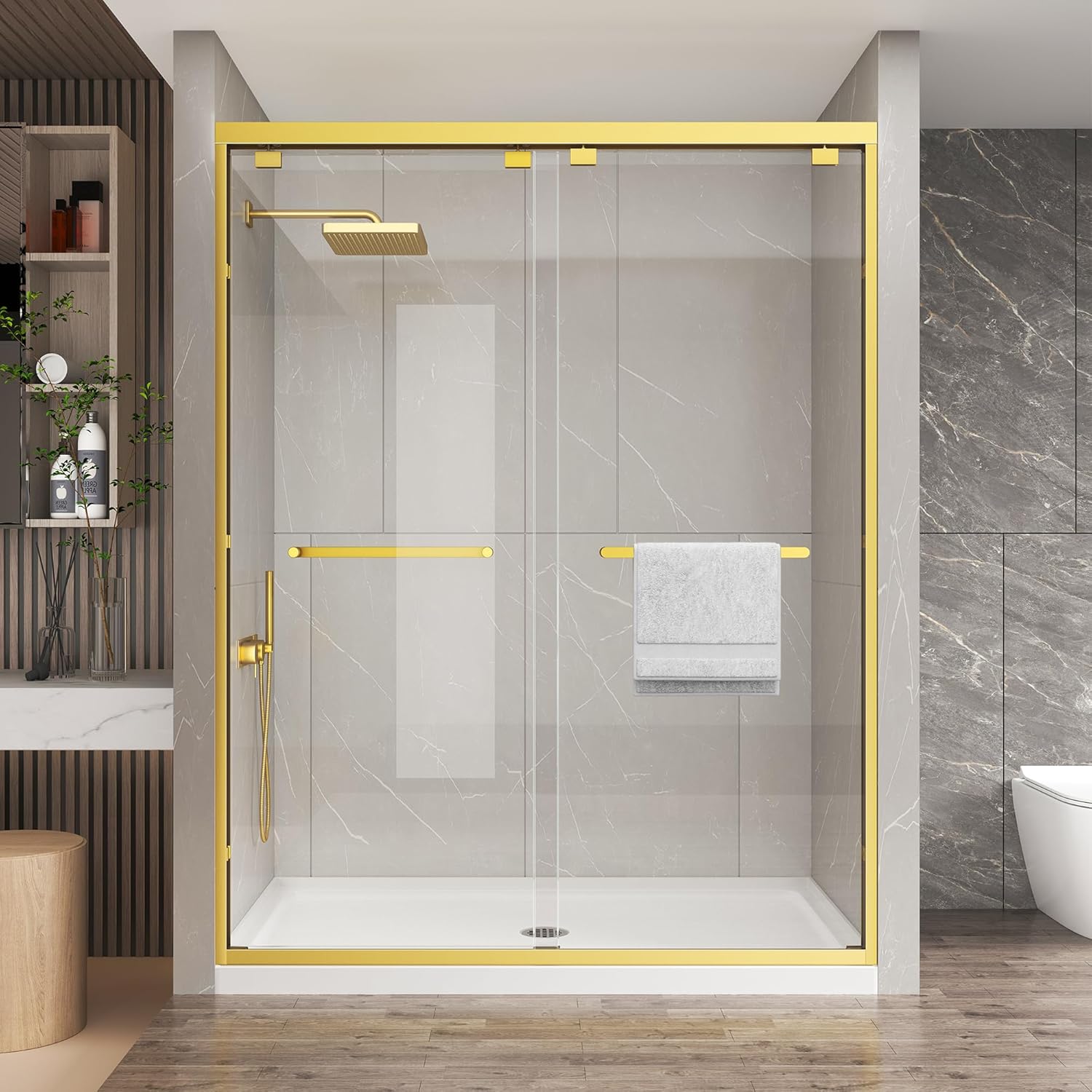
Older showers often create the same problem: the opening looks simple until you measure it after tile, curb build-up, and wall finish changes. A frameless shower door can work very well on a curbed shower, but only if the finished opening, curb width, wall plumb, and swing clearance are checked before ordering. In 2026 remodels, homeowners are also asking for cleaner sightlines and easier cleaning, which makes frameless glass a common choice for curbed shower layouts.
The Short Answer
A frameless shower door can be a strong choice for a curbed shower if the finished opening is measured correctly and the curb is flat, stable, and sized for the door hardware. The key checks are top, middle, and bottom width, wall plumb, curb height, swing clearance, and glass thickness clearance. If the opening is out of square or the curb is narrow, a different door style may fit better.
What to Measure on a Curbed Shower
Start with the finished opening, not the rough framing. Tile thickness, backer board, and curb cap all change the final dimensions. On a curbed shower, the door sits on the curb and fastens to the wall, so the final fit depends on both surfaces being true enough for the hardware to install cleanly.
Measure the shower opening at three points: top, middle, and bottom. A bathroom that looks square by eye often is not. Older homes often have walls that lean just enough to affect glass fit. If the top opening is wider than the bottom, that difference matters more on frameless glass because the panel has less forgiveness than a framed system.
Also check the curb itself. You want to know:
- Whether the curb is level from end to end
- Whether the top of the curb is flat enough for the sweep and hinge hardware
- Whether the curb has the correct slope back into the shower area
- Whether the curb width leaves enough room for stable hardware placement
A door may fit the opening on paper and still be a poor match if the curb is too narrow for the hinge footprint or if the wall tile leaves little room for secure anchor placement. If the curb is being rebuilt, plan the door at the same time as the shower base or pan. KPUY Frameless Shower Doors are the relevant collection to review once the opening and curb are confirmed.
For code and safety context, it helps to cross-check general bathroom and glazing planning with NKBA guidance and safety-related considerations from CPSC.
How Door Type Changes the Fit
Not every frameless shower door behaves the same on a curbed shower. The best match depends on available clearance, where the toilet or vanity sits, and how wide the opening is. Frameless glass looks similar from a distance, but the movement pattern and hardware requirements can be very different.
| Door style | Best fit condition | Main planning concern |
|---|---|---|
| Pivot / hinged swing door | Opening has enough room for the panel to swing outward or inward safely | Door swing clearance near vanity, toilet, or aisle space |
| Fixed panel with door | Opening needs splash control but the layout is too tight for a large swing | Panel width, stability, and curb sealing |
| Sliding frameless layout | Space is limited outside the shower or the opening is wide | Track alignment, roller setup, and wall-to-wall accuracy |
| Two-panel bypass layout | Shared bathroom or wider opening needs access from either side | Overlap, track clearance, and handling of out-of-plumb walls |
For a curbed shower, a pivot door works well only if the surrounding space can accept the swing. A vanity drawer may clear the room but still hit the door casing. A toilet that seems far enough away can become a problem once the door opens fully and the handle projects into the aisle.
A sliding layout is often the safer choice where swing clearance is tight. It also tends to work better in smaller bathrooms, especially when the curb is part of a compact alcove shower. If you are comparing movements and opening styles, the main KPUY collection to review is still Frameless Shower Doors, because the hardware and glass fit principles are the same even when the panel motion changes.
For installers and homeowners working through code-adjacent details, the ICC and IAPMO resources can be useful references for broader building and plumbing context: ICC and IAPMO.

Pre-Order Installation Checklist
Before ordering, work through the opening the way an installer would. This avoids the common mistake of measuring only the nominal width and forgetting what the finished surfaces changed.
- Measure the finished opening at the top, middle, and bottom.
- Check both side walls for plumb with a level.
- Measure the curb width and confirm the top is flat enough for hardware.
- Verify the curb slope returns water to the shower, not toward the bathroom floor.
- Confirm there is room for the door swing, handle projection, and any towel bar or nearby fixture.
- Find stud locations or confirm the wall structure can accept anchors where needed.
- Check tile thickness and any trim pieces that may reduce the usable opening.
- Review the shower base or pan drain position if the remodel includes a full replacement.
- Decide whether the design needs a larger fixed panel for splash control.
- Plan silicone sealing lines and water containment details before finishing the walls.
A useful jobsite rule: measure after tile if the wall surface is changing. The wallboard opening is not the same as the finished opening. That gap can be enough to change the door size or hardware layout. The same is true for curb caps, which can raise the landing surface by more than expected.
Glass thickness matters too. Frameless assemblies usually need enough rigidity to stay stable without a heavy frame, so hardware clearance and wall support matter more than they do on a framed shower door. That is why the opening must be accurate before the door is selected. If the walls are out of square, a professional installer may be able to work around it, but the adjustment range is not unlimited.
Water containment is another practical issue. Frameless doors rely on careful alignment, sweeps, and sealing. They do not block water the same way a framed enclosure might. For that reason, a curbed shower with a frameless door should be planned as a system: curb height, panel position, showerhead location, and floor slope all work together.

Frameless Door Decision Table
The table below compares the main planning factors that affect whether a frameless shower door is a good match for a curbed shower.
| Planning factor | What to check | Why it matters |
|---|---|---|
| Opening width | Top, middle, and bottom measurements | Reveals out-of-square walls and installation tolerance |
| Curb condition | Flatness, level, width, and slope | Supports hinges, seals, and stable door operation |
| Door movement | Swing space or sliding clearance | Prevents conflict with vanity, toilet, or hallway traffic |
| Wall support | Stud locations and anchor points | Glass hardware needs secure attachment |
| Water control | Showerhead location and threshold details | Helps limit splash outside the curbed area |
| Finished materials | Tile thickness and trim buildup | Changes the final opening and hardware position |
Common Mistakes to Avoid
Most problems with frameless doors on curbed showers come from measurement shortcuts, not from the glass itself. Keep an eye out for these issues:
- Measuring the rough opening instead of the finished opening
- Ignoring out-of-plumb walls and assuming the opening is square
- Forgetting curb thickness after tile or stone is added
- Not checking swing clearance near the toilet, vanity, or entry door
- Skipping wall support planning for hinges and stabilizers
- Overlooking drain placement when the shower base is being changed
- Assuming a narrow curb will accept any hardware
Another common remodel surprise shows up after demolition: a drain that looked centered may not match the new shower base, or the subfloor may not be as flat as expected. If the project includes a new shower base, confirm drain location and threshold height before the door is finalized. A good opening can still become a bad fit if the base sits differently than planned.
For accessibility, clearance, and general bathroom layout thinking, the NKBA is a useful reference point, especially when the shower must work around aging-in-place needs or a tighter floor plan.
Frequently Asked Questions
Can a frameless shower door be installed on any curbed shower?
No. The curb needs to be stable, properly sized, and flat enough for the hardware and sealing materials. The opening also has to allow for the chosen door motion. A good fit depends on the finished dimensions, wall plumb, and available clearance around the shower.
How much out-of-plumb can a frameless shower door handle?
There is no universal number. Some hardware and glass layouts allow limited adjustment, but frameless systems have less forgiveness than framed ones. If the walls lean too much or the opening varies a lot from top to bottom, the installer may need a custom approach or a different door style.
Should I choose a swinging or sliding frameless door for a small bathroom?
If floor space is tight, sliding usually makes more sense because it avoids swing clearance conflicts. A pivot or hinged door can still work if there is open aisle space outside the shower. Measure the room around the shower, not just the opening itself, before deciding.
Before You Choose
A frameless shower door can be a clean, practical fit for a curbed shower, but only when the opening is measured after finishes are in place and the curb is planned for the hardware. The deciding factors are simple: finished width, wall plumb, curb geometry, door movement, and nearby clearance. If those details check out, frameless glass can work very well in a curbed remodel.
If you are still sizing the opening or comparing layouts, start with the shower system first and then match the door to it. For homeowners planning a frameless setup, the most relevant place to review options is KPUY Frameless Shower Doors. That is the collection that aligns most closely with curbed shower planning, swing space, and finished-opening accuracy.

Leave a comment
All comments are moderated before being published.
This site is protected by hCaptcha and the hCaptcha Privacy Policy and Terms of Service apply.