
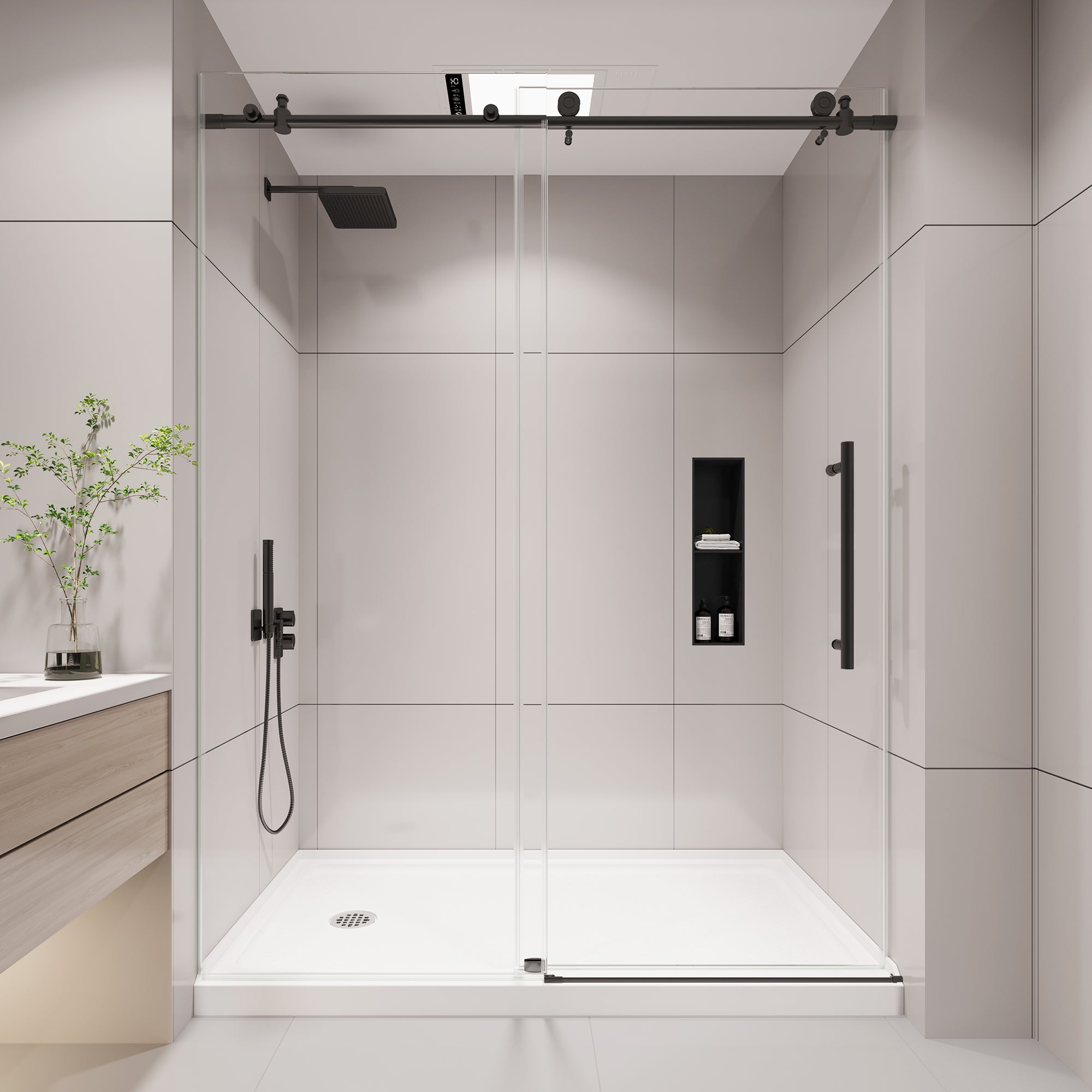

Ordering a shower base and assuming the drain will line up is one of the most common, expensive mistakes I see on remodels. Homeowners pick a prefabricated base because it’s fast and clean, then the plumber shows up and the existing rough-in is 3" off center, or the finished wall sits out-of-plumb and the drain sits behind a stud. In 2026 the trend toward curbless and custom tiled pans makes getting the drain location right before you order even more important. A little time with a tape, level and a clear plan saves days of callbacks and costly workarounds.
Quick answer: Can you order a shower base without checking the drain?
Short answer: No — always measure the center of the existing drain to the finished wall and to both side walls, and confirm the drain height (finished floor to drain center) before ordering. Most prefabricated bases allow only a small lateral tolerance (often ±1/4" to ±3/8"). If your rough-in is outside that tolerance, you must plan a recessed flange, a custom cut, or a plumbing move.
Why drain location matters (and where projects go wrong)
Drain location determines the pan design, slope, trap placement, and how the finished threshold or curb will tie into surrounding tile and flooring. A drain that’s off by a few inches can force a field-modified base, a raised curb, or a full rework of the waste line. For curbless and low-threshold showers, a 1/8" difference in plan can translate to a significant slope or a failed waterproofing detail.
Practical consequences: blocked access for the trap, incorrect curb slope, grout lines that don’t line up, or the need to cut and epoxy a new channel into the substrate. You don’t want to discover those on the day the base arrives.
How to measure an existing drain — step-by-step
Follow this field-tested sequence before you click “buy.” If you’ve got a contractor, have them do it with you and sign off on the measurements.
- Expose the subfloor if possible — remove a small patch of tile or flooring to see the drain flange. If not, measure from the finished floor surface and note whether measurements are to tile or to the backing.
- Measure center-to-wall: Run a tape from the center of the drain strainer to the finished wall face. Record center-to-back-wall and center-to-side-wall distances. Measure to the final planned finished wall, not the temporary drywall.
- Confirm drain height: Measure from the finished floor surface to the top of the drain flange or to the drain centerline if exposed — this tells you whether the drain sits high or low relative to the planned base.
- Check for hidden offsets: Probe along the wall framing for studs, pipes, or obstructions that may restrict moving the drain laterally.
- Document with photos and notes: Take close-up photos with a tape visible and label them with the measurements — this helps the manufacturer if a question comes up.
Measuring for a new shower base (prefab vs. custom)
When ordering a prefabricated Shower Bases, you must give the manufacturer the drain location relative to two fixed points: the finished wall behind the drain and the nearest side wall or edge. Most vendors publish a rough-in diagram — compare your site measurements to that diagram.
Key dimensions to capture:
- Center-to-back wall (or center-to-long wall)
- Center-to-side wall (left/right)
- Finished floor to drain centerline (height)
- Distance to any obstructions like studs or supply lines
For a tiled mud pan you’ll work from the centerline and slope the mortar bed at 1/4" per foot toward the drain (common industry practice). Precast pans already have slope and a set drain outlet — verify that your plumbing trap adapter lines up and that you have the vertical room for the drain body.
Common layout scenarios — what to expect
| Layout | Typical drain location | Common issue to watch for |
|---|---|---|
| Single-wall alcove (standard 32"–36" depth) | Centered or offset toward front | Trap can sit under front apron — check access |
| 60"×36" walls | Drain often centered at 30" from back | Mismatch between wall studs and drain center requires box-out |
| Curbless / linear drain | Along threshold or against wall | Needs precise fall and curb alignment |
| Custom tiled pan | User-defined — must coordinate with plumber | Substrate depth and waterproofing critical |
Real jobsite experience you should know
After 20 years of remodeling I can tell you most houses — especially those built before 1990 — have surprises: walls that are out-of-plumb by up to 3/4", old cast-iron lines that don’t match modern PVC fittings, and drains set off-center because the original installer used a stud layout instead of plumbing centerlines. One memorable bathroom I did had the poured concrete slab higher on one side; the drain flange was buried and the only fix was to recess the shower base 1/2" and build a tapered mud set to maintain slope. That 1/2" of hidden variance is why I always test-fit and document.
When working with glass doors, remember this interaction: the tempered glass thickness and hardware mounting need predictable jamb and curb dimensions. Frameless doors commonly use 3/8" or 1/2" tempered glass — if the base sits proud or low by even 1/4", you can blow the door alignment. Coordinate the drain/curb measurement with door hardware specs.
Tolerances, codes and authoritative references
Manufacturers will publish an allowable lateral tolerance — typically between ±1/4" and ±3/8" — and a vertical tolerance for how far above or below the finished floor the drain top can sit. If your site is outside those numbers, you must either move the drain or select a base that accommodates an offset. Check the product documentation before ordering.
Plumbing and waterproofing codes vary by jurisdiction. The National Kitchen & Bath Association provides practical layout guidance useful to homeowners and designers (NKBA). For plumbing code specifics and trap/rough-in requirements, consult the model plumbing code adopted locally — for example, resources from IAPMO/UPC or your local building department are authoritative (IAPMO).
Tools, materials and a quick on-site checklist
- Tape measure (25' with clear markings)
- Magnetic or spirit level (48" recommended)
- Laser level for long runs
- Small demo tools to expose flange (pry bar, oscillating multi-tool)
- Camera or phone for photos
- Pen, jobsite sketch pad, and a marker
On-site checklist (printable):
- Record center-to-back and center-to-side wall measurements.
- Record finished floor to drain centerline height.
- Verify trap access below and note flange type.
- Compare to manufacturer's rough-in diagram.
- Photograph everything and confirm with plumber.
FAQ — People Also Ask
How far should shower drain be from the wall?
The simplest response: measure the center of the drain to the finished wall and compare to the shower base manufacturer’s rough-in spec. There isn’t a single correct distance — it’s determined by the base design. Typical prefab bases list a center-to-back-wall rough-in; many fall between 12" and 30" depending on size and layout, but you must use the specific product spec.
Can I move the drain instead of buying a custom base?
Yes, moving a drain is possible but it adds cost and time. A lateral move can be done in the floor or below slab (more expensive). If you need to relocate, get a plumber’s estimate first. Sometimes a small shift—under 2"—can be managed with an offset drain fitting; bigger moves often require cutting the subfloor or slab work.
What tolerance do manufacturers allow for drain placement?
Many manufacturers state a lateral tolerance of ±1/4" to ±3/8". Vertical tolerance may be a similar small range. Always check the product technical sheet — if your site is outside the tolerance, order a variant or plan a plumbing modification.
Wrap-up & next steps
Take the time to measure and document the drain center-to-wall distances, the drain height, and any obstructions before you order. If you’re using a prefabricated Shower Bases, match those numbers directly to the manufacturer rough-in. Small tolerances are not negotiable on installation day.
If you’re unsure, schedule a short site visit with an experienced contractor or plumber to verify measurements — that one visit often prevents a full rework. For layout help and installation best practices, refer to NKBA and IAPMO resources linked above, and keep your documentation with the product order.

Leave a comment
All comments are moderated before being published.
This site is protected by hCaptcha and the hCaptcha Privacy Policy and Terms of Service apply.