
Installing a shower door looks simple until the opening is out of square, the tile thickness changes the finished width, or the curb is just slightly off. In real remodels, the hardest part is usually not hanging the glass; it is getting the measurements, wall conditions, and door movement right before the hardware ever comes out of the box.
The Short Answer
Installing a shower door is moderately difficult for a basic alcove with square, plumb walls, but it becomes much harder when the opening is out of plumb, the curb is uneven, or the tile changes the finished dimensions. Sliding doors are usually more forgiving on tight bathrooms, while pivot and frameless doors demand cleaner measurements, stronger wall support, and more careful alignment.
What Makes Shower Door Installation Difficult
The challenge is not just attaching glass to a wall. A shower door has to fit a finished opening, move without binding, and keep water inside the shower area. That means the installer has to account for tile thickness, grout lines, wall flatness, curb height, and any slope in the pan or threshold. A door can be the correct nominal size and still fail in the field if the opening was measured too early or without checking all three points: top, middle, and bottom.
Older homes often have walls that are not perfectly plumb. Even a small lean can affect frameless glass, make a pivot door swing differently, or leave a sliding track looking crooked if it is forced to follow a bad wall. Remodels also uncover surprises after demolition: a stud that is not where expected, drywall thickness that changed, or a subfloor that needs correction before a new shower base goes in. For shower planning and layout context, KPUY’s KPUY Shower Doors collection is a useful reference point for door styles that fit different openings.
From a planning standpoint, the installation difficulty usually comes down to four things:
- Measurement accuracy for the finished opening, not the rough opening.
- Wall condition, especially out-of-plumb or bowed surfaces.
- Hardware and glass clearance, including tile build-out and trim pieces.
- Water management, so spray does not escape at the hinge, track, or threshold.
For safety context around glass and bathroom planning, the CPSC is a helpful resource. For general bathroom layout and homeowner planning principles, the NKBA offers widely used guidance.
Measurements That Decide the Fit
Start with the finished opening, not the old product label. If you are replacing a shower door, the previous door size may not tell you much once the wall surface has changed. Tile can reduce the clear opening. New wallboard, waterproofing layers, and finish tile can all change the final dimension by more than homeowners expect.
Measure the opening at the top, middle, and bottom. If the numbers are different, use the smallest reliable measurement and note the variation. That tells you whether a sliding door, pivot door, or fixed panel is more realistic. A shower opening may measure one way at eye level and another at the curb because older framing is rarely perfect.
| Installation Condition | Typical Difficulty | What It Affects | Practical Response |
|---|---|---|---|
| Square, plumb alcove | Lower | Door alignment, track fit | Most standard doors fit with normal adjustment |
| Out-of-plumb walls | Moderate to high | Glass fit, hinge alignment, reveal gaps | Check wall variance before ordering; frameless layouts need more precision |
| Uneven curb or floor | High | Water containment, door sweep, threshold contact | Verify slope and level before final hardware fit |
| Tile build-out changed after demolition | Moderate | Finished width and hardware clearance | Measure after finish surfaces are installed |
| Limited swing clearance | Moderate to high | Pivot door operation | Consider a sliding layout or fixed panel if the room is tight |
A base that fits the footprint still needs the drain to land in the right place. That matters if you are replacing a shower base at the same time as the door. In a remodel, a drain that looks centered may not line up with the new pan or the actual plumbing rough-in once the old flooring is removed. That is why shower door work often goes hand-in-hand with shower base planning. If the pan is part of the project, KPUY’s Shower Bases collection is relevant for threshold and drain layout review.
Door Types and Installation Difficulty
Not every shower door installs the same way. The opening size, nearby fixtures, and wall support usually determine which style makes the most sense.
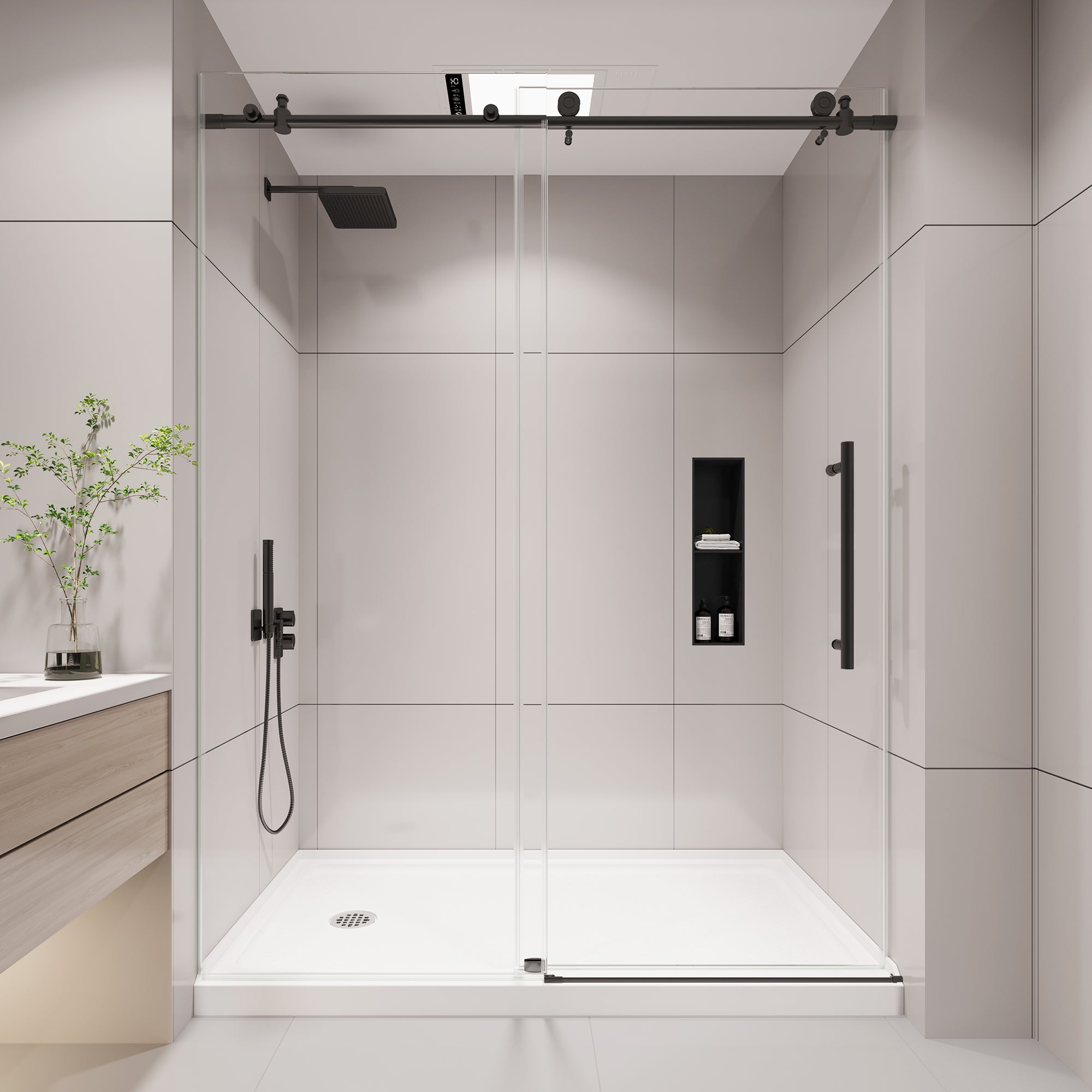
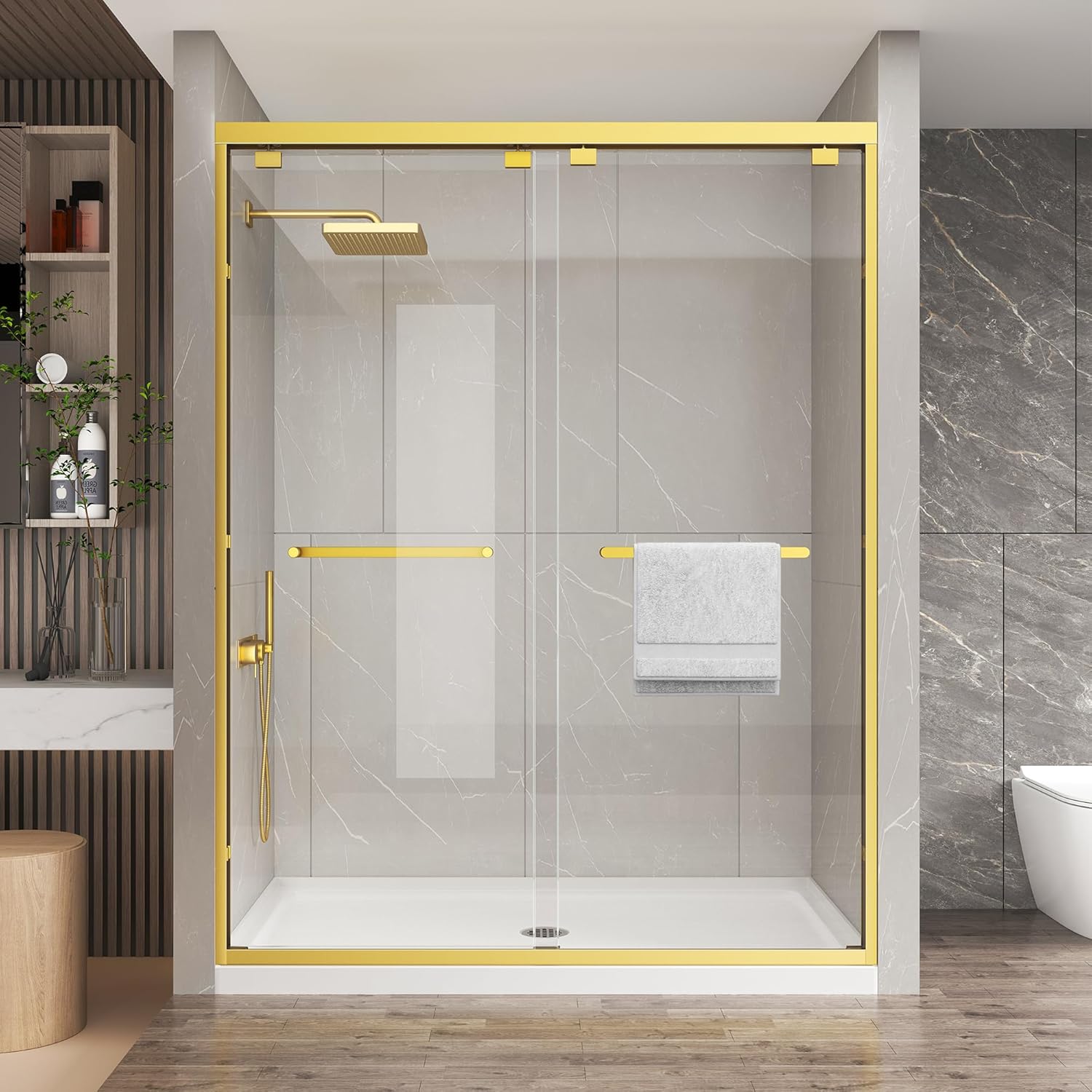
Sliding shower doors are often the easiest choice in a tight bathroom because they do not need swing clearance. They do require straight track alignment and a reasonably level threshold. If the opening is wide enough and the walls are not badly out of square, sliding systems can be practical for many remodels.
Pivot doors are more demanding because the door must swing freely without hitting the vanity, toilet, or nearby wall. The door opening direction matters. In a compact layout, a pivot door that looks fine on paper can become a problem if the handle collides with the room traffic path.
Frameless shower doors are popular in 2026 bathroom design because they keep the room visually open, but they usually ask for better wall condition and tighter finished measurements. Thicker glass, hinge locations, and wall anchor placement all need attention. If the walls are off, the glass usually shows it.
Fixed panels can simplify installation because there is less moving hardware, but they must be sized to manage splash. A panel that is too short or placed too far from the shower head can leave water outside the enclosure. For open-entry layouts, a panel may be a cleaner fit than a full door. If that is the direction you are considering, KPUY’s Shower Glass Panels collection matches that planning stage.
Here is a practical way to think about difficulty:
- Confirm the finished opening after all wall surfaces are installed.
- Check wall plumb and curb level at multiple points.
- Measure swing clearance or track clearance based on the door type.
- Locate studs and verify where wall anchors can land.
- Confirm the shower base, curb, and drain do not force a bad glass layout.
- Plan silicone sealing and water control before the first hole is drilled.
Image suggestions often help homeowners visualize the difference between door types and opening constraints.

What to Check Before You Order
The biggest installation mistake is ordering before the shower is actually ready. A shower door should be selected after the base, curb, and wall finishes are close to complete. If you order too early, you may end up with a door that is technically close but not correct once the tile and trim are in place.
- Finished opening width at the top, middle, and bottom.
- Wall plumb and whether one wall leans more than the other.
- Curb slope so water drains inward, not toward the room.
- Threshold height and whether the door sweep has enough contact.
- Tile thickness and any build-out from waterproofing layers.
- Stud locations for hinge or support bracket attachment.
- Door swing clearance around toilets, vanities, towel bars, and trim.
- Drain location if a new shower base is part of the job.
For code context on plumbing and installation planning, especially when shower bases or rough-ins are changing, IAPMO and the ICC are useful references. They are not a substitute for local requirements, but they help frame why rough-in dimensions and water containment matter during remodels.
One common jobsite observation: a vanity drawer may clear the room but still hit the door casing or shower entry trim once the final door is installed. That is why nearby fixture clearance matters as much as the opening itself. If you are planning a full bath layout, door swing, cabinet placement, and shower access should be considered together rather than separately.
If your project is centered on a minimal-glass look, a frameless layout can work well, but only if the opening is measured carefully and the wall support is sound. That is the point where a few extra minutes of prep save a lot of field adjustment later.

A Practical Installation Sequence
Whether the job is DIY or handled by a pro, the workflow should be disciplined. Shower glass is unforgiving once holes are drilled into finished tile.
- Verify the opening after tile or wall finish is complete. Measure top, middle, and bottom. Record the smallest usable width.
- Check plumb and level. Use a level on both side walls and across the curb or threshold.
- Confirm hardware layout. Make sure hinge plates, tracks, or brackets will hit solid backing or studs.
- Dry-fit the major components. Check that the glass, seals, and hardware clear each other and nearby fixtures.
- Mark and drill carefully. Tile can crack if anchors are rushed or the bit walks.
- Set the glass and test movement. Open and close the door before final sealing.
- Apply silicone correctly. Seal according to the door design, but leave intended drain paths open where required.
- Allow cure time. Do not use the shower too early after sealing.
Glass thickness matters, but more glass does not automatically mean easier installation. Heavier panels place more demand on hinges, anchors, and wall structure. Hardware clearance also becomes more important, especially where tile edges, trim, or adjacent walls are close to the opening. That is why a simple-looking project can become difficult once the actual field conditions are known.
For homeowners comparing shower styles before a remodel, the general KPUY Shower Doors collection is a practical starting point because it keeps the decision focused on opening size, door movement, and installation conditions instead of guesswork.
Frequently Asked Questions
Can a homeowner install a shower door without professional help?
Sometimes, yes. A straightforward sliding door on a square, well-finished alcove is manageable for an experienced DIYer. Frameless and pivot doors are less forgiving because small measurement errors show quickly. If the walls are out of plumb, the curb is uneven, or the glass is heavy, professional installation is usually the safer path.
How do I know if my shower opening is ready for a door?
The opening should be finished, measured at multiple points, and checked for plumb and level. If tile, trim, or a shower base is still changing, wait. A door should be selected from the finished dimensions, not the rough opening. If the drain, curb, or wall surfaces are still being adjusted, the final fit may change.
What is the hardest part of installing shower glass?
The hardest part is usually not hanging the door. It is getting the measurements, wall support, and water management right before installation. Out-of-plumb walls, tile thickness, and nearby fixture clearance are the usual trouble spots. Once glass is drilled and set, there is not much room for correction.
Final Takeaway
Installing a shower door is not extremely difficult when the opening is square, the walls are true, and the hardware has room to work. It becomes a much bigger job when the bathroom is a remodel with uneven framing, changed tile thickness, or a curb that needs correction. The safest approach is to measure the finished opening carefully, match the door type to the layout, and verify water containment before ordering.
If you are planning a new shower enclosure, start with the opening and the movement of the door, not just the style. From there, KPUY’s KPUY Shower Doors collection can help narrow the layout to a door type that fits the room and the installation conditions you actually have.

Leave a comment
All comments are moderated before being published.
This site is protected by hCaptcha and the hCaptcha Privacy Policy and Terms of Service apply.