
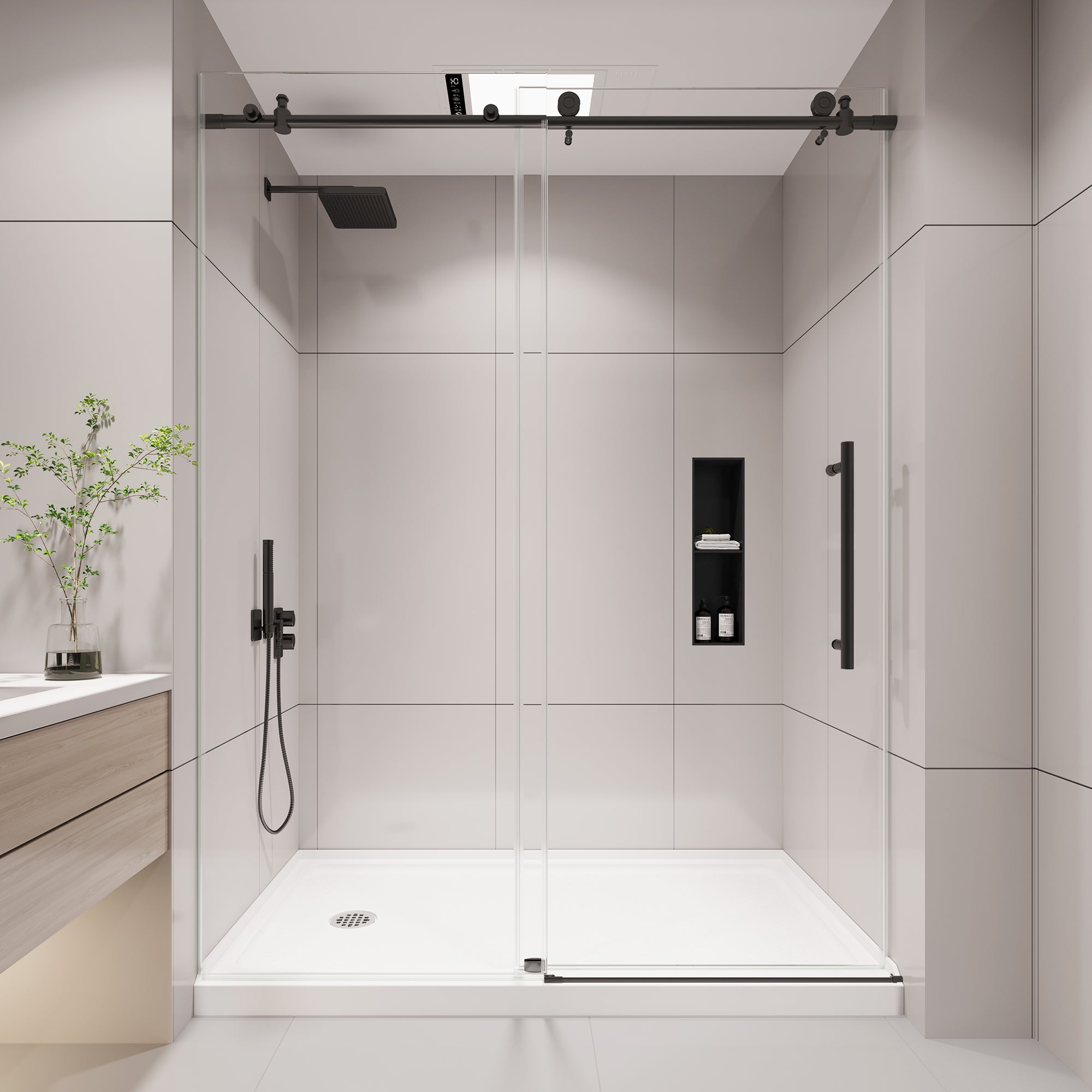
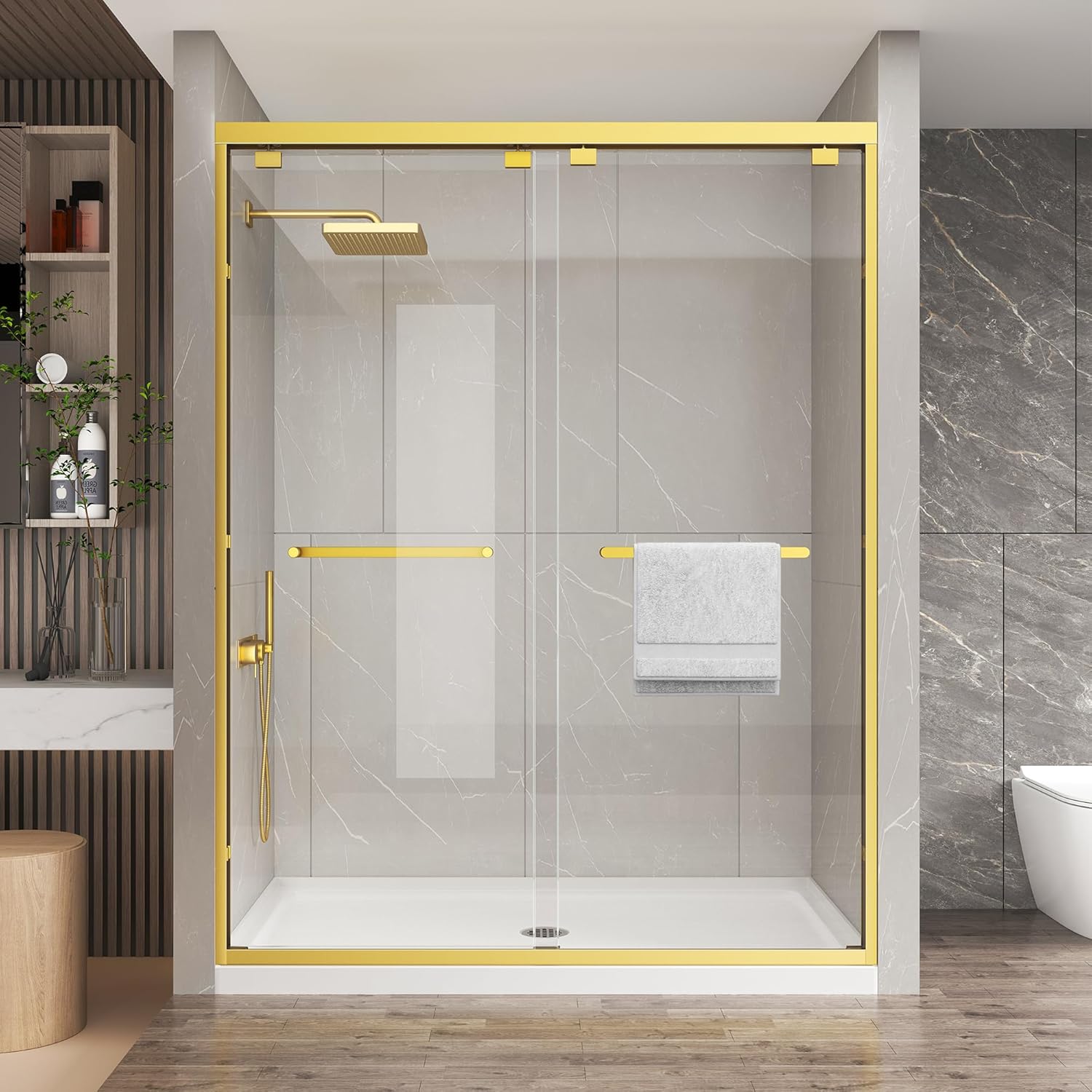
Frameless and semi frameless shower doors both work well, but they solve slightly different remodeling problems. If your opening is accurate, your walls are close to plumb, and you want a cleaner glass look, frameless usually fits best. If you want some of that open look with a little more forgiveness on fit, cost, and alignment, semi frameless is often the safer choice.
The Short Answer
Choose frameless if you want the cleanest look and your finished opening is accurate, plumb, and stable enough for heavier glass hardware. Choose semi frameless if you want a similar visual style with a little more tolerance for small out-of-plumb conditions and a bit less installation sensitivity. The rule of thumb: the less perfect the opening, the more forgiving semi frameless tends to be.
How Frameless and Semi Frameless Doors Differ
The real difference is not just appearance. It is how much metal surrounds the glass, how much hardware carries the load, and how much the opening has to cooperate during installation. Frameless doors use thicker glass and minimal framing, so the wall conditions matter more. Semi frameless doors still look open, but the partial framing helps stabilize the door and can hide small irregularities better.
That matters in real remodels because many bathrooms are not square once tile is installed. Older homes often have walls that lean just enough to affect glass fit. A door can measure fine in the showroom sense and still bind, gap, or require excessive sealant in the actual opening.
For readers comparing door families across a remodel, KPUY’s KPUY Shower Doors collection is the natural place to start when you are matching style to the finished opening.
| Option | Best for | Limitations | Typical remodel fit |
|---|---|---|---|
| Frameless shower doors | Clean look, open sightlines, accurate openings | Less tolerance for out-of-plumb walls and uneven tile work | Best when the opening is measured after finish surfaces are in place |
| Semi frameless shower doors | Balanced look, moderate flexibility, slightly easier fit | More visible framing than frameless | Good when the room is close to square but not perfect |
Which Door Fits Your Bathroom Layout?
The easiest way to decide is to start with the room constraints, not the style preference. If the door needs to clear a toilet, vanity, or entry door, the layout may decide for you. If the walls are noticeably out of plumb, semi frameless may reduce installation friction. If the opening is tight and the glass needs to look as light as possible, frameless is often the better visual match.
Here is the practical breakdown:
- Frameless works best when the finished opening is precise and the wall structure behind the tile is solid enough for the hardware.
- Semi frameless works best when you want a lighter look but need a little more tolerance for minor alignment issues.
- Frameless can expose problem areas such as a bowed wall, uneven curb, or a tile return that is not truly square.
- Semi frameless can reduce visual bulk without demanding the same degree of perfection as a full frameless setup.
- Either option can fail visually if the opening is measured from the old door instead of the finished tile surfaces.
One common mistake is assuming the old frame tells the whole story. It does not. Tile thickness, backer board, and any floor build-up can change the finished opening enough to affect hinge clearance, magnetic seal alignment, and water containment. A base or curb may still fit the footprint, yet the door can feel wrong once the finished walls are in place.
What usually pushes a remodel toward frameless
Frameless is usually the better visual choice when the shower is part of a full remodel and the rest of the room has clean lines, straight tile work, and enough space to show the glass. It also makes sense when you want fewer visual interruptions and are comfortable paying closer attention to wall support, door swing, and installation precision.
What usually pushes a remodel toward semi frameless
Semi frameless makes more sense when you want the room to feel lighter but the opening is not ideal. That includes slight wall irregularities, older framing, or a layout where a little more hardware helps the door feel stable. It can also be the practical middle ground for homeowners who like the frameless look but do not want every minor wall condition exposed.
In bathrooms where the enclosure decision is tied to the overall opening style, KPUY’s Frameless Shower Doors collection is the more specific reference point for that cleaner, less framed look.
What to Measure Before You Order
Start with the finished opening, not the rough opening or the old door size. Measure after tile if the wall surface is changing. A frameless door is far less forgiving if the top, middle, and bottom widths vary, or if one jamb leans noticeably out of plumb. Semi frameless can tolerate a little more variation, but it still needs accurate dimensions and a stable wall surface.
Pay attention to the height at both sides of the opening as well. An opening that appears level can still change once the curb, pan, or tile build-up is finished. Hardware needs clearance too. A handle, hinge, or sweep that fits on paper can still interfere with a nearby vanity door, medicine cabinet, or towel bar once the room is fully assembled.
- Measure the finished width at the top, middle, and bottom of the opening.
- Measure the finished height on the left and right sides.
- Check whether the walls are plumb with a level or straightedge.
- Confirm the curb or threshold slopes back toward the shower, not toward the bathroom floor.
- Verify that the door swing or panel placement will not hit the toilet, vanity, or entry door casing.
- Find solid backing or stud locations for the hardware before you commit to the layout.
- Review glass thickness and hardware clearance so the door will not bind against adjacent trim or tile returns.
Some bathrooms also benefit from checking ventilation, lighting, and fixture spacing while the space is open. If you are already remodeling the room, a small change in door style can affect visibility, light flow, and how crowded the shower entry feels. That is especially true in compact baths where a door swing competes with the main traffic path.

Why finished dimensions matter more than rough-in dimensions
Rough-in numbers help with planning the shower base and plumbing, but the door only cares about the finished opening. Tile thickness, mortar bed thickness, wall backer, and trim details all change the final width and height. That is why a shower door can be “close enough” to the rough opening and still be wrong for the finished space.
Common Mistakes That Change the Result
The most expensive mistakes usually happen when the door style is picked before the room conditions are checked. Frameless especially can expose problems that were easy to ignore before demolition. Semi frameless can hide some of them, but it will not fix a bad opening or a weak wall behind the hardware.
- Measuring before tile is installed can leave the finished opening too tight or too loose.
- Ignoring out-of-plumb walls can cause uneven gaps, poor seal contact, or binding at the hinge side.
- Forgetting clearance near the vanity or toilet can make a good-looking door inconvenient to use.
- Assuming the curb is level can lead to water running toward the bathroom floor.
- Overlooking wall support can create hardware stress, especially with heavier glass and minimal framing.
- Choosing style before function can turn a visually clean door into a maintenance problem if it splashes or traps moisture in the wrong places.
A good comparison is to think about how the door will live in the room. Frameless emphasizes the glass. Semi frameless emphasizes the enclosure. If the bathroom already feels busy, frameless may visually calm it down. If the opening is imperfect or the hardware must do a little more work, semi frameless often reduces risk without making the shower look dated.
For homeowners who are still sorting out shower-door style choices in a broad remodel, the general KPUY Shower Doors collection can help narrow the category before you get into exact measurements.
Frequently Asked Questions
Is frameless harder to install than semi frameless?
Usually yes, because frameless depends more on precise measurements, solid wall support, and better plumb conditions. Semi frameless still needs accurate sizing, but the partial framing can tolerate minor irregularities a little better. Neither should be treated as a guess-and-fit product. A clean install starts with finished dimensions, not assumptions from the rough opening.
Does semi frameless leak more than frameless?
Not automatically. Water control depends more on the door design, sweep contact, panel placement, curb slope, and sealing than on the label alone. A poorly aligned frameless door can leak more than a well-fitted semi frameless door. The real question is whether the finished opening supports good water containment and proper closure at the threshold.
Which style is better for a small bathroom?
That depends on the layout. Frameless can make a small room feel lighter because it removes more visual framing, but it also makes wall errors more obvious. Semi frameless may be the better fit if the bathroom is tight and the opening needs a bit more help from the hardware. Either one still needs clearance for the door, vanity, and traffic path.
Final Takeaway
If the bathroom is being remodeled from the studs out and the finished opening is measured carefully, frameless is the cleaner visual choice. If the room has older framing, slight wall movement, or a few layout compromises, semi frameless is often the more forgiving path. The deciding factor is not just the look; it is whether the opening, threshold, and hardware can support the door you choose.
Before you order, confirm the finished width at the top, middle, and bottom, check the wall plumb, and make sure the swing or panel placement clears the vanity and toilet. If you are still comparing enclosure styles, review the fit and layout options in KPUY Shower Doors once the measurements are in hand.

Leave a comment
All comments are moderated before being published.
This site is protected by hCaptcha and the hCaptcha Privacy Policy and Terms of Service apply.