
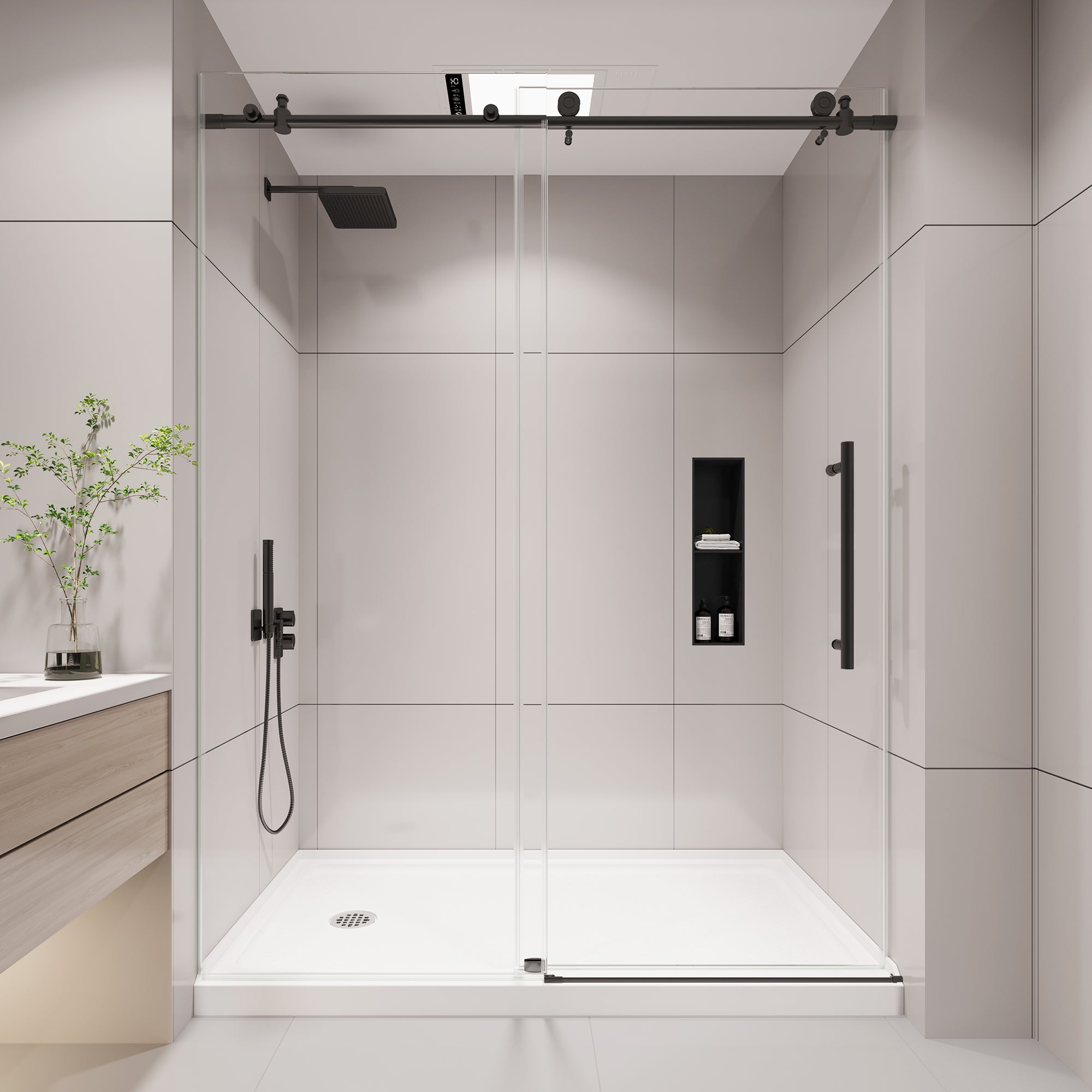
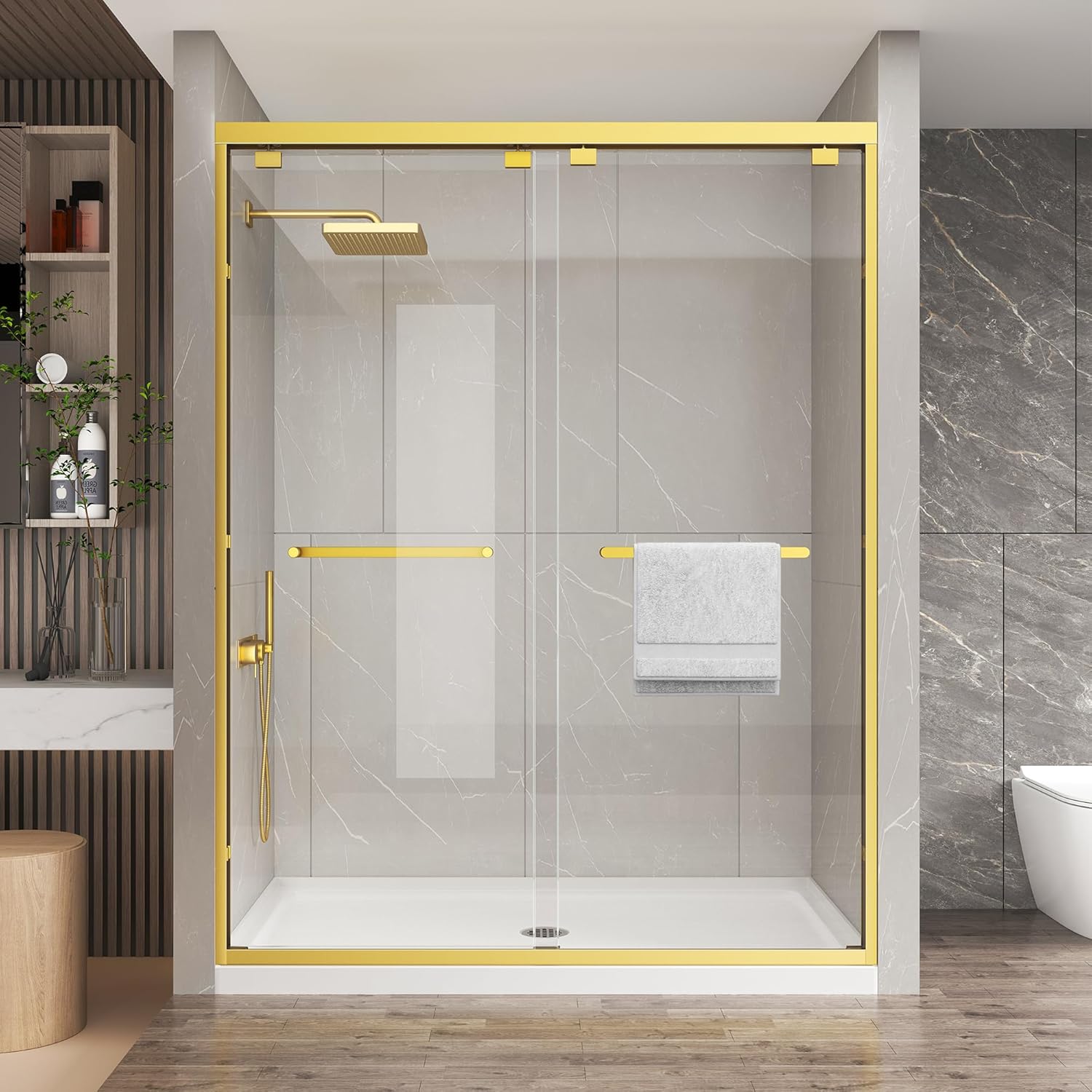
Frameless shower door problems after installation usually come down to one of four things: the opening was measured from the wrong surface, the walls are out of plumb, the door hardware was not matched to the glass and support conditions, or the shower enclosure was installed before the rest of the remodel was truly finished. The practical rule is simple: check the finished opening, wall plumb, threshold slope, and hardware clearance before blaming the glass.
The Short Answer
Most frameless shower door problems after installation are not random; they usually trace back to a bad finished-opening measurement, a wall that is out of plumb, an uneven curb or floor, or hardware that cannot compensate for the actual conditions in the shower. Start by measuring the top, middle, and bottom opening width, checking both side walls with a level, and confirming that the threshold slopes back into the shower instead of toward the room.
What Is Actually Causing the Problem
With frameless glass, small errors show up fast. A door can look fine on paper and still bind, leak, rub, or sit crooked once it is on the wall. That is because frameless systems depend on finished dimensions, not rough framing guesses. Tile thickness, backer board, curb buildup, and even a slightly crowned floor can change the final fit enough to matter.
Older homes are especially prone to this. A shower opening may measure one width at the top and a different width at the bottom. One wall can lean in while the other leans out. The installer can sometimes work around that, but only within the tolerance of the glass and hardware. If the opening is outside that range, the symptoms start to show up after installation.
For homeowners still in the planning stage, the most useful next step is to match the enclosure style to the real opening conditions. If you are still comparing frameless layouts, the Frameless Shower Doors collection is the most relevant place to start because it helps frame the hardware and opening decisions around the actual shower footprint.
- Binding at the hinge or panel edge usually points to out-of-plumb walls or a door that was set too tight.
- Water on the bathroom floor often means the threshold slopes the wrong way, the sweep is not contacting correctly, or the panel stops short where it should not.
- Gaps that look uneven can come from wall bow, tile thickness changes, or a curb that is not level front to back.
- Hardware movement after installation may point to weak anchoring, wrong fasteners, or a wall that was not suitable for the load.
- Scraping or rubbing can happen when the door swing path was not checked against a vanity, toilet, or trim before installation.

Symptom, Likely Cause, and Practical Fix
| Symptom | Likely Cause | Practical Fix |
|---|---|---|
| Door drags, binds, or closes unevenly | Wall is out of plumb, hinge placement is off, or the glass was set too tight | Check wall plumb at both sides and confirm the hinge hardware has the needed adjustment range |
| Water leaks at the bottom | Threshold slopes away from the shower, sweep contact is poor, or the panel leaves too much open space | Verify curb slope and seal contact; reseal only after checking the base geometry |
| Uneven side gaps | Tile thickness varies, walls are not square, or the opening was measured before finish material | Recheck finished width at top, middle, and bottom, then compare to the installer’s tolerance |
| Hardware feels loose | Fasteners missed solid backing, anchors were used where studs were needed, or tile substrate is not supporting the load | Confirm stud locations and structural support before re-tightening or re-anchoring |
| Door hits vanity, toilet, or trim | Swing clearance was not planned in the real room, not just on the shower wall | Map the swing path against nearby fixtures and trim before changing hardware or panel orientation |
One common remodeling mistake is assuming the shower opening is the only dimension that matters. It is not. A frameless door can fit the opening and still fail in use if it collides with the toilet, blocks a vanity drawer, or opens into a towel bar. That is why the room layout matters as much as the glass size.
Measurements to Check Before You Call It a Door Problem
Before you assume the glass itself is defective, verify the finish conditions around it. In a remodel, the rough opening is only the starting point. Tile, wallboard, mortar buildup, curb cap, and finish trim all change the final dimensions.
Check these points first
- Finished opening width: measure at the top, middle, and bottom of the shower opening.
- Wall plumb: check both jamb walls with a level from top to bottom.
- Threshold slope: confirm the curb or base slopes back into the shower, not toward the bathroom floor.
- Glass clearance: confirm the door or panel is not touching tile edges, trim, or adjacent fixtures.
- Support points: make sure hinges, clamps, or brackets are anchored to solid structure where required.
- Door swing path: test the open position against vanity doors, drawers, toilet clearance, and room traffic.

If the shower base was changed during the remodel, check the drain rough-in too. A base can fit the footprint and still be wrong if the drain location does not line up. That issue is easy to miss until the door or panel is already being set, especially when the plumbing was roughed in for a different floor plan.
Installation and Remodel Checklist
Use this checklist when a frameless shower door is acting up after installation or when you are trying to prevent the problem before ordering replacement glass.
- Measure the finished opening, not the rough framing, at the top, middle, and bottom.
- Check both side walls for plumb and note any lean or bow.
- Measure the threshold or curb for slope back to the shower.
- Confirm the tile thickness and finished wall build-out on each side.
- Verify the door swing will clear the toilet, vanity, drawers, and trim.
- Locate studs or backing before assuming the hardware can be tightened again.
- Inspect the seal line and sweep contact for gaps or compression problems.
- Check for rubbing at hinges, clamps, or floor hardware if present.
- Confirm the glass matches the layout, especially if a fixed panel and door are working together.
- Look for floor unevenness that may have shifted the door alignment after setting.
The practical reason this checklist matters is simple: frameless systems have less forgiveness than framed systems. Once the glass is in, even a small error shows up as a leak, a rattle, or a door that never feels quite right. If the opening still needs work, it is usually better to correct the opening than to keep forcing the hardware to compensate.
For homeowners still deciding whether a frameless layout is the right match for a remodel, KPUY Shower Doors can help you compare enclosure styles without treating every bathroom like it has the same opening or the same swing clearance.
When Replacement or Rework Makes Sense
Not every issue can be fixed with a small adjustment. If the opening is outside the hardware tolerance, if the curb slope is wrong, or if the door keeps hitting nearby fixtures, the better move may be to rework the layout rather than keep tweaking the same installation. That is especially true when the glass is under stress from a crooked wall or unsupported anchoring point.
Replacement starts to make sense when the problem is structural or geometric:
- The door closes, but the gap is still uneven from top to bottom.
- The panel seals at one point and leaks at another because the threshold is inconsistent.
- The swing path works on paper but fails in the real bathroom.
- The walls are out of plumb enough that hardware adjustment is no longer sufficient.
- The glass size was based on the rough opening instead of the finished opening.
If the problem is only minor seal wear or a slightly loose fastener, maintenance may be enough. But if the room layout, curb slope, or wall geometry is wrong, the installation will keep fighting the same conditions. That is where a careful reset of measurements matters more than another bead of silicone.
For planning a new frameless layout or replacing one that never fit quite right, start with the opening first and the product second. That order prevents most of the expensive surprises.
Frequently Asked Questions
Why does my frameless shower door leak after installation?
Leaks usually come from one of three issues: the threshold does not slope back into the shower, the seal or sweep is not contacting correctly, or the opening itself is out of square enough that water escapes at the gap. A leak is not always a glass defect. Often it is a layout or finish problem that shows up only after water hits the door repeatedly.
How can I tell if the wall is the problem instead of the door?
Use a level on both side walls and compare the gap from top to bottom. If one side leans or the opening width changes noticeably from top to bottom, the wall or curb is likely part of the problem. A door can be installed correctly and still appear wrong if the surrounding surfaces are not true. That is common in older remodels.
Do I need new glass if the door rubs or does not close cleanly?
Not always. First check for loose hardware, poor hinge adjustment, or a threshold that is uneven. If the rubbing comes from an out-of-plumb wall or the wrong finished opening size, hardware adjustment may not be enough. New glass becomes more likely when the opening is outside the allowable range or when the original measurements were taken before the finish surfaces were complete.
Final Takeaway
Frameless shower door problems after installation usually point to measurement, slope, plumb, or support issues before they point to the glass itself. Start by checking the finished opening, the wall alignment, and the threshold direction, then compare those numbers to the hardware and swing path. If you are still in the planning stage, use the Frameless Shower Doors collection as a reference point while you confirm the real bathroom dimensions and layout constraints.

Leave a comment
All comments are moderated before being published.
This site is protected by hCaptcha and the hCaptcha Privacy Policy and Terms of Service apply.