
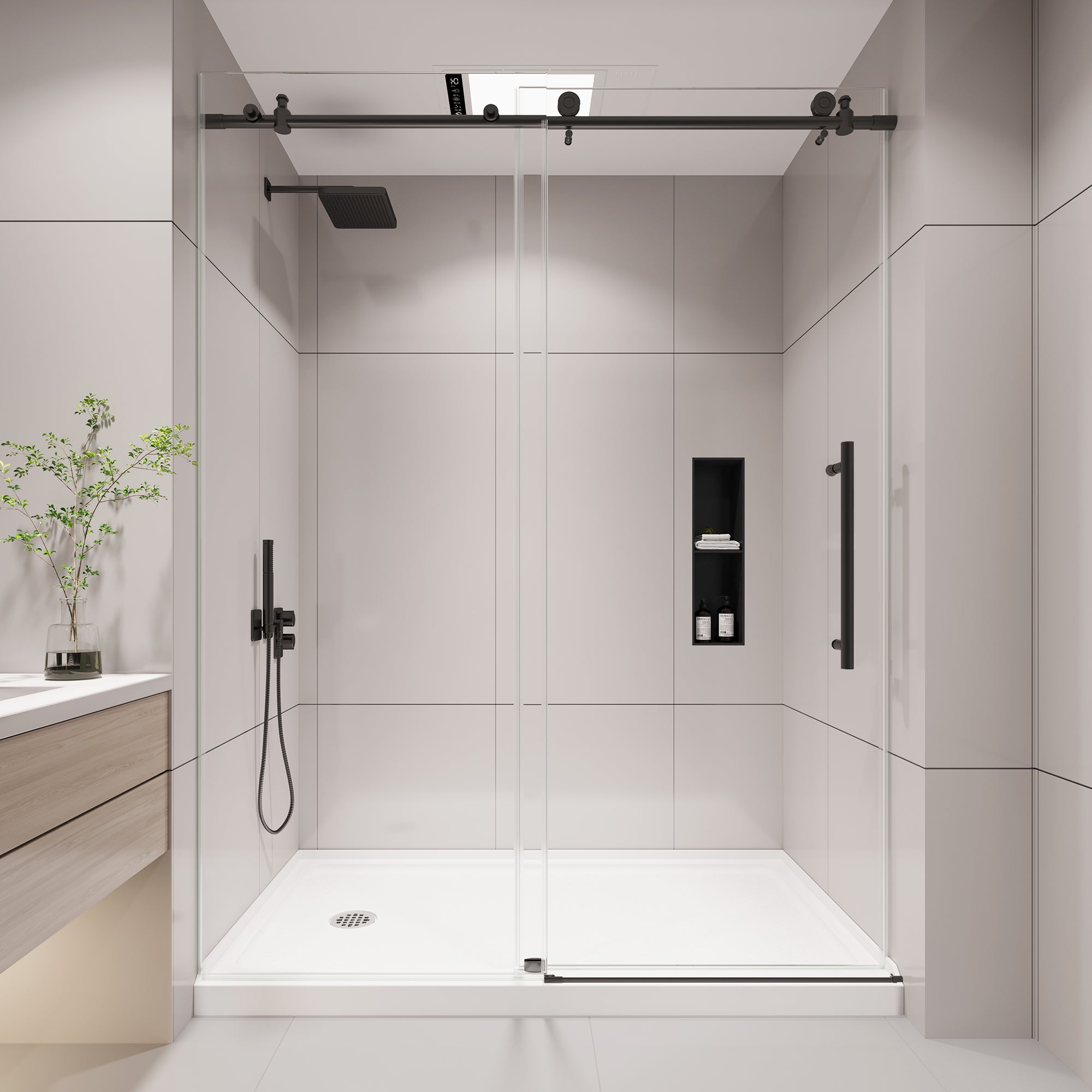
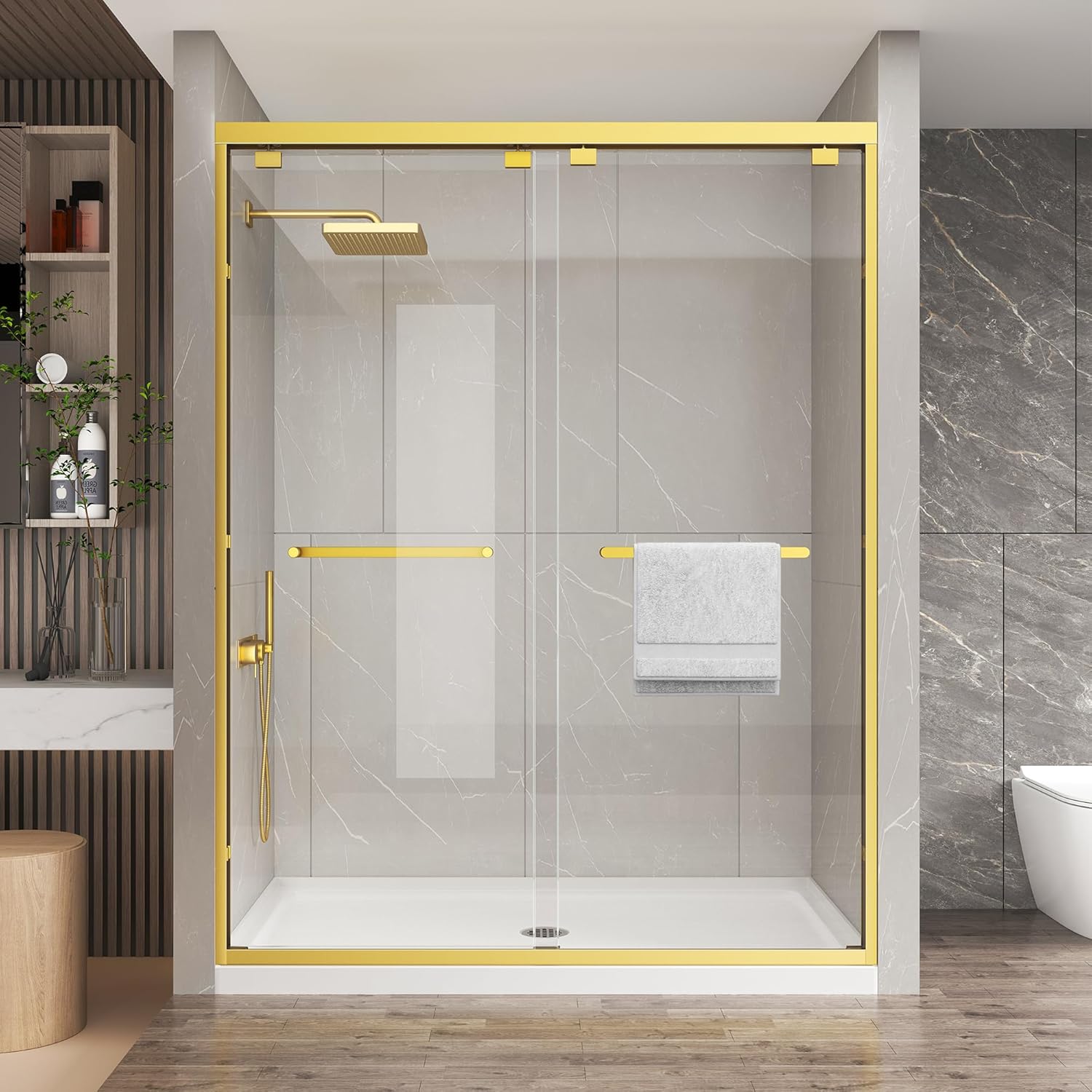
Black shower doors have become a common choice in remodels because they give a bathroom stronger visual lines without changing the entire layout. The fixture colors around them matter more than many homeowners expect. A black frame or black hardware can look crisp with warm metal finishes, high-contrast white surfaces, or muted matte details, but the wrong mix can make the room feel busy or mismatched. The best results usually come from coordinating the shower door with the faucet, lighting, cabinet hardware, and tile undertones.
The Short Answer
The best bathroom fixture colors to pair with a black shower door are brushed nickel, matte black, polished chrome, warm brass, and soft white or off-white finishes. For the cleanest look, match the shower door hardware to another repeat finish in the room, usually the faucet or cabinet pulls. If the bathroom has warm tile or wood tones, brass works well; if it is cool-toned, chrome or nickel usually reads better.
Best Fixture Colors for a Black Shower Door
Black shower doors work because they create a strong frame around the shower area. The fixture color you choose should either repeat the black finish for a coordinated look or balance the contrast so the room does not feel too heavy. In most U.S. remodels, the safest combinations are black with brushed nickel, black with chrome, or black with warm brass.
For homeowners planning a full bath update, it helps to think in layers: shower door hardware, faucet finish, mirror frame, vanity pulls, light fixtures, and even towel bars. If those finishes fight each other, the bathroom can feel disjointed even when the tile and cabinet colors are good.
| Fixture Color | How It Pairs with a Black Shower Door | Best For |
|---|---|---|
| Matte black | Creates a unified, low-contrast look | Modern bathrooms, darker palettes, simple hardware plans |
| Brushed nickel | Softens the contrast and stays versatile | Most transitional bathrooms, light gray or white tile |
| Polished chrome | Sharp contrast with a clean, reflective finish | Smaller baths, bright white spaces, classic layouts |
| Warm brass or gold | Adds warmth against the black frame | Warm wood, beige tile, cream walls, mixed-metal plans |
| Soft white or off-white accents | Brightens the space and balances the black lines | Light, airy bathrooms with white tile or painted walls |
1. Matte Black
Matte black is the easiest finish to coordinate with a black shower door because it makes the room feel intentional. Use it on the faucet, towel bars, cabinet hardware, or mirror frame if you want a streamlined look. This works especially well in bathrooms with white tile, large-format stone looks, or flat-panel cabinets.
Be careful not to overdo it. Too much black in a small bath can make the room feel visually dense unless there is enough light, white grout, or pale wall color to break it up.
2. Brushed Nickel
Brushed nickel is one of the most forgiving finishes for a black shower door. It works with both warm and cool tile tones and does not compete with the door frame. If you are remodeling a bathroom with mixed materials, nickel often helps everything settle into the same design language.
This finish is also practical in family bathrooms because it tends to hide fingerprints and water spotting better than highly polished finishes.
3. Polished Chrome
Chrome gives a sharper contrast next to a black shower door. It works best in bright bathrooms with good natural light, white walls, and simple fixtures. Chrome keeps the room from feeling too dark and can make a small bath feel cleaner and more open.
If your tile has a cooler undertone, chrome usually looks more natural than brass. It is also a straightforward choice when the vanity, toilet paper holder, and other accessories are already chrome or very close to it.
4. Warm Brass or Gold
Warm brass can look very good with black shower doors, especially in bathrooms using cream tile, walnut cabinets, beige stone, or warm gray paint. The black frame gives brass some structure, while brass softens the hard lines of the glass enclosure.
This combination is strongest when the brass finish is repeated at least twice in the room, such as on the faucet and cabinet pulls. One isolated brass item can feel random; two or three make the choice look planned.
5. White or Off-White Surroundings
White is not a fixture finish in the same way as metal, but it matters as the background that frames the black door. White sinks, white tile, and off-white walls make the black lines stand out without making the room feel crowded. This is one reason black shower doors remain popular in 2026 remodels: they fit both minimalist and classic bathrooms.
If the room is small, white or off-white surfaces help the black door act like an outline rather than a dominant feature.
For a broader look at door styles and hardware layouts, the Black Shower Doors collection can help you see how finish coordination fits different bathroom plans.
How to Coordinate the Whole Bathroom
The finish on the shower door is only one part of the room. A bathroom looks better when the main metal finishes repeat in a deliberate pattern. You do not need every item to match exactly, but you do need a clear plan. In remodel work, the most common mistake is choosing a black shower door, then picking random fixtures later from different finish families.
Start with the largest visual elements first: shower door, vanity faucet, lighting, and cabinet pulls. Then decide whether the room will lean cool, warm, or neutral. That choice should be based on the tile, countertop, and paint more than on trends.
Use a simple finish rule
- One main finish for the faucet and most visible hardware.
- One supporting finish for accents, if needed.
- One repeat of black somewhere besides the shower door so it feels intentional.
- Keep glass and mirror details simple if the bathroom is already visually busy.
In older homes, the wall color and tile undertone often matter more than the fixture finish. A bathroom with beige floor tile and a black shower door can still look balanced if the faucet and accessories stay warm. The same door in a gray-blue bath usually looks better with chrome or brushed nickel.
For homeowners also planning a shower replacement, opening size and wall condition matter just as much as color. A black frame draws the eye immediately, so out-of-plumb walls, uneven tile edges, and sloppy caulk lines become easier to notice. That is why many remodelers check the finished opening carefully before ordering a door or panel from the KPUY Shower Doors collection.
Lighting affects finish color
Warm bulbs can make nickel and brass feel softer, while cooler bulbs can make chrome and black look crisper. If the bathroom has weak lighting, even a well-coordinated finish plan can look off. Vanity lights should reduce shadows on the face and give the shower door enough visual presence without creating glare.
That is where a measured plan matters. A matte black door under dim lighting can look heavy. The same door under properly placed vanity and overhead lighting can look sharp and clean.

What to Check Before You Order
Color choice is the visible part of the decision, but the fit still has to work. A black shower door can look great and still become a problem if the opening is out of square, the curb slope is wrong, or the wall tile changes the finished dimension. Before choosing the final finish package, confirm the actual space conditions.
Older homes often have walls that are not perfectly plumb. A shower opening may measure differently at the top, middle, and bottom. That matters because glass hardware and door alignment depend on the finished opening, not the rough stud dimension.
- Measure the finished opening at the top, middle, and bottom.
- Check whether the walls lean in or out and note any out-of-plumb condition.
- Confirm the curb slope and threshold height so water drains back into the shower.
- Account for tile thickness, backer board, and any surface build-out.
- Verify the faucet, drain, and valve locations before locking in the shower layout.
- Check swing clearance if you are using a pivot or hinged door style.
- Make sure the hardware will clear nearby walls, vanities, and trim.
For shower-floor planning, the substrate matters too. A base that fits the footprint still needs the drain to land in the right place. If the drain is off by even a small amount, the installation plan may need a different base configuration or additional plumbing adjustment.
That is why shower bases and door finishes should be considered together. The enclosure style, curb height, and opening size affect what looks good and what works in real space. If you are still deciding on the base layout, it helps to review the shower floor first, then select the door finish after the dimensions are confirmed.
Common Mistakes to Avoid
A black shower door is visually strong, so small planning errors stand out. Most of the avoidable problems come from finish mismatch, poor lighting, or ignoring the real measurements after tile and wall finishing.
- Mixing too many metal finishes without a clear pattern.
- Choosing black hardware in a dark room without enough light or contrast.
- Ignoring tile thickness when measuring the finished opening.
- Forgetting door swing clearance near a toilet, vanity, or cabinet.
- Assuming the walls are square when the shower opening is slightly out of plumb.
- Skipping sealant planning around wall joints, curb edges, and fixed glass transitions.
Another common jobsite issue is assuming a centered drain will still work after the shower floor is replaced. Sometimes it will, sometimes it will not. The same is true for cabinet and door clearances. A vanity drawer may clear the room but still hit the door casing, or a shower door may open cleanly on paper but run into a towel bar once the hardware is installed.
For homeowners planning a shower enclosure with a fixed panel or a simpler open entry, the glass layout can reduce visual clutter while keeping the black finish as the main frame element. That is one reason many remodelers look at shower panel options before deciding on a full door system.
When you need a cleaner visual line and fewer moving parts, a fixed panel layout can be worth considering alongside other shower enclosure options. The right choice depends on splash control, opening width, and how much clearance the room actually gives you.
To keep the bathroom functional, check guidance from the NKBA on planning, comfort, and layout thinking, especially if the remodel also includes lighting, storage, or accessibility updates.
Frequently Asked Questions
Should black shower doors match all other bathroom fixtures exactly?
No. A black shower door does not need every fixture to match. It works better when black is repeated once or twice in the room and balanced with one main metal finish, such as brushed nickel, chrome, or brass. Exact matching is less important than a clear finish plan.
Does brass or nickel look better with a black shower door?
Both can work. Brass is better in warm-toned bathrooms with cream, beige, wood, or warm gray surfaces. Brushed nickel is more flexible and usually easier to coordinate in mixed-material spaces. If the bathroom is cool and bright, nickel or chrome is often the cleaner fit.
Do black shower doors make a small bathroom feel smaller?
Not necessarily. If the room has enough light and a light wall or tile background, black shower doors can frame the shower without overwhelming the space. The problem usually comes from too many dark finishes together, not from the black door itself.
Final Takeaway
The best fixture color for a black shower door depends on the rest of the bathroom, but the most reliable pairings are brushed nickel, chrome, warm brass, and matte black. Use the room’s tile undertone, lighting, and cabinet finish to guide the choice. Then verify the finished opening, wall condition, and door clearance before you order.
If you are still sorting out the shower layout, opening size, or glass style, start with the enclosure first and build the rest of the finish plan around it. For a focused look at black-framed options, the Black Shower Doors collection is a practical place to compare finish direction before finalizing the remodel.

Leave a comment
All comments are moderated before being published.
This site is protected by hCaptcha and the hCaptcha Privacy Policy and Terms of Service apply.