
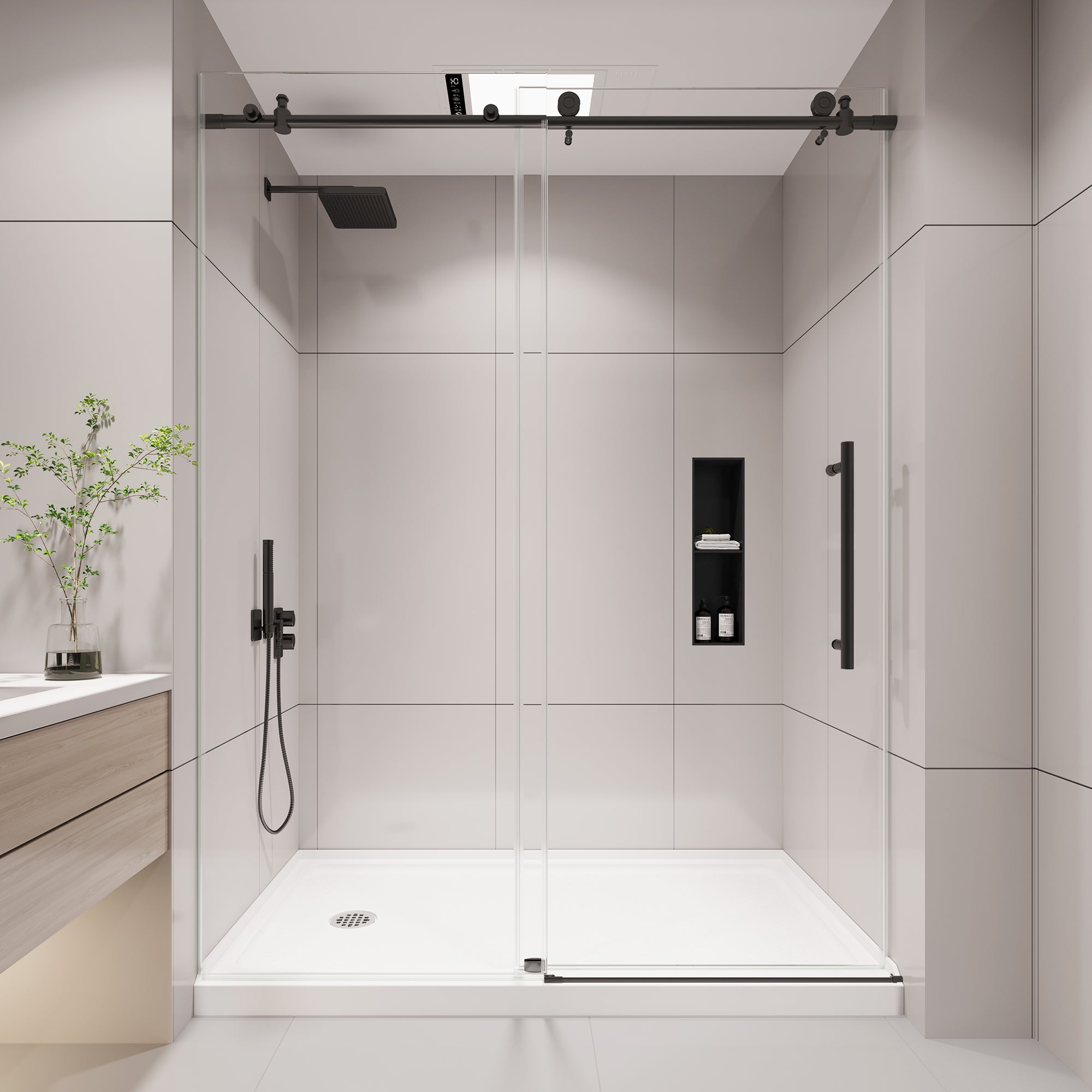
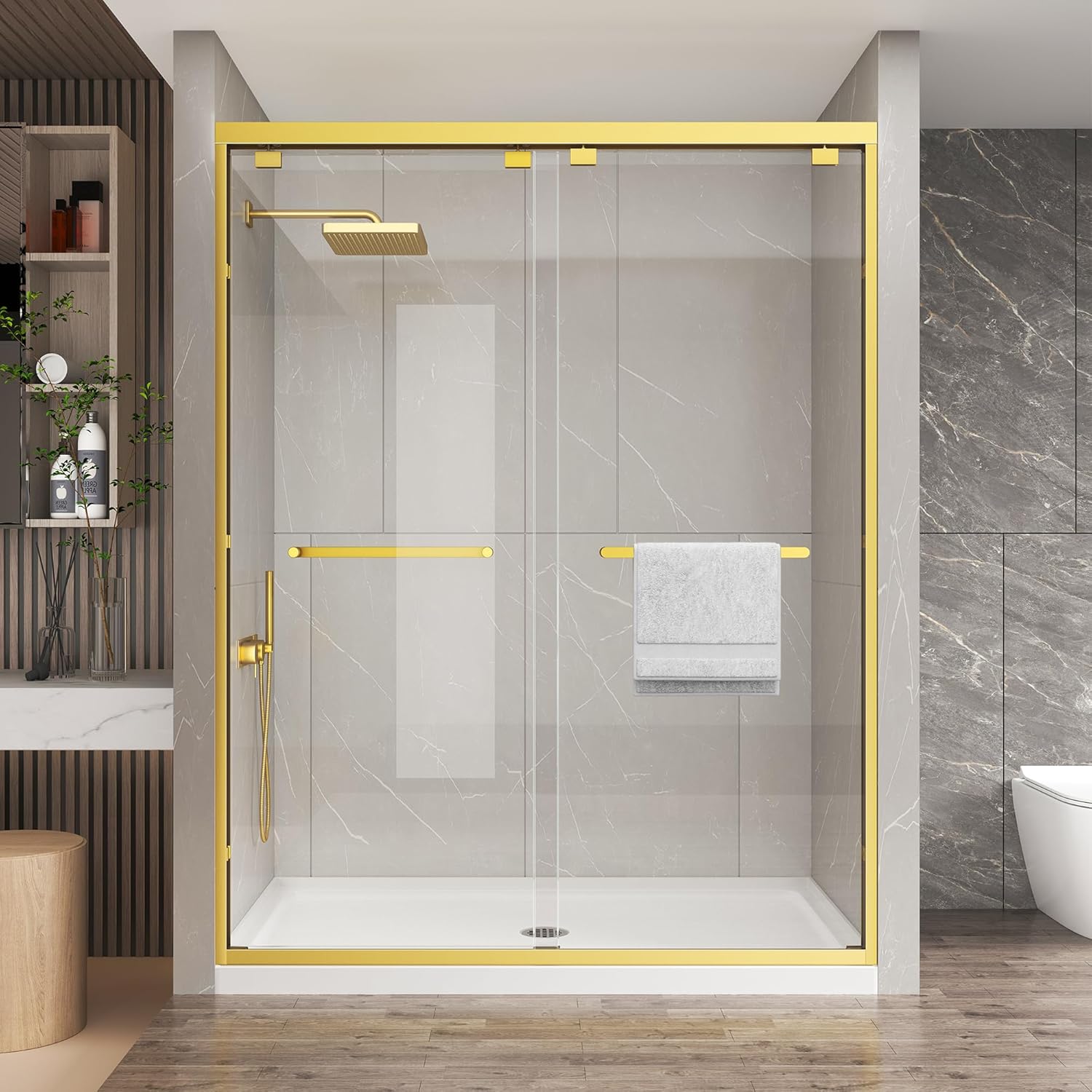
In a small bathroom, the tub wall, vanity edge, toilet clearance, and door swing all compete for the same few inches. That is why the best bathtub shower door layout is usually the one that keeps movement inside the tub footprint and avoids a door that swings into the room. In most tight U.S. bathrooms, a sliding tub door or a fixed-panel-and-door setup works better than a wide swing door, especially when the vanity or toilet sits close to the tub.
The Short Answer
For most small bathrooms, the best bathtub shower door layout is a sliding door or a fixed panel with a smaller access opening, because both keep clearance inside the tub area instead of taking space from the room. A pivot-style layout only works well if the vanity, toilet, and bathroom door all leave enough swing room. Start with the finished tub opening, not the old curtain rod or the rough framing.
Which Layout Works Best in a Small Bathroom
The right layout depends on how tight the room really is, not just on the tub size. In a compact bathroom, the most common problem is not the tub itself. It is the conflict between the tub opening and nearby fixtures. A door that swings outward can block the toilet, bang into a vanity edge, or create a pinch point at the room entry. A sliding layout avoids that conflict because the panels move parallel to the tub rim.
For many remodels, the decision comes down to three questions: How much room is in front of the tub? How wide is the finished opening? and Will the door interfere with another fixture? If the bathroom is already tight, a sliding or fixed-panel approach usually leaves the room easier to use day to day.
Here is a practical comparison of common tub-shower layouts:
| Layout | Best for | Limitations in a small bathroom |
|---|---|---|
| Sliding tub doors | Tight rooms with limited floor clearance | Needs accurate wall alignment and track planning; can feel narrow if the opening is large |
| Fixed panel with return | Homeowners who want less splash without a full swing door | Leaves an opening for entry, so panel width must be planned carefully |
| Pivot or swing door | Rooms with enough open floor space beside the tub | Can hit a vanity, toilet, or door casing if clearance is tight |
| Shower curtain | Very tight budgets or temporary use | Poor splash control and a softer, less finished look; curtain sticks to skin and walls |
Older homes often make this choice harder because the wall may be slightly out of plumb and the tub may not sit perfectly level. A sliding system can still work well, but the finished opening has to be measured carefully. A layout that looks fine on paper can fail in the room if the tile edge, wall finish, or tub apron changes the final width by even a small amount.
KPUY Bathtub Shower Doors are worth reviewing once you know whether your room needs a sliding, fixed-panel, or swing-style layout. The collection is most useful after you have measured the finished opening and confirmed the door movement will not conflict with the vanity or toilet.

What to Measure Before You Order
Do not start with the old curtain size or the tub manufacturer label. Start with the finished opening after tile, backer board, or wall panels are in place. In small bathrooms, the difference between rough opening and finished opening is where many ordering mistakes happen. Tile thickness, wallboard buildup, and trim pieces can all change the final dimension.
Measure the opening at the top, middle, and bottom. Measure the height on both sides as well. If the walls are out of plumb, the numbers will not match, and that matters for sliding tracks and framed edges. A tub door may look square from a distance, but a small lean at the wall can change how the glass sits and how the seals meet the tub rim.
Also check the tub rim and surrounding surfaces:
- Tub rim level: a tub that slopes or dips can affect water containment.
- Tile thickness: finished wall surfaces may reduce the clear opening more than expected.
- Wall plumb: out-of-plumb walls can make a sliding track bind or leave uneven gaps.
- Door-path clearance: verify the door will not hit the vanity, toilet, or nearby hardware.
- Threshold and splash zone: the front edge of the tub must help keep water inside the bathing area.
If you are also replacing the tub or adjusting the wall surface, confirm the final tub-to-wall dimension before the door is ordered. A door that fits the old setup may be too wide or too narrow once new tile is installed. That is especially common in tub-to-shower remodels where the wall finish changes the opening by a noticeable amount.
For layout planning that starts with the enclosure instead of the tub alone, many homeowners also compare Sliding Shower Doors for narrow openings where swing clearance is tight. That is helpful when the bathroom floor plan leaves very little room in front of the tub.
Layout Mistakes That Shrink the Room
The wrong choice usually causes one of three problems: the room feels cramped, water escapes onto the floor, or the door is hard to use. In a small bathroom, those problems show up fast because there is no extra space to hide them.
Wrong choice causes this problem: a pivot door in a tight room may block the vanity drawer, force awkward entry, or hit the toilet when opened. A curtain may solve the clearance issue but create constant splash and cleaning trouble. A sliding door that is ordered from a rough opening instead of a finished opening may be too tight once tile is installed.
One jobsite reality is that a vanity drawer can clear the room on paper and still hit the door casing or glass handle when the door opens. Another common issue is a tub base or rim that appears level until the new door is installed, then the bottom seal shows a gap on one side and drags on the other. Those details matter more in small bathrooms than they do in larger ones.
Signs the layout needs a different approach:
- The bathroom door and tub door would swing through the same space.
- The toilet is close enough that a swing door would create a pinch point.
- The vanity top or side splash sits too close to the tub edge.
- The tub opening varies enough that a standard track or frame will not sit evenly.
- Water has been escaping because the curtain is too short or the splash zone is too wide.
When splash control is the main concern and the room still needs an open feel, a fixed panel can help. If you are comparing that style to other bath glass options, shower glass panels for partial enclosure layouts are useful to review for small-bathroom planning.

Pre-Order Checklist for Tub Shower Doors
Use this checklist before placing an order or scheduling installation. It helps catch the details that cause delays and returns.
- Measure the finished tub opening at the top, middle, and bottom.
- Measure both side heights and note any difference from left to right.
- Check whether the walls are plumb with a level or straightedge.
- Confirm the tub rim is level enough for consistent sealing.
- Measure the available clearance in front of the tub for door swing or standing room.
- Check for conflicts with the toilet, vanity, towel bar, or bathroom door casing.
- Verify the tile thickness or wall panel build-up before final width is assumed.
- Look at the drain area and tub edge to make sure the shower setup does not force water toward the room.
- Confirm that wall anchors or fasteners can reach solid support where the hardware will attach.
- Review whether the layout needs a sliding door, fixed panel, or swing-style access.
For homeowners comparing layouts against bathroom code and safety expectations, the NKBA is a useful reference point for planning clearances and fixture placement. That does not replace local requirements, but it helps frame the room around real use, not just product dimensions.
A final check worth making: if the tub is staying in place, make sure the door style matches the tub’s front edge and the wall finish around it. Small variations in the rim, tile edge, or caulk line can affect where the door lands and how the bottom seal performs.
Frequently Asked Questions
Should a small bathroom use a sliding tub door or a pivot tub door?
Most small bathrooms work better with a sliding tub door because the panels move within the tub footprint. A pivot door only makes sense if there is enough free floor space in front of the tub and no conflict with the toilet, vanity, or bathroom entry. If the room is tight, swing clearance is usually the deciding factor.
Why does the finished opening matter so much for a bathtub shower door?
The finished opening is the real dimension after tile, wallboard, or panel material is in place. Rough framing can be different by enough to change how the glass or track fits. In small bathrooms, even a small change can affect alignment, sealing, and whether the door clears nearby fixtures. Always measure after the wall surface is complete.
Can a shower curtain work better than a door in a very small bathroom?
Yes, sometimes a curtain is the most forgiving option if clearance is extremely limited. It does not need swing space and is easy to move out of the way. The tradeoff is splash control and a less finished feel. If the bathroom has frequent water on the floor, a door or fixed panel usually performs better.
Final Takeaway
If the bathroom is tight, choose the layout that protects clearance first and water control second. In most tub-shower remodels, that means a sliding door or a fixed-panel setup rather than a swing door. Measure the finished opening, check for out-of-plumb walls, and confirm the door will not interfere with the vanity, toilet, or room entry. Once those details are known, review Bathtub Shower Doors that match the layout you can actually use, not just the opening you hoped you had.

Leave a comment
All comments are moderated before being published.
This site is protected by hCaptcha and the hCaptcha Privacy Policy and Terms of Service apply.