
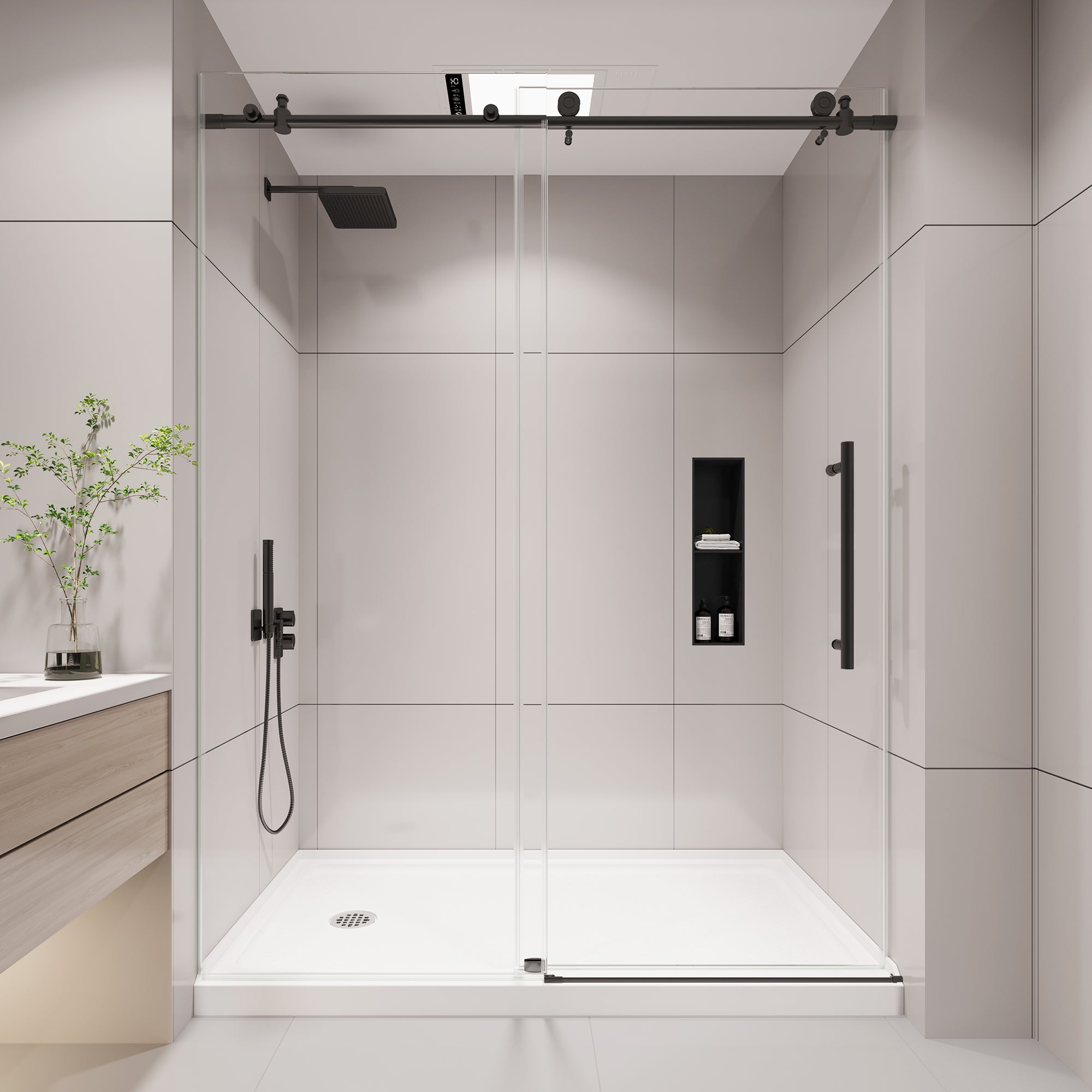
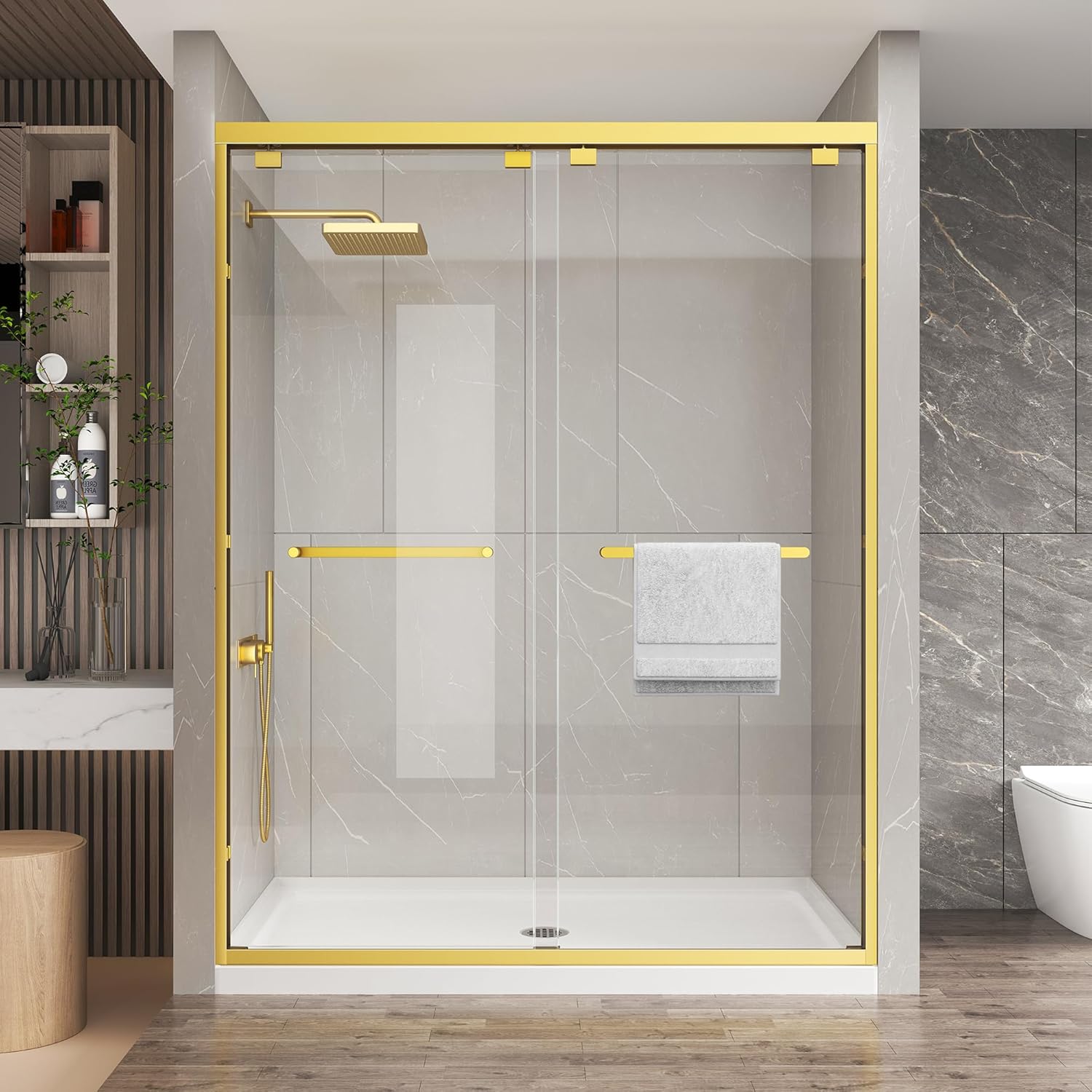
Pivot shower door clearance starts with the swing path, not the door label. In a tight bathroom, the door can fit the opening and still fail if it hits a toilet, vanity, towel bar, or wall return. A good rule of thumb is to leave enough clear space for the door to open fully without clipping nearby fixtures, and to measure the finished opening after tile, not before.
The Short Answer
Most pivot shower doors need enough room to swing open without hitting anything in the bathroom, so the real answer is not a fixed number of inches. Start by measuring the finished opening, then check the door swing path against the toilet, vanity, towel bars, and adjacent walls. If the space is tight, pivot doors usually work best when the opening is wide enough and the swing path is completely clear.
What to Measure Before You Order
Start with the finished opening, not the old opening size from demolition drawings or the rough framing. Tile thickness, backer board, and wall finish can change the width enough to matter. Pivot doors are especially sensitive to small measurement errors because the hinge side, sweep, and strike side all rely on a clean, square opening.
Measure the opening at three points: top, middle, and bottom. Also measure the height on both sides. Older homes often have walls that lean just enough to make a pivot door bind, even when the opening looks square to the eye. If the difference between top and bottom is noticeable, the door may need more adjustment range or a different style.
For planning purposes, think in terms of four checks:
- Finished width: top, middle, and bottom after tile or wall finish is complete.
- Finished height: both sides, since out-of-level floors can change the visible opening.
- Swing clearance: the arc of the door from closed to open.
- Hardware clearance: room for handles, hinges, brackets, and glass edges.

For broader shower door planning, compare the opening size and hardware needs with Pivot Shower Doors only after the finished dimensions are known. If the opening is still being changed, measuring too early is how many remodels end up with a door that technically fits but does not clear the room.
Where Pivot Doors Usually Run Out of Room
A pivot door is a swing door, so the main limitation is not just width. It is the space the door occupies as it opens. That can create problems in bathrooms that already feel crowded, especially when the shower sits near a toilet or vanity.
The most common clearance conflicts are:
- Toilet interference: the door opens into the toilet zone before it reaches a comfortable entry angle.
- Vanity or drawer contact: the door clears the shower opening but blocks a drawer pull or cabinet door.
- Wall return conflict: the outer edge of the glass hits a short side wall or jamb before full opening.
- Towel bar overlap: a towel bar sits right where the handle or outer glass corner needs to pass.
- Threshold mismatch: the door sweep contacts a curb that slopes the wrong way, causing drag or water escape.
Wrong choice causes a very real problem: the door may need to stay partly closed just to move around the bathroom. That can turn a normal shower entry into a daily annoyance and can also increase splash outside the shower if the door never reaches its intended position. If swing clearance is tight, it may be smarter to compare the layout with KPUY Shower Doors and choose the door style that matches the room, not just the opening.
| Bathroom condition | What it usually means | Better approach |
|---|---|---|
| Door has room, but vanity is close | The swing path may block drawers or cabinet handles | Measure the full arc and verify cabinet clearances before ordering |
| Opening looks wide, but toilet is nearby | The door may open only partway before contact | Check from the hinge side to the nearest fixture, not just wall to wall |
| Wall is slightly out of plumb | Glass may bind or leave uneven gaps | Measure top, middle, and bottom and confirm hardware adjustment range |
| Curb slopes away from the shower | Water can escape and the sweep may not seal correctly | Check threshold slope and rework the base or finish if needed |

Pivot Door Clearance by Bathroom Layout
The easiest way to judge clearance is to compare the room layout, not just the shower opening. A pivot door may work well in one alcove and fail in another even when the opening width is similar.
| Layout | Clearance need | Best use case | Main limitation |
|---|---|---|---|
| Open wall beside the shower | Moderate | Rooms with space for a full swing arc | Needs uninterrupted floor and wall space |
| Toilet close to the opening | High | Only if the toilet is far enough from the arc | Often blocks full entry |
| Vanity near the opening | High | Bathrooms with shallow vanities or offset placement | Drawer and handle conflict is common |
| Short return wall | Moderate to high | When the hinge side is fully supported | Glass and hardware can collide with the return |
A pivot door is usually easiest to live with when the shower sits in a layout that leaves one side of the door path open. If the bathroom is narrow, a fixed panel or sliding layout may solve the clearance issue better than forcing a swing door into a tight footprint. For shower openings that still need a door but cannot spare much floor space, the broader Pivot Shower Doors collection is the most relevant place to compare door configurations after you confirm the room can actually accept the swing.
Step-by-Step Measurement Checklist
Use this sequence before you order anything. It avoids the common mistake of measuring only the old door opening and missing the real finished-space limits.
- Measure the finished opening width at the top, middle, and bottom after wall finish is in place.
- Measure the finished height on both sides so you can spot an uneven floor or sloped curb.
- Check wall plumb with a level or straightedge. If the wall leans, the hinge alignment may need extra adjustment.
- Map the swing path from fully closed to fully open and note any toilet, vanity, or door casing conflicts.
- Measure threshold conditions to see whether the curb slopes back toward the shower, not away from it.
- Check hardware clearance for handles, towel bars, light switches, or trim pieces near the opening.
- Confirm stud locations and wall support where hinges or brackets will need secure fastening.
- Verify drain and base layout if the project also includes a new shower base, since footprint and door placement can affect each other.
One practical field detail matters more than many homeowners expect: a vanity drawer can clear the room on paper and still hit the door casing in real life. That is why you should test both the open door arc and the path people use to enter the bathroom. A clearance issue does not have to be large to be annoying.
Installation Details That Affect Clearance
Clearance is not only about the opening size. Installation conditions can shrink the usable space or change how the door operates once the glass is in place.
- Out-of-plumb walls: even a small lean can throw off hinge alignment and door closure.
- Tile thickness: new tile can change the finished opening and move the hinge line outward.
- Uneven floors: a curb or floor that is not level can make the door appear to fit when it really does not.
- Heavy glass: thicker glass needs sound wall support and hardware that can carry the load without flex.
- Seal contact: the sweep and strike seals must meet the curb and wall correctly to help control water.
For code and safety context, many remodelers also check guidance from the NKBA when planning clearances and bathroom layout. That does not replace local requirements, but it is a useful benchmark for making sure a pivot door does not crowd the room. If the shower opening is being reworked, the door choice should come after the tile thickness, threshold height, and support points are known.
A pivot door can fit the wall opening and still feel wrong if the swing lands in the main traffic lane. That is especially true in small bathrooms where the bathroom entry, vanity, and shower all compete for the same floor space. In those rooms, a homeowner often gets a better result by measuring the whole circulation path instead of focusing only on the shower aperture.
Frequently Asked Questions
How much side clearance does a pivot shower door need?
It needs enough room for the glass to swing freely without hitting a toilet, vanity, wall return, or nearby trim. There is no single universal number because the door size, hinge location, and bathroom layout all change the arc. The safest approach is to draw the full swing path on the floor and check every point the door could contact.
Can a pivot shower door work in a small bathroom?
Yes, but only if the swing path stays clear. A small bathroom can still work when the shower sits away from the main traffic lane and there is enough open floor in front of the door. If the opening is tight and the toilet or vanity is close, a sliding door or fixed panel may make the layout easier to live with.
What is the most common measurement mistake homeowners make?
Measuring the old door opening instead of the finished opening is the most common error. Tile, wall board, curb finish, and out-of-plumb walls can all change the final size. Another mistake is checking width only at one point. Always measure top, middle, and bottom, then verify the swing path before ordering hardware or glass.
What to Do Before You Order
For pivot shower doors, clearance is a layout problem first and a product problem second. If the opening is finished, the walls are reasonably plumb, and the swing path stays clear, a pivot door can work well. If the room is tight, the toilet or vanity is too close, or the threshold and wall support are not ready, solve those issues before ordering glass.
If you are still comparing door styles after measuring the room, start with the Pivot Shower Doors collection and compare the door fit against your finished opening, not the rough framing. That keeps the decision grounded in the actual bathroom, where clearance is what matters most.

Leave a comment
All comments are moderated before being published.
This site is protected by hCaptcha and the hCaptcha Privacy Policy and Terms of Service apply.