
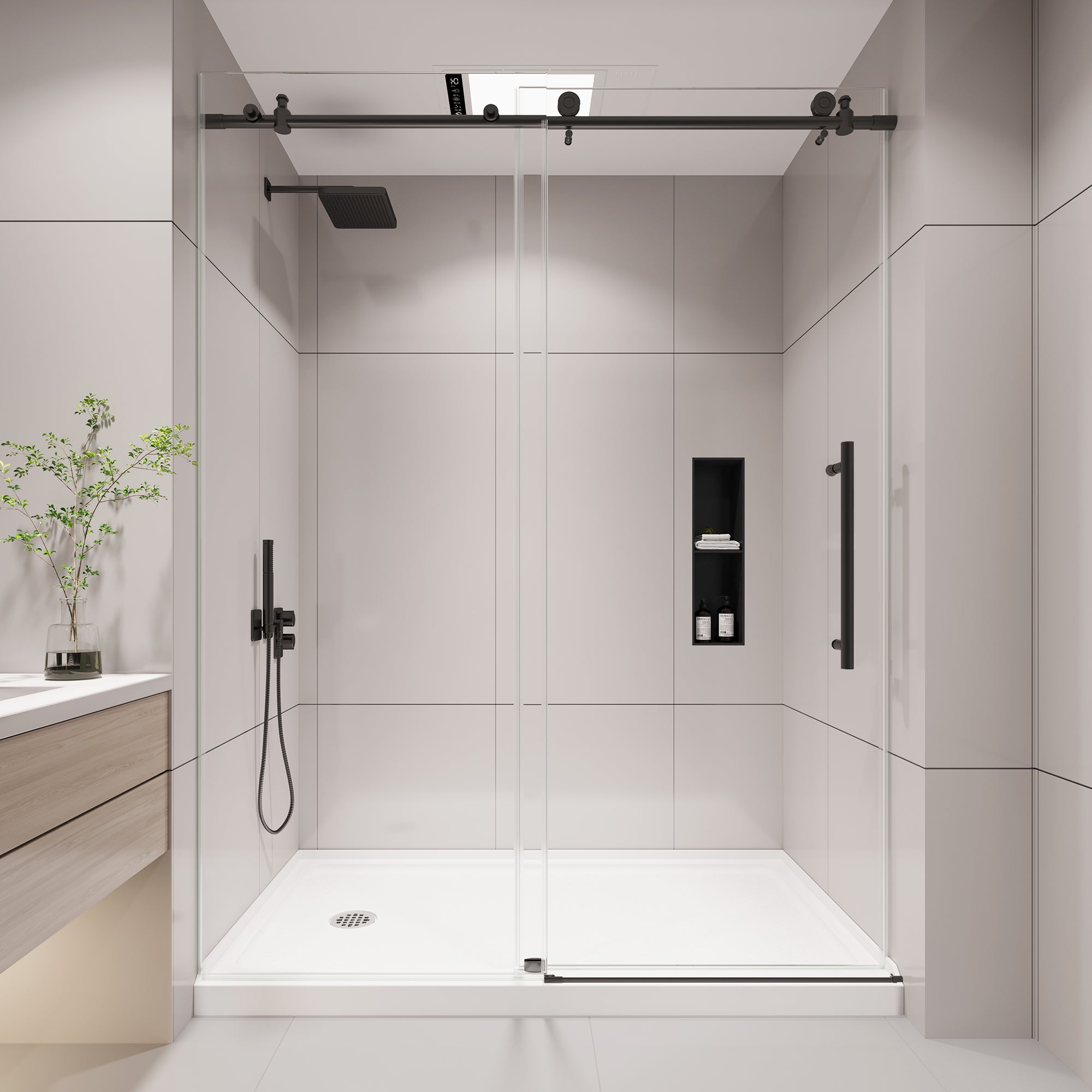

Choosing the right shower door for daily quick cleaning is less about looks and more about real-world performance. Homeowners want low-maintenance glass that resists soap scum, easy access for quick wipes, and predictable water containment — all while meeting safety and code requirements. As a contractor who’s been remodeling bathrooms for over 20 years, I’ll give you the practical, no-nonsense guidance you need: what door types work best, what details to watch for on installation, and exactly how to keep the glass clean in under five minutes a day.
Quick Answer: Best Shower Door for Daily Quick Cleaning
Short answer: a frameless or semi-frameless glass door with a durable hydrophobic coating and 3/8" to 1/2" tempered glass offers the best balance of easy daily cleaning, modern style, and long-term durability. For constrained bathrooms where water containment is critical, a sliding (bypass) or semi-frameless framed sliding door may be a better low-maintenance choice.
Shower Door Types Compared for Cleaning Ease
Not all doors clean the same. Here’s a practical comparison so you know what to expect when you choose.
| Door Type | Ease of Daily Cleaning | Water Containment | Typical Tempered Glass Thickness | Best For |
|---|---|---|---|---|
| Frameless pivot or hinged | Excellent — no metal channel to trap gunk | Good with proper sweep/threshold | 3/8" – 1/2" | Modern baths, easy wipe-down |
| Semi-frameless | Very good — small slivers of hardware | Very good | 3/8" | Cost-conscious homeowners who want modern look |
| Framed sliding | Fair — frames collect soap scum | Excellent | 1/4" – 3/8" | Small bathrooms, tub-shower combos |
| Bypass (pocket) sliding | Fair — track cleaning needed | Good | 1/4" – 3/8" | Space-saving installs |
| Fixed panel (walk-in) | Excellent — minimal hardware | Depends on curb and slope | 3/8" – 1/2" | Wet-room or open concept showers |
Why frameless or semi-frameless wins for cleaning
- Fewer channels and seals — less place for mildew and mineral build-up.
- Straight glass surfaces — a squeegee or microfiber wipes the whole panel in one pass.
- Thicker tempered glass (3/8" or 1/2") resists flex and keeps seals tight longer, which reduces leakage points where grime collects.
That said, framed sliding doors still work well where water containment is the priority — think tub-and-shower or small bathrooms where splashing is likely.
For shoppers, check out a curated selection of proven glass door options: KPUY Shower Doors for models that use thicker tempered glass and hydrophobic coatings.

Job-Site Realities That Affect Cleaning and Performance
Let’s be blunt — the cleanability of a shower door starts long before the first wipe. Real-world issues I see every week:
- Out-of-plumb walls: Older homes often have 1/4" to 3/8" out-of-plumb over the height of the panel. That forces uneven gaps and causes seals to pinch or not engage, which traps water and soap scum.
- Rough-in and curb slope: If the curb isn't sloped correctly (we target about 1/4" per foot toward the drain), water collects at the base and under sweep seals — instant mildew hotspot.
- Installation tolerances: Expect +/- 1/8" tolerances when working with tile and field-cut glass clearances. Plan for 1/16" to 3/16" reveal at the jambs so silicone sealant does the work without looking sloppy.
- Glass edge clearance: You must leave proper clearance for door swing and gaskets; otherwise doors rub and stress the glass edge — that damages coatings and accelerates film build-up.
From actual renovations: I had a 1960s bathroom where the tile wall bowed by 5/8" over 72". A frameless door would have been a nightmare — we used a semi-frameless with adjustable jambs and a hydrophobic coating. It cleaned in two passes with a squeegee and a microfibre.
Daily Quick-Clean Routine (Under 5 Minutes)
Here’s a practical routine you can do in 3–5 minutes after your shower to keep glass looking clean for months.
- Squeegee the glass — top to bottom, one pass per panel. This removes most minerals and soap scum before they set.
- Wipe metal rails and handles — quick pass with a microfiber to remove water beads. Focus on bottom track areas on sliding doors.
- Spot-clean the threshold — a small spray of diluted vinegar (1:1 with water) or a mild glass cleaner, wiped off immediately.
- Open the door — if possible, let the enclosure air-dry for 5–10 minutes to prevent trapped moisture in frames and gasket channels.
Essential tools to keep handy:
- One-channel squeegee with rubber blade
- Microfiber cloths (2-3)
- Small spray bottle with 1:1 white vinegar + water
- Old toothbrush for grout/track details
Pro tip: Install a hook in the bathroom for the squeegee and train the household to squeegee after each shower. That habit beats aggressive cleaners later.

Glass Coatings, Seal Types and Hardware That Matter
Coatings and hardware determine how easy the glass is to clean and how long that ease lasts.
Hydrophobic / Nano coatings
A professionally applied hydrophobic coating repels water and reduces mineral adherence. Look for coatings rated for showers (not automotive) and ask about re-coat intervals. In heavy-use family bathrooms I schedule a re-coat about every 2–4 years.
Tempered glass thickness and safety
Safety first: all shower glass must be tempered and meet ANSI Z97.1. For daily durability and cleaning ease, I prefer 3/8" (10 mm) or 1/2" (12 mm) tempered glass for frameless doors — less flex means fewer gaps, fewer leaks, and less dirt migration into seals.
Hardware finishes and cleaning
- Matte black and brushed nickel are popular 2026 finishes; choose non-porous, corrosion-resistant hardware. Smooth profiles are easier to wipe.
- Avoid ornate channels and recessed handles if low maintenance is a priority.
For standards and professional guidance on kitchen and bath design that tie into safe, cleanable installations, see the NKBA resources: NKBA. For plumbing and code implications of drainage and water containment, IAPMO provides guidance on UPC/IPC: IAPMO.
Installation Tolerances & Practical Tips from the Field
Good installation is what turns a pretty door into a low-maintenance door. Here are the contractor-level details I share with homeowners:
- Leave installation clearance: Plan for 1/8"–3/16" at jambs and 1/8" at the top to allow for out-of-plumb walls and silicone bead compression.
- Set the curb slope: Aim for a minimum 1/4" per foot slope toward the drain and a 3–4" high curb for tubless showers. Without the slope, water pools and accelerates mineral and biofilm buildup at the base of doors.
- Shim, then seal: Use corrosion-resistant shims to get the frame plumb before applying continuous caulk. Never rely on caulk to correct a 1/2" misalignment.
- Check hardware torque: Over-tightening screws distorts glass and hardware; follow manufacturer torque specs and leave the correct gasket compression so water seals are effective but accessible for cleaning.
During a recent remodel I encountered a tiled opening where the finished wall was 3/8" out at the hinge side. We installed adjustable hinges and a semi-frameless door, keeping the glass off the wall by 3/16" with a continuous silicone bead. That small detail saved weeks of callbacks for leak and mildew complaints.
FAQ
Which shower door is easiest to keep clean daily?
Frameless or semi-frameless glass doors with a hydrophobic coating are easiest — fewer channels, simple glass surfaces, and thicker tempered glass that maintains seal geometry. For small baths where water containment matters more than minimal maintenance, choose a framed sliding door and commit to track cleaning once a week.
How thick should the glass be for durability and easy cleaning?
Use 3/8" (10 mm) as the baseline for frameless doors. For larger panels or tub-closures, 1/2" (12 mm) adds stiffness and longevity. All glass must be tempered and comply with ANSI Z97.1 for safety.
Can I retrofit a coating on my existing shower glass?
Yes. Many hydrophobic coatings can be applied on-site or in a shop. For best results, the glass should be professionally cleaned to bare glass before coating; DIY applications often fail to achieve the durability of a professional installation.
Wrap-up & Where to Look Next
For most homeowners focused on quick daily cleaning, a frameless or semi-frameless glass door with a hydrophobic coating and 3/8"–1/2" tempered glass is the practical choice. Pay attention to installation tolerances, curb slope, and leaving small clearances so sealants and sweeps can do their job. If you need a reliable supply of glass door styles that fit these specs, check out KPUY Shower Doors for models commonly used in modern remodels.
Strong daily habits — a single squeegee pass and a quick wipe — prevent hard scrubbing later. That combination of the right door and consistent maintenance keeps your shower glass clear and your bathroom smelling fresh.

Dejar un comentario
Todos los comentarios se revisan antes de su publicación.
Este sitio está protegido por hCaptcha y se aplican la Política de privacidad de hCaptcha y los Términos del servicio.