
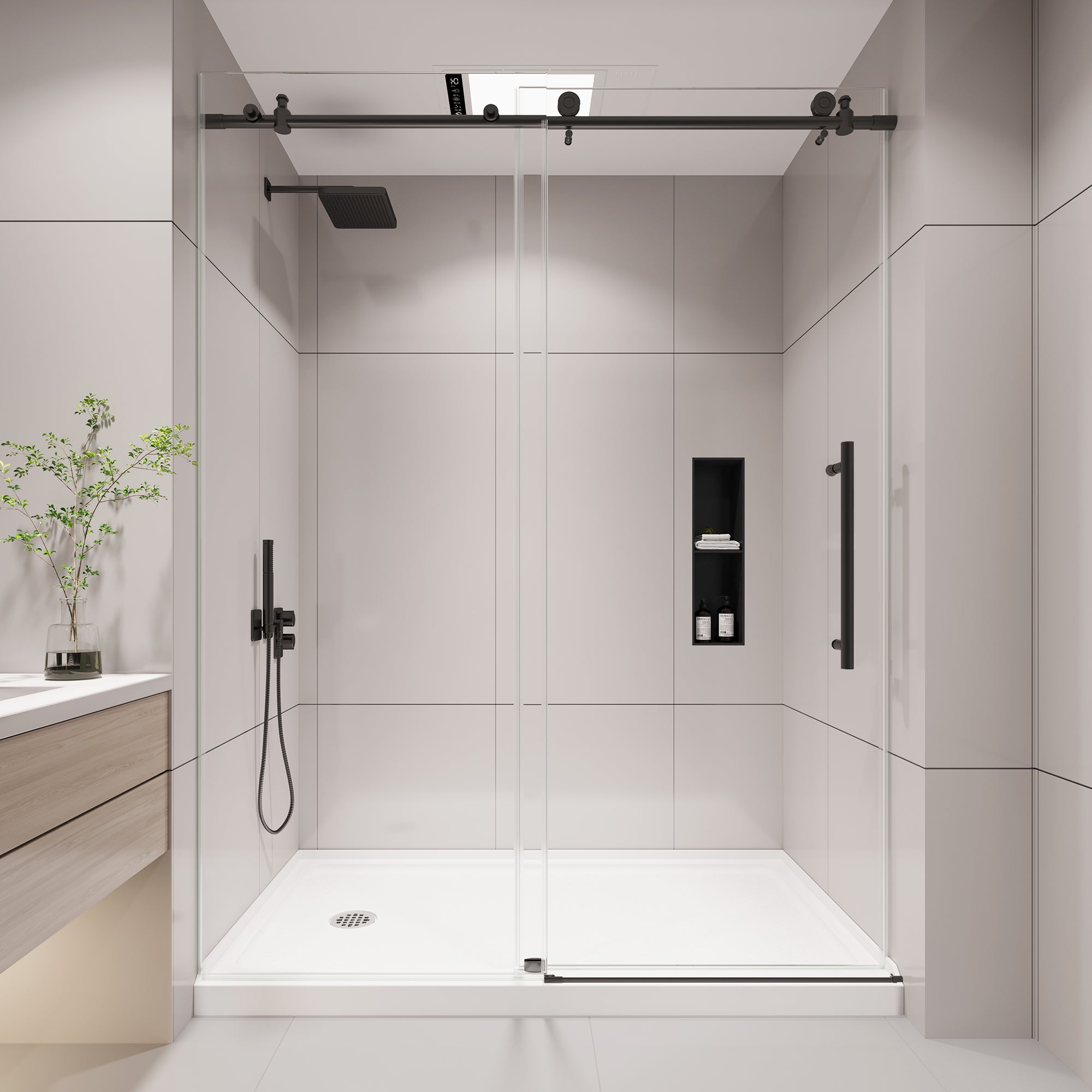
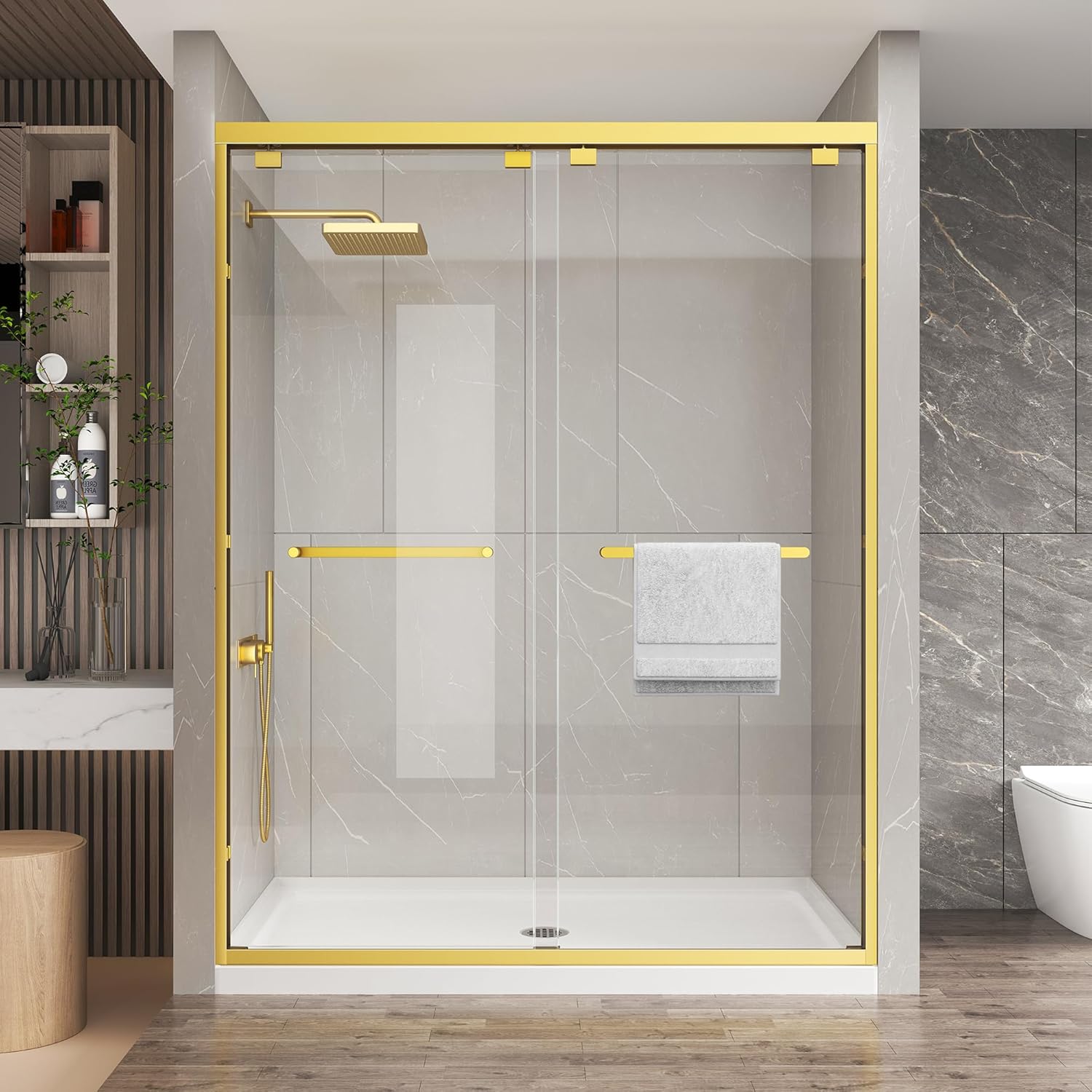
Coastal homes force you to think differently about every finish and fastener. Salt air accelerates corrosion, wind-driven moisture finds gaps, and older beach cottages almost always have out-of-plumb walls that complicate a seemingly simple shower door install. For American homeowners planning a bathroom remodel near the coast in 2026, the right door choice balances corrosion resistance, water containment, and realistic field tolerances — not just showroom looks.
Quick answer
Best overall choice: a semi-frameless or framed shower door using 316 stainless steel or marine-grade anodized aluminum hardware with at least 3/8" tempered safety glass and purpose-made coastal finishes. Frameless glass looks great but demands thicker glass and more corrosion-resistant hardware. For long-term reliability near the beach, choose hardware rated for marine environments and a design that tolerates out-of-plumb conditions.
Why coastal bathrooms are different
Salt, humidity, and temperature swings speed up metal corrosion and wear out seals faster than inland climates. On top of that you’re usually dealing with older framing and tile that didn’t leave generous rough-in dimensions. That affects the types of doors you can install and the tolerances you must allow for. A perfect-looking door in a showroom can fail prematurely on a beach property if the wrong materials or installation practices are used.
Shower door types and coastal suitability
Not all doors are equal when salt air is in play. Below are the common configurations and my field-tested take on each.
Frameless glass doors
Frameless doors are typically 3/8" or 1/2" tempered glass that anchors to the tile with heavy-duty clips and channel hardware. They look modern and are easier to wipe down because there are fewer horizontal framing profiles to trap salt deposits.
- Pros: Clean look, easier glass maintenance, minimal exposed metal if hardware is specified correctly.
- Cons: Requires thicker glass and precise substrate. Not forgiving of out-of-plumb walls unless adjustable hinges are used.
Semi-frameless doors
Semi-frameless doors have a slim header or vertical frames but minimal full surround framing. They strike a balance between aesthetics and protection. You can get reasonable adjustability for installs where the walls are not perfectly plumb.
Fully framed doors
Framed doors use full perimeter metal framing. They hide more caulk joints, tolerate rougher conditions and are typically lower cost. However, the frame exposes more metal to salt — you must specify corrosion-resistant finishes.
Sliding bypass doors
These are good for space-constrained layouts. Track systems collect water and salt, so choose tracks with good drainage designs and stainless hardware.
Bi-fold or accordion doors
Use them only where space or defect corrections are needed; they have more seals and moving parts and typically require frequent maintenance in coastal climates.
| Door Type | Typical Glass | Hardware Material | Coastal Suitability | Field Tolerance |
|---|---|---|---|---|
| Frameless | 3/8" – 1/2" tempered | 316 SS, anodized hardware | Good if hardware is marine-grade | Low — needs plumb walls and solid substrate |
| Semi-frameless | 3/8" tempered | 316 SS or coated aluminum | Very good balance | Medium — adjustable hinges help |
| Framed | 1/4" – 3/8" tempered | Powder-coated aluminum (marine) or stainless | Good if finish is specified | High — tolerates out-of-plumb |
| Sliding | 1/4" – 3/8" tempered | 316 SS tracks or anodized | Good with keyed drainage | Medium — track adjustment required |
As a practical tip: if you want the look of frameless but you live on a salt-spray coast, upgrade to 1/2" glass and insist on 316 stainless steel pivots or hinges. If budget or substrate prevents that, a well-finished semi-frameless door is often the best compromise.

Materials, finishes, and hardware to specify
Materials matter more than the pivot style. Here’s what to insist on in your spec or when buying a door:
- 316 stainless steel for hinges, pivots and screws — it resists chloride corrosion far better than 304.
- High-quality anodized aluminum or marine-grade powder coat finishes for frames and tracks.
- Tempered glass meeting ANSI Z97.1 or equivalent safety glazing — 3/8" minimum; 1/2" recommended for frameless in coastal zones.
- Seals made of EPDM or silicone that tolerate UV and salt without hardening quickly.
- Stainless screws and all-thread anchors — avoid plated fasteners that will pit quickly.
For standards and best-practice references, see the National Kitchen & Bath Association guidance on coastal materials and finish selection: NKBA. For building code considerations and acceptable product listings, refer to the International Code Council: ICC.
Installation details contractors watch for
On the job site I want to see the rough-in dimensions and I measure twice. For coastal homes I also check the following:
- Verify the walls are plumb and measure actual door opening width at top, middle and bottom — expect up to 3/8" variance in older homes.
- Confirm curb slope and make sure the curb is pitched toward the drain; if water pools at the door it will accelerate seal failure.
- Set the glass with a gap consistent with the manufacturer’s installation tolerances; don't try to squeeze glass into an undersized opening.
- Use marine-grade backer behind tile clips or anchors; if substrate is soft, install blocking.
- Seal only where required — excessive caulk lines trap salt and mildew.
Real job-site note: I remodeled a 1960s beach bungalow where the tile return varied by 5/16" from top to bottom. We chose a semi-frameless door with adjustable hinges and installed a thin stainless shim behind the lower hinge to maintain hinge alignment. That small on-site adjustment avoided glass stress and kept the 3/8" glass from becoming a structural liability. Field adjustments like shimming and setting hinge tolerances are common — plan for them in your electrician/plumber/carpentry rough-in timeline.
Common installation tolerances I work with:
- Glass width tolerance: usually ±1/8" after site measurement.
- Hinge adjustment range: typically 3/16" to 1/4" vertical and horizontal.
- Maximum out-of-plumb fix without rebuilding: about 3/8" — more than that usually requires reframing or a custom sill.

Maintenance and care
Maintenance is straightforward but must be regular in coastal settings:
- Rinse metal parts weekly with fresh water if near surf spray.
- Use a squeegee after every shower to remove saltwater residue from glass and seals.
- Replace worn seals before they harden and crack — typically every 3–5 years depending on exposure.
- Lubricate rollers and pivot points with a silicone-based product that’s safe for stainless steel and seals.
Avoid bleach on metal finishes and never use abrasive pads. A soft cloth and mild detergent or a 50/50 vinegar/water rinse followed by fresh water works well for salt residue.
Cost and timeline expectations
Budget and schedule vary by door type and field conditions. Typical ranges for a coastal remodel:
- Frameless (3/8" glass, marine-grade hardware): $1,200 – $3,000 installed, 1–3 days for fit and finish.
- Semi-frameless: $800 – $2,000 installed, 1–2 days.
- Framed: $400 – $1,200 installed, 1 day.
Allow extra time for site-measuring and ordering marine-grade hardware — lead times for 316 stainless can be longer. Also account for substrate repairs if tile or blocking is damaged; that adds a day or two.
FAQ
What shower door is best for a salt-air, high-humidity coastal bathroom?
Use a door with 316 stainless or marine-grade anodized aluminum hardware and at least 3/8" tempered glass. Semi-frameless gives you visual appeal and field adjustability; frameless works if you upgrade to 1/2" glass and ultra-durable hinges.
Can I use a frameless door on an out-of-plumb wall?
Short answer: sometimes, but it's risky. Frameless doors require precise substrate and stronger glass. If your walls vary more than about 3/8", consider a semi-frameless or framed system, or budget for site shimming and blocking to achieve plumb conditions.
How thick should coastal shower glass be?
Minimum 3/8" tempered safety glass that complies with ANSI Z97.1; 1/2" tempered glass is recommended for frameless doors in coastal exposures to reduce deflection and hinge stress.
Final notes & where to look
If you want a practical blend of performance and style, specify a semi-frameless door with 316 stainless or marine-grade anodized hardware and at least 3/8" tempered glass. Have your contractor measure on-site, confirm rough-in dimensions and curb slope, and plan for minor field adjustments to accommodate out-of-plumb walls. For product options that meet these coastal performance criteria, see KPUY Shower Doors for styles and finish choices.

Final practical advice: spend a little more on hardware and shop for marine-grade finishes. It’s cheaper than replacing corroded hinges and seals two years after installation.

Dejar un comentario
Todos los comentarios se revisan antes de su publicación.
Este sitio está protegido por hCaptcha y se aplican la Política de privacidad de hCaptcha y los Términos del servicio.