
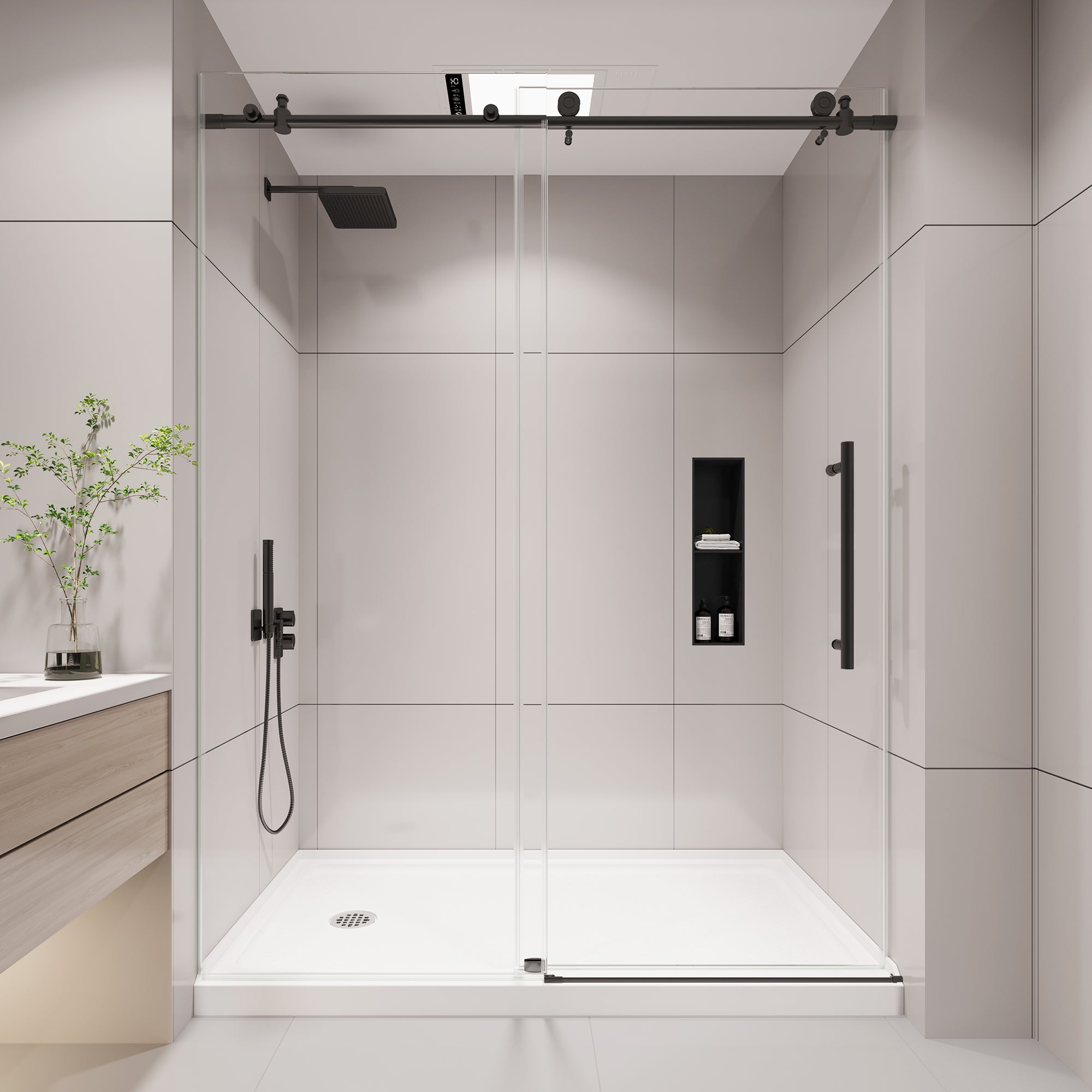
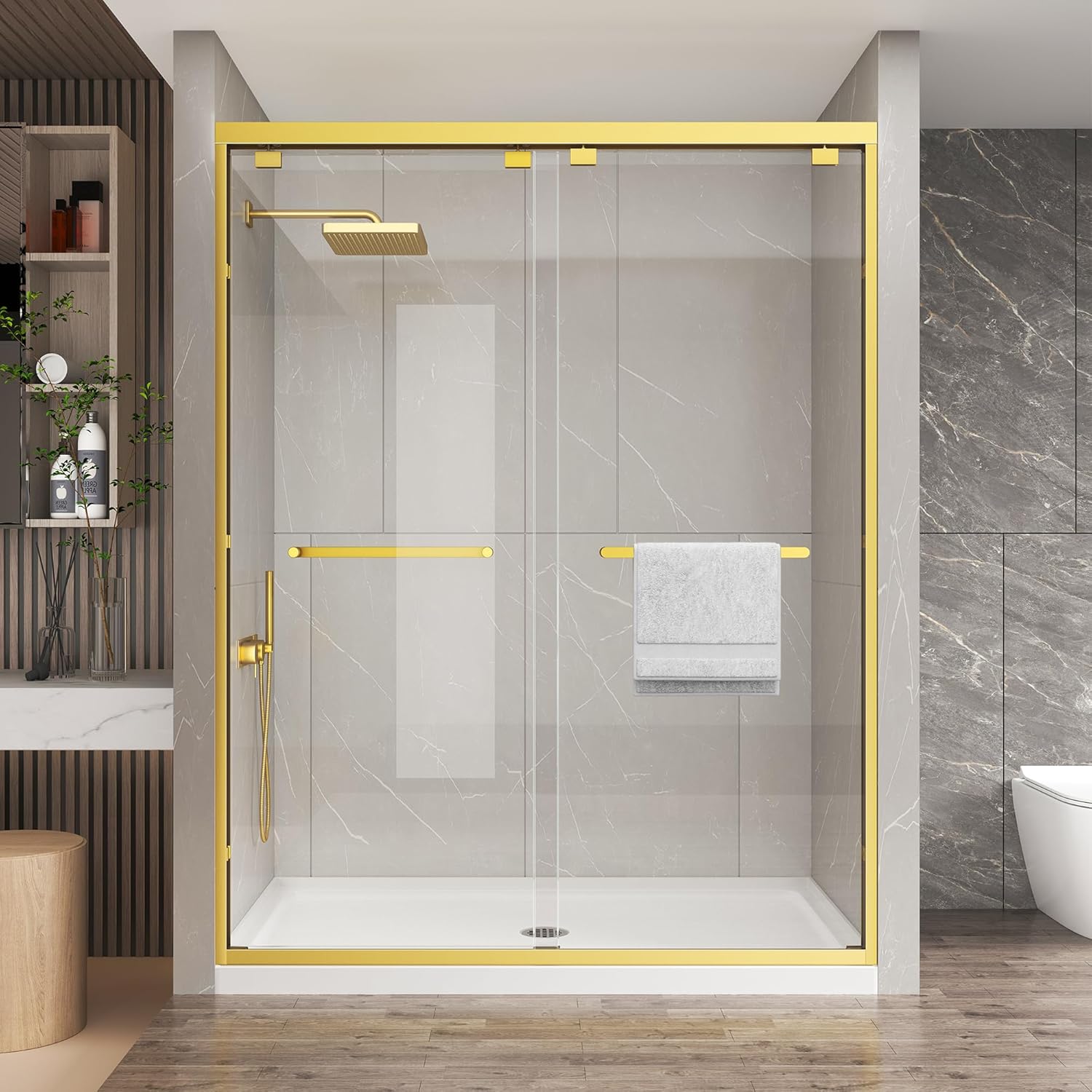
As a bathroom contractor with over 20 years on renovation sites across the U.S., I get asked the same practical question a lot: can you put a frameless glass door on a shower with a built curb? The short answer is usually "yes" — but there are a lot of jobsite realities that decide whether it will function well and stay leak-free for years. Frameless doors are a top 2026 trend for clean, open bathrooms, but getting the details right — curb slope, glass thickness, hinge choice, and installation tolerances — is what separates a successful install from callbacks.
Quick Answer (Featured Snippet)
Yes
How a Frameless Door Works on a Curbed Shower
A frameless shower door is supported by heavy-duty hinges anchored to stud or concrete, patch fittings into glass, and sometimes a header or a channel at the curb on sidelight panels. Unlike framed units that rely on a metal surround, frameless systems use the glass itself as a structural element. That makes accurate rough-in dimensions and substrate preparation critical.
Two mechanical concerns determine success:
- Curb slope and height: The curb must be sloped toward the drain so water doesn't pool against the glass and leak under the door. I aim for a 1/8" to 1/4" slope across the curb towards the shower floor.
- Out-of-plumb walls and squareness: Glass hinges need consistent gaps. If walls are out of plumb more than 1/4" over 6 feet, you either need to correct it with shims or specify custom glass patterns that compensate.
For visual reference and to plan layout changes, I often generate a site sketch before ordering glass.

Key Considerations Before You Choose
Glass thickness and safety
Most frameless doors for residential curbed showers use 3/8" (10mm) tempered glass. For larger doors (over 60" tall or wide) or doors with heavy hardware, specify 1/2" (12mm). Always confirm the glass meets ANSI Z97.1 safety glazing expectations and local code. Tempered glass breaks into small granular pieces instead of large shards — that's non-negotiable for occupant safety.
Hardware and mounting
Hinges must be through-bolted into solid blocking or a steel plate behind the finished wall. On tile walls with shallow substrate, I pack with a steel mounting block at least 3" square. Choose hinges with at least a 3/8" capacity and a tolerance adjuster to close minor plumb issues during installation.
Curb slope and waterproofing
The curb should be built on a mortar bed or slope pan with at least a 2" to 3" vertical rise from finished floor for ideal water containment. A low 1" curb increases the risk of splash-over, especially with shower heads aimed outward. I check the drain rough-in and confirm the curb is sloped so water flows back into the shower pan.
Real-world jobsite note
On older homes I remodel, walls are frequently out of plumb by 1/2" or more. I've had to order glass with tapered edges and use thicker hinges to compensate. When you measure, leave a glass tolerance of at least 1/8" to 3/16" per side for field adjustments; for heavy-duty commercial-style hardware give a bit more. Not leaving room for shims or sealant leads to callbacks — trust me on this.
Side-by-Side Comparison
| Type | Typical Glass Thickness | Minimum Curb Height | Water Containment | Installation Tolerance |
|---|---|---|---|---|
| Frameless on Curbed Shower | 3/8" – 1/2" | 2" (3" ideal) | Good with proper seals and slope | 1/4" over 6' max; shim/blocking required |
| Framed on Curbed Shower | 1/8" – 3/16" glass (inserts) | 1"+ | Best with integrated sill | More forgiving; frame masks minor plumb issues |
| Curbless with Frameless | 1/2" often preferred | 0" (ramped floor) | Relies on floor slope and threshold strips | Requires tight tolerances and correct floor pitch |
Installation Steps & Tolerances
- Verify dimensions: Measure opening height, curb width, and out-of-plumb in three places. Record numbers and compare to factory template limits.
- Prepare substrate: Install blocking behind hinge locations; ensure tile and backerboard are flat within 1/8".
- Confirm curb slope: Set the curb on a mortar slope to the drain and test with water before final tile.
- Dry fit glass: Place panels to verify gaps. Expect to leave 1/8"–3/8" clearance at the top and sides depending on hardware.
- Secure hardware: Anchor hinges to blocking; use stainless steel fasteners and thread locking where recommended.
- Seal seams: Use high-quality neutral-cure silicone at the curb and wall seams; leave a small return at the bottom edge under the door to act as a water break.
- Test: Run a full water test for 10–15 minutes and check outside the curb for leaks.
Two installation tolerances I always call out: keep wall plumb within 1/4" over 6 feet, and maintain a consistent door-to-floor gap (typically 1/4"). If either one is out, plan for custom glass or a sill/threshold option.

Common Field Problems and Fixes
- Door rubs on tile: Caused by out-of-plumb walls or incorrect hinge spacing. Fix: add shims, re-drill hinge locations into blocking, or order custom taper glass.
- Water leaks at bottom: Often due to insufficient curb height or no bottom sweep. Fix: add a low-profile sweep or re-grade the curb slope; switch to a partial threshold where needed.
- Glass chatter or wiggle: Hardware not anchored to solid backing. Fix: retrofit steel plate behind tile or install larger blocking.
- Fogging/film: Poor water-flow to drain. Fix: adjust shower head direction and verify drain flow and trap seal (check IPC/UPC plumbing rough-in if remodel involved relocating drain).
When Not to Use a Frameless Door on a Curbed Shower
There are scenarios where I advise against frameless doors:
- Walls are severely out of plumb (>1/2" over 6').
- Low curbs under 1" with high flow shower heads or inexperienced users; risk of splash-over is high.
- Substrate cannot accept blocking without major demolition.
- Budget constraints that don't allow for thicker glass or custom patterns needed to correct fit issues.
FAQ
Can you install a 3/8" frameless door on an existing curb?
Yes. In most cases a standard 3/8" tempered frameless door works fine on existing curbs if the curb is at least 2" high, properly sloped, and you have solid backing for hinge anchors. Verify wall plumb and measure door swing clearance. If the curb is too low or walls are out of plumb you may need a bottom sweep or custom glass pattern.
Do frameless doors leak more than framed doors?
Not necessarily. Frameless doors can match or outperform framed doors when installed correctly. The difference is that frameless systems rely on precise fit and high-quality glass/hardware — framed units give you more built-in protection at the expense of the minimalist look. Proper curb slope, a small threshold or sweep, and correct silicone detailing are what prevent leaks.
What minimum curb height do you recommend?
I recommend a minimum 2" curb for residential frameless doors, with 3" preferred. That gives a better water barrier and a margin for the bottom seal or sweep. Very low curbs are a frequent source of callbacks.
For homeowners shopping for frameless options, consider checking a vetted supplier’s selection before final measurements. If you want a product line with a range of frameless styles and hardware options, take a look at KPUY Shower Doors for examples of common configurations I install in the field.
For construction standards and design guidance, see the National Kitchen & Bath Association resources at NKBA, and check general safety standards at ANSI for tempered glass requirements.
When you’re planning a frameless door on a curbed shower, the job comes down to two things: accurate measurements and quality blocking/hardware. Get those right and the frameless look lasts for decades; miss them and you’ll be chasing leaks. If you want a site-specific opinion, book a site visit so I can measure the curb slope, wall plumb, and drain location and give you a concrete recommendation.

Dejar un comentario
Todos los comentarios se revisan antes de su publicación.
Este sitio está protegido por hCaptcha y se aplican la Política de privacidad de hCaptcha y los Términos del servicio.