
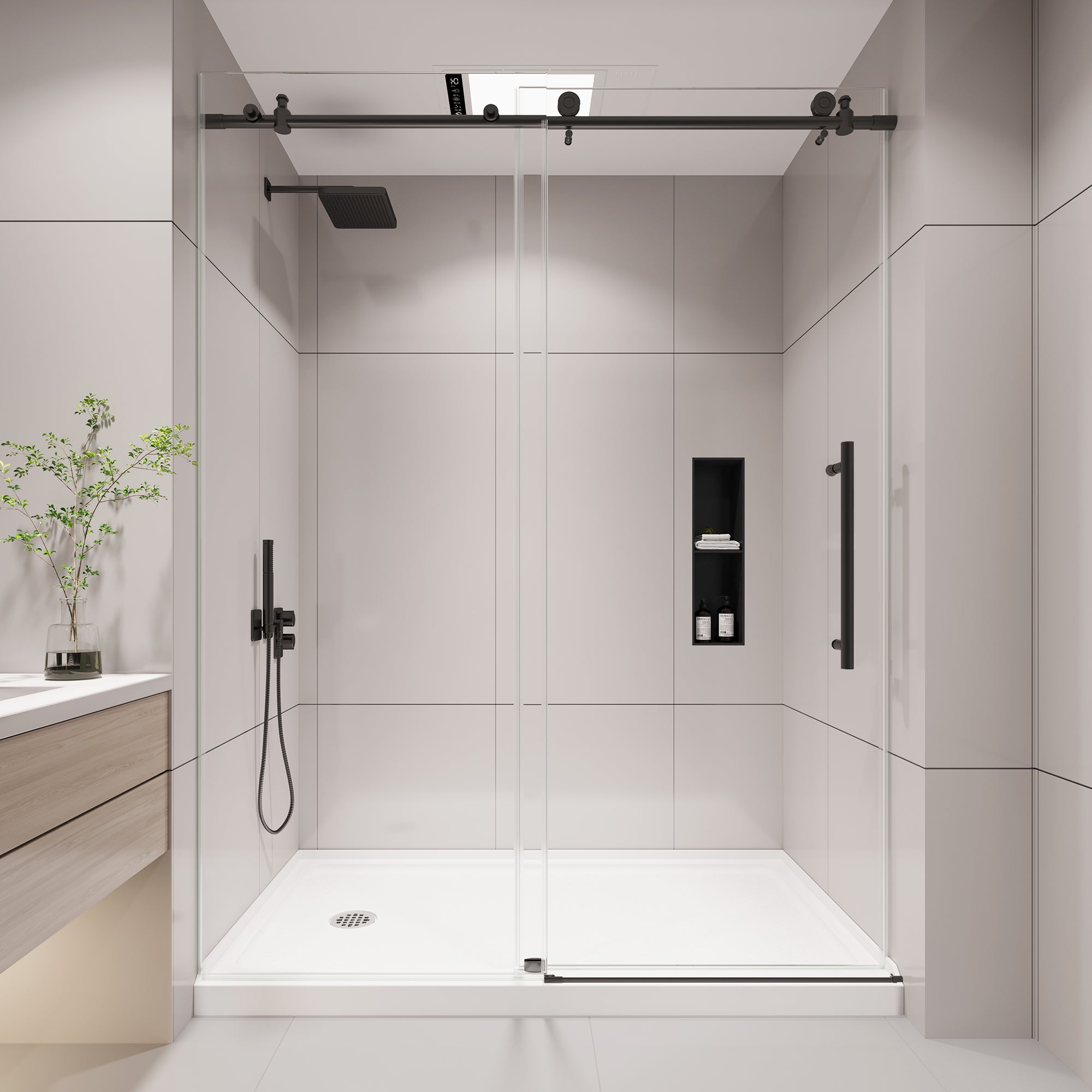
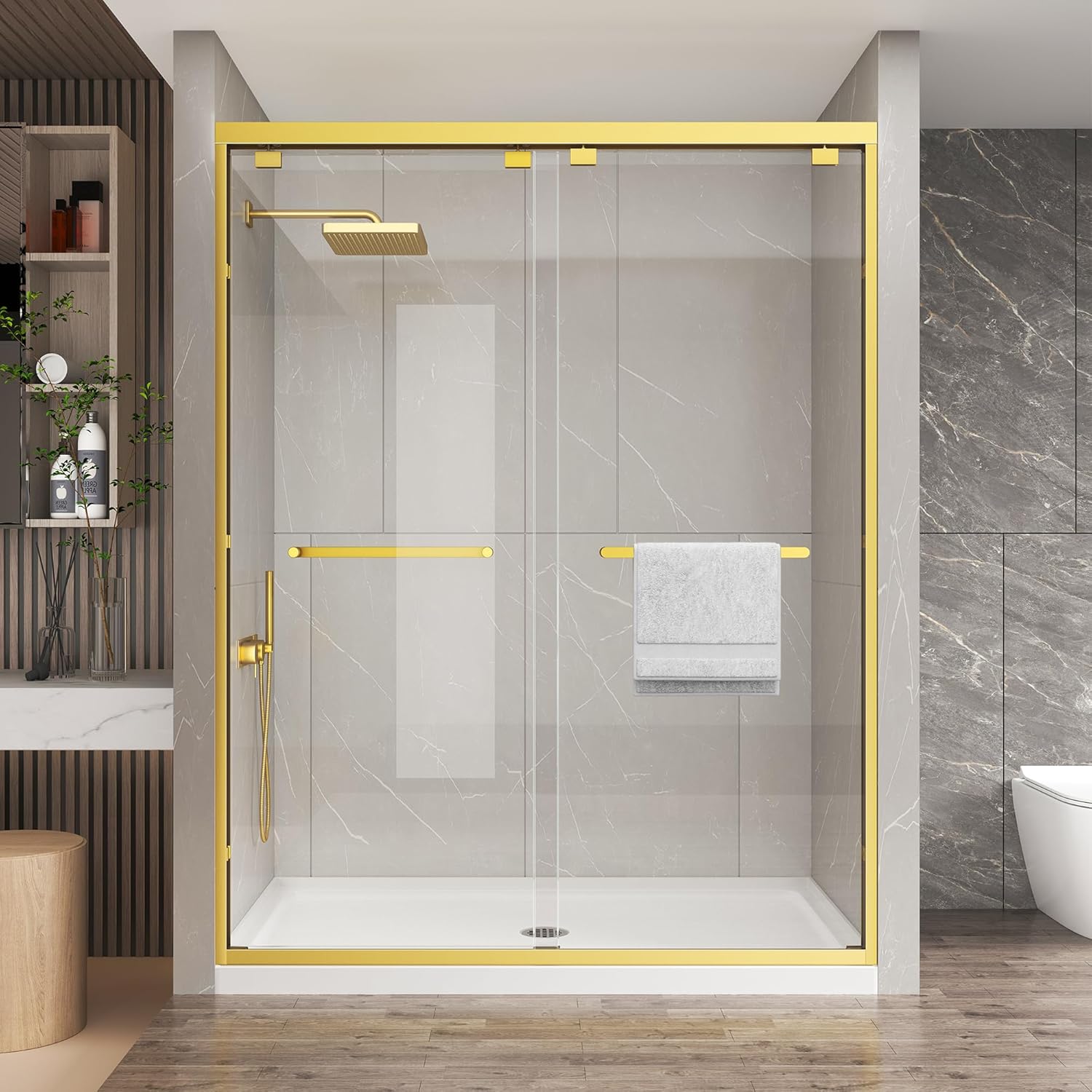
Sliding shower doors usually stick for one of three reasons: the rollers are worn or out of adjustment, the track is dirty or damaged, or the opening is out of plumb enough to bind the panels. Start with the finished opening, not the old door label. If the rollers move smoothly on a clean track but the door still drags, wall alignment and track level are the next checks.
The Short Answer
A sliding shower door sticks when the rollers are not carrying the panel evenly, the track is out of level or dirty, or the walls are out of plumb enough to pinch the glass. The fastest rule of thumb: clean the track, inspect the rollers, and measure the opening top, middle, and bottom before assuming the door is the problem. If the track and rollers are sound but the opening is not square, the install or the layout needs attention.
What Is Actually Making the Door Stick
Most sticking complaints come from one of two places: the moving parts or the opening itself. Rollers wear down, collect mineral buildup, or sit too high on one side. Bottom guides can also bind if they are too tight or positioned off center. On the other side of the equation, older shower openings often look fine until a level is set against them. A wall can lean just enough to make a panel rub at one end of the track.
That is why a sliding door can feel worse after a remodel than before. New tile changes the finished opening, and a fresh track exposes problems that an old frame may have hidden. If the wall surface is thicker because of tile or backer board, the final width can shrink. If the curb is not level, the door may track differently from one end to the other.
For homeowners planning a replacement, a good starting point is the right style and track setup from the beginning. If you are comparing layouts or ordering a replacement, Sliding Shower Doors are the most relevant place to start because the opening width, track height, and roller layout all affect how smoothly the door operates.
Symptoms, Likely Cause, and Practical Fix
Use the symptom first, then work backward. A sticky door is not always a roller problem. The table below helps separate a simple maintenance issue from a measurement or installation issue.
| Symptom | Likely Cause | Practical Fix |
|---|---|---|
| Door is hard to move only in one spot | Dirty track, damaged roller, or debris in the bottom guide | Clean the track, inspect the roller wheels, and check for chips or buildup |
| Door drags more at the top or bottom | Roller adjustment or out-of-plumb wall | Check level at the track and measure the opening top, middle, and bottom |
| Door rubs after tile work | Finished opening changed after wall build-up | Recheck finished dimensions, not the rough opening from before tile |
| Panels jump or chatter on the track | Loose hardware, worn rollers, or uneven track surface | Tighten hardware within the manufacturer’s limits and inspect the track for bends |
| Door closes but feels tight at the end | Wall alignment or guide position is forcing the panel off its travel path | Confirm that the wall, curb, and track line up before replacing parts |
The main mistake is assuming every sticking door needs new glass. In many cases, the door is fine, but the opening is not. A replacement panel will not fix a curb that slopes the wrong way, a track that is bowed, or a wall that leans enough to pinch the rollers.
- Check the rollers first: look for flat spots, corrosion, or loose bearings.
- Check the track second: dirt, soap scum, and mineral deposits can create drag fast.
- Check the wall plane third: a small out-of-plumb condition can cause repeated binding.
- Check the curb or threshold: a sloped or uneven base can shift how the door hangs.
- Check hardware clearance: the panel may fit the opening but still bind against a wall cap, tile edge, or guide.
What to Check Before You Replace Parts
Before ordering replacement rollers, a new track, or a full door assembly, confirm the opening is actually suitable for a sliding system. This is where remodeled bathrooms often surprise people. A finished opening can measure differently at the top, middle, and bottom, especially after tile and trim are installed. The opening can also be square enough for the eye but still be off just enough to bind moving glass.
In many bathrooms, the best move is to verify the opening with a tape measure and a 4-foot level before spending money on hardware. If the opening is outside the normal tolerance for the product, the door may keep sticking even after new rollers are installed. If the issue is broader than maintenance, it helps to review the enclosure style itself through KPUY Shower Doors as a general planning step? Wait
The most practical layout questions are simple: does the track have enough straight, level run, and do the walls stay close enough to plumb for the rollers to travel smoothly? If the answer is no, the problem is often the opening rather than the door.
Step-by-Step Check of Rollers, Track, and Walls
Use this sequence before you decide whether to repair, replace, or rework the opening. It is simple, but it catches most of the real causes.
- Measure the finished opening at the top, middle, and bottom. Record all three numbers, not just the widest point.
- Check both side walls for plumb with a level. Even a small lean can affect the way the panel rides.
- Inspect the track for level and damage. A bent or pitched track can make one roller work harder than the other.
- Look closely at the rollers. Spin them by hand if possible, and watch for wobble, cracking, or grit.
- Examine the bottom guide. It should steady the door without pinching it.
- Check the curb or threshold. Water should return to the shower, and the surface should not twist the door path.
- Measure hardware clearance near tile returns, wall caps, and adjacent fixtures so the panel does not bind at the end of travel.
- Confirm the drain and base conditions if the project is a full remodel. A door issue can be related to a base that is not sitting true.
Older homes often reveal the real problem here: the opening may be slightly wider at the top than at the bottom, or one wall may lean enough to make a sliding panel feel rough. That is normal in remodel work, but it changes what kind of hardware or enclosure will behave well over time.
For bathrooms where the enclosure design is still being chosen, a sliding layout makes the most sense when swing clearance is tight and the opening stays reasonably consistent. If you are still in the planning stage, compare the enclosure style with the available width through Sliding Shower Doors so the door style matches the opening instead of fighting it.
A related layout issue is fixture clearance. A vanity drawer may open fine on paper and still hit a nearby casing, and a shower door may slide freely until it reaches the stop and contacts a towel bar or wall return. Those conflicts are easy to miss during the measuring stage.
When the Door, Track, or Opening Needs More Than Maintenance
If cleaning the track and inspecting the rollers does not solve the issue, the next step is to separate replaceable wear from structural fit. A new roller set can help when the door is otherwise square and the track is sound. A new track may help when the old one is bent, corroded, or mounted poorly. But if the opening itself is out of plumb or the curb is uneven, hardware alone usually will not fix the root cause.
This is also the point where replacement becomes a layout decision, not just a part swap. A door can fit the footprint and still operate badly if the wall alignment is off. If the remodel includes new tile, a new shower base, or a curb rebuild, measure after the finished surfaces are in place. That is the opening the glass will actually live in.
Use repair when:
- The rollers are visibly worn but the track and opening are sound.
- Debris or mineral buildup is creating the drag.
- The door only sticks at one point and the alignment otherwise looks straight.
Use replacement or rework when:
- The walls are out of plumb enough to pinch the panel.
- The track is bowed, corroded, or not mounted level.
- The finished opening changed after tile or wall board was added.
- The bottom guide or curb creates repeated binding.
For broader shower enclosure planning, a general shower door collection can help when you are deciding whether to stay with a sliding setup or switch styles. In that case, KPUY Shower Doors gives a cleaner starting point for comparing enclosure types without treating every opening like a standard size.
Most sticking problems are solved by matching the door to the real opening, not the old one. If the frame has to fight the wall, the problem will return. If the opening is corrected and the rollers are sized for the glass weight, the door usually moves much more smoothly.
Practical warning: a base or curb can look acceptable from above but still throw the door out of alignment if it is not level. That is one reason a sliding door sometimes starts sticking only after the rest of the remodel is complete.
Frequently Asked Questions
Can I fix a sticking sliding shower door without replacing the whole door?
Often, yes. If the track is dirty, the rollers are worn, or the bottom guide is too tight, a repair may solve the problem. Start with cleaning, then inspect movement, then check level and plumb. If the opening is out of square or the track is damaged, the fix may need to go beyond maintenance.
Why does my sliding door stick after a bathroom remodel?
New tile, wall board, or a rebuilt curb can change the finished opening. Even a small change in width or wall plane can affect how the rollers travel. A door that worked before remodeling may start dragging if the new surfaces changed the alignment or reduced the clearance at the track.
What measurements matter most before ordering a replacement?
Measure the finished opening at the top, middle, and bottom, then check the height on both sides. Those numbers reveal whether the opening is square enough for smooth sliding action. Also check the curb or threshold and confirm there is enough hardware clearance at the ends of travel.
Final Takeaway
If a sliding shower door sticks, do not start by blaming the glass. Start with the rollers, then the track, then the wall alignment. That sequence usually shows whether you are dealing with a simple maintenance issue or a remodel problem in the opening itself. If you are planning a replacement, measure the finished opening carefully and use the right Sliding Shower Doors layout for the space, not the one that just happens to fit the old frame.

Leave a comment
All comments are moderated before being published.
This site is protected by hCaptcha and the hCaptcha Privacy Policy and Terms of Service apply.