
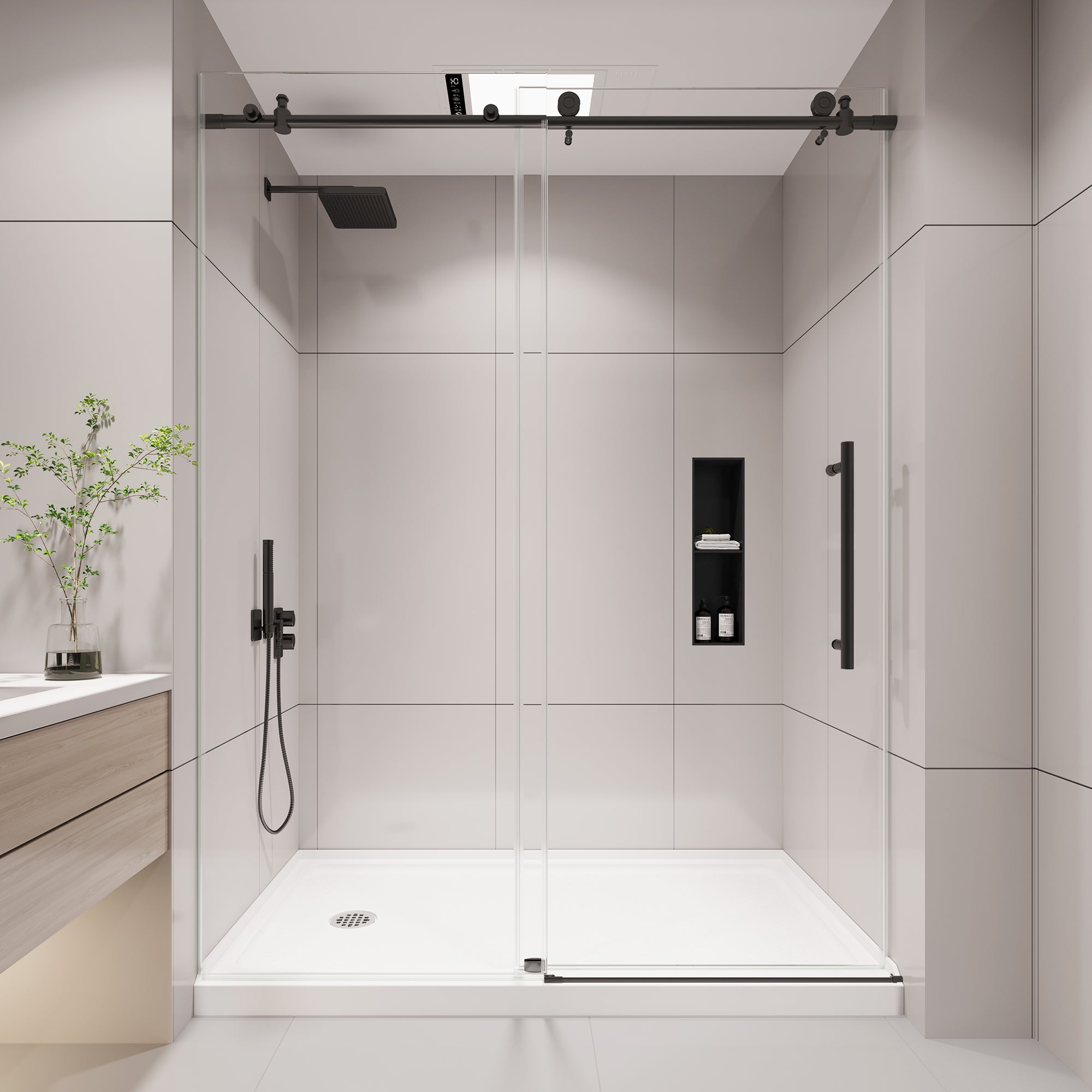
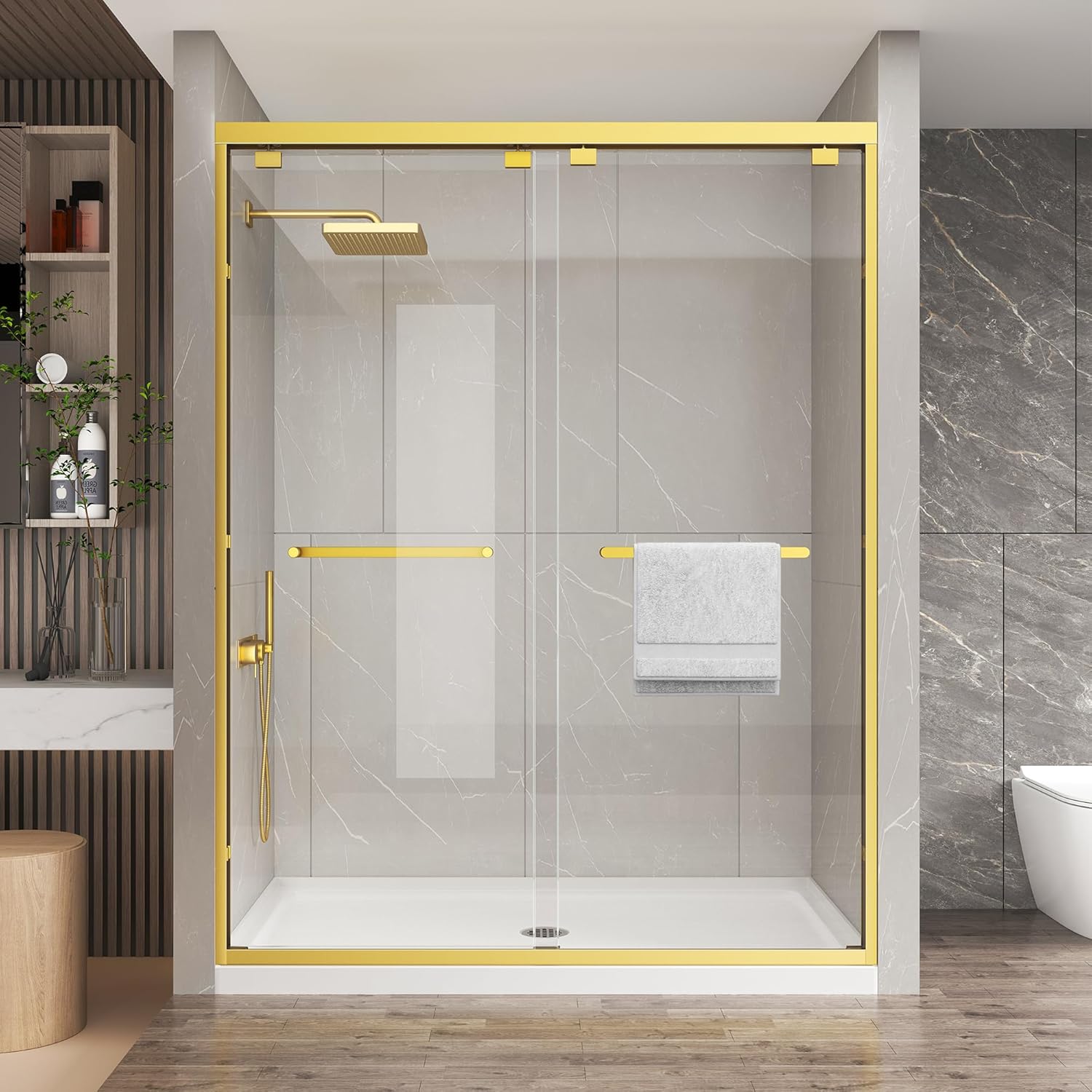
The reality in many American homes: a bathroom that functions, but clocks in tight on clearances and swing room. For 2026, the trend is clean, glass-forward showers that still respect narrow footprints. As a bathroom remodeler with 20+ years on job sites, I’ll walk you through which shower door types actually work in narrow bathrooms, what to measure, what to expect when walls aren’t plumb, and how to pick glass thickness, hardware, and a layout that won't feel claustrophobic.
Quick Answer
Best short answer for a featured snippet: For a narrow bathroom, a sliding (bypass) shower door or a folding/bi-fold door will usually perform best because they require little to no swing clearance. For ultra-compact spaces, consider a fixed glass panel with an open entry or a neo-angle sliding solution. Use 3/8" tempered glass (min) for frameless sliding doors and be sure you plan for out-of-plumb walls and installation tolerances.

Key Factors to Consider
- Door swing clearance: If you have under 30–36 inches of clear floor space in front of the shower, avoid swinging doors unless they open into a dedicated walk space.
- Visual openness: Frameless or minimal-frame doors keep sightlines open and make a narrow bathroom feel larger.
- Threshold and curb slope: Check the curb height and slope — it affects water containment and the sill details for sliding tracks or bottom seals.
- Glass safety: All shower glass must be tempered per safety standards like ANSI Z97.1; verify with your supplier and installer.
- Rough-in and plumbing location: Showerhead and valve placement can change the preferred door orientation—if the valve is in a tight corner, a sliding door may be best.
Shower Door Types for Narrow Bathrooms
-
Sliding (Bypass) Doors
Pros: No swing area needed, works with narrow hallways in front of the shower. Available in framed, semi-frameless, and frameless styles. Common tempered glass thickness: 3/8" (10mm) for frameless sliders to balance strength and guide track compatibility.
-
Bi-fold (Folding) Doors
Pros: Fold inward or outward with minimal swing; good for alcove showers where a full swing door would hit fixtures. Often more affordable than custom frameless options.
-
Neo-angle with Sliding Panels
Pros: Fits in corner installations and reduces footprint into the room. Sliding panels keep door operation compact.
-
Fixed Panel with Open Entry (Walk-in)
Pros: Minimal hardware and no door swing; a half-screen fixed panel keeps splash down while preserving openness. Requires good curb design or linear drain to control water.
-
Pocket Door (Framed Shower)
Pros: If you have the room inside the wall cavity, a pocket door eliminates swing—but this is a heavier structural work item and not always feasible on retrofit jobs.
Critical Measurements & Rough-in Checklist
Before you pick a door, measure carefully. Contractors live by measurements; homeowners should too. Use a 25' tape and a level. Record each measurement in triplicate.
- Shower opening width: Measure at three heights (bottom, mid, top) to check for taper.
- Projection into room: Measure from shower face to nearest obstruction (toilet, vanity edge, door swing path).
- Headroom: Ceiling height for top-mounted tracks or pivot hardware.
- Curb height and slope: Note the actual curb height and the slope toward the drain; sliders need a flat bottom track or wet track detail.
- Wall thickness and substrate: Tile over backer board, plaster, or drywall determines anchor type and shim needs.
Rough-in tolerances: Expect 1/8"–1/4" out-of-plumb in older homes and plan for adjustable hardware or shims. Most frameless door manufacturers publish an installation tolerance (e.g., +/- 3/16"). Always confirm field measurements before ordering custom glass.
Real Site Challenges: Out-of-Plumb Walls & Tolerances
Here’s where job-site experience counts. On older homes I often find the shower opening is not plumb—one side can be 1/2" out over a 6-foot rise. That impacts glass fit and hardware selection. You can’t brute-force glass into that gap; you need adjustable jambs, compliant seals, and sometimes a framed jamb to take the variance.
A typical real-world example: I replaced a 1980s alcove shower in a Cape Cod. Walls were 3/8" out-of-plumb and tile had been skimmed twice. The homeowner wanted frameless glass. We lowered expectations to a semi-frameless sliding system with an adjustable top track and added jamb shims behind the tile. The end result looked clean and avoided the cost of tearing back tile to true up walls.
Field tip: When ordering glass, give the fabricator the smallest width measurement and indicate walls are out-of-plumb. Allow for field-cutting where possible and include a 1/8" to 3/16" per side tolerance for seal extrusion.

Selection Tips: Glass, Thickness, and Hardware
Glass thickness: For narrow bathrooms, 3/8" (10mm) tempered glass is the sweet spot for frameless sliders and many frameless pivot doors. 1/2" (12mm) glass is stronger and looks premium but adds weight and requires heavy-duty hardware and stronger jambs. For framed and semi-frameless systems you can use 1/4" (6mm) glass.
Tempering and safety: Always require tempered glass that meets ANSI Z97.1 standards. Ask your supplier for a compliance certificate and ensure the installer records glass ID marks—these are required to meet building-safety norms.
Hardware and clearances: Choose low-profile top tracks to keep sightlines open. For sliding doors, rail heights and rollers will determine smooth operation; specify stainless steel or a corrosion-resistant finish for longevity. Ensure bottom seals or sweeps engage the curb without binding—curb slope matters here.
Thresholds and drains: For walk-in fixed panels, consider a linear drain and a gently sloped floor toward it. That lets you use a minimal or hidden curb and maintain water control without a full enclosure.
Side-by-Side Comparison
| Door Type | Swing Required | Typical Glass | Best For |
|---|---|---|---|
| Sliding (Bypass) | None | 3/8"–1/2" tempered | Narrow hallways, alcoves, compact bathrooms |
| Bi-fold | Minimal | 1/4"–3/8" tempered | Small alcoves with limited clear floor space |
| Fixed Panel Walk-in | None | 3/8"–1/2" tempered | Modern open designs, minimal hardware, linear drains |
| Pocket Door | None (wall cavity) | Framed or glass panel options | Renovations with wall depth and budget for structural work |
Practical Selection Workflow
- Measure the opening at three heights and note obstructions.
- Decide preferred door operation: no swing (sliding/panel) vs. minimal swing (bi-fold).
- Confirm curb height and slope, and inspect the drain type.
- Choose glass thickness based on desired look and hardware capacity.
- Order custom glass only after a final site measurement is taken by the fabricator or installer.
Manufacturer tolerances: Always read the product installation guide. Frameless kits often allow +/- 3/16" adjustability. Factor that into ordering dimensions and on-site shim plans.
People Also Ask
What shower door is best if my bathroom is less than 5 feet wide?
If you have under 5 feet of width, a sliding (bypass) door or a fixed panel walk-in with a half glass screen is usually best. These options avoid swing clearance and maintain usable room. For custom solutions, a neo-angle sliding system can also optimize corner space.
Can I install a frameless door if walls are out-of-plumb?
Yes, but expect extra work. Frameless installations require shims, adjustable jambs, and sometimes modified glass edge polishing to match the plane. If walls are significantly out-of-plumb (over 1/4" in 6 feet), consider semi-frameless or framed systems that hide variation and provide easier sealing.
How thick should shower glass be for a narrow bathroom?
For a balance of strength and practicality, use 3/8" tempered glass for frameless sliding doors and fixed panels. Use 1/2" for premium, heavy-duty installations where hardware supports the extra weight. Framed systems can use 1/4" glass.
Final Note & Where to Look
When space is tight, plan measurement, tolerance, and hardware first. If your priority is visual openness and minimal swing, start with sliding door systems or fixed panels. A practical next step is to review door models that accommodate narrow openings and adjustable tolerances—the product category we use for these installs is here: KPUY Shower Doors. For design guidance and industry best practices, see resources from the NKBA and general code guidance at the International Code Council.
Final contractor tip: Never order custom glass until a final templating or field measurement is completed by a professional. That step alone saves weeks of back-and-forth and protects your budget from surprise adjustments.

Leave a comment
All comments are moderated before being published.
This site is protected by hCaptcha and the hCaptcha Privacy Policy and Terms of Service apply.