
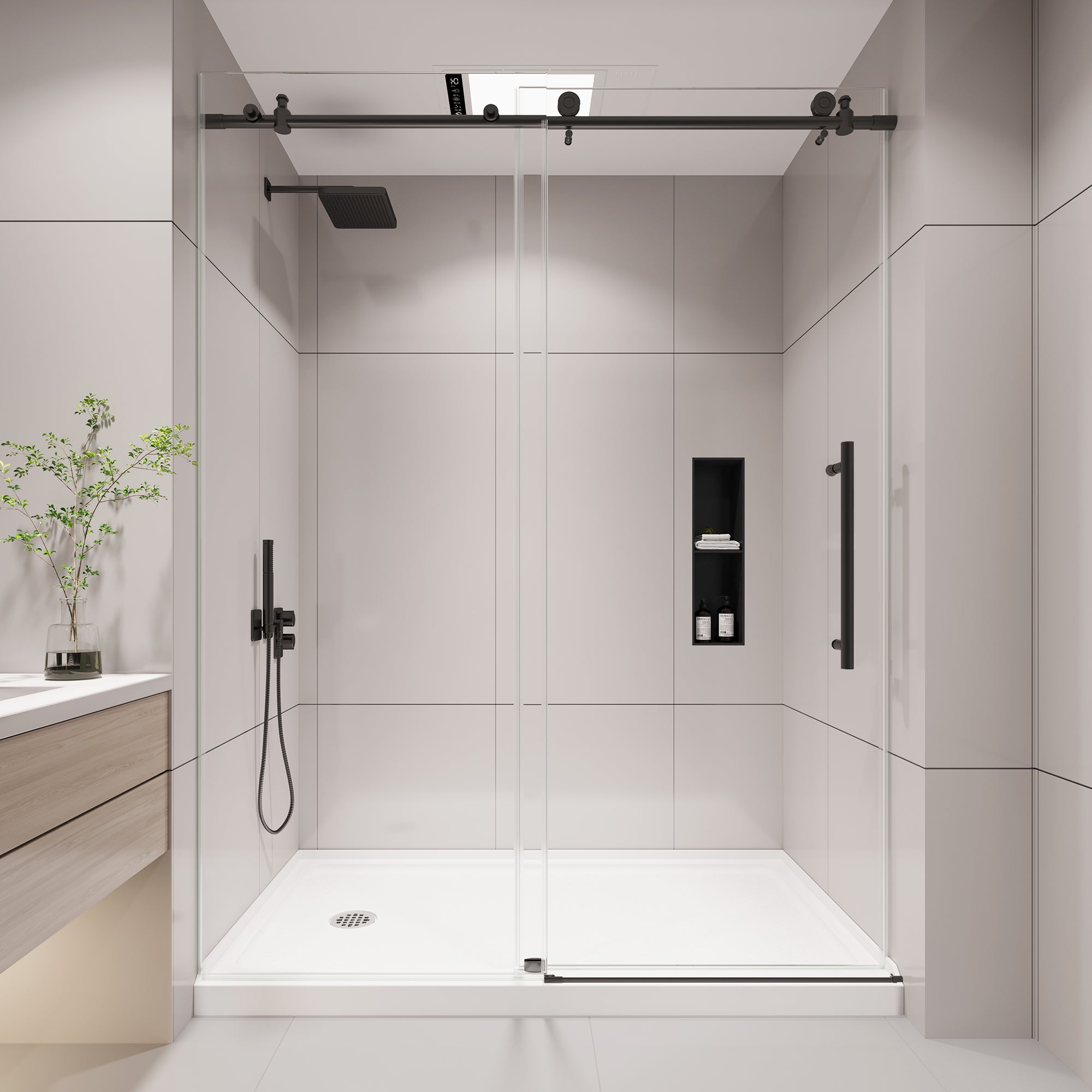
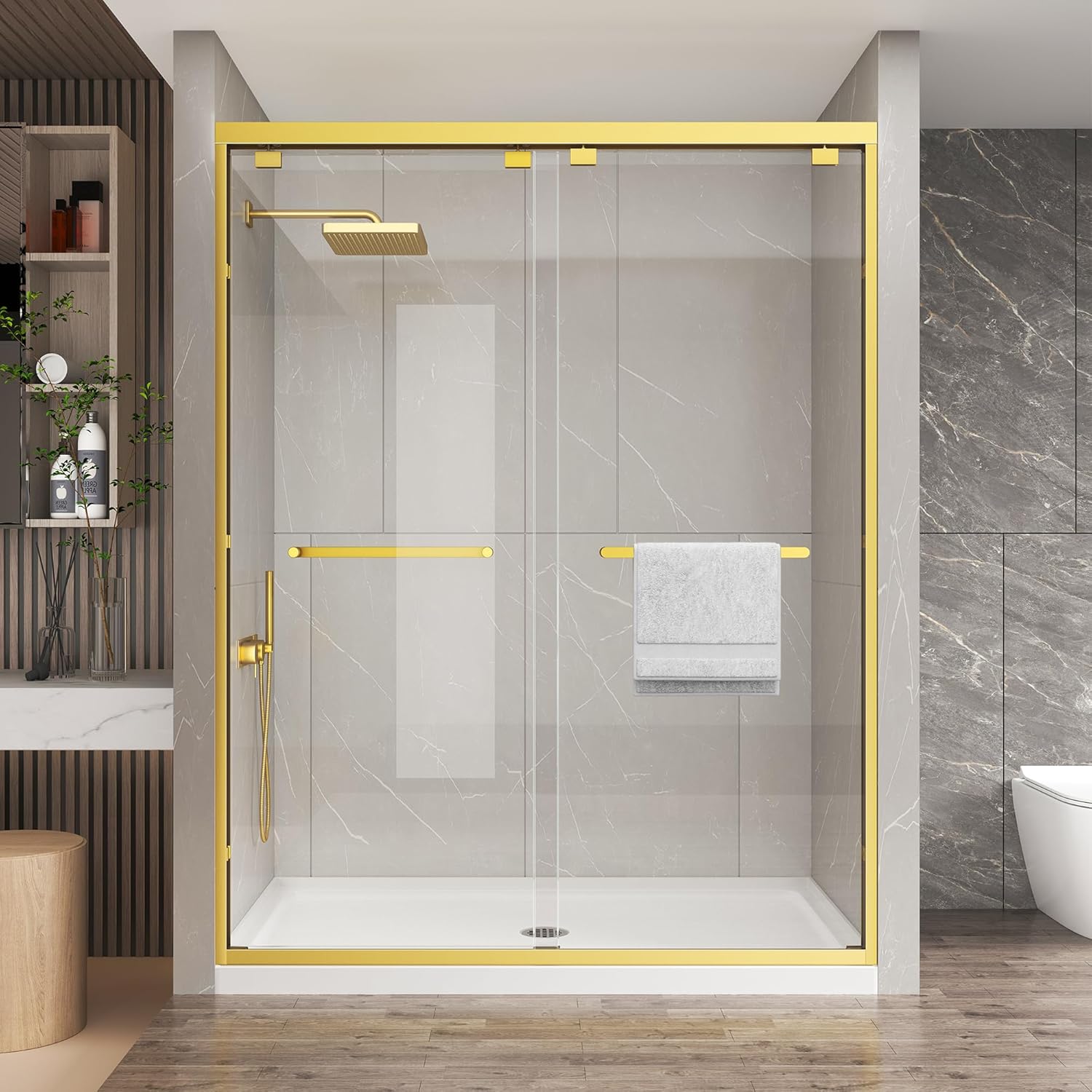
Installing gold fixtures changes the entire visual balance of a bathroom. As a contractor with two decades on renovation crews, I’ve seen homeowners bring in warm metallic hardware—satin brass, polished gold, antique brass—and then struggle to choose a shower door that doesn’t clash, darken the space, or complicate installation. The 2026 trends favor warm metals paired with matte textures and minimal profiles. That means the right shower door is one that highlights the finish without adding visual clutter or creating fit problems on a jobsite with out-of-plumb walls and tight rough-in dimensions.
Short answer
Best overall: A clean, frameless glass door with brushed or satin gold hardware. If you need a more budget-friendly or water-tight option, choose a semi-frameless sliding door with a narrow header and matching gold hardware. These options show off the gold finish, stay visually light, and work with current 2026 bathroom aesthetics.
Why the fixture finish matters
Gold finishes are reflective and warm. They read as a focal point, not just an accent. That affects your door choice in three practical ways:
- Contrast vs. blending: Heavy frames create a visual border that competes with gold. Minimal frames let the fixture finish be the star.
- Cleaning and water marks: Gold will show water streaks differently than chrome. Glass type and hardware placement influence how often you’ll be wiping down the door.
- Coordination with tile and lighting: Matte gold pairs well with warm stone and layered lighting; polished gold tolerates cooler tones if the door is frameless and reflective.
Design trend note: in 2026 homeowners favor mixed metals but with one dominant metal. If gold is dominant, the shower door should support that direction—keep lines simple, finishes consistent, and the glass as unobtrusive as possible.

Shower door styles compared
Here’s a contractor-level breakdown of the common door options and how they pair with gold fixtures. I include realistic installation tolerances and common jobsite trade-offs.
| Style | Look with gold | Typical glass thickness | Installation tolerance | Best for |
|---|---|---|---|---|
| Frameless pivot/hinge | Shows gold hardware clearly; modern and high-end | 3/8" (10mm) or 1/2" (12mm) | Requires plumb walls ±1/8" per 8' and solid header or blocking | Master showers, frameless aesthetic |
| Semi-frameless sliding | Balanced: some frame but clean sightlines | 1/4"–3/8" (6–10mm) | Can tolerate wall variance up to 1/4" with jambs or shims | Small baths, tight door swing constraints |
| Framed pivot/bypass | Traditional; frame color can compete with gold | 1/8"–3/8" (4–10mm) | Most forgiving for out-of-plumb walls | Budget projects, older homes |
| Neo-angle or custom panels | Works with gold if hardware is exposed and matched | 3/8"–1/2" (10–12mm) | Requires precise templating; expect ±1/16" for glass cuts | Corner showers, custom geometry |
Frameless vs semi-frameless vs framed: what to pick
- Frameless: Best visual match for gold hardware—clean, modern, and showcases the finish. Requires thicker tempered glass and careful blocking for hinges.
- Semi-frameless: Good compromise—less expensive, visually lighter than fully framed, and easier to install on slightly irregular walls.
- Framed: Most tolerant of out-of-plumb conditions and cheaper, but the frame finish must be chosen carefully to avoid clashing with gold.
For most homeowners looking to emphasize gold fixtures without upping the maintenance burden, I recommend framed or semi-frameless sliding doors for small baths, and frameless pivot doors for primary bathrooms where budget allows.

Real jobsite considerations
Here’s where my 20+ years of fieldwork matters. Choosing a style on a mood board is one thing; installing it in a home built in 1975 with uneven studs is another.
- Check wall plumb and square early. Expect 1/8" to 1/4" variance on older renovations. Frameless doors tolerate less variance; plan for shims and blocking.
- Measure rough-in dimensions after tile is set. Glass and frame tolerances are tight—glass shops typically require final templates within 1/16" for frameless units.
- Confirm curb slope. A poorly sloped curb will pool water—consider a header or drip rail design that works with your gold hardware to control runs.
- Plan for hardware mounting. Heavy brass or gold-finished pulls and hinges add load. Use solid blocking behind tile and follow manufacturer load specs.
- Account for threshold and floor finish. If the tile height changes at the door, choose a sliding door or add a threshold detail to protect the finish and minimize chipping.
Real-life anecdote: I once templated a frameless door for a 1930s house. After demo we found the left wall bowed 3/8" over the 6-foot run—far outside tolerances. We switched to a semi-frameless sliding assembly with adjustable jambs and saved the homeowner money while keeping the gold hinges and pulls visible. These are the trade-offs that only show up on a real jobsite.
Glass, safety standards, and thickness
Glass choice matters for safety, durability, and aesthetics. Keep these points in mind:
- Tempered glass: Always use tempered safety glass that meets applicable standards. In the U.S., tempered glazing is regulated under federal glazing safety standards (see CPSC guidance) and industry norms like ANSI Z97.1.
- Thickness choices: 3/8" (10mm) is the common minimum for a frameless door; 1/2" (12mm) is sturdier and visually premium. Semi-frameless doors work well with 3/8". Framed doors can use thinner glass.
- Coatings: Clear low-iron glass increases clarity and pairs beautifully with gold. Protective coatings (hydrophobic) reduce maintenance and keep gold hardware looking better over time.
For further reading on glazing safety, consult the National Kitchen & Bath Association guidelines and federal glazing safety sources.
NKBA and U.S. Consumer Product Safety Commission are good starting points for standards and safety notes.
Practical pairing and installation tips
How you pair glass style and hardware finish is as much about installation technique as it is about design.
Hardware finish tips
- Use the same gold tone across fixtures whenever possible. If mixing, keep the shower hardware within one sheen (e.g., all satin finishes).
- Choose finishes that are lacquered or PVD-coated for durability in a wet environment—polished brass without proper protection will patina unevenly.
- Match visible fasteners: exposed screws, pivot accents, and handles should follow the same finish family.
Installation tips contractors use
- Template after tile. Final glass cuts should be made to the tile finish plane, not drywall dimensions.
- Always install blocking where hinges or heavy pulls will mount. That blocking needs to be solid—plywood or blocking inside the stud bay, not just adhesive anchors in tile.
- Leave 1/8"–3/16" gap under frameless doors for clearance on uneven floors; use magnetic seals to control water without rubbing gold hardware.
- For out-of-plumb walls, use adjustable jambs or a semi-frameless system. Don’t force a frameless unit into a space with >1/4" deviation—glass stress will cause failures.
When you shop, consider pre-matched kits where the manufacturer supplies hinges and pulls in the same gold finish. If you prefer custom pulls, have your glass fabricator supply the drill template for exact alignment.
Want to see options that fit these guidelines? Check a focused selection of quality doors like KPUY Shower Doors for various frameless and semi-frameless systems that come in gold-compatible hardware finishes.
Frequently asked questions
Will a framed shower door look bad with gold fixtures?
No—framed doors can work if you choose a frame finish that complements rather than competes with gold. A narrow, matte black or brushed nickel frame can create a deliberate contrast, but the safest route with gold is a matching or minimal frame finish.
What glass thickness is required for a frameless door with heavy brass hardware?
Use at least 3/8" (10mm) tempered glass; 1/2" (12mm) is preferred for heavier hardware and larger panels. The thicker glass reduces hinge torque and gives a more solid feel.
How do I handle out-of-plumb walls when installing a frameless door?
You can’t fix extreme wall variance with silicone. For deviations beyond about 1/8" per 8', either use shims and adjustable jambs, or switch to a semi-frameless or framed option that has built-in adjustment. Always re-measure after tile and before templating glass.
Wrap up and next steps
For homeowners: if your priority is showcasing gold fixtures while keeping the bathroom feeling open and modern, go with a frameless glass door and gold hardware—just make sure your walls and blocking are prepared for it. For tighter budgets or older houses with uneven walls, a semi-frameless sliding door with a narrow profile will give you the look without the installation headaches.
If you want options to compare, start with a curated selection of shower doors that match today’s gold finishes and installation realities. Browse trusted collections to find the right balance of glass thickness, frame style, and matching hardware—then bring those specs to your contractor or glass fabricator for on-site templating.

Next practical step: measure the finished tile-to-tile opening and have your contractor or glass shop provide a final template. That step is where design choices meet real dimensions—and protects your gold fixtures and glass investment.

Leave a comment
All comments are moderated before being published.
This site is protected by hCaptcha and the hCaptcha Privacy Policy and Terms of Service apply.