
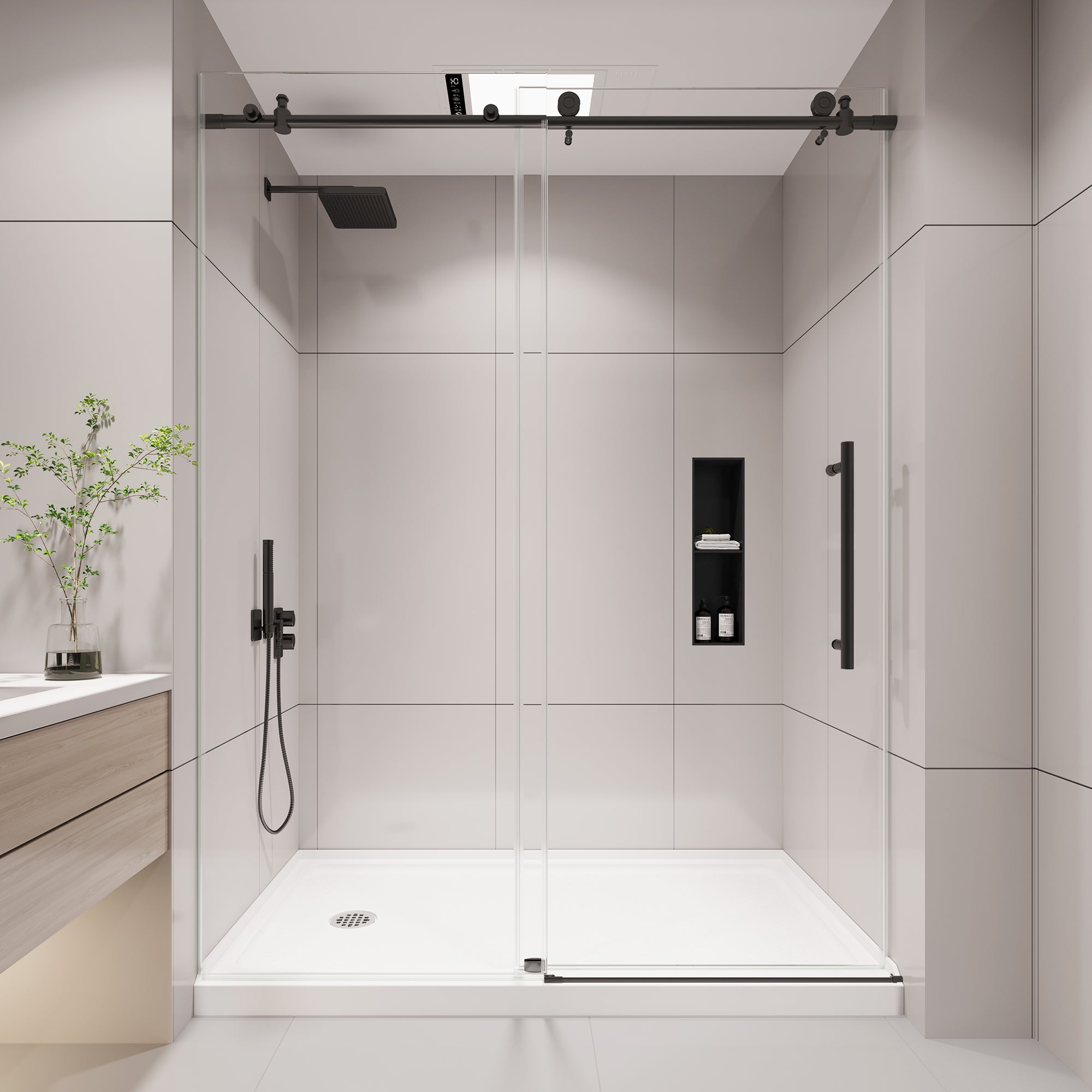
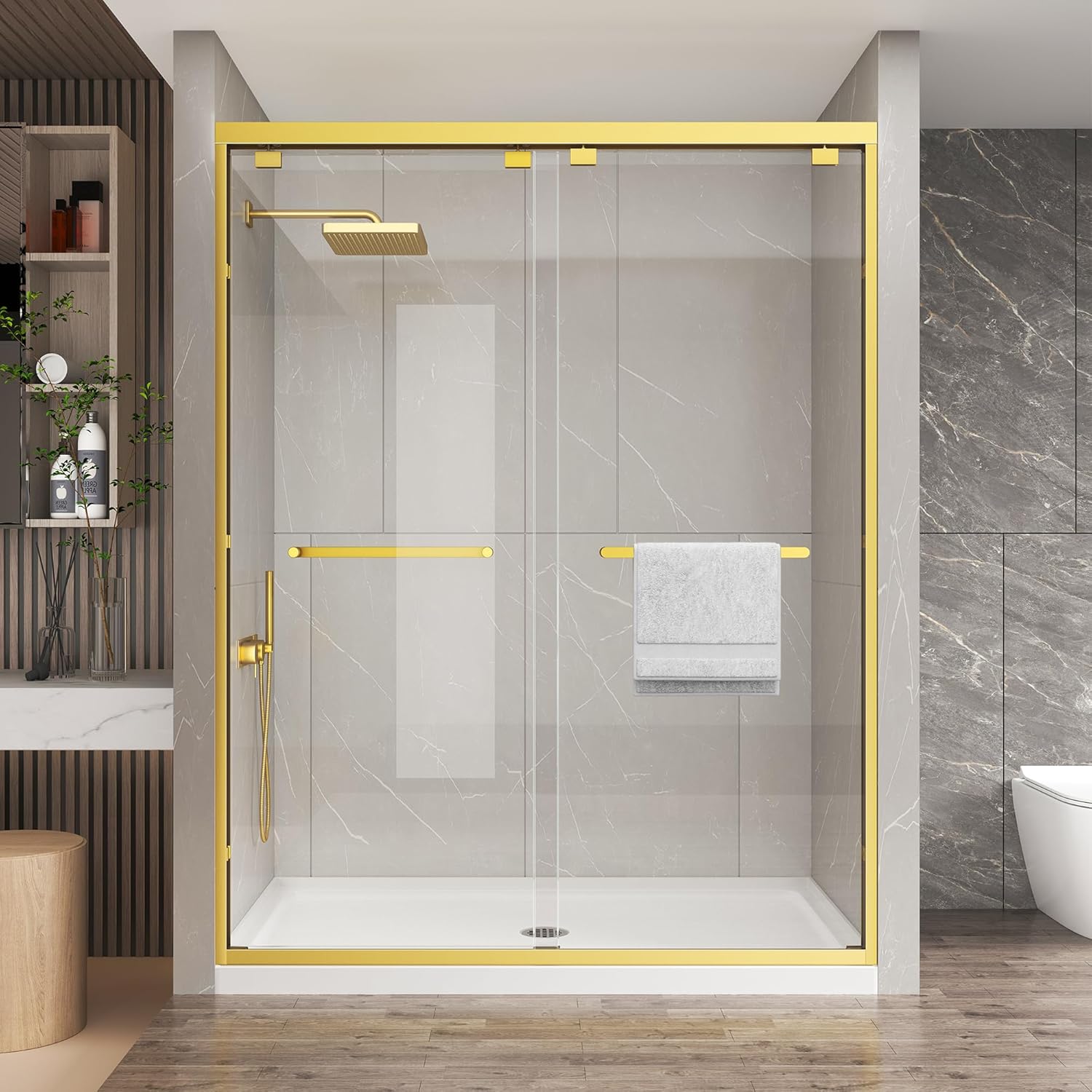
Small bathrooms push you to make every inch count. Homeowners want bold looks without sacrificing the illusion of space or the practicalities of installation. As a bathroom remodeling contractor with 20+ years on job sites, I’ve installed hundreds of black shower doors in tight footprints and retrofitted older houses with out-of-plumb walls and tricky curb transitions. For 2026 the trend is clean matte black hardware and slimmer profiles, but the right choice depends on glass thickness, door type, and real-world tolerances—not just aesthetics.
Quick answer
Short answer: For a small bathroom, the most practical black shower door is a clear tempered glass sliding (bypass) or single-panel pivot with a slim matte-black frame or black-edge hardware and 3/8" tempered glass. This combination maximizes visual space while keeping installation tolerances manageable. Choose frameless only if you can accommodate proper glass thickness, hinge clearances, and out-of-plumb adjustments.
What works best in a small bathroom
When space is limited, two priorities dominate: 1) keep sightlines open so the room reads larger, and 2) avoid door swings that interfere with the toilet or vanity. That usually rules out inward-swinging doors and heavy mullioned doors that break up the visual plane.
- Clear glass is your friend—less visual interruption.
- Black slim-frame or black hardware gives the modern look without bulk.
- Sliding/Bypass doors are space-saving where wall clearance is tight.
From a practical install standpoint I often steer homeowners to a stainless-steel track with a slim black finish and 3/8" (10mm) tempered glass. It’s a reliable compromise: strong enough to feel substantial, thin enough not to dominate a tight area, and within typical installation tolerances.
For product selection you can look at options like KPUY Shower Doors which offer several low-profile black-frame sliding and pivot models suited to small layouts.
Technical considerations contractors care about
Choosing a black shower door isn’t just about color. Here are the real technical points I inspect on-site before recommending a type:
- Out-of-plumb walls: Measure both walls where the door will mount. It’s common to find 1/4" to 3/4" variance over 5 feet in older homes. Framed systems tolerate more out-of-plumb than frameless systems.
- Rough-in widths: Know the clear opening. Standard showers run 36" or 48" wide, but many small baths are 32"–34". Sliding doors perform better in narrower openings.
- Tempered glass thickness: 3/8" (10mm) is my go-to for small showers—enough stiffness for minimal deflection, and compatible with most black hardware. 1/4" (6mm) is lighter and cheaper but flexes more. Frameless large panels should be 1/2" (12mm) for safety and stability.
- Installation tolerances: Expect to shim and pack by 1/16"–1/8" increments. Manufacturers often publish ±1/8" to ±3/16". If walls are off more than 3/8", you’ll need trim or custom channel.
- Curb height and slope: The curb should be tall enough to seat the door bottom track (if sliding) and maintain 1/4" per foot slope toward the drain. Verify threshold clearance—many black-frame doors require 3/4" to 1" of curb height or a bottom guide solution.
- Glass safety standard: Tempered glass must meet ANSI Z97.1 or local code. Always confirm tempered marking and thickness. For heavier frames, also check hardware load specs.
Compare door types for small bathrooms
Below is a quick comparative table showing pros, cons, and ideal small-bath situations for common black-door styles.
| Type | Best for | Pros | Cons |
|---|---|---|---|
| Slim framed sliding | Very narrow widths (32"–48") | Space-saving, affordable, tolerates out-of-plumb | Frame can break visual flow |
| Semi-frameless pivot | Small baths with room for swing | Clean look, less visual interruption | Needs clearance for swing, hinges require plumb walls |
| Frameless pivot | Modern look, open sightlines | Minimal hardware, premium feel | Higher cost, requires thicker glass and precise walls |
| Fixed panel + door | Walk-in wet rooms | Open, airy, flexible layout | Requires drain planning and curb detail |
Installation tips from the field
Here are practical items I use on every small-bath install. These are the things I wish homeowners knew before demo day:
- Measure twice, cut once: I take three sets of horizontal measurements at top, middle, and bottom. If the range exceeds 3/8", don’t plan on a frameless door without corrective trim or custom glass measurement.
- Plan for shims: I carry 1/16", 1/8", and 1/4" shims and install them under jambs to square things up. Expect to shim at both top and bottom.
- Drain and curb: Verify the drain is centered for sliding doors or offset for pivots. Confirm curb is level across the face—slope belongs on the pan interior, not on the threshold edge.
- Clearance: Standard clearances: 3/8"–1/2" between glass and fixed walls to prevent rubbing; 1/4" under doors for water containment varies by profile.
- Seal smart: Use silicone in the least visible joints and prioritize mechanical fasteners at high-stress points. Black neoprene or matching black seal options exist but confirm compatibility with finishes.
Real-site anecdote: On a 1930s bungalow I remodeled, one sidewall bowed 5/8" over 50"—enough that a frameless pivot would have had a visible gap and hinge twist. We chose a slim framed sliding system with an adjustable track. It tolerated the variance, looked modern with matte black hardware, and saved the homeowner a custom glass bill.
Another real-world detail—if you’re swapping out a tub for a shower in a small space, check the rough-in drain location and curb slope before ordering glass. Moving a drain even a few inches adds cost. I often build the curb and pre-fit the glass to the finished curb height to avoid surprises.
Design tips aligned with 2026 trends
For 2026, homeowners lean toward restraint: matte black, thinner profiles, and mixed materials. Here’s how to get the look without sacrificing the functionality of a small bathroom.
- Pick clear glass over patterned: Frosted or textured glass offers privacy but visually chops the room. Use privacy film selectively only where needed.
- Choose matte black hardware: It photographs well, hides water spots better than glossy black, and pairs with warm wood vanities and warm-tone tiles trending in 2026.
- Limit mullions: If you want a grid look, keep the mullion lines to the perimeter—avoid heavy grids that make the shower read smaller.
- Use reflective tile or a single large-format tile: Tile choice behind a clear black-framed door influences perceived depth. Large horizontal tiles visually widen the space.
For product browsing consider a focused collection like KPUY Shower Doors if you want to see slim-profile black options that cater to narrow openings.
For installation standards and safety guidelines, I follow the NKBA recommendations and reference glass safety standards (ANSI) before ordering glass or hardware. See the National Kitchen & Bath Association for layout guidelines: NKBA. For glass safety specs check ANSI's information on tempered glass where applicable: ANSI.
Frequently asked contractor-style questions
Can you use a black-framed shower door in a 32-inch opening?
Yes. The most reliable solution for a 32" opening is a slim framed bypass (sliding) unit or a single-panel pivot where the hinge side is plumb and there’s enough shower depth. Expect to use 1/4"–3/8" glass and confirm the bottom track will fit on your curb. If walls are out-of-plumb more than 3/8", choose a framed system that can accept packing or use a custom channel.
What glass thickness should I pick for a small shower?
Recommended: 3/8" (10mm) for a balance of stiffness and cost. Use 1/2" for frameless full-height doors or large panels. Always confirm tempered marking per ANSI Z97.1 and hardware load ratings.
Do black frames make a small bathroom feel smaller?
They can if the frames are heavy and heavily mullioned. To avoid that, select thin profiles (look for 5/8"–3/4" sightlines) and keep glass clear. Matte black hardware with a slim frame tends to read as an intentional accent rather than visual clutter.
Final notes and next steps
Choosing the right black shower door for a small bathroom requires balancing style with the realities of the cavity—out-of-plumb walls, curb geometry, and rough-in locations. My practical rule: favor clear glass, slim black profiles, and a 3/8" tempered pane unless the job dictates heavier glass. Always measure the space after tile/curb work is complete and allow for installation tolerances.
When you’re ready, get a site measure from a contractor who will check wall plumb, curb height, and drain location. That reduces costly surprises and ensures your black shower door looks intentional, modern, and fits the space.
Need a recommendation? If you want specific model suggestions based on your rough-in dimensions and curb details, I can walk you through what to measure and what issues to watch for before ordering glass.

Leave a comment
All comments are moderated before being published.
This site is protected by hCaptcha and the hCaptcha Privacy Policy and Terms of Service apply.