
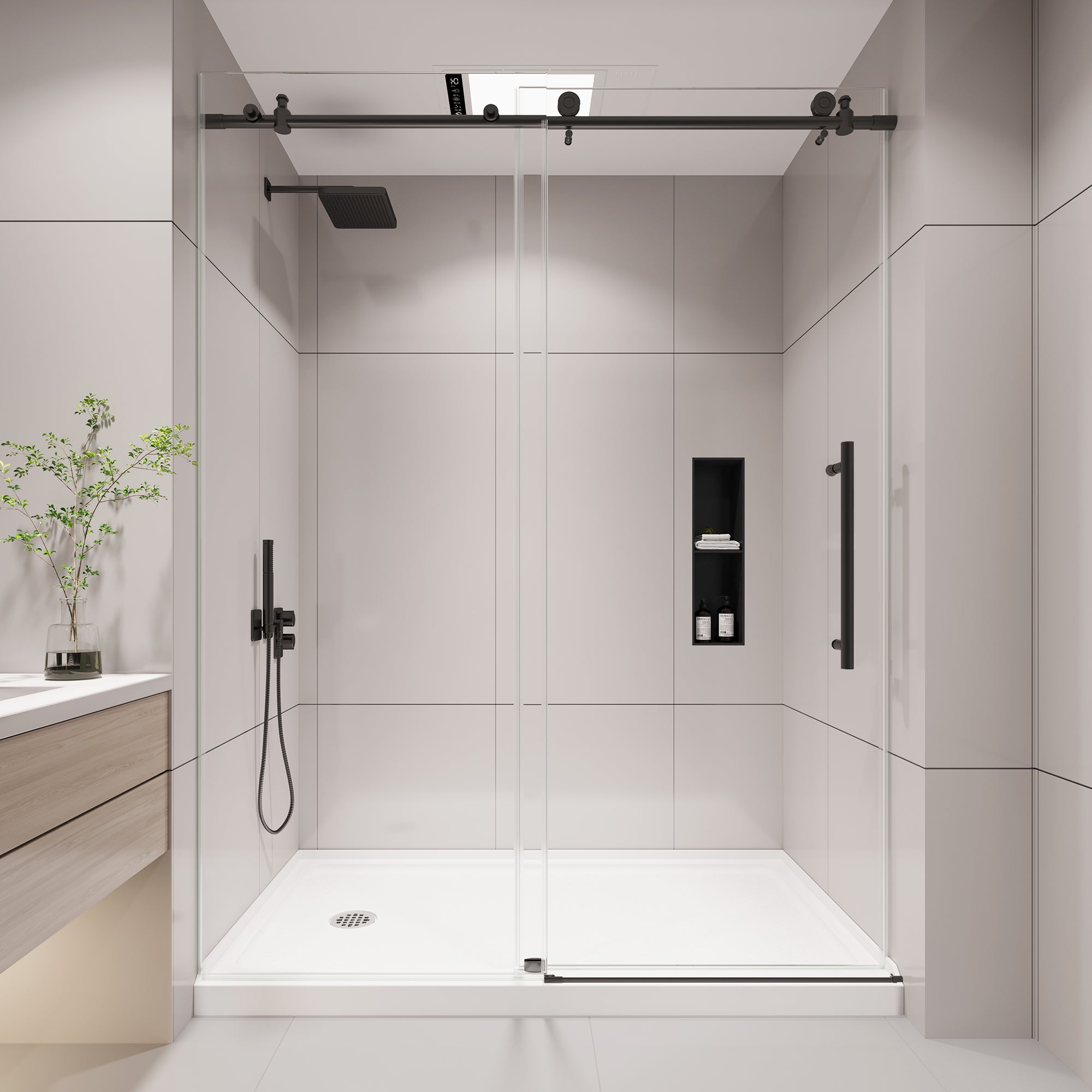
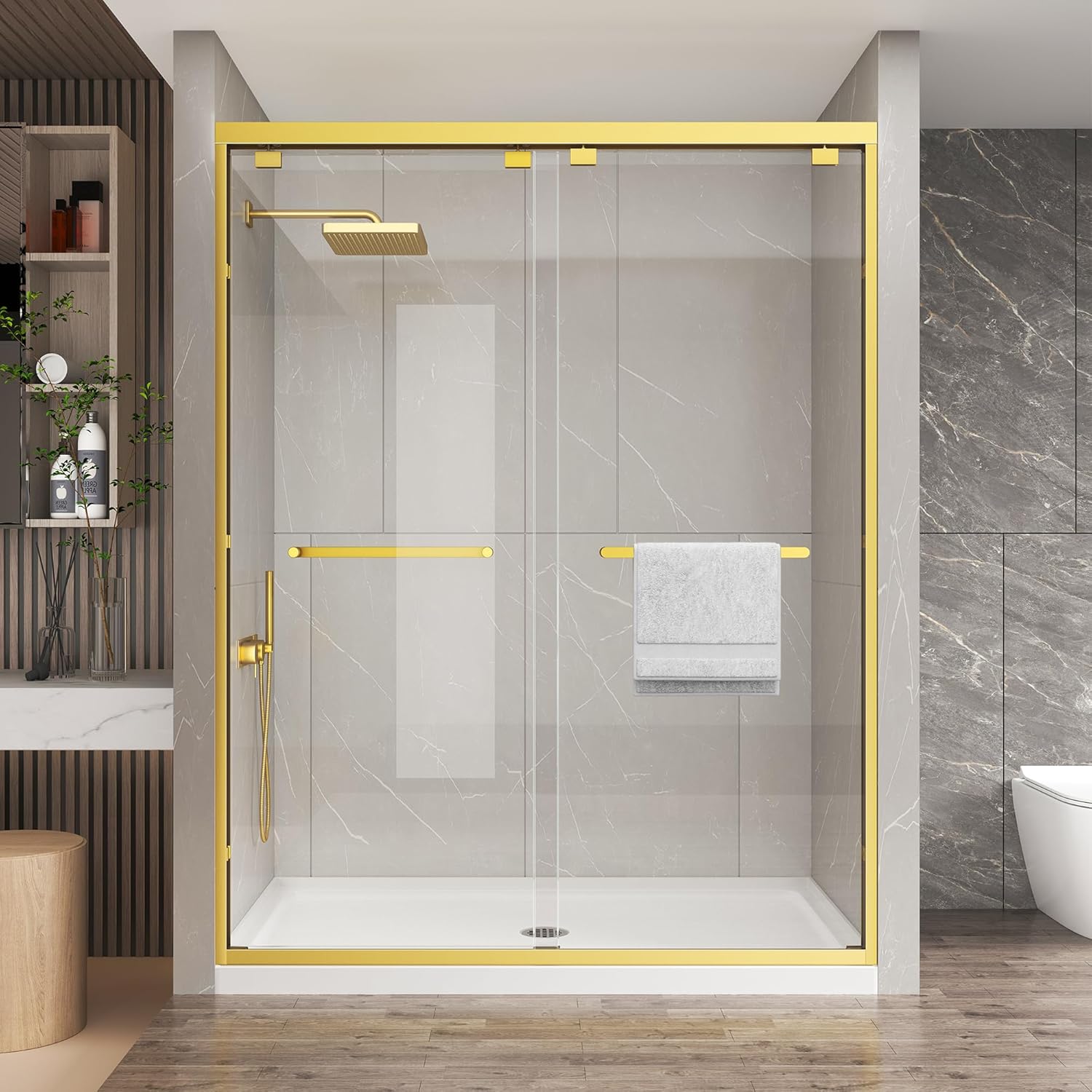
One of the most common shower door buying mistakes is assuming the opening only needs one simple width measurement. In reality, shower door sizing is about more than a single number. You need to understand the opening width, measure in more than one place, account for wall conditions, check the threshold or shower base, and think about how the door will actually operate once it is installed.
This matters because a shower door that looks right on paper can still become the wrong choice in the actual bathroom. A door may technically match the opening width but still create problems if the side walls are out of plumb, if the threshold is not compatible, or if a swinging door interferes with nearby fixtures. That is why it helps to compare shower door options only after the opening has been measured carefully and the layout has been considered in real terms.

Quick Answer
To measure a shower opening correctly, take the width at the top, middle, and bottom, then use the smallest practical number as your real reference point. Also check the finished opening height, the threshold or shower base dimensions, the wall condition, and the front clearance around the entry. The right shower door size is never just about one width measurement alone.
On this page
Why shower door sizing is often misunderstood
Many homeowners think shower door sizing works like buying a standard household item: measure the opening once, choose the matching size, and install it. Shower doors are more demanding than that. Bathrooms are built with real-world variation, which means walls are not always perfectly straight, tile edges are not always perfectly even, and the finished threshold can influence what will actually fit.
This is why two bathrooms with a similar-looking opening can still need different shower door solutions. One may work well with a sliding shower door, while another may be better suited to a pivot shower door or another configuration. A visually open design may look attractive, but if the opening has not been measured carefully, the final result may be harder to install, harder to use, or less comfortable in daily life.
The goal is not just to find a door that technically fits the width. The goal is to find a shower door that fits the opening, the surrounding layout, and the way the bathroom will actually be used.
What you need before you measure
Before you start, measure only after the relevant finished surfaces are in place. If tile, wall panels, or the shower base are not finalized yet, a measurement taken too early may not reflect the real finished opening.
It helps to have:
- a tape measure
- a notepad or phone for recording dimensions
- a pencil or masking tape to mark reference points if needed
- enough light to see the finished edges clearly
It is also helpful to know what kind of shower setup you are measuring. An alcove installation, a corner layout, a walk-in opening, and a shower with a fixed glass panel all create slightly different measurement priorities. If you are still deciding what style fits your bathroom, comparing a broader glass shower door collection can help you understand what kinds of openings different door styles are built for.

How to measure the opening width
The opening width is the first measurement most people take, but it should never be measured only once.
Measure at the top, middle, and bottom
Take three separate width measurements across the opening:
- near the top of the opening
- through the middle of the opening
- near the bottom, where the door will meet the threshold or shower base
This matters because walls are not always perfectly parallel. If the numbers differ, the opening may not be perfectly square or plumb. In practical planning, the smallest realistic measurement is often the most important one, because it is the most likely to affect what can actually fit.
Measure the actual installation span
In many cases, the usable installation width is not just the most visible open space. It is the finished span where the shower door hardware will actually mount. That means your measurement should reflect the real wall-to-wall installation area, not only the easiest place to stretch the tape measure.
Record every measurement clearly
Do not rely on memory. Write the top, middle, and bottom numbers down clearly so you can compare them later. If the difference is noticeable, that is a sign the wall condition may influence which type of shower door will fit more comfortably.
| Measurement point | What to record | Why it matters |
|---|---|---|
| Top width | Finished width near the top of the opening | Shows whether the walls stay consistent at a higher point |
| Middle width | Finished width through the center of the opening | Helps confirm whether the opening changes through the main span |
| Bottom width | Finished width near the threshold or shower base | Important because the bottom area often reveals the most real-world variation |

How to check height, threshold, and clearance
Width is only part of the decision. Several other factors influence whether a shower door will fit well and function comfortably.
Finished opening height
Measure the finished height where the shower door system will sit. Even if you are not choosing the door based mainly on height, this helps confirm proportion, wall condition, and installation suitability.
Threshold or shower base
The bottom edge matters more than many homeowners expect. The threshold or shower base affects how the door meets the opening, how water is contained, and how the installation aligns with the rest of the shower. If your shower uses a base, it helps to compare the opening together with the base itself, especially inside a broader shower base collection when you are planning the enclosure as a system instead of as separate products.
Front clearance
Even if the door fits the opening, the bathroom still needs enough usable space in front of it. This is especially important if you are considering a pivot or swing-style entry. A door that opens into the vanity, toilet area, or walkway may technically fit the opening but still be the wrong choice for the room.
Wall condition
If the walls are noticeably out of plumb, that may influence what kind of shower door is more practical. This does not automatically prevent installation, but it is one of the reasons careful measurement matters so much before buying.

How door style affects sizing
The opening size alone does not choose the door for you. The door style changes how the measurements should be interpreted.
Sliding shower doors
Sliding shower doors are often the best fit when the opening is wider and the bathroom has limited front clearance. Because the door panels slide rather than swing outward, the space in front of the opening stays more usable. If your bathroom is tighter, it often makes sense to compare sliding shower door options after measuring the opening width carefully.
Pivot shower doors
Pivot shower doors can work well for narrower openings, but they require more attention to the swing path. In these cases, the real decision is not just "Will it fit the opening?" but also "Will it open comfortably in the bathroom?" A narrower opening with clear surrounding space may still be a strong pivot-door situation.
Frameless and visually open designs
Frameless shower doors are often chosen for visual reasons, but they still need practical sizing support from the opening and the surrounding layout. A door can look cleaner and more open while still requiring the right width, wall condition, and operational fit.
Fixed glass panels
In some walk-in designs, a fixed panel is the better answer than a full swinging or sliding enclosure. In those cases, the opening should be evaluated together with splash control, panel size, and the position of the shower area. That is why shower glass panels are usually considered as part of a layout decision, not just a width decision.
| Door style | Sizing focus | Extra thing to check |
|---|---|---|
| Sliding shower door | Opening width and installation span | Track fit and overall clearance around the shower |
| Pivot shower door | Opening width and entry fit | Swing path in front of the shower |
| Frameless shower door | Opening width, wall condition, and design fit | Whether the layout supports the chosen configuration |
| Fixed glass panel | Panel span and opening relationship | Splash control and walk-in layout planning |
Common sizing mistakes
These are the mistakes that cause the most trouble when choosing a shower door:
- measuring the width only once instead of at the top, middle, and bottom
- measuring before tile, panels, or other finished surfaces are completed
- forgetting to check the threshold or shower base
- focusing on opening width without checking front clearance
- assuming a shower door that fits the width will also be comfortable to use
- choosing a swing-style door without evaluating nearby fixtures and walkways
Most of these mistakes happen because the measurement process is treated like a single dimension problem. In reality, shower door sizing is a fit problem involving the opening, the layout, and the way the door will operate.


A simple shower door measuring checklist
Before buying a shower door, make sure you can answer all of these clearly:
- Did I measure the opening at the top, middle, and bottom?
- Did I record the finished opening height?
- Did I check the threshold or shower base dimensions?
- Did I look at the wall condition and overall installation span?
- Did I check the clearance in front of the shower?
- Did I match the measurement to the type of door I actually want?
- Did I compare the opening to the bathroom layout, not just the width?
If all of those answers are clear, you are already in a much stronger position to choose the right door size and style.
Explore related collections
If your measurements are ready, these collections can help you narrow the right direction faster.
- Shower Door — a broad starting point for comparing door types and opening fit
- Sliding Shower Doors — useful when front clearance is limited
- Pivot Shower Doors — worth comparing for narrower openings with a clear swing path
- Frameless Shower Doors — useful when you want a cleaner visual look without ignoring fit
- Shower Glass Panels — helpful for open walk-in layouts
- Shower Base — important when the bottom edge and enclosure need to work together
Frequently asked questions
How do I measure a shower door opening correctly?
Measure the width at the top, middle, and bottom of the finished opening, then record the finished height, threshold or shower base details, and the front clearance around the entry. Accurate shower door sizing is about the full opening condition, not just one width number.
Why do I need to measure the opening in three places?
Because walls are not always perfectly straight or parallel. Measuring at the top, middle, and bottom helps reveal whether the opening changes across the span, which can affect what kind of shower door will fit best.
What is the biggest shower door measuring mistake?
The biggest mistake is measuring only once and assuming that single number tells the whole story. In practice, threshold details, wall condition, and front clearance matter just as much as width.
Do I need to measure the shower base too?
Yes, especially if the shower uses a base or threshold that affects how the door sits and how water is contained. The door and the base should be considered together, not as completely separate decisions.
Does the right shower door size depend on the door style?
Yes. A sliding shower door, pivot shower door, frameless design, and fixed panel layout all use the opening differently. The same opening width may support different styles in different ways depending on clearance and layout.
Final thoughts
Shower door sizing makes more sense when it is treated as a planning process instead of a single measurement. The right decision comes from understanding the full opening, the wall condition, the threshold or shower base, and the way the bathroom functions around the shower entry. Once those pieces are clear, choosing the right shower door becomes much more straightforward.
If you are ready to compare what fits your opening best, start with the broader shower door collection and narrow the choice by opening style, layout fit, and the way the bathroom will actually be used every day.

Leave a comment
All comments are moderated before being published.
This site is protected by hCaptcha and the hCaptcha Privacy Policy and Terms of Service apply.