
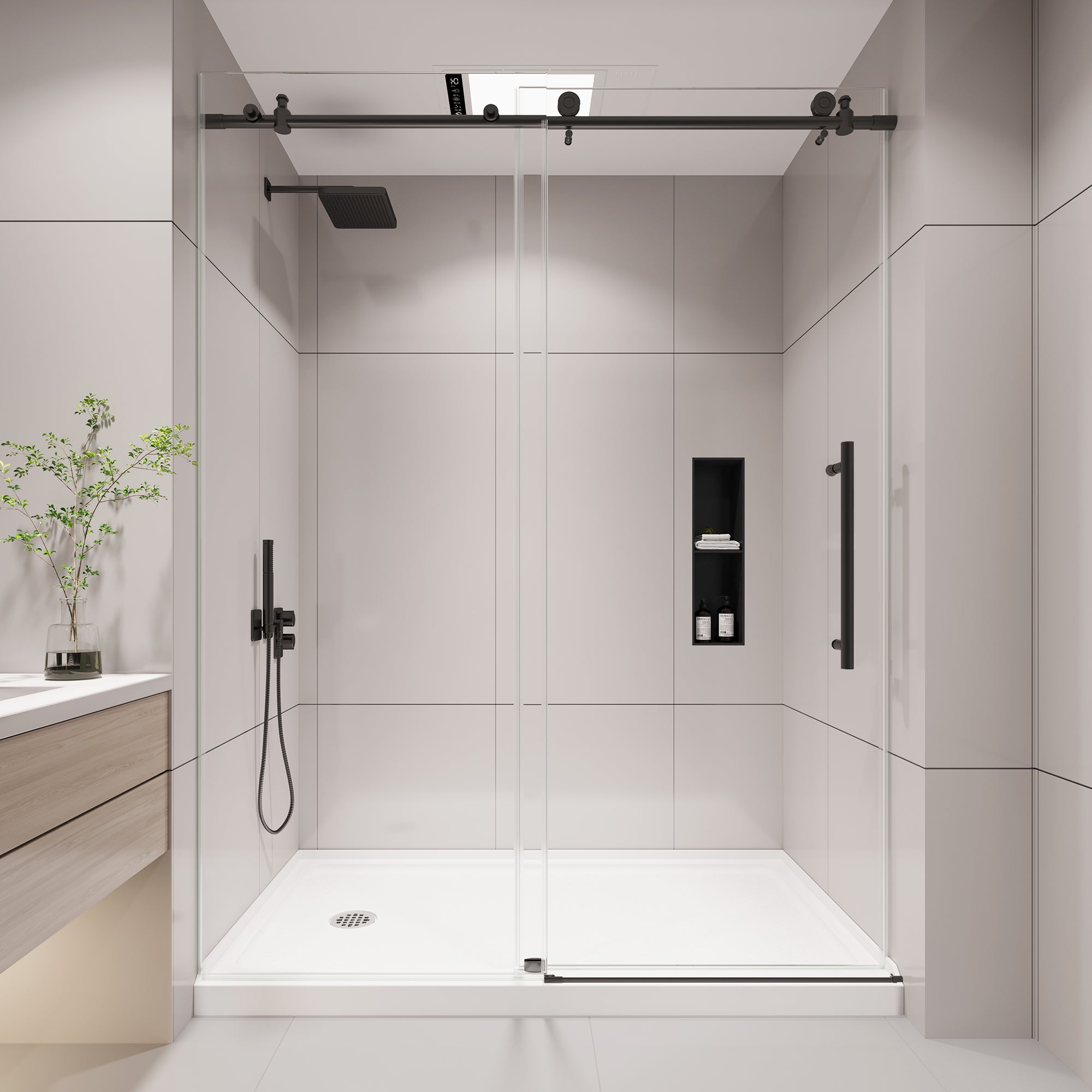
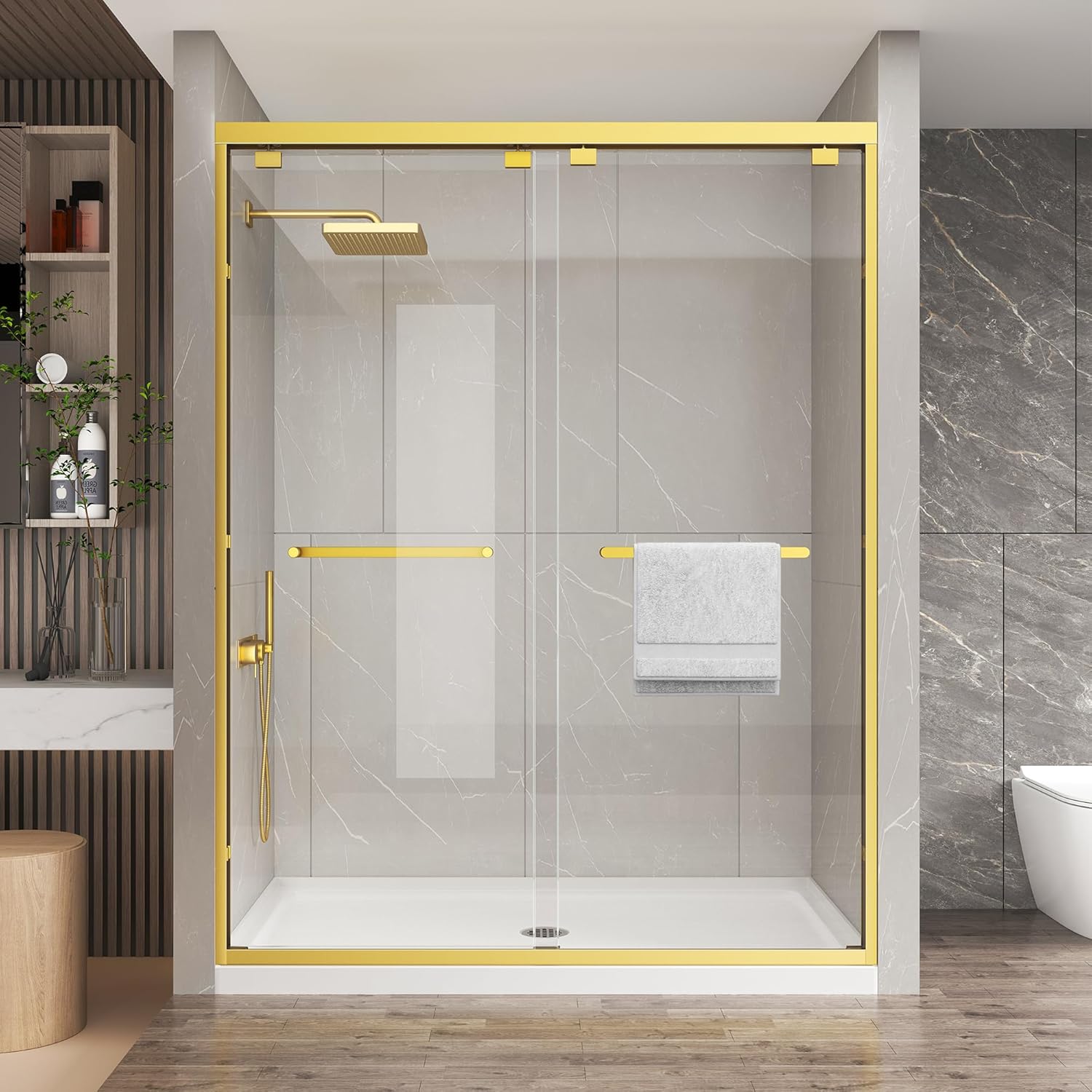
Rain glass and frosted glass both reduce visibility, but they do it in different ways, and that changes how the shower feels to use, clean, and light up. If you want more privacy without making the bathroom feel dim, rain glass usually gives a better middle ground. If you want the strongest visual blur and less direct view through the panel, frosted glass is the more private choice. The right pick depends on how close the shower sits to the vanity, toilet, and window light.
The Short Answer
Rain glass is a good fit when you want privacy, but still want daylight to move through the shower and into the room. Frosted glass blocks more direct visibility and gives a stronger privacy effect, but it can soften light more and sometimes show mineral buildup differently. Rule of thumb: choose rain glass for a balanced look and frosted glass when privacy matters more than visual openness.
Privacy, Light, and Cleaning Differences
Rain glass and frosted glass are both used to reduce the clear view through shower glass, but they affect the bathroom in different ways. Rain glass usually has a texture that breaks up the image while still letting light pass. Frosted glass creates a more uniform blur, which can feel more private, especially in a shared bathroom or a shower that faces the vanity.
That difference matters in real remodels. A bathroom that already feels tight can lose brightness fast if the glass is too opaque and the surrounding lighting is weak. On the other hand, a clear panel may be too exposed if the shower sits near a window or if the entry faces the main vanity path. This is why glass choice should be tied to layout, not just appearance.
From a cleaning standpoint, both styles need routine care, but they behave differently. Rain glass texture can hide some water spotting from a distance, while frosted glass may make soap film and hard-water residue more noticeable once it builds up. Neither style eliminates cleaning. If the shower sees heavy mineral content or frequent use, plan for regular wiping and a cleaning routine that matches the water conditions in the home.
| Glass type | Best for | Limitations |
|---|---|---|
| Rain glass | Balanced privacy with more light transmission; bathrooms that need a softer visual barrier without feeling closed in | Less obscuring than frosted glass; texture can still show buildup if cleaning is neglected |
| Frosted glass | Stronger privacy; showers that face the room or sit close to shared circulation areas | Can soften more light; may make mineral spotting and film easier to notice up close |
What usually causes the wrong choice
The most common mistake is choosing glass by sample alone and ignoring the actual bathroom layout. A finish that looks subtle in a showroom can feel too dark in a small hall bath. A privacy level that seems fine in a large space can feel exposed once the shower is installed opposite a mirror or near a window.
- Too much opacity can make a small bathroom feel dim, especially if the room has only one window or weak vanity lighting.
- Too little privacy can make an open shower feel awkward when the door or panel faces the main room.
- Texture choice can change how often water spots are noticed from different angles.
- Layout matters because a glass panel that works on one wall may feel very different on a corner or alcove opening.
For homeowners comparing styles while planning a full shower enclosure, the main KPUY Shower Doors collection is the most relevant place to start because the glass type should be matched to the door style and opening conditions, not treated as a stand-alone detail.

Which One Works Best in Real Bathrooms
The better choice depends on how the shower is used and how the room is laid out. In a guest bath or shared family bath, frosted glass often gives a stronger privacy buffer. In a primary bath where you want the shower to feel open but not fully exposed, rain glass often strikes a better balance. For remodels with limited daylight, rain glass usually keeps the room brighter.
Think about the sightline first. If someone can see directly into the shower from the doorway or vanity, privacy glass matters more. If the shower is tucked behind a return wall or a partial panel, the glass can focus more on light control and cleaning preference than on full privacy.
The practical tradeoff is simple:
- Choose rain glass if you want softer privacy without losing as much daylight.
- Choose frosted glass if privacy matters most and the room has enough light to handle a denser visual block.
- Choose neither based on style alone if the shower opening, hardware, or wall layout is still undecided.
Glass choice also interacts with thickness, framing, and hardware. Heavier glass typically calls for stronger support, and out-of-plumb walls can show up fast when the glass is installed. Older homes often have walls that lean just enough to make a panel look square when the opening is not. That is one reason the full enclosure plan should be checked before the glass is ordered.
If the remodel includes a fixed panel, an open entry, or a walk-in layout, a complementary Shower Glass Panels layout may be worth reviewing alongside the glass type. The same privacy material can feel very different depending on whether the shower has a full door, a partial opening, or a stationary return.

Measurement and Layout Checks Before Ordering
Before you decide between rain glass and frosted glass, confirm the opening and the room conditions. A privacy choice that works on paper can feel wrong once the glass is installed if the shower sits too close to the toilet, vanity, or entry path. In a remodel, finished dimensions matter more than old rough framing numbers.
Measure the finished opening at the top, middle, and bottom, and note whether the walls are plumb. Check the height on both sides if the ceiling, tile transition, or threshold slopes differently. If tile thickness is changing the wall surface, measure after the finished wall is in place. A door can fit the framed opening and still be wrong once tile adds thickness.
Pay close attention to nearby clearances:
- Door swing or sliding path should not conflict with the vanity, toilet, or towel bar.
- Wall alignment matters because a fixed panel or frame can expose out-of-plumb conditions.
- Light direction affects how opaque the glass feels in the room.
- Water control still depends on the shower base, curb slope, and sealing, not the glass texture alone.
Where the shower is part of a full enclosure plan, the opening size and operating style often matter as much as the glass pattern. For a remodel that needs a complete door solution, the most practical starting point is still KPUY Shower Doors, because glass type should follow the door layout and the finished opening, not the other way around.
- Measure the finished shower opening at the top, middle, and bottom.
- Check the wall plumb on both sides with a level.
- Confirm threshold height and whether the curb slopes back into the shower.
- Measure the distance from the shower entry to the vanity, toilet, and door casing.
- Note the light source: window, ceiling light, or vanity lighting.
- Decide whether privacy or daylight matters more in this bathroom.
- Verify that hardware clearance and glass thickness work with the chosen layout.
Step-by-Step Planning Checklist
A practical checklist keeps the decision grounded in the room, not just the sample board. This is especially useful in remodels where tile, framing, and plumbing conditions can shift the finished opening after demolition.
- Start with the finished opening. Use the actual tile or wall finish dimensions, not just the stud-to-stud framing size.
- Check for out-of-plumb walls. A small lean can change how rain glass or frosted glass is perceived once installed.
- Confirm the shower entry sightline. Stand at the doorway and look toward the shower, vanity, and mirror.
- Review the light source. If the room is dim, choose the glass that preserves more brightness.
- Inspect the curb or threshold. A poor slope can create water that escapes regardless of the glass choice.
- Check hardware and panel clearance. Heavy glass, brackets, and handles need room and solid wall support.
- Compare maintenance expectations. Choose the texture you can clean regularly based on your water quality and use pattern.
- Match the glass to the layout. A privacy pattern that works in a large primary bath may feel too closed in a compact hall bath.
In smaller bathrooms, layout can influence the decision as much as privacy. A panel that preserves light can make the room feel less boxed in, while a more opaque option can visually shrink the shower area if the rest of the room is already tight. That is one reason a wall-to-wall opening, a return panel, or a fixed side panel should be considered together with the glass pattern, not separately.
For homeowners comparing shower layouts while planning the room, it can also help to look at fixed shower glass panels for walk-in showers if the design is moving away from a full framed enclosure. A fixed panel changes how privacy and light are handled because the opening, splash control, and sightlines all shift together.
Frequently Asked Questions
Does rain glass clean easier than frosted glass?
Not automatically. Rain glass can hide some spotting from a distance because of its texture, but it still collects soap residue and hard-water film. Frosted glass may show buildup more evenly up close. Cleaning difficulty depends more on water quality, cleaning frequency, and how much splash the shower gets than on the glass pattern alone.
Which glass is better for a small bathroom?
Rain glass is often the better starting point in a small bathroom because it gives privacy without blocking as much light. That said, if the shower faces a vanity or the bathroom opens directly into a shared hallway, frosted glass may be the safer privacy choice. The room’s daylight and fixture spacing should guide the decision.
Can I choose the glass pattern before the shower is measured?
It is better to confirm the shower opening, wall conditions, and operating style first. Glass texture affects how the finished room feels, but the fit depends on the actual opening, wall plumb, and hardware layout. If the remodel includes tile changes or a new threshold, measure after those surfaces are accounted for.
Final Takeaway
Rain glass and frosted glass both solve privacy problems, but they solve them differently. Rain glass is usually the better balance when you want privacy and daylight. Frosted glass is usually the stronger choice when privacy is the main priority. Before you order, confirm the finished opening, check wall plumb, and look at the shower from the actual sightline in the room. If you are still matching glass style to the enclosure layout, the KPUY Shower Doors collection is the most useful next step for narrowing the door style that fits the space.

Leave a comment
All comments are moderated before being published.
This site is protected by hCaptcha and the hCaptcha Privacy Policy and Terms of Service apply.