
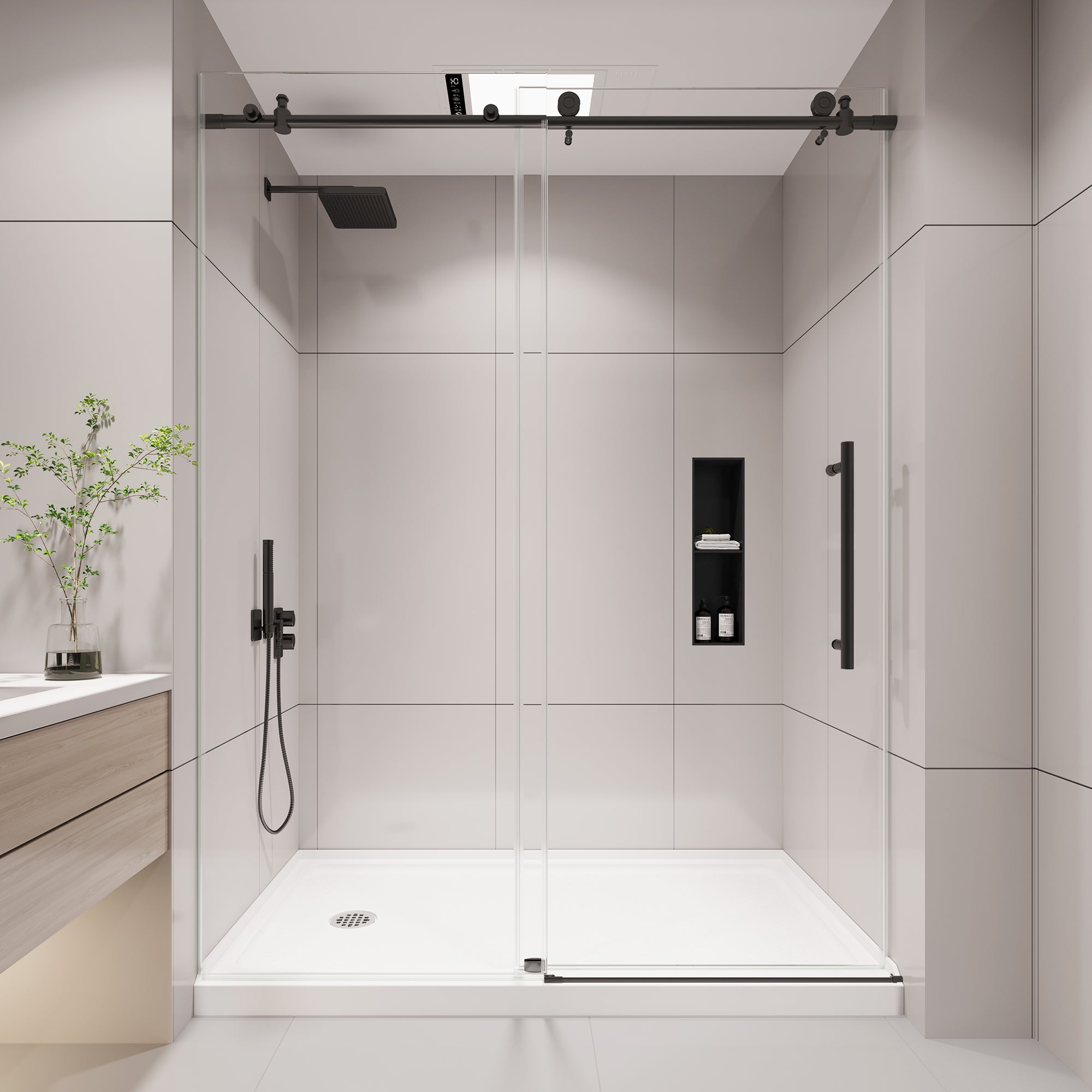
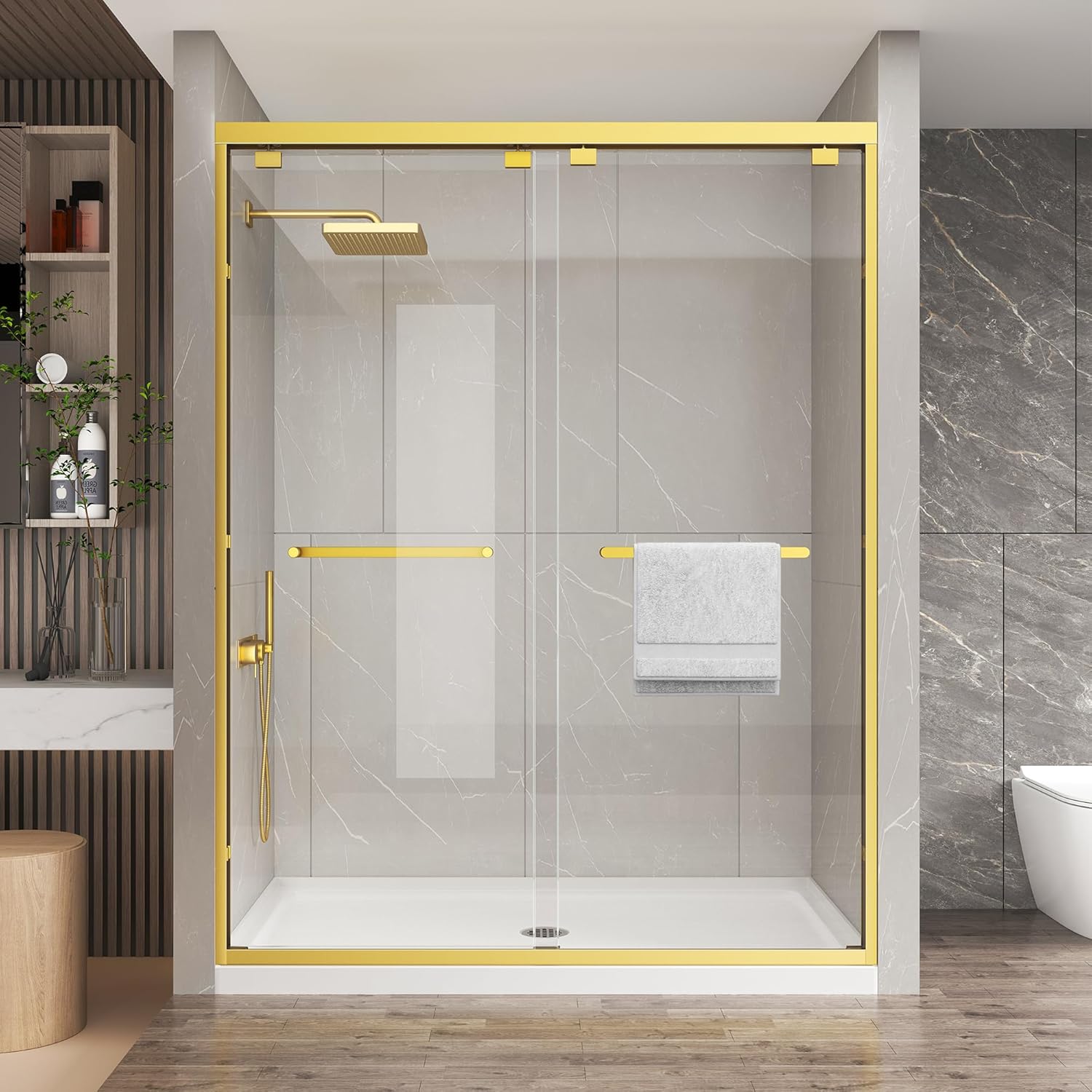
Pivot shower doors are a smart fit when you have enough swing clearance for a hinged door and want easier entry than many sliding layouts allow. They work by rotating on pivot hardware mounted at the top and bottom or along the side, which lets the door swing inward, outward, or both depending on the design. They are often a better choice for wider alcoves, cleaner glass lines, and remodels where the opening is square enough to support a hinged installation.
The Short Answer
A pivot shower door swings on fixed hardware instead of sliding on a track, so it needs clear floor space and a fairly accurate finished opening. It is usually the better choice for alcove showers with enough front clearance, homeowners who want a cleaner look, and remodels where easy entry matters more than saving swing space. For tight bathrooms, a sliding layout may be easier to live with.
How a Pivot Shower Door Works
A pivot door opens on rotating points rather than rolling on a track. That sounds simple, but the hardware choice affects the whole installation. Some pivot doors swing both directions and return to center with a stop point. Others are configured to swing mainly outward. The door panel, hinges, seals, and strike side all need to match the shower opening and the surrounding fixtures.
The main advantage is straightforward access. A pivot door gives you a full or near-full opening without the lower track you see on many sliding systems. That makes the entry feel less confined, and it can be easier to clean because there is less track hardware to trap soap residue and mineral buildup. In 2026 remodeling work, many homeowners still want a cleaner visual line, but they also want practical access and a layout that does not fight the room.
Pivot doors still depend on the surrounding structure. The walls must be close to plumb, the finished opening must be measured correctly, and the floor must not fight the sweep of the door. Older homes often have walls that lean just enough to affect glass fit. A shower opening can also measure a little differently at the top, middle, and bottom after tile is installed. That is normal enough to matter.
When a Pivot Door Is the Better Choice
A pivot shower door is usually the stronger option when the bathroom has room for swing clearance and the opening suits a hinged setup. It is not automatically the best choice for every shower, but it works very well in the right conditions.
- You have enough clearance outside the shower. The door should not hit a vanity, toilet, linen tower, or drawer face when it opens.
- You want a simpler entry path. Pivot doors can feel easier to step through than narrower sliding openings.
- The opening is reasonably square and stable. Out-of-plumb walls and uneven tile can still be managed, but the door should not be asked to correct a major framing problem.
- You want a cleaner lower threshold area. Without a full sliding track, the shower entrance can look more open.
- You are replacing an older shower door with a similar swing layout. Matching the existing movement often reduces remodel friction.
Pivot doors are often less forgiving than people expect. A swing door that seems fine on paper can become frustrating if the bathroom is tight. If the door opens directly into the path of a vanity or toilet, you may end up using it carefully every day. That is one reason some remodelers choose a Pivot Shower Doors collection only after checking the room layout, not before.
They can also be a better fit where the shower opening is wide enough that a swing door can feel balanced and easy to use. If the opening is too narrow, the entry may feel cramped. If it is too wide, the door size, hinge placement, and glass thickness become more important for stability.
How to Measure Before Ordering
Start with the finished opening, not the old product label. The old door size is only a reference. What matters is the actual tile-to-tile, finished-wall measurement after all wall surfaces are complete.
Measure the opening at three points: top, middle, and bottom. Write each number down. If the walls are out of plumb, those three measurements will not match. That is common in older homes and in remodels where one wall was rebuilt and the other side stayed put.
- Measure the finished width at the top, middle, and bottom of the opening.
- Check the finished height from curb or threshold to the top of the opening.
- Confirm the wall condition: plumb, bowed, or slightly out of square.
- Verify that the floor and curb slope properly back toward the shower.
- Check swing clearance outside the shower for door arc and handle reach.
- Locate studs or solid backing where hinge hardware will mount.
- Account for tile thickness, wallboard build-up, and any trim pieces.
Tile thickness matters more than many homeowners expect. A shower opening that looked generous during rough framing can shrink after tile, backer board, and waterproofing layers are added. If you are replacing a base and door together, the finished dimensions need to work as one system. A base that fits the footprint still needs the drain to land in the right place, and the door still needs the finished curb or threshold to line up correctly.
For the base side of the project, the shower floor must support proper drainage and water containment. If the threshold height is too low, or the curb slope is off, water can migrate toward the opening no matter how carefully the door is installed. That is where a coordinated layout matters. If you are planning the full shower footprint, KPUY’s Shower Bases collection is the relevant place to start alongside the door choice.
Jobsite reality: a drain that looks centered from above may not match the new shower base once the finished walls and curb are built. Always verify the rough-in and finished layout together.
| Project Condition | Pivot Door Fit | Why It Matters |
|---|---|---|
| Wide enough front clearance | Good fit | The door can swing without hitting nearby fixtures or cabinetry. |
| Tight bathroom layout | Often a poor fit | The swing arc may conflict with the toilet, vanity, or door casing. |
| Walls slightly out of plumb | Possible, but needs careful measuring | Hinge alignment and glass fit depend on accurate finished dimensions. |
| Cleaner, more open entry | Strong fit | A pivot door can feel less boxed in than a track-based system. |
| Very narrow alcove opening | Less ideal | Hinged swing may leave too little usable space for entry and exit. |
For planning context, bathroom layout guidance from the NKBA is useful when you are checking clearances around fixtures, doors, and circulation paths. The exact dimensions in your home still need to be verified in the field.
Image planning should also reflect the real room. A bathroom with a pivot shower door often benefits from a clear sightline, balanced lighting, and minimal visual clutter around the entry.

Installation Factors That Matter
Pivot doors are hardware-driven, so the installation details carry real weight. The frame or hinge locations have to land on solid backing, and the glass panel must be supported in a way that keeps the door aligned over time. If the wall anchors miss the studs or backing, the door may loosen, shift, or stress the glass.
Hardware clearance is another piece that gets overlooked. The thickness of the glass, the hinge body, handle projection, and seal placement all affect how the door behaves when it opens. A door that clears the tile on paper may still rub once the hardware is installed. That is why field measurements matter more than catalog assumptions.
Watch these installation issues closely:
- Out-of-plumb walls that force the door to rack slightly.
- Uneven floors that affect threshold level and door sweep.
- Improper curb slope that sends water toward the opening.
- Missing blocking or weak backing where hinges attach.
- Handle or towel-bar interference with the adjacent vanity or wall.
- Seal placement that leaves a gap at the bottom or latch side.
Silicone sealing should be used carefully, not heavily. You want proper water containment, but you also need to preserve serviceability and avoid sealing over areas that may need movement. A clean bead at the correct joint is better than a thick, messy seal that traps debris or hides a poor fit.
For safety planning, tempered glass and general shower enclosure safety concerns tie back to homeowner protection and code awareness. The CPSC is a useful reference point for consumer safety context, especially if you are replacing older glass or upgrading a shower in a family bath.
If your shower project is paired with other bath upgrades, plan the room as a system. A new door can conflict with a cabinet drawer, a tall vanity side panel, or a mirror sconce location. It is common to see a vanity drawer clear the room on a sketch but still brush the door casing once everything is installed. That is the kind of mistake that comes from measuring one item at a time instead of the full room.
Image planning for this stage should show the hardware and the opening, not just the finished bathroom. That helps homeowners understand why pivot doors depend on accurate field dimensions.

Pivot vs. Other Common Door Needs
The question is not only whether a pivot door works. It is whether it works better than other layout types for your room and daily routine.
| Need | Pivot Door Advantage | Where It Falls Short |
|---|---|---|
| Easy entry | Wide swing path can make entry straightforward | Needs floor and fixture clearance |
| Tight bathroom footprint | Usually less suitable than a track-based layout | The swing arc may block traffic |
| Cleaner lower edge | No full sliding track at the base | Still needs proper sealing and alignment |
| Maintenance access | Fewer track surfaces to clean | Hinges and seals still need routine attention |
| Remodel flexibility | Good when the opening is accurate and the room has room to spare | Less forgiving in cramped layouts |
If you are still deciding between swing and other configurations, think about how you move in the room every day. A pivot door can feel better in a roomy alcove or a shower placed away from major traffic paths. If the opening is tight, a different door style may solve more problems than it creates.
For a broader look at shower door layouts and related enclosure options, the KPUY Pivot Shower Doors collection is the most relevant starting point for this type of door movement and fit consideration.
Practical Planning Tips
Before you order, walk through the room like an installer would. Open the bathroom door, stand at the vanity, and imagine where the shower door will move. The right choice on paper can still be awkward in daily use if the swing path crosses another fixture.
- Confirm the finished shower opening after all wall materials are installed.
- Check door swing clearance against the toilet, vanity, and room entry.
- Verify the curb or threshold slope for water control.
- Identify solid backing for hinge hardware before tile work is complete.
- Measure the opening at the top, middle, and bottom, then compare them.
- Plan for glass thickness and hardware projection so handles do not interfere.
- Coordinate the shower door with any base, tile, or cabinet changes in the room.
Small bathrooms deserve extra caution. Pivot doors are often a better experience in medium or larger baths where the swing does not pinch circulation. In compact layouts, swing clearance can become the limiting factor, not the door itself. If your room is tight, the shower door should serve the layout instead of forcing the layout to adapt to the door.
On remodels, rough-in surprises are common after demolition. A wall that looked straight under old tile may bow once it is stripped down. Subfloor conditions can also change the final curb height if repairs are needed. That is normal worksite reality, not a failure of planning. It is simply why final measurements should happen after the framing, walls, and shower base are confirmed.
If you are also planning a larger bath update, lighting and storage can affect door operation too. A door handle may interfere with a wall cabinet, or a wall sconce may sit too close to the swing path. Those details belong in the same layout conversation, even if they are not part of the shower door order itself.
For homeowners comparing shower door types, the decision usually comes down to three things: available clearance, finished opening accuracy, and how the room is used every day. Pivot doors score well when all three line up.
Frequently Asked Questions
Do pivot shower doors need more room than sliding doors?
Usually, yes. Pivot doors need swing clearance outside the shower, while sliding doors move within the opening. If the bathroom is tight, a sliding system may be easier to live with. If the room has enough space, a pivot door can feel more open at the entry.
Can a pivot door work if the walls are not perfectly square?
Sometimes, but the opening has to be measured carefully. Slight out-of-plumb conditions are common in older homes. The installer or homeowner needs to confirm top, middle, and bottom widths, along with the finished height, so the hardware and glass fit the real opening.
What should I check before ordering a pivot shower door?
Check the finished opening size, swing clearance, wall backing, curb height, and any nearby fixtures that could block the door. Also confirm that the shower base and tile work are complete or fully planned, since those details change the final dimensions.
Final Takeaway
A pivot shower door is a strong choice when you want a cleaner opening, easier entry, and a layout that supports a true swing door. It works best in showers with enough front clearance, solid backing, and finished dimensions that are measured accurately after tile and wall surfaces are in place. If the room is tight or the swing path is compromised, another layout may be the better fit.
Before you order, verify the finished opening, check the curb and floor slope, and make sure the door will not interfere with the rest of the bathroom. If you are comparing pivot layouts or just want to narrow the field to the right door type, start with the Pivot Shower Doors collection and measure the room first, not the other way around.

Leave a comment
All comments are moderated before being published.
This site is protected by hCaptcha and the hCaptcha Privacy Policy and Terms of Service apply.