
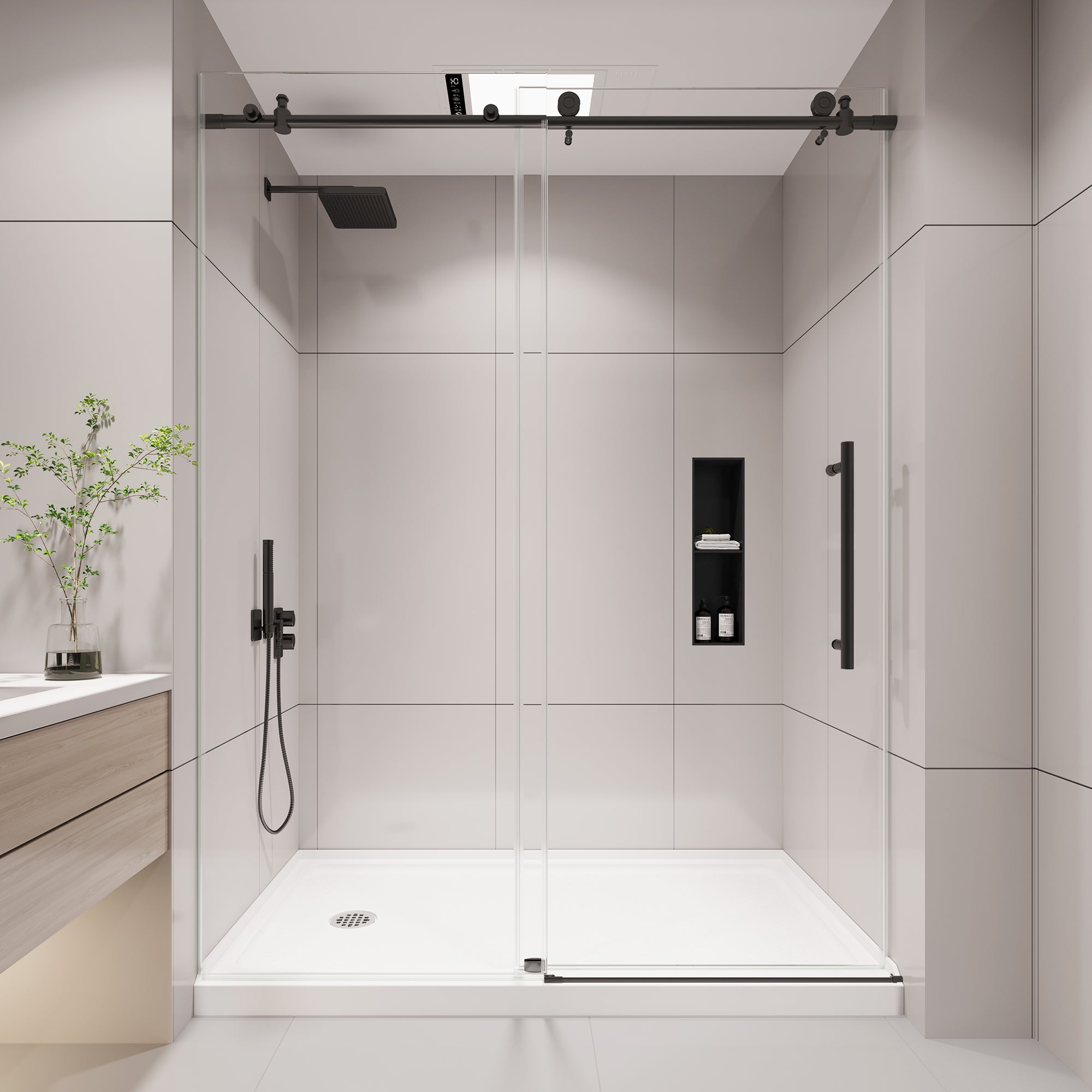
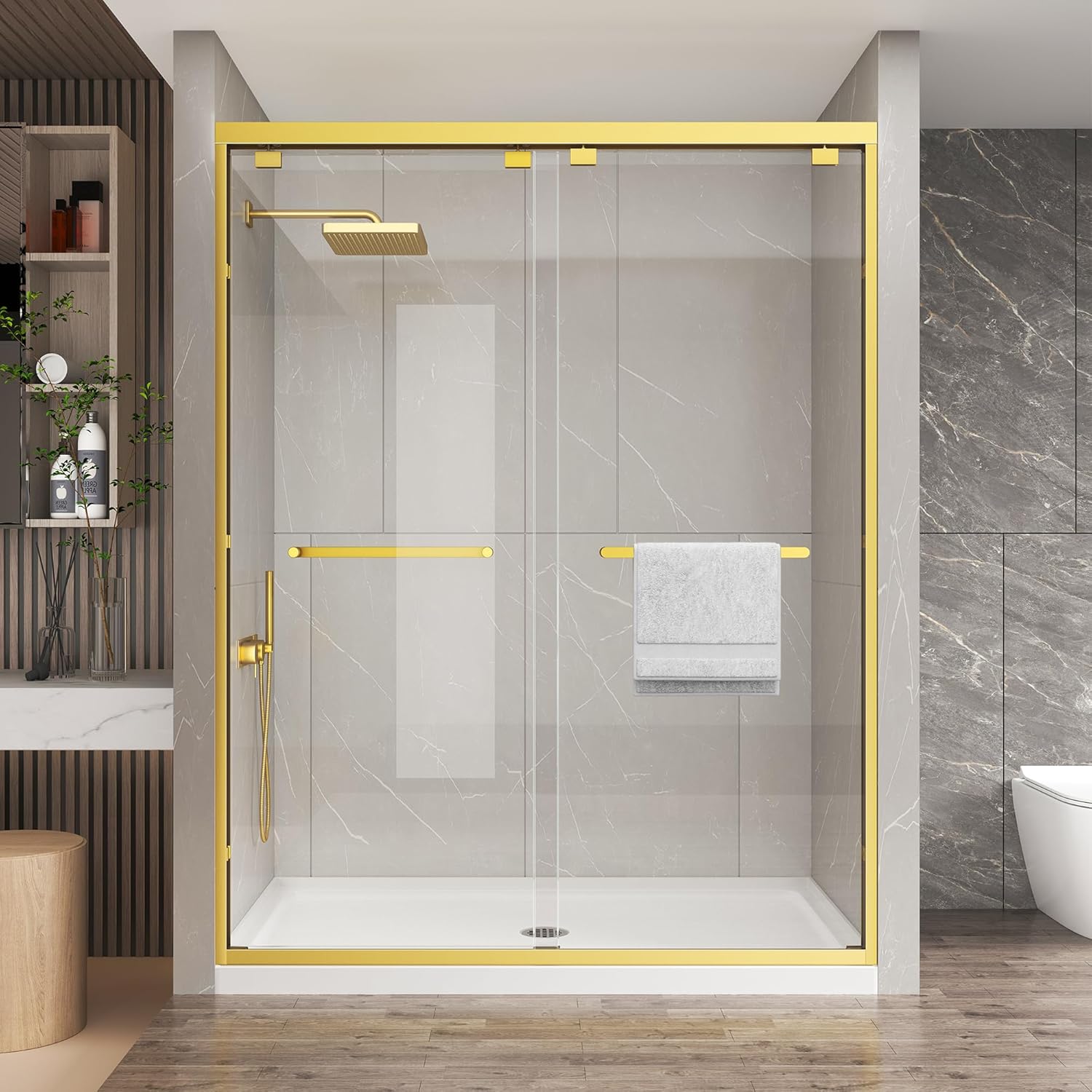
Picking between a pivot shower door and a hinged shower door sounds simple until the opening is measured after tile, the walls are a little out of plumb, and the vanity edge is closer than expected. In a remodel, the door type affects swing clearance, water containment, hardware placement, and how forgiving the installation will be once the finished surfaces are in place.
The Short Answer
A pivot shower door swings on off-center hardware and usually needs less clearance at the hinge side, while a hinged shower door swings on side-mounted hinges like a standard door and typically needs more deliberate swing space. Both can work well, but the better choice depends on finished opening width, nearby fixtures, wall plumb, and how much room the door needs to open without hitting a vanity, toilet, or wall.
How Pivot and Hinged Doors Open
A pivot shower door rotates on pivot hardware mounted near the top and bottom of the glass or frame. The pivot point is usually set slightly in from the edge, so the door can swing more smoothly and sometimes use a narrower clearance zone near the jamb. In practical terms, pivot doors are often selected for tighter openings where a full edge-hinge setup would feel cramped.
A hinged shower door uses side hinges mounted along one vertical edge. It behaves like a typical room door: open, close, and stop at a fixed arc. This style can feel more familiar and solid, especially when the opening is wide enough to allow a clean swing path. The tradeoff is that it asks for more clearance in front of the shower.
For homeowners comparing layouts, the real question is not which door looks better on paper. It is which one fits the actual bathroom geometry after tile, curb, and trim are finished. That is why KPUY shower door planning usually starts with the opening and surrounding fixtures, not the catalog description. If you want a closer look at pivot-specific options, the Pivot Shower Doors collection is the relevant place to start.
Practical Differences That Matter in a Remodel
In the field, the difference between pivot and hinged often comes down to five things: swing clearance, opening tolerance, wall conditions, sealing behavior, and installation forgiveness. A door can be the right size and still be the wrong choice if the toilet, vanity, or opposite wall steals the swing path.
Older homes often have walls that are not perfectly plumb. That matters more than most people expect. A shower opening may measure differently at the top, middle, and bottom, and a door type that tolerates slight variation can save time during installation. Tile thickness also changes the finished width, so measurements should be taken after the wall build-up is known.
| Decision Point | Pivot Shower Door | Hinged Shower Door |
|---|---|---|
| Swing clearance | Usually needs a more compact swing zone near the pivot point | Needs a full door-like swing path along the hinge side |
| Best fit for tight bathrooms | Often better when nearby fixtures are close | Works best when there is open floor space in front of the shower |
| Opening feel | Can feel balanced and controlled when properly aligned | Feels familiar and straightforward |
| Installation sensitivity | More dependent on accurate pivot alignment and wall condition | More dependent on stable hinge mounting and clear swing space |
| Typical remodel use | Compact alcoves, tighter layouts, cleaner entry paths | Wider openings, bathrooms with adequate clearance, traditional layouts |
Water control also deserves attention. Pivot doors can work very well, but the swing geometry means the seal line and sweep need to be installed carefully. Hinged doors can also manage water effectively, but they rely on accurate alignment and a properly sloped threshold or curb. If the curb slope is weak, water containment becomes a layout problem, not just a door problem.
- Check the finished opening, not the rough opening. Tile, backer board, and wall finish all change the final dimension.
- Measure top, middle, and bottom width. Out-of-plumb walls can turn a “standard” opening into a custom fit.
- Look at nearby fixtures. A pivot door may clear the floor but still crowd a vanity handle or toilet paper holder.
- Confirm wall support. Hinges and pivot hardware need solid mounting locations, especially in tile showers.
- Plan for water control. A door style does not replace proper slope, seals, and silicone detailing.
Measurement and Layout Checklist
Before ordering any shower door, start with the finished shower zone. That means the tile is in, the curb or threshold height is known, and the wall surfaces are done or at least fully accounted for. If the shower base is already set, confirm that the drain location and curb slope are correct before you focus on the door. A good door cannot compensate for a base that pitches the wrong way.
- Measure the shower opening at the top, middle, and bottom.
- Check both side walls for plumb using a level or laser.
- Confirm the finished curb height and the top surface slope.
- Measure the distance to nearby fixtures, including the vanity and toilet.
- Verify where hinges or pivot hardware can hit solid backing or framing.
- Account for tile thickness, trim, and any wall build-out.
- Decide which direction the door should swing for the cleanest entry.
- Leave room for handles, towel bars, and cleaning access.
That sequence matters because door choice affects more than the opening itself. For example, a hinged door can feel ideal until you realize the swing arc intersects a vanity light or a medicine cabinet. A pivot door can solve the swing issue but may need tighter hardware placement and more careful sealing at the threshold. The right choice is the one that works with the room, not just the shower box.
For broader shower enclosure planning, including doors that need to match the rest of the shower build, see the KPUY Shower Doors collection.
Pivot vs. Hinged Door Comparison
Use the table below as a quick planning tool when you are deciding which layout fits the bathroom better.
| Factor | Pivot Door | Hinged Door |
|---|---|---|
| Best for | Tighter layouts and openings with limited swing room | Open layouts with enough clearance in front of the shower |
| Look and feel | Can feel more compact and modern in function | Feels more like a traditional door movement |
| Hardware location | Pivot points at top and bottom or within the frame line | Side hinges mounted along the vertical edge |
| Maintenance focus | Keep pivot points aligned and seals intact | Keep hinges secure and the door aligned over time |
| Remodel risk | Less forgiving if the finished opening varies widely | Less forgiving if the swing path is crowded |
When a pivot door usually makes sense
A pivot door is often the better fit in a smaller bath where the shower entry is close to the toilet, linen cabinet, or vanity. It can also work well when you want a cleaner opening path and the shower width is enough to support the pivot hardware without making the entry awkward.
When a hinged door usually makes sense
A hinged door tends to fit best when there is enough open floor in front of the shower for the panel to swing naturally. It is a practical choice for larger bathrooms and for remodels where the opening is square, the walls are stable, and the hardware can be anchored cleanly into backing or studs.
Installation Notes That Save Trouble
Door installation starts with the walls, not the glass. If the wall substrate is uneven, the hinges or pivots may need adjustment shims or careful layout to keep the door aligned. That is normal in remodel work. The goal is a door that closes consistently, seals properly, and does not scrape the curb or swing into nearby trim.
Glass thickness and hardware clearance also matter. Thicker glass can feel more substantial, but it changes the hardware load and may require more precise alignment. Hinged doors in particular need reliable anchoring, because the hinge side carries repetitive weight. Pivot systems distribute movement differently, but they still depend on correct alignment and a solid mounting surface.
Silicone sealing should be clean and deliberate. Do not use caulk to fix a bad fit. Silicone is there to manage water at joints and edges after the door is properly installed. If the opening is off, or the threshold is not sloped enough, sealant alone will not solve the problem.
In remodels, I also like to check the area beyond the shower. A vanity drawer may clear the room on paper but still hit a door casing when the door swings open. That kind of conflict shows up after rough demolition if the layout was only measured from old trim, not the final finish line.
For planning around safety and home layout clearances, the CPSC and NKBA are useful references for general bathroom safety and design thinking. If you are also evaluating the shower base or curb at the same time, the shower floor and drain layout should be reviewed before the door is ordered.

Visual Planning Examples
One useful way to picture the difference is to imagine two finished bathrooms with the same opening width. In the first, a pivot door opens into a narrow aisle without bumping the vanity. In the second, a hinged door opens cleanly because the bathroom has more front clearance and the wall layout supports a traditional swing. The best choice depends on room geometry more than on the style name.
That is also why wall finish details matter. Tile thickness, bullnose, trim, and even the final wall paint line can shift the real opening. A remodel that seems simple on rough framing can change a lot after finish materials go in. If the opening is still in planning, take the final wall build-up into account before choosing hardware.

Frequently Asked Questions
Is a pivot shower door better for a small bathroom?
Often, yes. A pivot door can be a smarter fit when there is limited room in front of the shower for a full swing. It still needs proper clearance, but the pivot motion may work better in a tight layout than a traditional hinged door. Measure the finished opening and the nearby fixtures before deciding.
Do hinged shower doors leak less than pivot doors?
Not automatically. Water control depends more on installation quality, threshold slope, seal placement, and how square the opening is. A well-installed pivot door can contain water effectively, and a poorly installed hinged door can leak. The door type matters, but the base and wall conditions matter just as much.
Should I measure before or after tile?
Measure after tile if the wall surface is changing. The finished opening is the number that matters for door fit. Rough framing measurements are useful for planning, but they are not enough for ordering glass or hardware. Tile thickness, trim, and wall board all affect the final dimension.
Final Takeaway
The real difference between a pivot shower door and a hinged shower door is how each one uses space. Pivot doors usually help when clearance is tight. Hinged doors work well when the bathroom has room for a full swing and the opening is clean and square. In both cases, the final decision should start with the finished opening, wall condition, and water containment plan.
If you are still comparing layouts, look at the room as a whole before you choose the door style. Check the shower base slope, nearby fixtures, and hardware mounting points. Then review the relevant options in the Pivot Shower Doors collection if that swing style fits your remodel better. The goal is a door that works with the bathroom you actually have, not the one on the rough framing sheet.

Leave a comment
All comments are moderated before being published.
This site is protected by hCaptcha and the hCaptcha Privacy Policy and Terms of Service apply.