
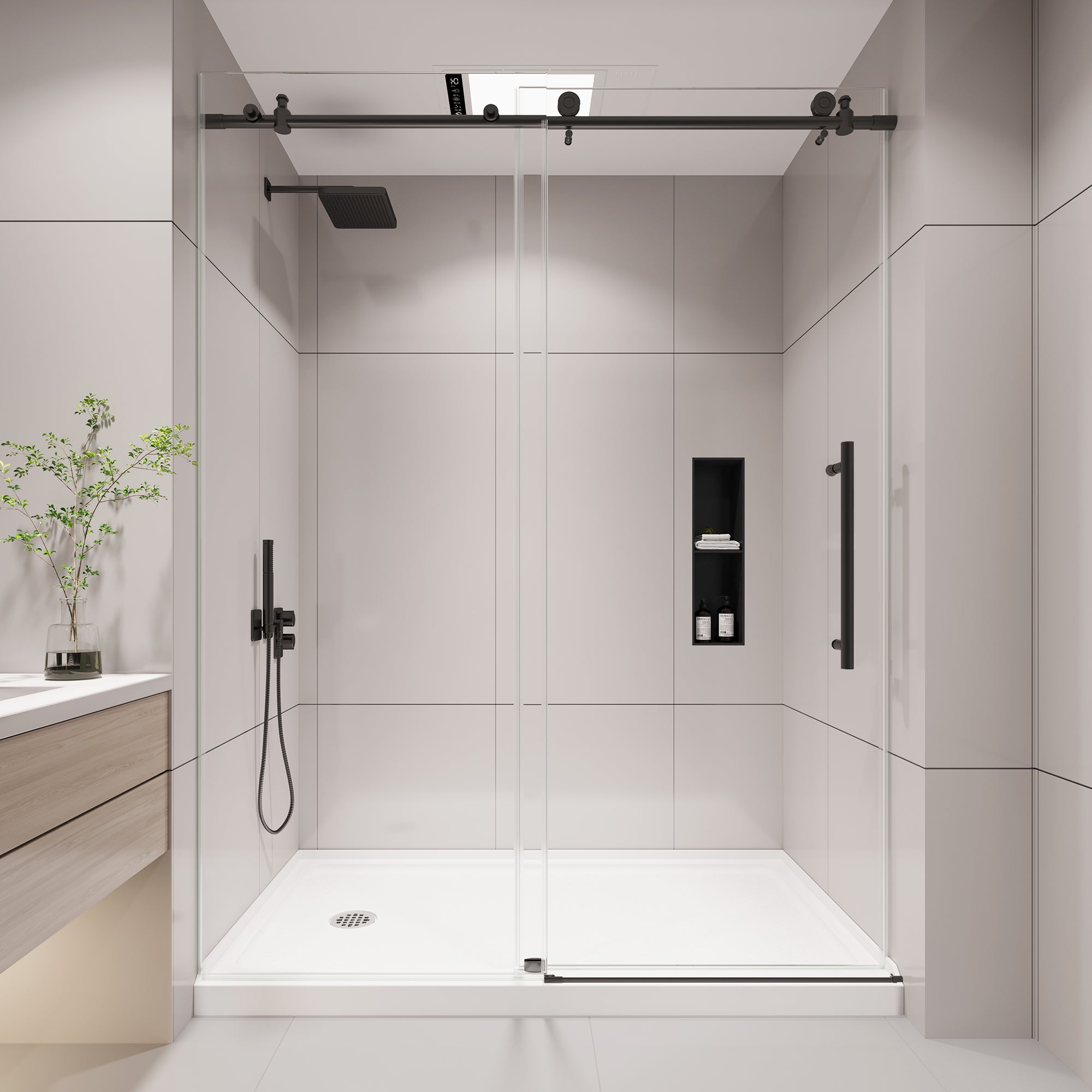
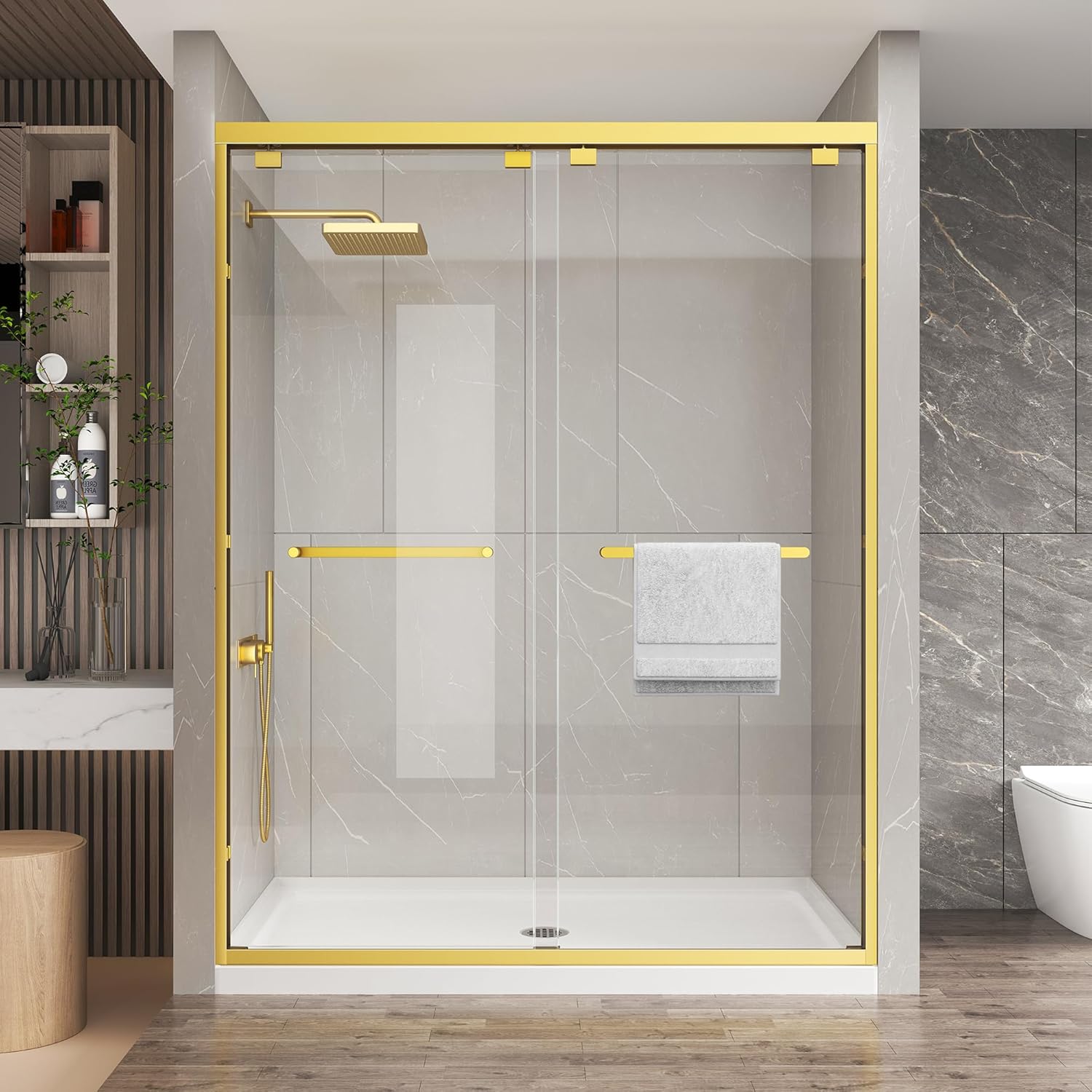
If your sliding shower door is leaking, you're not alone — it's one of the most common service calls I get after 20+ years of bathroom remodels. Homeowners notice puddles on the bathroom floor, mildew in corners, or a slow drip that only appears during heavy showers. The good news: most sliding-door leaks are a problem of fit, wear, or slope, not a complete failure. Fixes range from a 15-minute tune-up to a one-day replacement job. This article gives a contractor's toolkit: how to diagnose the leak, what tolerances and standards matter, and step-by-step fixes you can do or hire out without getting upsold on things you don't need.
Quick Answer (featured snippet style)
Short answer: Most sliding shower door leaks are fixed by replacing worn bottom sweeps and seals, re-aligning rollers and guides to close gaps, and ensuring the shower floor and curb have the correct slope toward the drain. Check seals and track for debris first — it’s the fastest fix.

How to Diagnose the Leak
Start with a structured test so you know where water is escaping. I use a bucket and a garden jug during inspections:
- Dry the entire area and put down a towel outside the shower to catch any new water.
- Pour water slowly in three zones: along the sliding door seam (where doors overlap), directly against each glass panel, and at the curb. Watch where water appears on the floor and behind the wall if visible.
- Record which zone produces the leak — overlapping seam, bottom sweep, sill/curb, or return jamb — that tells you the fix path.
Tools to have on hand: utility knife, silicone sealant, replacement vinyl sweeps, screwdriver set, a level, and a flashlight.
Common Causes and Contractor Notes
I see the same patterns on rehabs and new installs. Below is a practical table I share with clients during estimates.
| Problem | Likely Cause | Typical Fix | Estimated Time |
|---|---|---|---|
| Water under door at center | Worn or split bottom sweep | Replace vinyl sweep; clean track | 30–60 minutes |
| Leak at door overlap | Incorrect alignment or missing guide | Adjust rollers/guide, install sweep | 1–2 hours |
| Water along outside face | Insufficient curb slope or damaged pan | Repair pan or install linear drain/replace base | Half day–1 day |
| Seep from fixed glass edge | Failed silicone or no weep holes | Remove old sealant, install backer, re-seal | 1–2 hours |
Standards and tolerances: Tempered glass used in sliding doors typically runs between 3/16" and 1/2" thickness in residential applications, with frameless sliders often at 3/8" or 1/2". Look for ANSI Z97.1 compliance for safety glazing. Keep installation tolerances tight — 1/8"–3/16" misalignment on guides can create gaps that let water through. If walls are out-of-plumb more than 3/8", you will need shims or a custom header/track to get a watertight closure.
Why walls and slopes matter
Out-of-plumb walls are common in older homes. If a side wall leans even 1/4" over a 4-foot height, a sliding door will either bind or leave a gap. The shower floor needs a consistent slope toward the drain — most installers aim for 1/4" per foot across the pan. If the curb is flat or crowned outward, water will escape the sill.
Step-by-Step Fixes (practical)
Below are contractor-level fixes arranged from simplest to more involved.
Quick fixes (DIY-friendly)
- Clean the track: Remove soap scum and hard water deposits. A blocked track prevents the door from fully seating.
- Replace bottom sweep: Most sweeps slide off and on. Measure glass thickness and buy the matching profile. Cut to fit and snap into place.
- Check guide and rollers: Adjust rollers to raise/lower the door a few clicks so edges meet without rubbing.
Advanced fixes (hire a pro if unsure)
- Remove doors and inspect sill for damage. If the sill is cupped or cracked, the pan may be compromised.
- For leaks at fixed glass, remove old silicone back to substrate, install closed-cell foam backer where needed, then apply a continuous smooth bead of high-quality bathroom silicone.
- If the track is corroded, replace it. For heavy glass sliders (3/8"–1/2"), you may need a stronger header and hardware rated for the weight.
Note on sealants: Don’t silicone the operating seam where doors need to slide — that prevents movement. Use swept seals and guides for moving joints and reserve silicone for stationary junctions only.

When to Replace the Door
Replace the door when multiple components are failing, glass is chipped, or the door is undersized for the opening. If you’ve got repeated leaks after replacing sweeps and resealing stationary joints, the track may be out-of-straight or the glass was cut wrong for the jamb — time to replace.
Replacement indicators:
- Glass chips or edge damage (compromised tempering).
- Track bent or corroded beyond repair.
- Rollers are obsolete and replacements aren’t available.
If you decide on replacement, consider ordering from a manufacturer that provides proper rough-in guidance and templates for glazing holes. For frameless and semi-frameless options, you can review KPUY Shower Doors for styles and hardware that match modern install tolerances.
Real Jobsite Experience
Here’s a real-world example I run into on older houses: I pulled a sliding door from a 1930s bathroom and found the right wall out-of-plumb by nearly 5/8". The original installer had packed the track with silicone to force the door to close, which created a small but persistent leak at the base. The real fix was to shim the header, replace the track, and order a slightly narrower glass panel to allow for out-of-plumb conditions with the proper sweeps. Job took a full day, but the leak stopped and the owner avoided a costly curb rebuild.
Practical tip: Always measure glass width and height on-site before ordering replacements. Allow a 1/16"–1/8" clearance for rollers and 1/8" tolerance for out-of-plumb walls when specifying custom glass.
FAQ — People Also Ask
How can I stop water from leaking under my sliding shower door?
Start by replacing the bottom sweep and cleaning the track. If that doesn't stop it, check for out-of-plumb walls and poor curb slope. Adjust rollers so doors overlap properly and seal all stationary joints with bathroom-grade silicone. If the pan is damaged, the leak may be coming from under the base and will require a pan repair or replacement.
Can silicone around the door stop the leak?
Only on stationary joints. Do not silicone moving seams — that prevents sliding. Use silicone at the fixed glass-to-tile junctions and at the curb-to-tile joint. For moving panels, use replacement sweeps, door guides, and drip rails.
How much does it cost to fix a leaking sliding shower door?
Simple fixes (sweep replacement, track cleaning, adjustment) typically cost under $150 if you hire a handyman. Track replacement, new rollers, or resealing are in the $200–$600 range. Full replacement of frameless sliding doors can range $800–$2,500 depending on glass thickness and hardware. Prices vary by market and complexity.
Wrap-up & Related Products
Leaks from sliding shower doors are usually straightforward to diagnose and repair if you follow a methodical process: test zones, inspect sweeps and tracks, check for out-of-plumb conditions, and verify curb slope. Save yourself time by starting with the sweeps and track — they’re the most common culprits.
For homeowners planning a replacement or upgrade, see the available shower door options at KPUY Shower Doors. If you want to review installation standards and best practices, the National Kitchen & Bath Association has useful contractor guidance and code references NKBA, and the International Code Council provides code language relevant to glazing and wet-area construction ICC.
Final contractor note: If you’re unsure whether the leak is coming from the door or from a damaged pan, hire a pro to do a controlled water test. It’s worth the small inspection fee to avoid tearing out tile and drywall unnecessarily.

Leave a comment
All comments are moderated before being published.
This site is protected by hCaptcha and the hCaptcha Privacy Policy and Terms of Service apply.