
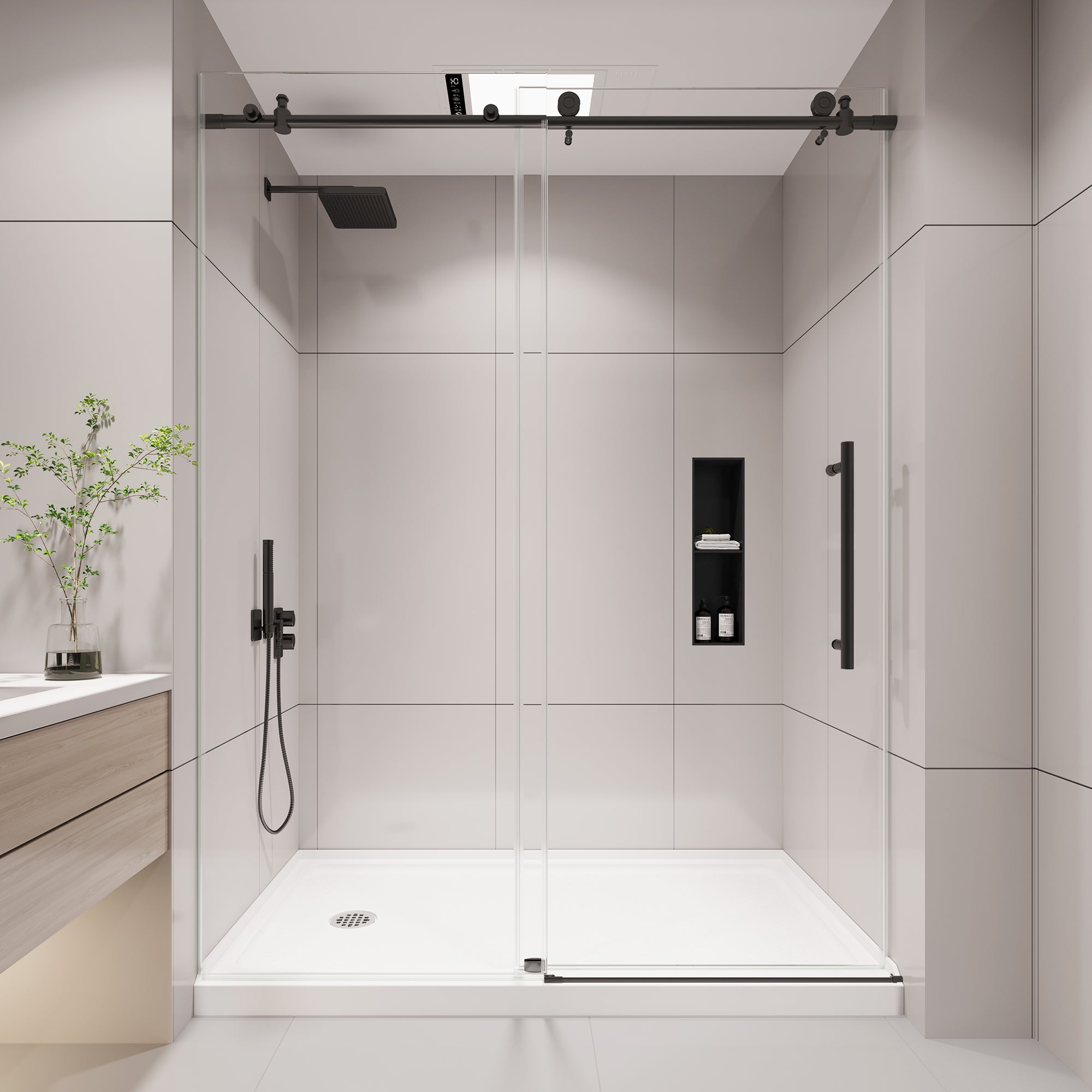
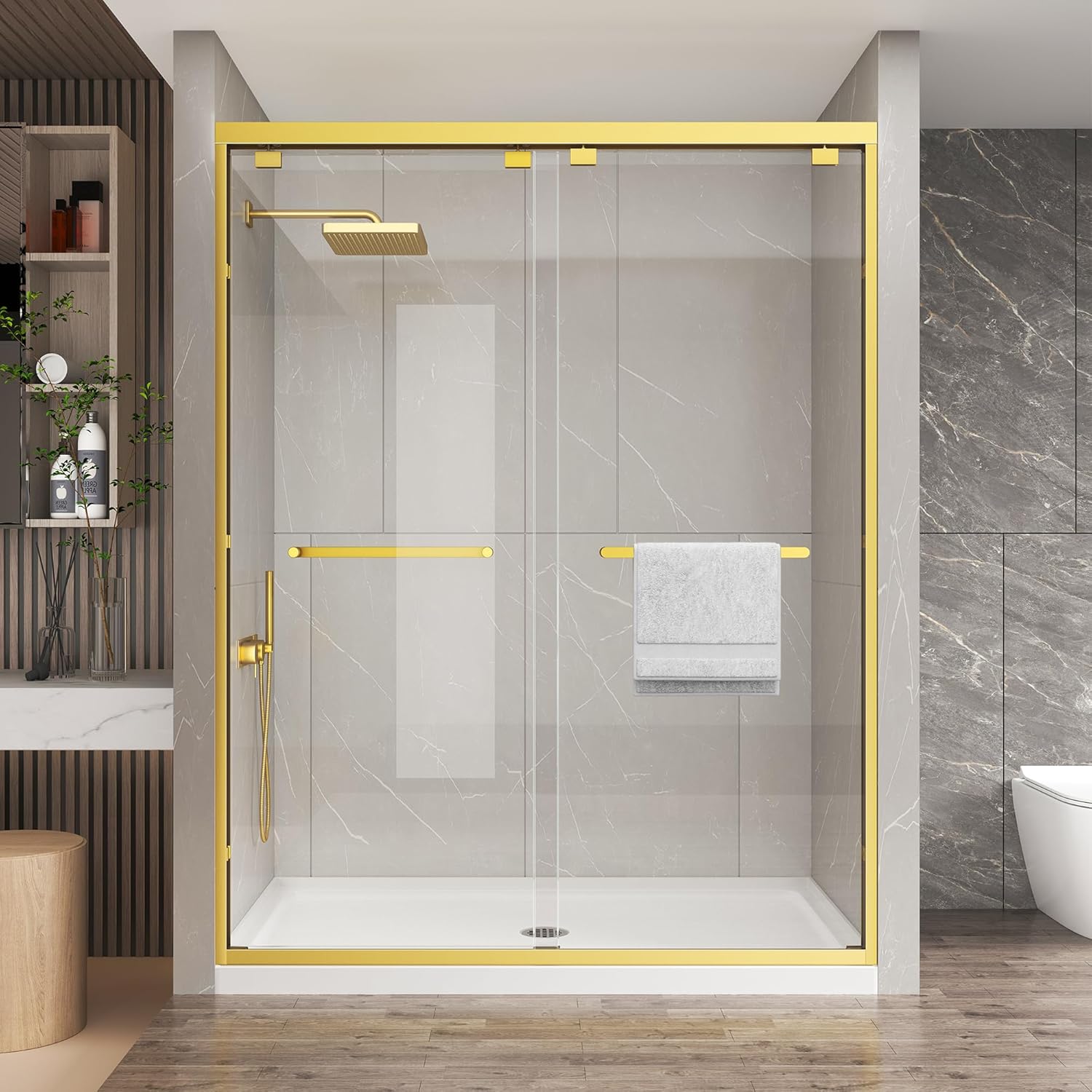
Ordering the wrong shower door size is one of the most expensive, time-consuming mistakes I see in the field. After 20+ years installing and fixing shower doors for homeowners across the U.S., I can tell you the most common reasons a door doesn't fit: inaccurate measuring, out-of-plumb walls, mismatched expectations about door style (framed vs. frameless), and ignoring installation tolerances and glass standards. With frameless glass trending in 2026 and minimal-metal designs getting more popular, accurate sizing matters now more than ever.
Quick answer: How to avoid ordering the wrong shower door size
Measure the finished opening in three places (top, middle, bottom), use the smallest measurement, account for the manufacturer's installation tolerance (usually 1/8"–3/8" per side), and confirm whether walls are plumb. If going frameless, order glass that leaves a deliberate reveal for shims and sealant — typically 1/8" clearance per vertical edge. When in doubt, bring a simple sketch and photos to the supplier and verify the product's tolerance range in writing.
Tools & Terms You Need
- Tape measure (25' contractor grade)
- 4' level and a 6' level for longer runs
- Feeler gauges or gap rulers for checking small clearances
- Carpenter's square and a thin shim set
- Rough-in dimensions: distance from finished wall to curb centerline
- Out-of-plumb: walls that lean in or out — expressed in inches over height
- Installation tolerance: the range a frame or clamp can accept during install
Understand the lingo before you measure. For example, "finish-to-finish" means after tile or wall panels are installed. Never measure unfinished walls unless the door will be installed immediately and you can guarantee final thicknesses.
Step-by-step measuring guide
- Confirm final finishes. Measure after tile, niche installations, and threshold substrate are complete.
- Measure the opening width at the top, middle, and bottom. Record all three measurements. Use the smallest number to size the door.
- Measure the opening height at left, center, and right. Consider maximums for tempered glass handling and transport.
- Check plumb: place a 4' level against each wall. Record how far out of plumb each side is (for example, 3/8" in at the top over a 7' height).
- Measure curb slope and height. For sliding doors you need flat, level track mounting area; for pivot doors you need adequate clearance for swing and threshold height.
- Note obstructions: towel bars, recessed niches, grab bars, and ceiling soffits that affect head clearance.
Document everything with photos, and mark the wall with a pencil where the glass edge will land. Suppliers respect documented measurements. If a measurement is ambiguous, call the manufacturer before ordering.

Common jobsite issues and how they affect sizing
I've removed and reinstalled dozens of doors where the problem wasn't the glass but the wall. Here are the jobsite issues I see weekly:
- Out-of-plumb walls — If a stud wall bows or tile is not flat, the glass has to read the smallest opening and you must order for the resulting taper. Frameless doors tolerate less variation than framed systems.
- Uneven curb — A sloped or crowned curb forces the track to twist or the door to bind. If the curb slope exceeds manufacturer limits, reset the curb substrate before ordering.
- Incorrect threshold height — Too high and the pivot will scrape; too low and you lose required clearance. Measure finished floor to underside of door swing.
- Narrow head space — Soffits or light fixtures can force shorter panel heights or different hinge arrangements.
When renovating older homes, walls can be 1/4"–3/4" out of plumb over 7' — that forces custom glass cuts or extra packers behind channels. If you don't like scribing and shimming work, factor in a more forgiving framed door or add jamb returns.
Tolerances, glass thickness & safety standards
Two things you must know before ordering: the manufacturer's tolerance range and the tempered glass standard. Most shower doors use tempered glass meeting ANSI Z97.1 and local code requirements. Typical thicknesses:
| Glass Type | Common Thickness | Best For | Notes |
|---|---|---|---|
| Tempered Clear | 3/8" (10mm) | Frameless, sturdy look | Most common for residential frameless doors |
| Tempered Clear | 1/4" (6mm) | Framed or semi-frameless | Less weight, lower cost, limited spans |
| Heat-Strengthened | 1/2" (12mm) | Large panels, commercial look | Requires specialized hardware |
Installation tolerance is the amount of width/height adjustment the frame or clamp system provides — usually listed on the product spec sheet as +/- measurement. For example, a sliding door frame may accept a 1/2" range total, while a frameless clamp might only allow 1/8" per side. Always check the spec sheet and factor the tolerance into your measured "order size."
For safety and code reference, check the NKBA guidelines and the International Code Council for local code interpretation: NKBA and ICC.
Typical opening widths and recommended door choices
Use this as a quick reference when deciding door style by opening size. These are starting points — always measure your project.
| Finished Opening Width | Recommended Door Type | Suggested Glass Thickness | Key Considerations |
|---|---|---|---|
| 30"–34" | Hinged pivot or framed door | 1/4"–3/8" | Check swing clearance, towel bars |
| 35"–48" | Sliding or frameless panel + fixed panel | 3/8" | Head track level critical; rail support |
| 49"–72" | Double sliding or bi-fold, custom frameless | 3/8"–1/2" | Consider transport and handling limits |
Real-world renovation notes (what I see on older homes)
When I work on a 1950s or 1970s bathroom, walls are frequently not plumb, tile is uneven, and previous installers have left thinset ridges under tile at the curb. On one job I measured a nominal 36" opening, but the left wall bowed in 5/16" at the middle. If we had ordered a tight-fitting frameless door to the nominal width, the panel would have bound and cracked during installation. Instead, we ordered a panel 3/8" narrower and used tapered shims under the channel. That extra 3/8" saved a night of demo and a custom glass remake.
My practical advice: always expect to need shims and 1/8"–3/8" clearance per side for frameless installations. If the house is old and you can't straighten the studs, plan for a framed or semi-frameless system that hides the variations.

Final ordering checklist (print and take to supplier)
- Three measurements top/middle/bottom and left/center/right heights recorded.
- Photos of the opening from multiple angles, including the ceiling and curb.
- Plumb readings for both side walls and the finished floor condition.
- Chosen door type and the manufacturer's installation tolerance noted.
- Glass thickness and safety standard (must meet ANSI Z97.1 or local code).
- Hardware finish, hinge handing, and any drilled holes or cutouts specified.
- Confirm shipping size limits — large panels may need door-to-door delivery with a lift gate.
Pro tip: Share this checklist with the glass shop and ask them to confirm the order dimensions in writing before cutting glass. If they push "we'll field-size it," get their tolerance range clarified and documented.
FAQ
How do I know whether to order based on inside or outside measurement?
Order based on the manufacturer's requested dimension. Most manufacturers ask for the finished opening (finish-to-finish) and specify whether they'll subtract for clearances. If they don't specify, provide the smallest inside width and ask them to confirm the final glass size in writing.
What is the safest way to handle an out-of-plumb wall?
Shim. Use corrosion-resistant shims behind channels, scribe the frame to match the tile profile, and plan for a small reveal. For significant out-of-plumb (more than 3/8" over 7'), consider leveling the substrate or switching to a framed system.
Can I measure myself or should I hire a pro?
Short answer: You can measure yourself if you follow the step-by-step method and document everything. If your walls are old, out-of-plumb, or you’re ordering frameless glass, hire a professional to confirm measurements and tolerances. A wrong glass cut costs far more than a measuring visit.
Next steps
Ordering the correct shower door size comes down to disciplined measuring, documenting the jobsite conditions, and confirming manufacturer tolerances in writing. If you want a sleek frameless look, plan for 1/8"–3/8" clearance per side and use a reputable glass shop. For more forgiving installs or a wider range of adjustability, consider framed or semi-frameless options.
If you're shopping for doors after measuring, check the product options and specs at KPUY Shower Doors and compare tolerance ranges before you place the order.

Leave a comment
All comments are moderated before being published.
This site is protected by hCaptcha and the hCaptcha Privacy Policy and Terms of Service apply.