
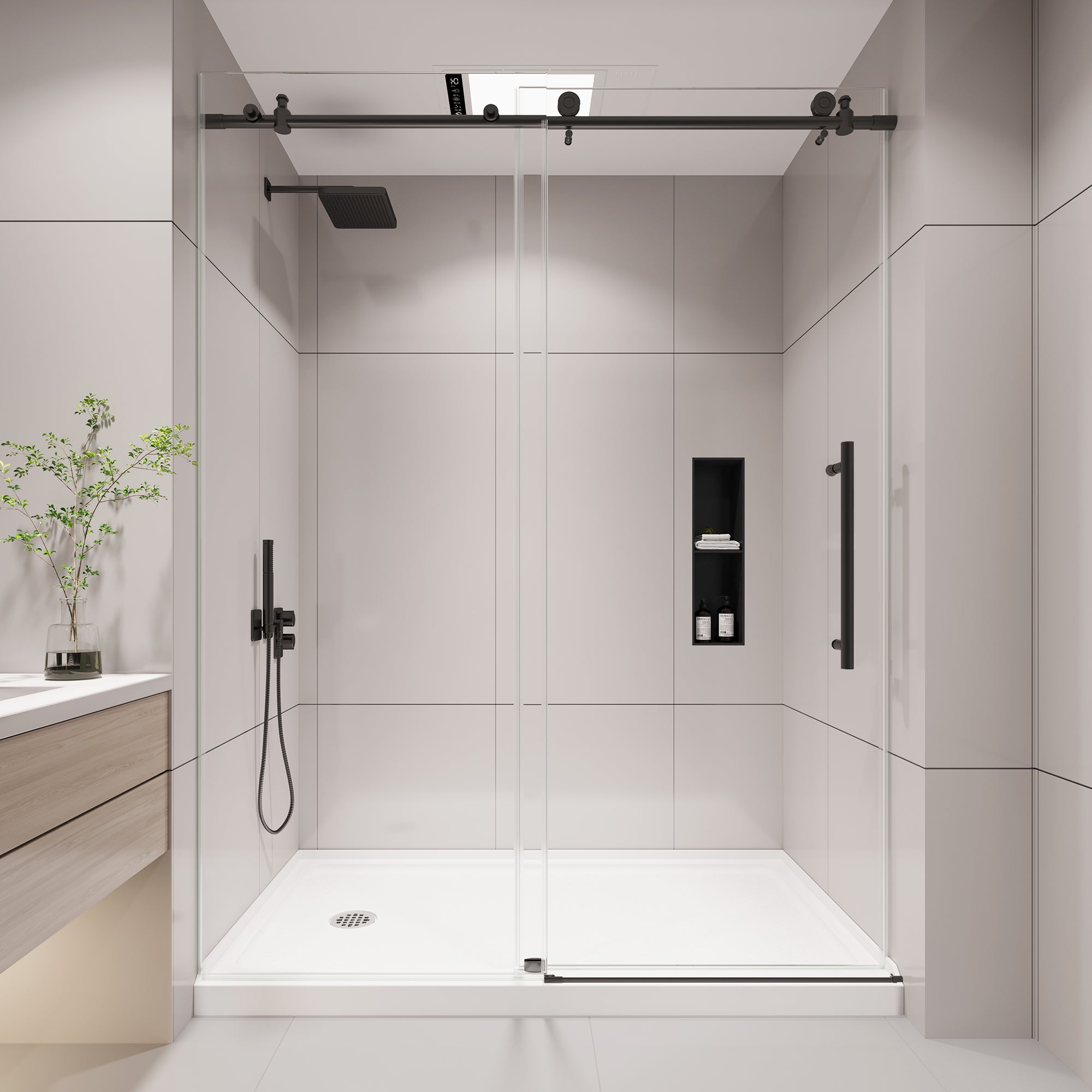
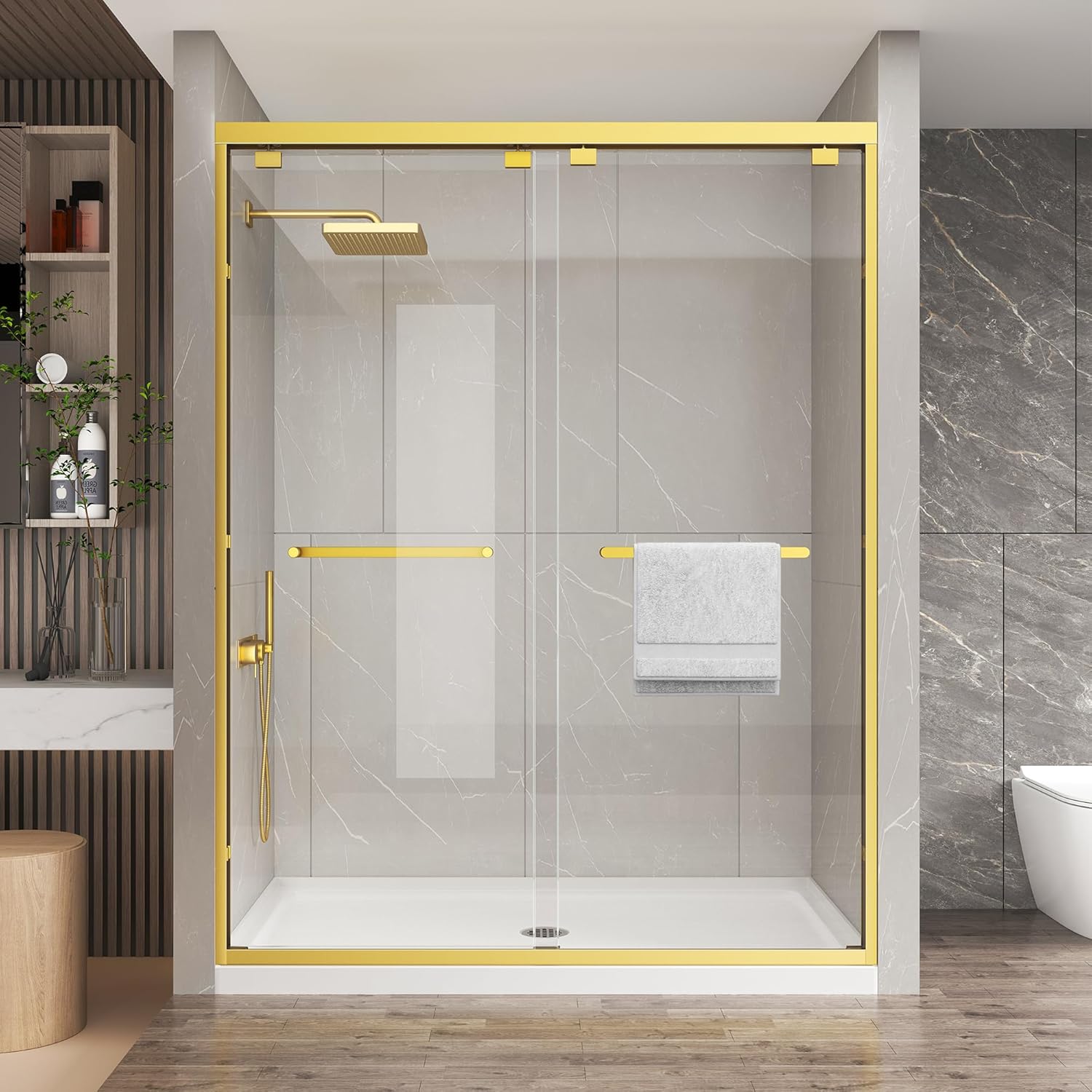
Glass pivot shower doors need more than a style choice before ordering. The opening has to fit the finished wall dimensions, the door has to clear nearby fixtures, and the wall has to support the hinge hardware. Rule of thumb: measure the finished opening after tile, check plumb on both sides, and verify swing clearance before you commit to a pivot layout.
The Short Answer
Before ordering a glass pivot shower door, confirm the finished opening, wall plumb, hinge-wall support, and door swing clearance. A pivot door can fit the opening on paper and still fail in the room if it hits a vanity, toilet, towel bar, or baseboard casing. If you are remodeling, measure after the wall finish is complete and check the threshold and floor slope, not just the rough opening.
What to Check Before You Order
A pivot shower door works best when the opening is true, the wall at the hinge side is solid, and the swing path is clear. Start with the room, not the catalog photo. Older bathrooms often have walls that lean slightly, floors that are not level, and tile thickness that changes the final opening width. Those details matter more with pivot doors than many homeowners expect.
If the door is too wide for the space, it can block traffic, bump a vanity drawer, or land too close to the toilet. If it is too narrow, water containment usually suffers and the shower may feel undersized. If the wall is not strong enough for the hinge load, the installation can become a hardware problem before it becomes a glass problem. For general enclosure planning, it helps to compare options through KPUY Pivot Shower Doors and then confirm the opening against the room layout.
- Finished opening: measure the actual tiled opening, not the rough framing.
- Plumb walls: check both sides with a level because glass hardware is less forgiving than curtain or rod setups.
- Swing clearance: verify the door will open without contacting a toilet, vanity, or wall trim.
- Threshold condition: make sure the curb or base surface slopes back into the shower.
- Hinge support: confirm there is proper backing or a solid wall condition where the hinges mount.
- Glass thickness and hardware: heavier glass needs hardware that matches the door weight and layout.

Which Layout Problems a Pivot Door Can Create
Most ordering mistakes come from assuming the door only needs to fit the opening width. In practice, a pivot door also needs room to move. That is the key difference from a fixed panel or a sliding enclosure. A pivot door may be the right choice for a shower that needs a clear entry, but it can create trouble in a narrow bath where the swing line crosses a vanity, toilet, or the bathroom door itself.
Wrong choice causes this problem: a homeowner orders a pivot door that technically fits the opening, but once installed the door cannot open fully because the swing hits the adjacent vanity drawer front. The result is a cramped shower entry, extra hardware stress, and a layout that feels broken even though the dimensions looked close on paper.
| What to check | Why it matters | Better approach |
|---|---|---|
| Opening width after tile | Tile thickness can reduce the usable width enough to change the door size you need | Measure the finished opening at multiple points before ordering |
| Wall plumb and floor level | Out-of-plumb walls can affect hinge alignment and glass fit | Check top, middle, and bottom measurements on both sides |
| Swing path | The door may clear the opening but still hit the toilet, vanity, or trim | Map the door arc in the room before choosing the hinge side |
| Hinge-side backing | Pivot hardware concentrates load on the mounting wall | Confirm solid backing or a wall condition that can accept the hardware |
For small baths, the room layout should guide the door type just as much as the opening size. If the pivot swing is tight, compare the room against other enclosure options before you lock in the order. In some remodels, a different door style solves the clearance issue without changing the shower footprint.

Measurement Checklist Before Ordering
Measure the finished opening first. Then confirm the wall surfaces, threshold, and room clearance. A pivot door should be sized from the actual installed condition, not from an old door or the framing behind the tile. If the shower is still under construction, wait until the finished wall thickness is known.
- Measure the width at the top, middle, and bottom of the opening after tile or finished wall material is in place.
- Measure the height on both sides because older walls are often not perfectly level across the top.
- Check plumb on the hinge wall and the latch side. Note any lean before selecting hardware.
- Verify threshold slope so water moves back into the shower instead of toward the bathroom floor.
- Measure swing clearance to the nearest vanity edge, toilet, towel bar, or door casing.
- Confirm hinge support with backing, framing, or a wall condition that can carry the load.
- Review hardware clearance around tile edges, trim, and any adjacent glass or fixed panel.
- Check the shower base or curb for level issues that could change how the door sits and seals.
One field detail gets overlooked often: the opening can look square from across the room and still measure differently at the top and bottom by enough to affect glass fit. That is why top, middle, and bottom measurements matter. The same goes for a threshold that appears flat but actually falls the wrong direction. A pivot door cannot solve a slope problem by itself.
If your remodel also involves a new shower floor, review Shower Bases early in the process. A base can fit the footprint and still fail if the drain rough-in or threshold condition does not match the door plan.
Common Ordering Mistakes and Better Approaches
These are the mistakes that usually create the most frustration after delivery or during install. They are easy to avoid when the room is checked like a real remodel, not a flat product page.
- Buying from the rough opening: rough dimensions are not the final dimensions once tile or wall panels are installed.
- Ignoring out-of-plumb walls: a small lean can change how the glass sits and how the door seals.
- Skipping swing checks: pivot doors need open space, not just wall width.
- Forgetting the threshold: a curb that sends water outward creates cleanup problems and leak risk.
- Assuming the hinge wall is strong enough: heavy glass and pivot hardware need a wall condition that can support them properly.
- Measuring only once: one measurement is not enough when the room is out of square or the tile thickness changes the opening.
For homeowners comparing enclosure styles, a pivot door is usually a good match where the entry area is clear and the wall support is solid. It is a less forgiving choice where space is tight or fixture placement is crowded. That is why the decision should happen after the room is measured, not before.
If you are still comparing how the enclosure should function in the room, start with KPUY Shower Doors to narrow the style, then confirm the opening and swing path against your bathroom layout.
Frequently Asked Questions
How do I know if a pivot shower door will clear my toilet or vanity?
Map the full swing path before ordering. Open the bathroom door, note the nearest fixture edges, and measure the space the shower door needs to travel. A pivot door may clear the opening but still hit a vanity front, drawer pull, or toilet tank when opened. If the path is tight, choose the hinge side carefully or consider a different layout.
Should I measure before or after tile goes up?
Measure after the finished wall surface is installed whenever possible. Tile thickness changes the final opening width, and the real-world dimensions matter more than the framing dimensions. If you must measure earlier, treat it as a planning estimate only and recheck before ordering. Finished wall dimensions are the ones that control the final fit.
Can a shower door fit even if the walls are not perfectly plumb?
Sometimes, but not always. Minor out-of-plumb conditions can often be handled with adjustable hardware, while larger deviations may affect alignment, sealing, and the way the door closes. Check both sides with a level and measure top, middle, and bottom widths. If the wall leans noticeably, account for that before placing the order.
Final Takeaway
Order a glass pivot shower door only after you confirm the finished opening, wall support, and swing clearance. That sequence avoids the most common remodel surprises: a door that fits the opening but clashes with the room, or hardware that does not suit the wall condition. If you are still narrowing the style, review the layout against Pivot Shower Doors and keep the measurements from the finished room in front of you before you place the order.

Leave a comment
All comments are moderated before being published.
This site is protected by hCaptcha and the hCaptcha Privacy Policy and Terms of Service apply.