
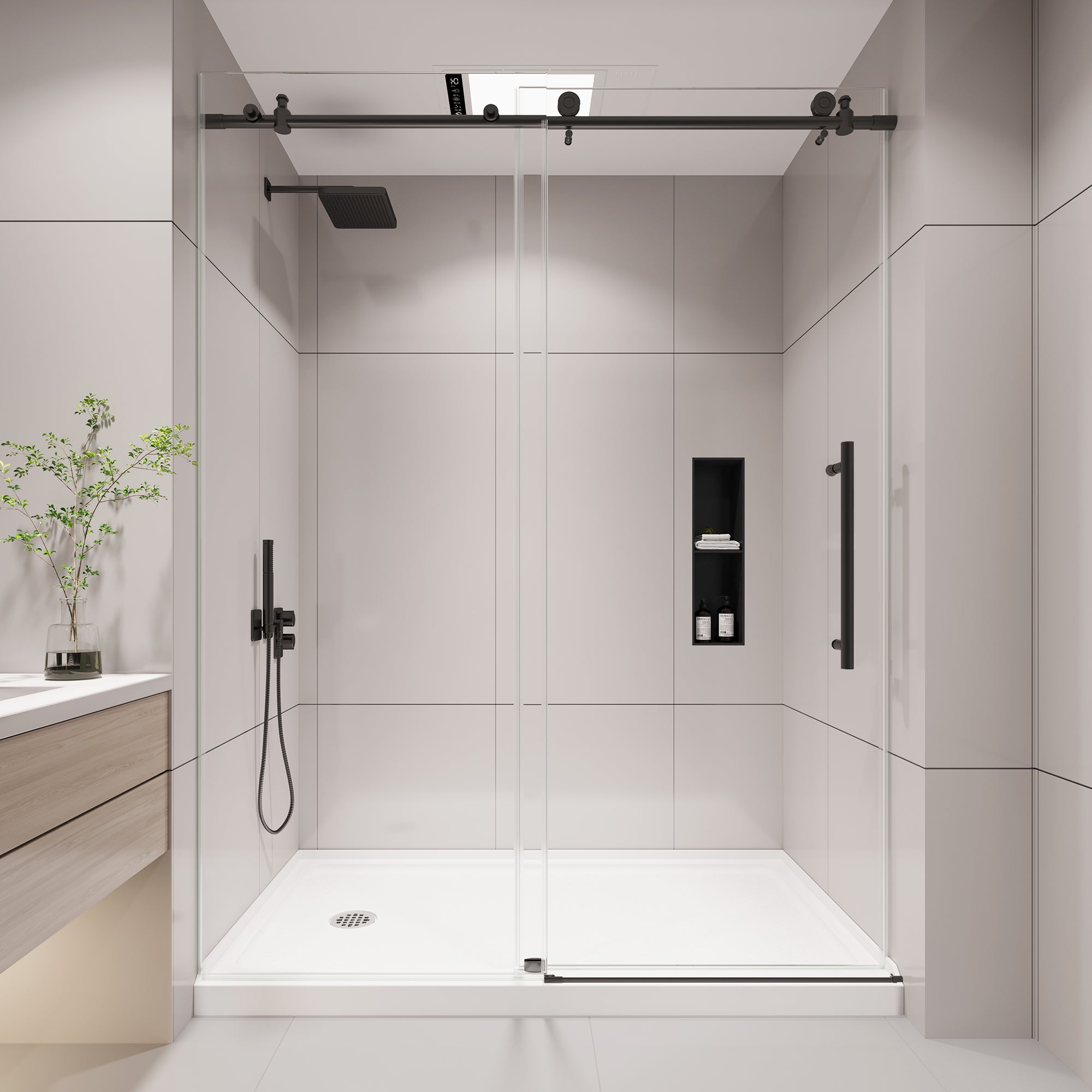
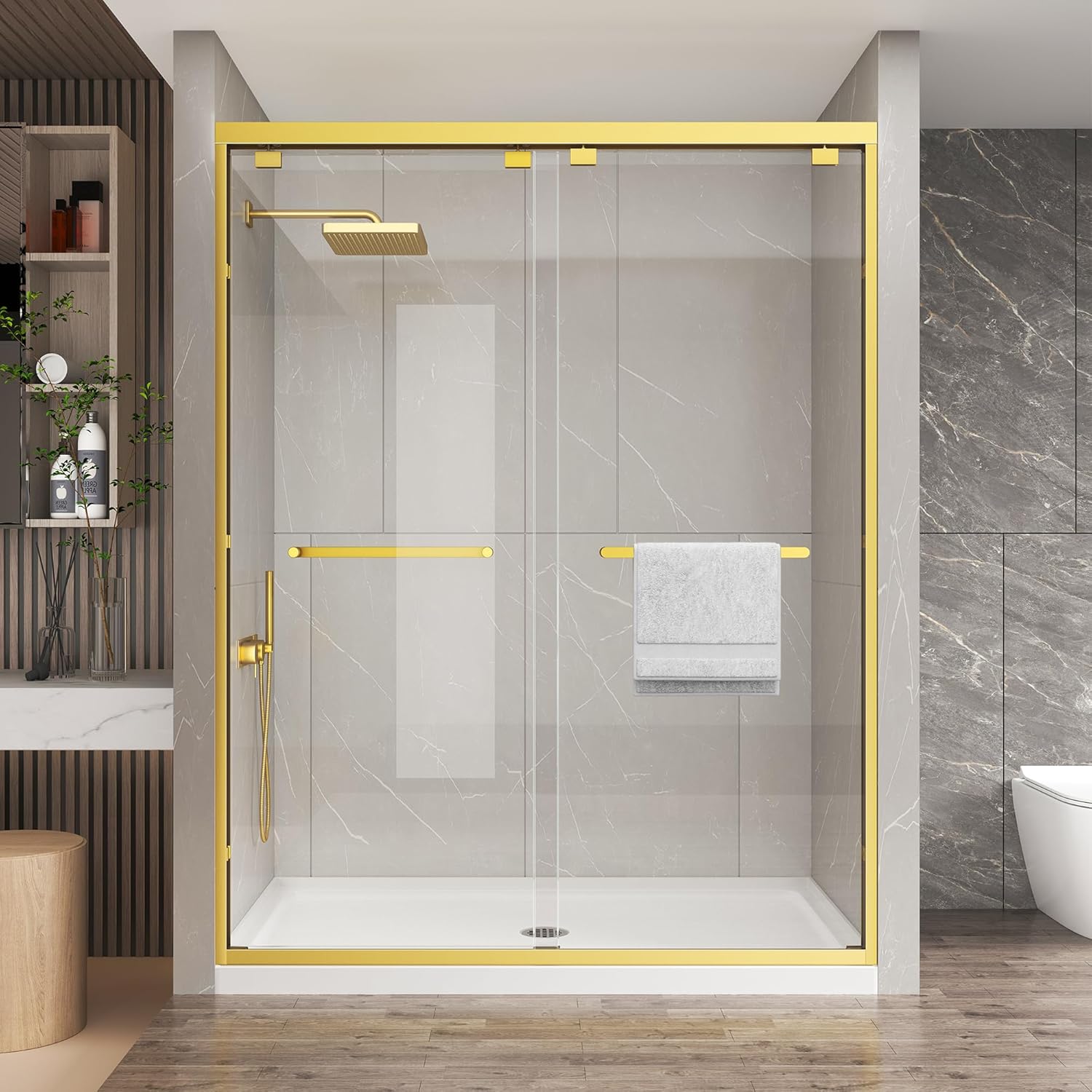
Frameless shower door thickness affects how stable the enclosure feels, how much hardware support it needs, and how forgiving the installation is when walls are slightly out of plumb. In most remodels, 8mm glass works well for lighter frameless doors and smaller openings, while 10mm glass is better when you want a sturdier feel, a heavier door, or a more substantial frameless look. The opening, hinge support, and wall conditions matter as much as the glass thickness.
The Short Answer
If you want the simpler rule: choose 8mm glass for a lighter frameless feel in standard openings, and choose 10mm glass when you want more rigidity, a heavier door feel, and a more solid hardware setup. The better option depends on opening width, hinge or bracket support, and how true the walls are. A thicker door is not automatically better if the opening is tight or the framing support is weak.
8mm vs 10mm: What Changes in Real Use
The thickness difference sounds small, but in a frameless shower door it affects how the door behaves every day. An 8mm door is typically easier to handle during installation and can be a good fit for many standard bathrooms. A 10mm door usually feels more substantial when opened and closed, but that extra thickness also adds weight, which puts more demand on hinges, wall anchors, and proper support behind the finished wall.
For homeowners, the decision is not just about appearance. A frameless door has very little visual framing to hide installation problems, so wall plumb, tile thickness, and the finished opening become more important. In older homes, the top of the opening can measure slightly different from the middle and bottom, and the wall can lean just enough to affect how the glass sits. That is one reason installers pay close attention to finished dimensions instead of assuming the rough opening tells the whole story.
Wrong choice causes a real problem: if you pick a heavier 10mm door for an opening with weak wall backing or limited hinge support, the door may feel solid at first but can strain the hardware over time. If you choose 8mm for a larger or more heavily used opening, the door can still work, but it may feel lighter than expected and may not match the visual weight some remodels need.
How thickness changes the jobsite reality
- 8mm: lighter on the wall, easier to handle, and often more forgiving during installation.
- 10mm: heavier, more rigid, and usually better when you want a sturdier frameless profile.
- Both: still require accurate finished opening measurements, proper wall support, and careful sealing.
- Neither: fixes a crooked wall, a bad curb slope, or a misread opening width.
For homeowners comparing frameless door options, the relevant choice is usually less about brand and more about fit, swing, and support. If you are narrowing down styles, the Frameless Shower Doors collection is the right place to compare how the glass thickness works with different opening sizes and layouts.

What to Check Before You Order
Before deciding between 8mm and 10mm, measure the actual finished opening and check the wall conditions around it. Frameless glass is less forgiving than framed products, so the enclosure needs the opening to be reasonably true. A shower can look square to the eye and still be off by enough to affect hinge alignment or door seal contact.
The most useful checks are simple:
- Finished opening width: measure at the top, middle, and bottom.
- Opening height: check both sides, since one wall may be slightly taller.
- Plumb: place a level on each jamb area and note any lean.
- Tile thickness: confirm whether the wall surface is already finished or still changing.
- Hardware clearance: make sure hinge movement will not hit a towel bar, nearby wall, or vanity edge.
- Wall backing: verify where studs or proper blocking are located behind the finished surface.
These checks matter more with 10mm because the door weighs more and usually puts more load on the hinge side. A thick door can still be a good choice, but only if the wall support and opening geometry can carry it cleanly. If the shower layout also includes a fixed panel, the weight and alignment details become even more important because the panel and door need to land together without forcing the glass into a bind.
For open, fixed-glass layouts where thickness still matters but the design is less about a swinging leaf, a related option is Shower Glass Panels. That is useful when splash control and visual openness matter more than a full hinged door.
8mm vs 10mm Comparison Table
| Option | Best For | Limitations | Installation Note |
|---|---|---|---|
| 8mm glass | Standard frameless doors, lighter hardware load, and bathrooms where handling weight matters | Feels lighter than thicker glass and may not suit every large opening | Easier to handle, but still needs accurate plumb and solid hinge backing |
| 10mm glass | Heavier frameless doors, a more rigid feel, and projects where the door should feel more substantial | Greater weight, more demand on wall support, and less tolerance for weak framing | Best when the opening is true and the wall structure can support the hardware properly |
Installation and Remodel Notes That Matter
Frameless shower doors are often chosen for the cleaner look, but the installation details are what determine whether the door works well. The finished opening is the number that matters, not the old rough framing dimension from before tile. Tile thickness, backer board, waterproofing layers, and even a minor wall bow can change the final size enough to affect glass fit.
One common remodel surprise is an opening that measures differently from side to side. Another is a curb that looks level but actually slopes the wrong direction. If the threshold pitches toward the bathroom floor instead of back into the shower, water can escape no matter how good the door looks. That issue is not solved by thicker glass; it has to be corrected at the base, curb, or sealing line.
Heavier 10mm glass also makes hardware selection more important. A wall hinge or clamp that works fine with an 8mm door may not feel right once the glass weight increases. The wall itself needs to be able to carry the load, and the fastening points need to land where the structure is solid. That is why framing and blocking matter behind the tile, especially in a remodel where the finished surface already hides the structure.
From a planning perspective, fit the glass thickness to the opening and support, not just to the look you want. If the opening is tight, the wall is slightly out of plumb, or the tile build-up is uneven, a lighter 8mm setup may be the cleaner install. If the opening is stable, well-supported, and intended for a more substantial frameless feel, 10mm can make sense.
For broader enclosure planning around swing, layout, and glass fit, the KPUY Shower Doors collection is a practical place to review frameless and other shower door styles side by side.
- Measure the finished opening width at the top, middle, and bottom.
- Measure the opening height on both sides and note any difference.
- Check wall plumb with a level on both jamb areas.
- Confirm where tile thickness, trim, or finished wall build-out changes the final size.
- Look for studs or blocking where hinges, clips, or brackets will mount.
- Verify that the door swing will clear the toilet, vanity, towel bar, or casing.
- Check the curb slope and threshold direction so water returns to the shower.
- Confirm that the chosen thickness fits the hardware specification and the opening layout.
Frequently Asked Questions
Is 10mm glass always better than 8mm for a frameless shower door?
No. Ten-millimeter glass feels heavier and more rigid, but that does not make it the right answer for every opening. If the wall support is limited or the opening is tight and slightly out of plumb, 8mm may be easier to install cleanly. The better choice is the one that matches the opening, hardware, and support conditions.
Can a frameless shower door fit if the walls are not perfectly square?
Sometimes, but only within a reasonable tolerance. Frameless glass is less forgiving than framed products, so the top, middle, and bottom measurements matter. A small amount of out-of-plumb can often be managed with proper planning, but a large lean or twisted opening can create hinge stress, sealing problems, or a door that does not close correctly.
Does thicker glass help with water leakage?
Not directly. Water control depends more on the curb slope, threshold height, seal placement, and how accurately the door is fitted. Thicker glass may feel more substantial, but it does not fix a poor slope or a bad seal line. If water is escaping, inspect the base, door sweep, and wall alignment before assuming thickness is the answer.
Final Takeaway
The real decision between 8mm and 10mm glass is about support, weight, and the conditions around the finished opening. Start with the measurements, not the glass thickness. If the opening is true and the wall structure is solid, either option may work depending on the look and feel you want. If the remodel has uneven tile build-up, slight wall lean, or limited backing, the lighter option is often easier to fit cleanly. For homeowners comparing frameless layouts, the Frameless Shower Doors collection can help narrow the enclosure style after the measurements are confirmed.

Leave a comment
All comments are moderated before being published.
This site is protected by hCaptcha and the hCaptcha Privacy Policy and Terms of Service apply.