
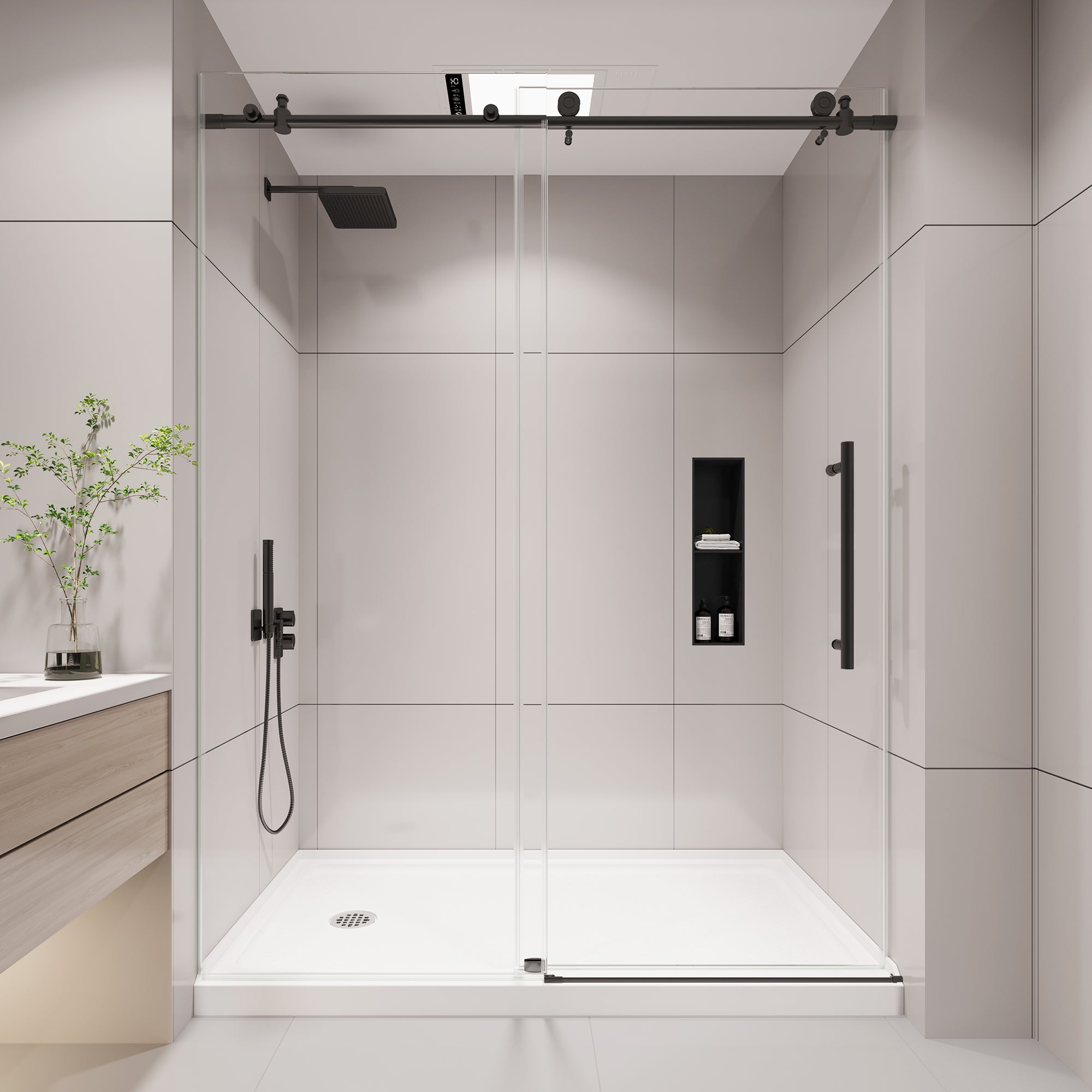
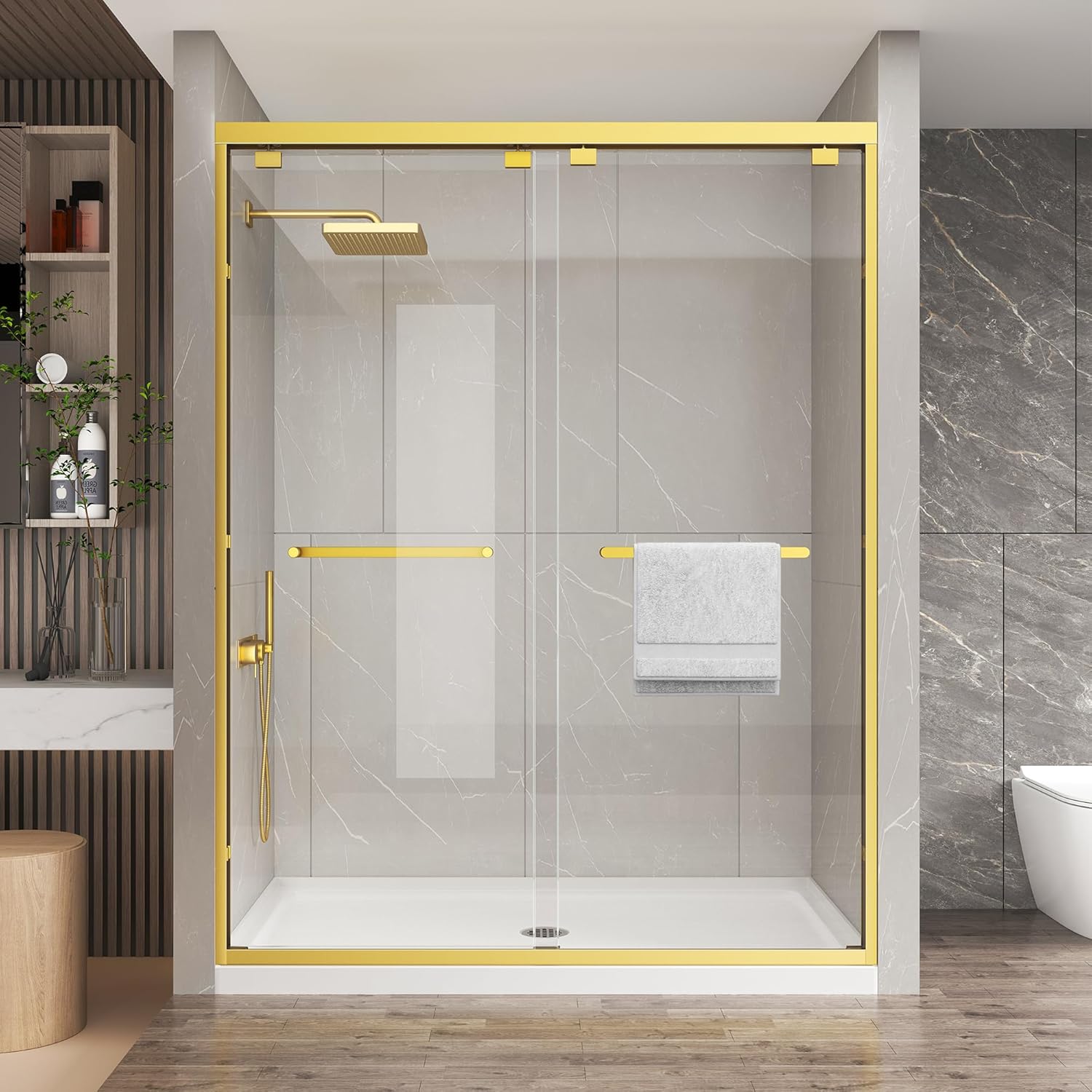
Double sliding shower door track alignment problems usually start with a finished opening that was never truly square, level, and plumb. The doors may be the right size on paper, but if the top and bottom widths differ, the walls lean, or the track sits on an uneven curb, the panels will drag, jump, rattle, or stop closing cleanly. The safest rule of thumb is simple: measure the finished opening, check plumb and level, and confirm the track will land on solid support before you order or install anything.
The Short Answer
Double sliding shower door track alignment problems happen when the opening is out of square, the curb is not level, or the wall surfaces change after tile. The best prevention is to measure the finished opening at the top, middle, and bottom, confirm both walls are plumb, and verify the track has a flat, solid mounting surface. For replacement planning, start with the Double Sliding Shower Doors collection so the door style matches the opening and clearance you actually have.
What Usually Causes Track Misalignment
Double sliding systems are forgiving in some ways, but they still depend on accurate layout. If the track is installed even slightly off, the rollers and panels will show it fast. In older homes, the problem is often not the door itself; it is the opening. Walls lean, tile thickness changes the finished width, and the curb may slope enough to affect the track line.
Here is the practical difference between a small maintenance issue and a real installation or layout problem: light roller wear may cause a little noise, but a track that is visibly out of line usually points to the opening, the support, or the original measurement. A door can fit the footprint and still fail if the bottom rail is not sitting where it should or if the wall surfaces were not checked after tile.
Symptoms, Likely Causes, and Practical Fixes
If the doors are already installed, the symptoms usually tell you where to look first. Use the table below to separate a simple adjustment from a bigger remodel issue.
| Symptom | Likely Cause | Practical Fix |
|---|---|---|
| Door drags at one end of the track | Track is not level, or the curb slopes unevenly | Recheck level across the full span and confirm the curb or threshold is not twisting the rail |
| Panels do not meet evenly in the center | Opening is out of square or the walls are out of plumb | Measure top, middle, and bottom widths and compare both side heights before adjusting hardware |
| Rollers chatter or bind | Track alignment, debris, or hardware tension problem | Clean the track, verify roller adjustment, and confirm the rail is mounted flat on solid support |
| One panel overlaps too far | Opening width or panel stack allowance was misread | Recheck finished opening dimensions and verify the door set is sized for the actual tile-to-tile width |
| Water escapes near the bottom | Track position, sweep contact, or threshold geometry is off | Inspect the curb slope and bottom seal line; a rail that sits too high or too low can reduce containment |
Most alignment complaints trace back to one of three places:
- The finished opening was measured before tile, not after the wall finish was complete.
- The walls are out of plumb enough that the track follows a crooked path.
- The curb or threshold is uneven, so the rail and rollers are fighting the slope.
Older homes often show this clearly once the old door comes off. A wall may lean just enough to be invisible with the eye, but it becomes obvious when a straight track is placed across it. That is why track-based doors demand better opening checks than a curtain or a loose panel.
What to Check Before You Order
Before you order a replacement or a new set, check the opening as it will actually be finished. Do not rely on the original framing dimensions, the old door label, or the old track length if tile, backer board, or a new shower base is changing the space.
- Finished width at three points: measure top, middle, and bottom from tile face to tile face.
- Height on both sides: confirm the left and right sides are close enough for the track and glass height.
- Plumb on both walls: a rail can compensate for small variation, but not for a serious lean.
- Curb or threshold level: check whether the mount surface runs flat enough for the rail and seals.
- Tile thickness: finished wall depth changes the true opening and can affect hardware clearance.
- Nearby fixtures: confirm the door path does not conflict with a vanity top, toilet, towel bar, or casing.
- Support behind the wall: verify the track and fasteners will bite into studs or proper blocking where needed.
If you are still in remodel planning, this is also the time to look at Sliding Shower Doors for tight bathrooms where swing clearance is limited, and at Shower Glass Panels only if you are considering whether a fixed panel layout would reduce track-related complexity. For a track-driven design, though, the main decision is still whether the opening can support a smooth bypass movement without forcing the rail out of line.
Pre-Order and Pre-Install Checklist
Use this sequence before you order or reinstall a double sliding door. It is much easier to correct a mismatch on paper than after glass arrives.
- Measure the finished opening at the top, middle, and bottom, and write each number down.
- Measure both side heights from the finished floor or curb to the planned top of the door opening.
- Check wall plumb with a level on both sides, especially near the tile edges where the track will mount.
- Confirm the curb or threshold is flat enough for a straight rail line and that water will still pitch back into the shower.
- Look for tile lippage, thick grout buildup, or trim pieces that could push the track out of alignment.
- Confirm there is enough wall support for the anchors and that fasteners will not land in weak backer only.
- Test for nearby conflicts: vanity doors, drawer fronts, towel bars, toilet clearance, and casing at the bathroom entry.
- Verify the door stack and overlap will not block the usable opening more than the room can handle.
- Review the drain and base situation if the shower is being rebuilt, because a base that fits the footprint can still fail if the drain rough-in is wrong.
A practical code and planning habit is to check bathroom clearances and safety expectations early, not after finish materials are in place. Resources such as NKBA can help frame layout thinking, especially when shower access, fixture spacing, and remodeling constraints overlap.
When Track Problems Mean Replacement, Not Adjustment
Some issues can be corrected with cleaning, roller adjustment, or a re-level of the rail. Others are design problems. If the track keeps drifting out of line, if the glass panels bind even after basic maintenance, or if the opening dimensions vary too much for a stable installation, the better move is often to replace the enclosure rather than keep patching it.
That is especially true when the opening was built around the old door instead of the true finished dimensions. The old frame may have hidden a bad curb, uneven tile, or wall tilt. A new double sliding system exposes those conditions immediately. In remodels, that is normal; it just means the door choice needs to match the actual opening instead of the assumed one.
For code and structural context, especially if the shower area is being rebuilt with new waterproofing, curb work, or a base change, it is reasonable to review general standards through ICC and confirm details with local requirements or a qualified installer.
Frequently Asked Questions
Why does a double sliding shower door go out of alignment after installation?
The most common reason is movement in the opening, not the glass itself. If the track was installed on a curb that is not level or on walls that are out of plumb, the rollers can gradually show stress and drift. Loose fasteners, poor support behind tile, and heavy cleaning wear can also make a small alignment issue become more noticeable over time.
Can I fix a dragging sliding shower door without replacing the whole system?
Sometimes, yes. Clean the track, check roller adjustment, and confirm the rail is not sitting on a bowed surface. If the door still drags in the same spot, the issue is usually the opening or the track line. When the finished width changes from top to bottom or the curb slopes the wrong way, replacement or remounting may be more realistic than a small adjustment.
What measurements matter most for preventing track problems?
The three most important checks are finished width at the top, middle, and bottom; height on both sides; and wall plumb. Those numbers tell you whether the bypass panels can travel smoothly and close evenly. If the opening changes by more than a small amount across its span, the door may still fit, but the track and rollers will have less tolerance.
Final Takeaway
If a double sliding shower door is binding, rattling, or refusing to close cleanly, start with the opening—not the glass. Track alignment problems are usually caused by a crooked curb, out-of-plumb walls, or a finished width that was never measured correctly after tile. Before ordering another set of panels, verify the finished opening, confirm support behind the track, and make sure the layout can handle bypass movement. If you are planning a replacement, the Double Sliding Shower Doors collection is the right place to match the door style to the opening you actually have.

Leave a comment
All comments are moderated before being published.
This site is protected by hCaptcha and the hCaptcha Privacy Policy and Terms of Service apply.